Term 4, 2025
Curriculum News - Prep
Term 4, 2025
Curriculum News - Prep
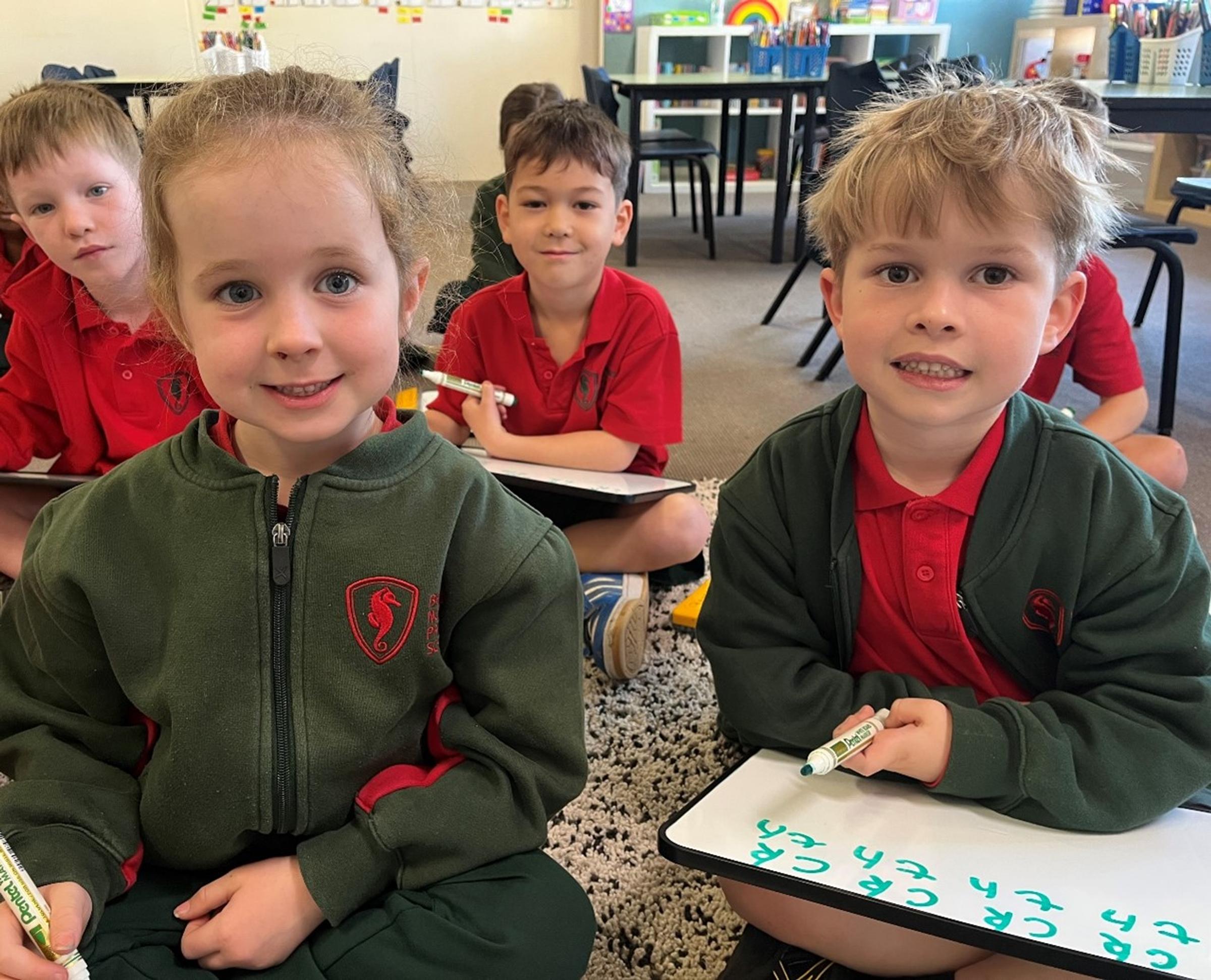
Welcome to Term 4! It’s hard to believe that we’re already in the final term of Prep. This year has truly flown by. The Prep teachers are so proud of the progress that the students have made throughout the year. It has been a pleasure to see their confidence and skills grow since they first started school.
Term 4 is going to be action-packed with exciting learning experiences! We can’t wait to continue this journey together as we make the most of the final term.
The Prep Swimming Program is just around the corner, and the students are eagerly looking forward to it! There’s already excitement in the air about boarding the bus with friends, even for the short trip to the pool. We’re also excited to see them practice their organisational skills, from taking care of their swimming bags to independently drying off and getting dressed after their lessons. It promises to be a fun and rewarding experience for everyone.
The Prep students are also very excited about their first ever school excursion, to the Melbourne Aquarium, which is later this term. In class, they have been very enthusiastic when learning about different sea creatures and the ways that humans can impact on their habitats.
Other events to look forward to this term include the Drama Toolbox Incursion where students will get to dress up and pretend to be sea creatures.
Later in the term, the Prep students will have the opportunity to visit the Year 1 classrooms and meet the teachers. This will help ease their transition to Year 1 in 2026 and give them a glimpse of what to expect in the year ahead. It’s an exciting step as they prepare for the next stage of their school journey!
People’s use of the sea impacts upon the creatures that call it their home
Human use of the Ocean
Impact on creatures and their habitats
Our responsibility to the environment
English – Literacy Skills Development
In Term 4, students will continue to consolidate and extend their foundational literacy skills as they prepare for a smooth transition into Year 1. Learning will remain hands-on, engaging, and purposeful, with a strong focus on applying skills with increasing independence and confidence.
• Strengthening Phonemic Awareness and Decoding
Students will continue to practise blending and segmenting sounds to read CVC words and will begin working with words containing digraphs (e.g., sh, ch, th). They will use decoding strategies with greater independence to read unfamiliar words in context.
• Reading with Fluency
Students will apply their growing bank of high-frequency words and phonics knowledge to read short, predictable texts more fluently and accurately.
• Comprehension Development
Focus will shift toward deepening comprehension through identifying characters, setting, and main ideas in texts. Students will be encouraged to make connections between texts and their own experiences.
• Understanding Text Features
Students will explore features of fiction and non-fiction texts such as headings, labels, and diagrams, and understand their purpose.
• Print and Book Handling Skills
Continued development of book-handling skills and understanding of concepts of print, such as punctuation and sentence structure, will support reading development.
• Writing Extended Sentences
Students will be supported to write longer, more detailed sentences using conjunctions (e.g., and, because). They will apply their phonics and sight word knowledge to spell words more accurately and independently.
• Exploring Informative Texts
Students will engage in planning, drafting, and editing simple informative texts, using graphic organisers and writing scaffolds.
• Editing for Meaning and Conventions Children will begin to revise and edit their writing by checking for sentence structure, punctuation, and clarity.
• Handwriting Practice
Ongoing handwriting lessons will focus on consistent letter formation, correct use of upper- and lowercase letters, and appropriate spacing between words.
• Purposeful Communication
Students will participate in a range of speaking activities to describe events, explain ideas, and respond to texts. They will be encouraged to speak clearly and with appropriate detail.
• Collaborative Discussions
Through partner and small group work, students will practise taking turns, staying on topic, and listening respectfully to others’ contributions.
• Performance and Presentation
• Opportunities to present their work and share special items during ‘Show and Tell’ will help build confidence in speaking to an audience.
• Oral Language and Vocabulary Building Emphasis will continue on developing rich oral language through modelled, shared, and guided conversations around new vocabulary and classroom topics.
As we move into Term 4, our Prep students will continue to engage in meaningful, hands-on mathematics experiences designed to consolidate key skills and concepts.
This term, the focus will be on developing deeper understanding in the areas of Counting and Place Value, Measurement, and Data, all of which support everyday mathematical thinking and problem-solving.
Number: • Counting and Place Value
Students will extend their understanding of number by exploring how numbers are composed of tens and ones. Using concrete materials such as bundling sticks, blocks, and ten frames, students will practise grouping, counting, and representing two-digit numbers.
They will learn to read, write, and order numbers to at least 20, and develop strategies for recognising and continuing number patterns, such as counting by 2s, 5s, and 10s. Activities will help students connect visual, verbal, and symbolic representations of numbers.
Measurement: • Length, Mass, and Capacity
Students will explore how to compare and measure objects using informal units. Through practical activities, they will investigate and use language such as longer/shorter, heavier/lighter, and holds more/less. They will use materials like blocks, hands, and containers to estimate, measure, and compare objects in everyday contexts. These activities will support students in developing an early understanding of measurement concepts and vocabulary.
• Time – Sequencing and Duration
Students will continue to build their understanding of time by ordering daily events and learning about the days of the week. They will use familiar time-related language such as morning, afternoon, today, tomorrow, and next to describe when things happen. They will also compare the length of activities, discussing which takes longer or shorter and why, using real-life examples and stories.
Statistics and Data: Collecting, Representing and Interpreting Data
Students will explore simple data collection by asking questions, gathering information, and sorting it into categories (e.g., favourite sea creatures, types of pets). They will represent their data using tallies, picture graphs, and simple charts. Students will interpret their findings by identifying which groups have more, less, or the same, and describe their results using everyday language. These activities build skills in sorting, comparing, and communicating about data.
October – Inquirers
We nurture our curiosity, developing skills for inquiry and research. We know how to learn independently and with others. We learn with enthusiasm and sustain our love of learning throughout life.
November -Principled
We are fair, acting with integrity and honesty
We take responsibility for our actions and their consequences
December- Knowledgeable
We develop and use conceptual understanding, exploring knowledge across a range of disciplines. We engage with issues and ideas that have local and global significance.
Respectful Relationships
This term in our Respectful Relationships program, Prep students will continue to explore important aspects of social and emotional learning that support their wellbeing, sense of identity, and connection with others. In Term 4, we will focus on two key topics: Gender and Identity and Positive Gender Relations.
Topic 7 – Gender and Identity In this unit, students will learn that everyone is unique and that it's okay to express who we are in different ways. They will explore the idea that interests, hobbies, and personal choices (such as favourite colours, games, or clothes) are not limited by gender. Through picture books, discussions, and inclusive classroom activities, students will be encouraged to value and respect differences in themselves and others. This topic helps children build a positive sense of self and understand that everyone should be free to be themselves, without stereotypes or unfair expectations.
Topic 8 – Positive Gender Relations In this topic, students will develop skills to interact respectfully and fairly with others, regardless of gender. They will explore ways to build positive friendships by including everyone, using kind words, and working together. Through cooperative games, role-play, and class discussions, students will learn about fairness, respect, and standing up for others. The focus will be on promoting inclusiveness and ensuring that all students feel valued, safe, and supported in their interactions with peers.
The Zones of Regulation, developed by Leah Kuypers, is a systematic framework that helps individuals, especially children, understand and manage their emotions. It categorises emotions and states of alertness into four color-coded zones:
Blue Zone (low alertness)
Green Zone (optimal alertness)
Yellow Zone (heightened alertness)
Red Zone (extremely high alertness)
By fostering emotional awareness, teaching self-regulation strategies, creating a Zones-friendly environment, and using visual supports, we empower children with essential skills for emotional well-being and self-control.
Monday 20 – Friday 30 October
Tuesday 4 November
Tuesday 11 November
Wednesday 12 November
Wednesday 10 December