Learning & Teaching
Literacy News
Literacy across P-2:
Over the next week your child (ren) will be receiving a ‘learning at home’ note that explains what learning at home looks like in Prep-2. In the note, we explain what tricky words are, what reading resources your child will bring and other important ways to access reading resources.
Reading to your child every day fosters essential brain development, significantly enhances language skills, and strengthens emotional bonds. Daily reading improves vocabulary, concentration, and comprehension while building empathy and preparing children for academic success. It also sparks imagination and creates a routine for connection.
Literacy across 3-6
Our 3-6 children will be engaging in a novel study. The 3-4 children will be studying the text Fantastic Mr Fox and the 5-6 children will study the text: Ghost in my suitcase. During the study, children will be analysing character traits and actions, predicting, making inferences and summarising the story in a short version. Our 3-6 children will engage in spelling and writing convention lessons where they will learn how to form grammatically correct sentences.
Library:
Our Library is now open and Hub groups will be going to the library on a weekly basis. In the library, children are encouraged to pick a book that they love - this builds reading for enjoyment. The books can be read to by a Mum, Dad, Grandpa/ma or older brother/sister.
We do encourage P-2 children to borrow 2 picture books and our 3-6 children to borrow both picture and chapter books.
Please bring your blue take home folder to school so we can keep your books safe!
Maths News
Prep Mathematics: Learning About Time
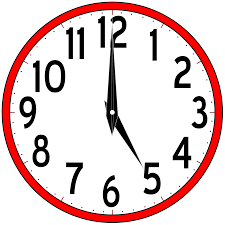
In Mathematics, Prep children were learning about Time. The children are telling and reading time, comparing the duration of everyday events, and discussing the order in which events occur throughout the day.
They are using time language such as before, after, first, next, minutes, hours and seconds, and talked about how long familiar activities take.
How families can support learning at home:
- Talk about daily routines and the usual sequence of events (e.g. morning routines, mealtimes, bedtime).
- Ask children to estimate and compare how long activities take, such as brushing teeth or getting dressed.
- Use time language naturally during the day, including minutes, hours and seconds.
- Time simple activities together using a clock or timer.
- Read clocks together and discuss what happens at different times of the day.
Years 1-2 Mathematics: Counting and Place Value
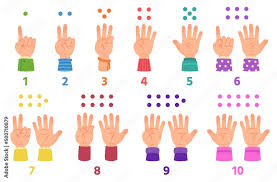
The children in Years 1–2 are learning about Counting and Place Value. They are developing their understanding of how numbers work and how we use them every day.
They are learning to: • Read, write, make, and order numbers using a variety of materials and strategies. • Count and compare collections of objects using concrete materials to strengthen their understanding. • Practise the quick recall of numbers to build confidence and fluency. • Represent numbers by breaking them into hundreds, tens, and ones to develop their understanding of place value and the role of the zero digit.
How families can support this learning at home: • Encourage your child to count everyday objects such as toys, plates, steps, or shopping items. • Ask your child to read and write numbers you see around the home (house numbers, prices, pages in books). • Play number games such as board games with dice, card games, or simple number ordering games. • Practise breaking numbers into tens and ones using coins, blocks, or drawing pictures (e.g. 34 is 3 tens and 4 ones). • Talk about which numbers are bigger or smaller and why.
Years 3- 6 Mathematics: Place Value and Number Properties
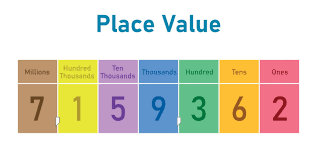
In Mathematics, children in Years 3- 6 were exploring Place Value and Number Properties.
Children were learning to recognise, represent and order numbers beyond 10,000, and to confidently name and write large numbers. They extended their understanding of place value to include tenths and hundredths, using decimal notation to represent these values. As part of this learning, children identified and explained the properties of odd and even numbers.
Children also explored number sequences involving multiples of 3, 4, 6, 7, 8 and 9, strengthening their understanding of patterns and relationships within numbers.
As part of their work on number properties, children investigated factors and multiples and used this knowledge to identify prime and composite numbers. They also explored patterns within triangular numbers, helping to deepen their understanding of how numbers are structured and connected.
How Families Can Support Learning at Home
Families can support this learning by:
- Encouraging children to read and write numbers beyond 10,000 using real-world examples such as population figures, distances or scores.
- Talking about place value during everyday activities, such as reading prices, measuring ingredients using decimals, or using a calculator.
- Asking children to explain why numbers are odd or even, and to find examples around the home or community.
- Practicing skip counting together (for example, counting by 3s or 4s) and identifying multiples of different numbers.
- Exploring factors by grouping objects such as counters, toys or household items in different ways.
- Investigating triangular numbers by drawing dot patterns, building arrays, or solving number puzzles together.