
Kinder/Year 1
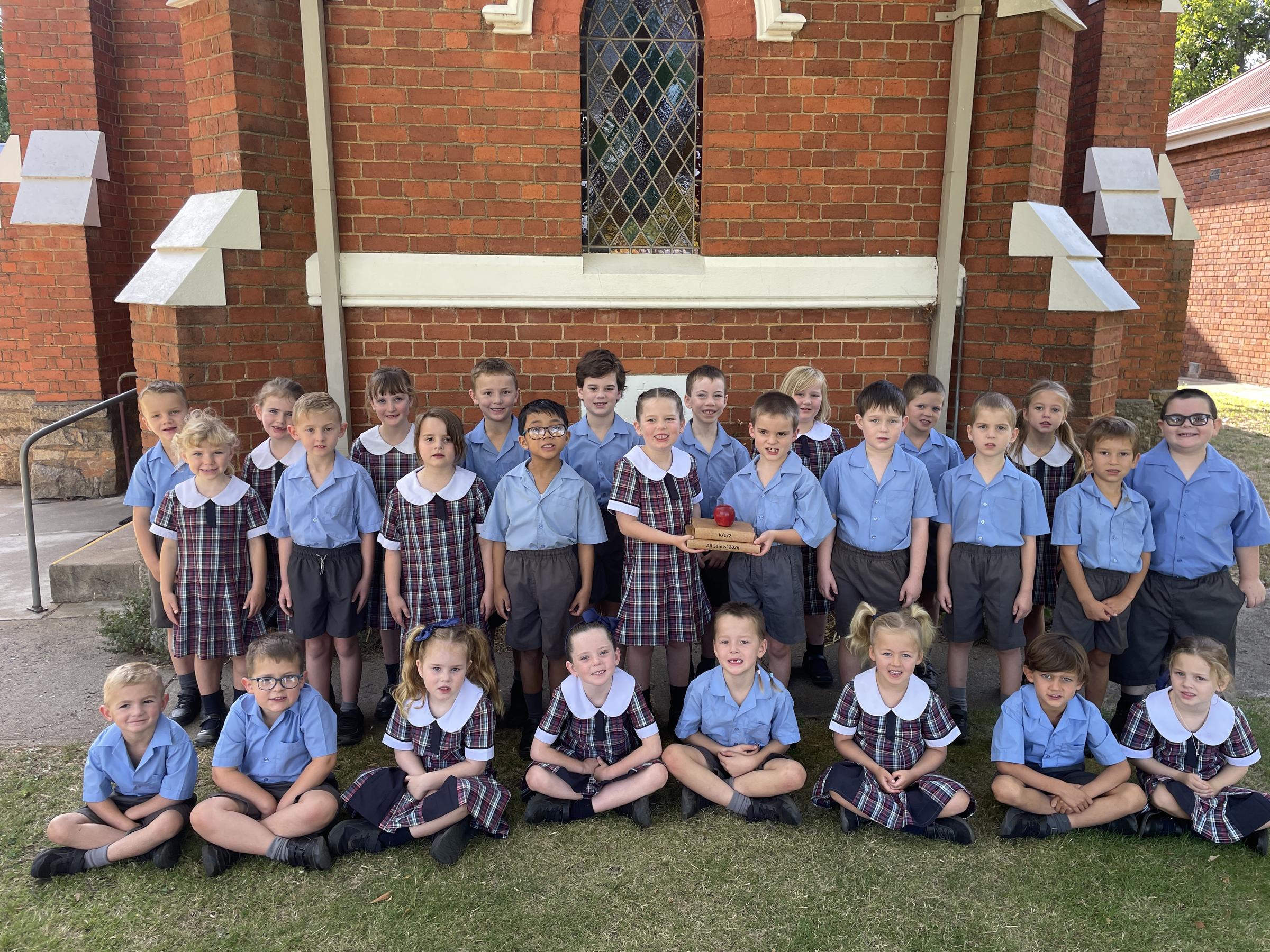

This term, students in K12 began their science learning by identifying a variety of materials and exploring how the senses can be used to describe their properties. They investigated how materials respond to bending, twisting, stretching or crushing, discovering that these actions do not change the materials’ properties.
We then explored how forces affect the movement, speed, direction and shape of objects. Through engaging, hands-on activities, they identify examples of pushes and pulls in everyday life. Students investigated the effect of friction on motion, comparing how different surfaces and materials can slow down a moving object. We explored the playground to see friction in action. Our playground is full of examples of friction at work; activities where friction is used for grip and where there l is less friction so we can slip and slide. We then explored magnetism, learning that magnets attract certain materials and have two poles. Magnets are so fascinating!
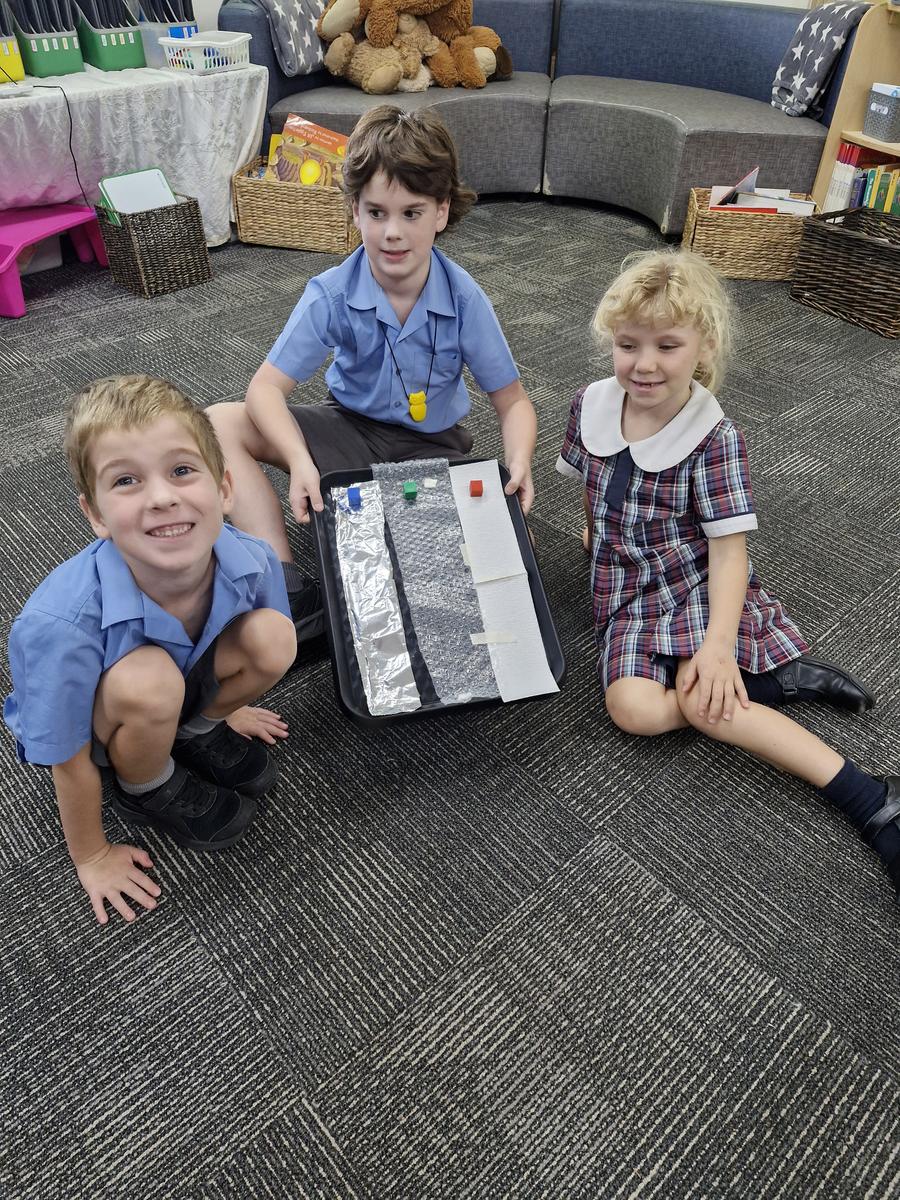
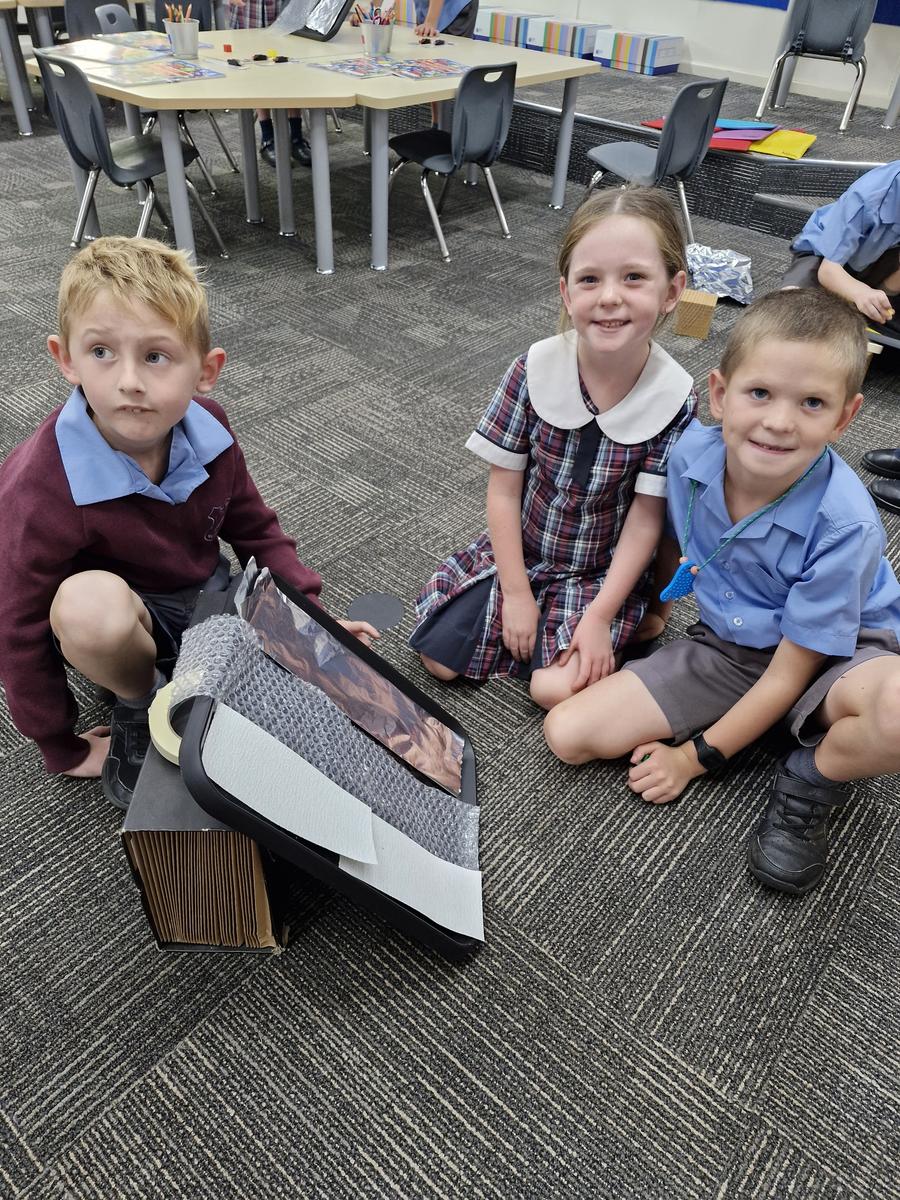
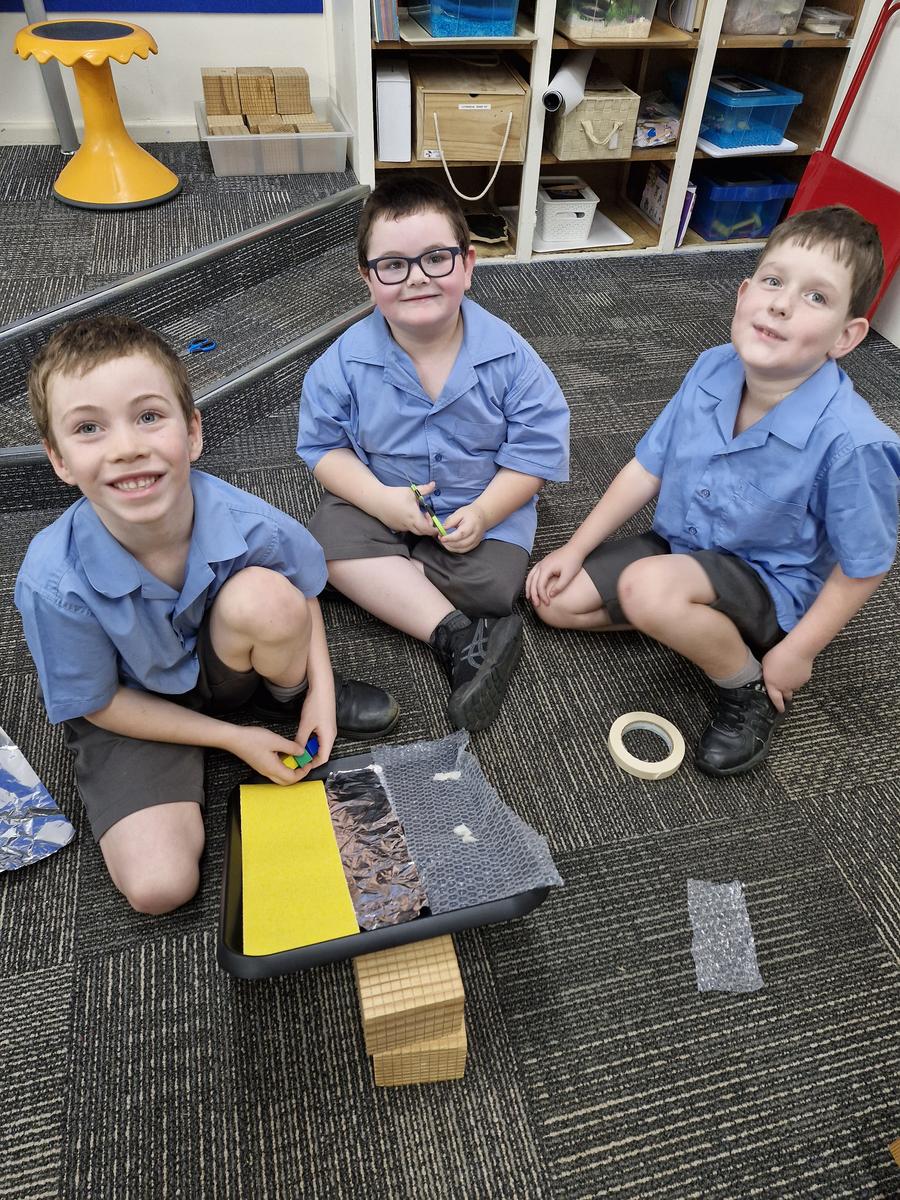
In the photos, you will see our testing of friction and how different surfaces slow down the sliding of blocks on an incline. You’ll notice we tested foil, bubble wrap, hessian, felt, and various forms of plastic, with some results that surprised us!
STE-SCI-01
A student identifies and describes characteristics of living things, properties of materials, and movement.
ST1-SCI-01
A student measures and describes changes in living things, materials, movement, Earth and the sky.
In mathematics, over the last few weeks, we have been learning about time. Time is quite a difficult concept for young learners to grasp. While kindergartners have been focusing on the days of the week, years one and two have been consolidating their understanding of the days of the week, the months of the year, the seasons, and telling time on analogue and digital clocks.
Learning about time can easily be done at home through your daily conversations. Asking your child what day it is today and tomorrow, and regularly using the names of the days when talking about your child's daily events, will help cement the relationship between the days of the week and the routines in your child’s daily life. Also, talking about the time that you do things, such as “It’s five-thirty, time to have dinner,” or “It’s 7 o’clock, time to read a story.” helps children understand the different times of the day. We know that we are doing maths at 12 pm!
MAE-NSM-02
sequences events and reads hour time on clocks
MA1-NSM-02
describes, compares and orders durations of events, and reads half- and quarter-hour time