
Teens & Screens
Digital Habits - tips for parents/carers
Teens & Screens
Digital Habits - tips for parents/carers
In our last Newsletter, we examined the ‘Manosphere’ and the influence online content-creators are having on our teen boys. In this edition, we focus on the “Looksmaxxing” social media trend that has exploded since the Covid-19 pandemic and continues to encourage our teen boys to engage in unhealthy practices and as well as promoting misogynistic and racist content to boys in their most impressionable years.
What Is It?
Looksmaxxing is growing trend on social media which focuses on encouraging men to pursue (maximise) the “ideal” face and body.
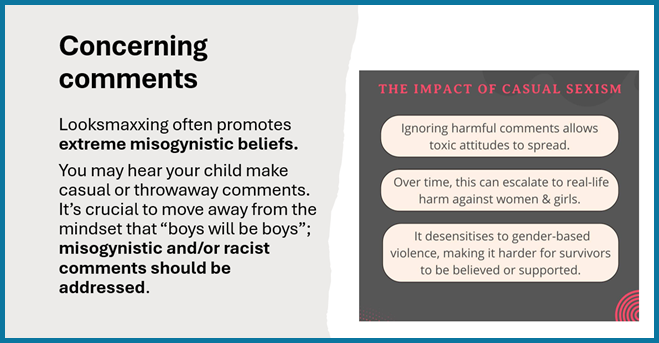
The trend has existed for at least a decade, but has recently been popularised and redefined on TikTok, where it's reaching a widening demographic of teenage boys algorithmically predisposed to the "manosphere" subculture. The manosphere grew in opposition to feminism, referring to a network of websites and online communities propagandising masculinity and misogyny.
Looksmaxxing attaches "scores" to aspects of male appearance, focusing particularly on jawline, muscularity and skin. Proponents and looksmaxxing influencers say these practices can be empowering in seeking self-improvement. But there is much more going on, here.
How Many Boys Are Exposed to This Content?
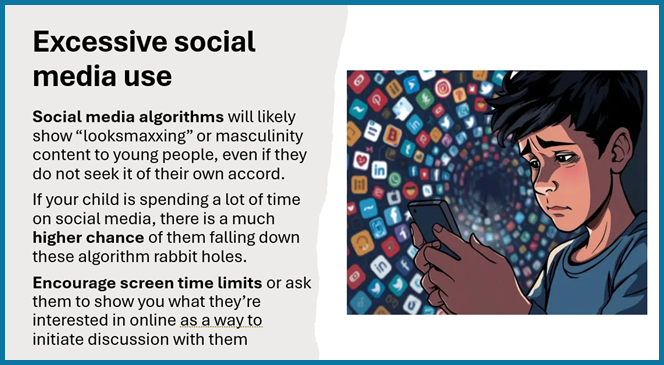
An extensive study in 2025 found that 60% of young men between the ages of 16-25 regularly consume content from at least one masculinity influencer, which means a majority of boys are exposed to and engaging with this content to some level.The study also highlighted that YouTube and TikTok in particular have been found to push increasingly extreme content like looksmaxxing to boys’ feeds. As a result, it is possible boys feel that everyone around them is engaging in looksmaxxing practices, making them feel pressured to follow suit.
While “looksmaxxing” was born out of the idea that young men need to increase or “maximize” their physical appearance to be attractive to women and respected as a man by their peers, now that the term has gone viral on mainstream social media platforms, many boys may be unaware of the misogynistic origins of the term. Young boys seem to gravitate towards this content because it taps into an unmet need for boys. They have questions about their bodies, romantic relationships, and how to operate in the world as young men. They have anonymity online to ask hard or embarrassing questions, a feeling of community with likeminded peers, and a constant stream of advice from confident older boys who claim to have successfully changed their appearance.
What Do Medical Experts Say?
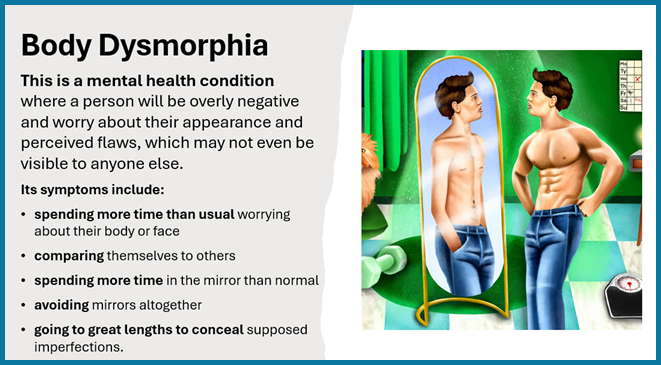
Mental health experts warn they can fuel body dysmorphia, anxiety, and other unhealthy behaviours. Jason Fierstein, founder of Phoenix Men’s Counseling, said these trends are toxic and harmful. “Young men fall into this false sense of acceptance, and what they believe women want from them. They can get caught up in potentially lifelong struggles with feeling inadequate and handling that inadequacy.”
Christine Ruberti-Bruning, licensed therapist and certified eating disorder specialist says, “There’s nothing wrong with wanting to look good, and caring for your appearance can build confidence and be gender affirming. But the big difference is that looksmaxxing is rooted in self-hate and trying to fit in at the cost of your health and safety.”
Dr Stuart Murray, director of the Eating Disorders Program at the University of Southern California, says "It's really shocking, the TikTok advice out there is not evidence-based, but it's promoted as science." He adds, “The self-objectification of looksmaxxing is itself inherently dangerous, encouraging young men to evaluate themselves based on weight or perceived attractiveness. Eating disorders in young men can be masked by muscle bulking and over-exercising.
Dr Minnie Joseph, Child and Adolescent psychiatrist, said, “Looksmaxxing may seem like a harmless social media trend, but in reality, it can cause long-lasting physical and mental health problems, especially for those who are already vulnerable to peer pressure, as algorithms are pushing harmful content onto their feeds. Parents need to be aware of these social media trends, so they can spot when their child may be falling into these worrying mindsets.”
How Can Parents Spot ‘Looksmaxxing’ Habits in their Sons?
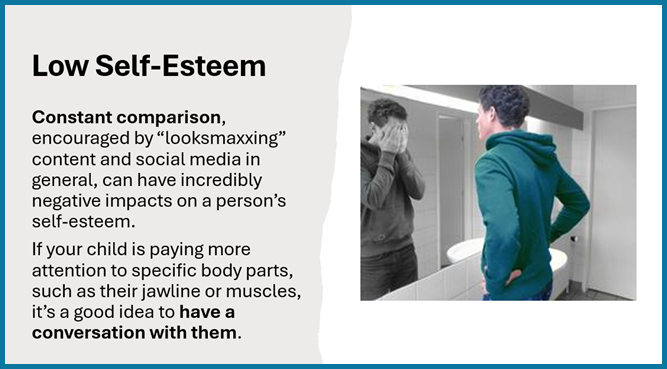
It’s normal to be worried about your child, and it can often feel impossible to understand what is going on in their mind. Part of understanding them includes being aware of what they’re watching on social media and the external pressures facing young men. Whether it’s pressure to look a certain way to attract a partner, increased loneliness, or societal expectations, try to get to the root cause.
Dr Minnie Joseph says, “Communication is key. Talking about these trends and the underlying issues requires an open and nonjudgmental dialogue between you and your child. At first, they may not want to talk or find it embarrassing, but it’s important to try. Let them know that you are always there for them, as developing confidence and having a positive role model can be a huge way for young men and boys to unlearn these beliefs.”
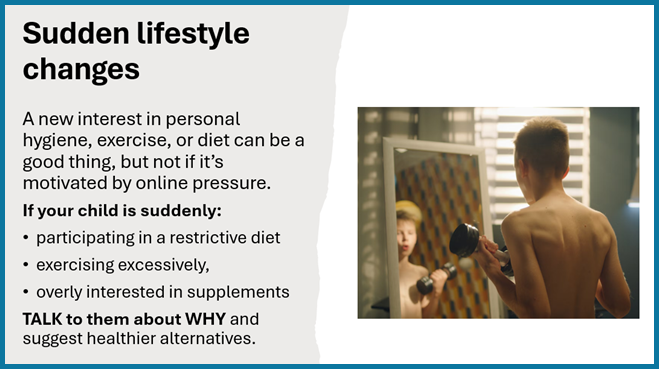
Here are the signs to look out for:
'Looksmaxxing' Is Fueling a Mental Health Crisis
Since 2002, there's been over a 400% increase in hospitalizations for eating disorders in boys. While eating disorders in boys can sometimes look like anorexia, it has become more common for boys to develop bigorexia, or muscle dysmorphia, an obsession with developing bigger muscles.
This is all supported by a new research study that found that young men who engage with masculinity influencers reported high levels of psychological distress, including high rates of worthlessness, nervousness, and sadness compared to boys not engaging with the content.
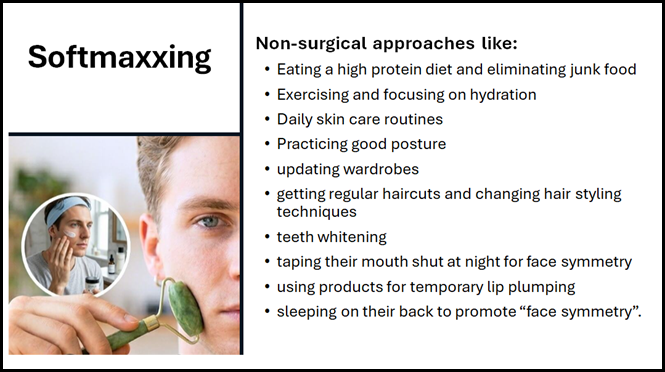
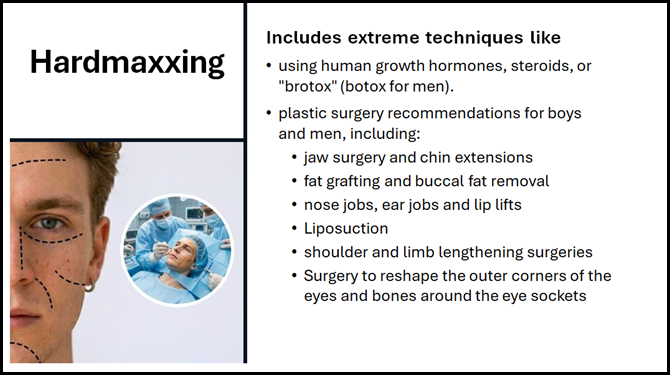
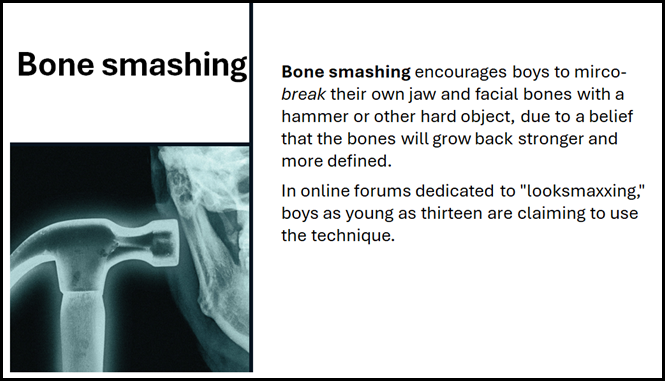
Boys are Learning to Modify Their Bodies:
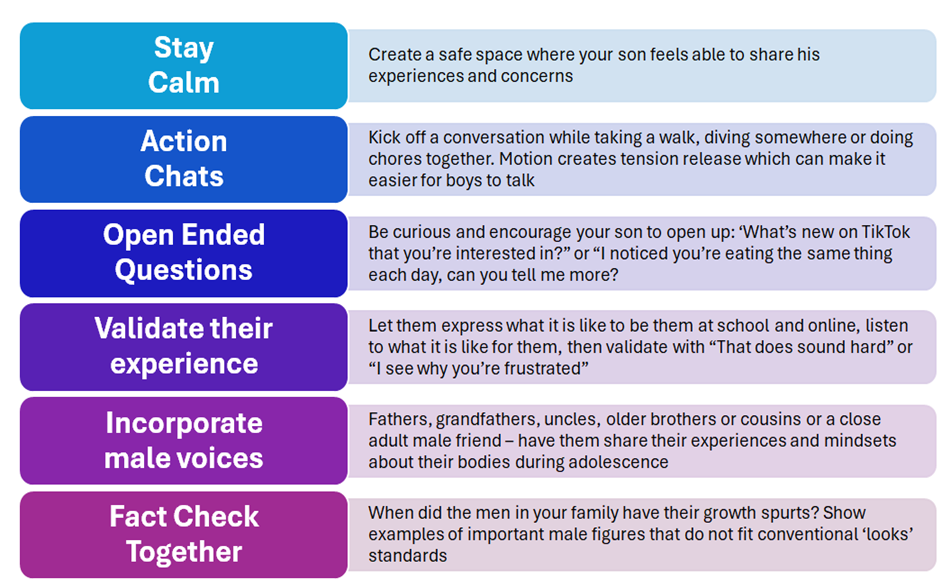
How Parents Can Help
Here are some ideas to help parents manage these tricky discussions with your teens:
Tanya Moran
Leader of Professional Practice
Main Source: