Outside the Classroom
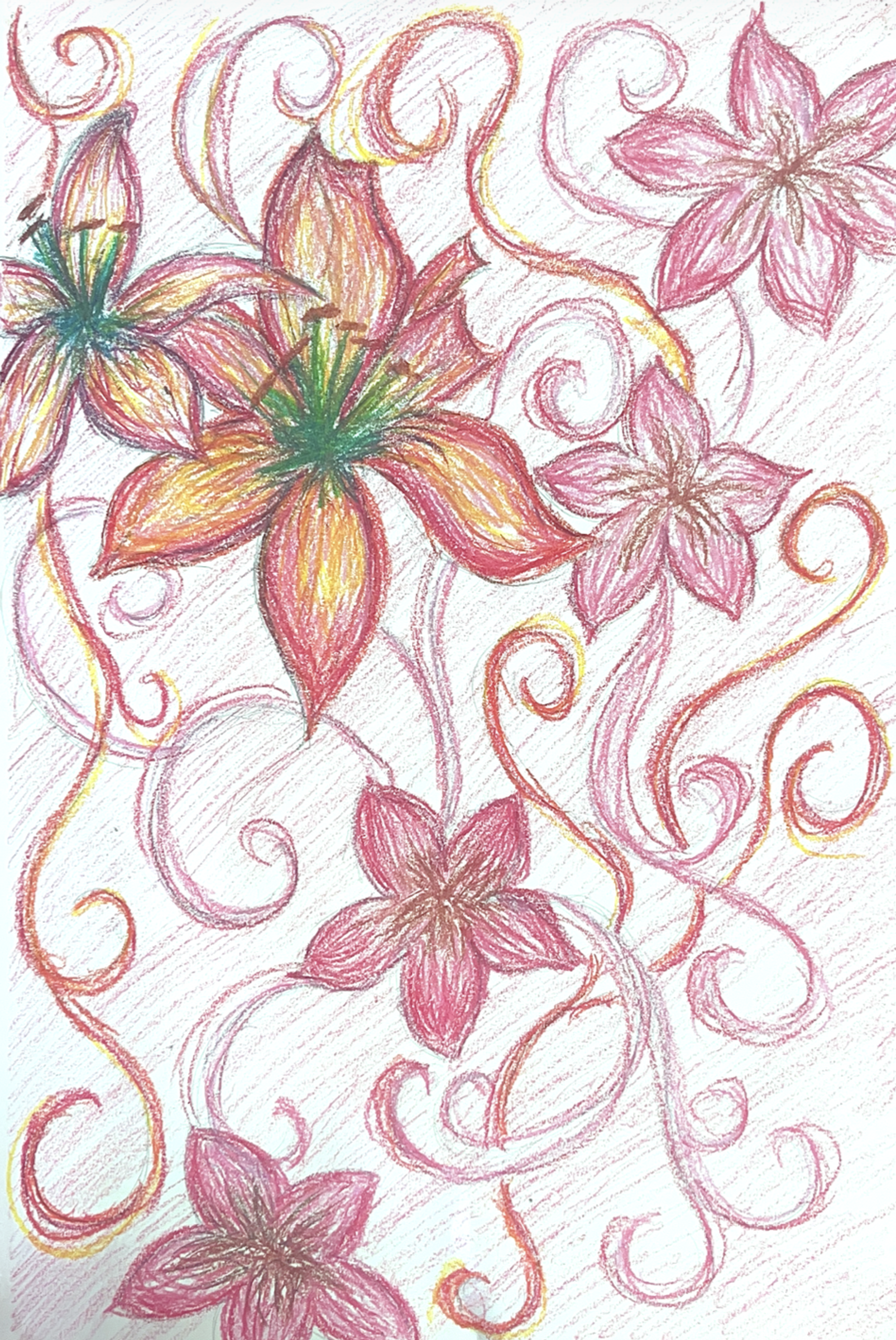
Artwork: Vanessa Chien, Year 11, Ridgeway Campus
Excursions
Indonesian Excursion
Finn McCreadie, Year 12, Ridgeway Campus
On 27 March, the IB Indonesian classes had the opportunity to go to the city for a Cultural Immersion Day. We began the day by catching the train into Flinders Street before meeting at Fed Square and going into ACMI. Our first activity of the day was to watch the 2019 Indonesian film ‘Imperfect’, a movie that followed a young woman who was struggling with her body image. Following this, we learnt how to weave our own ketupat baskets from ribbon, which are a specific type of baskets created for special rice cakes that are commonly eaten in Indonesia for celebrations. Although it was very challenging and took a lot of concentration, we were eventually able to admire our completed work. After this, we walked to an Indonesian restaurant called ‘Nelayan Restaurant’. I ordered the nasi goreng and it was delicious. We all thoroughly enjoyed it and hope to go back some day. Overall, the excursion was an enriching experience and helped us to appreciate the wonderful Indonesian culture even more. A big thank you to Bu Irwin for organising the day as well as ACMI and the Indonesian Film Festival for facilitating such an amazing opportunity for all of us.
Melbourne University Philosophy Excursion
Alex Zhou, Year 9, University Campus
The philosophy excursion to The University of Melbourne was an interesting experience because it gave us the chance to think deeply about ethical and philosophical questions that do not have simple answers. Throughout the day, we explored different ideas about morality, human responsibility and the relationship between the mind and the brain. The excursion challenged the way I think and encouraged me to consider perspectives I had never thought about before.
One of the main discussions we had was whether people should donate their kidneys. This topic raised many ethical questions about responsibility, sacrifice, and personal choice. We discussed whether donating a kidney is something people are morally obligated to do, if it meant it could save another person’s life or whether individuals should have complete freedom over their own bodies. Some arguments focused on the idea that helping others is the right thing to do when we have the ability to do so, while other viewpoints argued that nobody should be pressured into making such a major personal sacrifice. This discussion helped me understand how ethics often involves compassion, individual rights, and consequences.
Another important concept we explored was the difference between the mind and the brain. We learned that the brain is the physical organ inside our body, while the mind refers to thoughts, emotions, memories, and consciousness. This led to discussions about whether the mind is simply the result of brain activity or whether it is something separate from the physical body. I found this topic especially interesting because it connected science and philosophy together. It made me realise how complex human consciousness is and how philosophers continue to debate questions that still do not have definite answers.
Overall, the excursion was valuable because it encouraged critical thinking and open-minded discussion. It showed me that philosophy is not just about ‘old theories’ but about real-world issues that affect society and everyday life. I enjoyed hearing different opinions and learning how to support ideas with reasoning and evidence. The experience helped me develop a deeper understanding of ethics and human thought while also making me more confident in expressing my own ideas. I would definitely go again if I ever get the chance to.
Activity Weeks
Year 9 Immersion Week
Issac Niu, Keiran Turner, Alan Zhang & Spencer Qian, Year 9, University Campus
During the third week of Term 1, all Year Nine students took part in a three-day Immersion Program at La Trobe University. There were many fascinating lectures and problem-solving challenges for us to work through, and everyone had a lot of fun. The focus of the program was Law and Humanities, and the experience was both educational and enjoyable for all students involved.
On the first day of the Immersion Program, we began with a lecture about law and career pathways in the field. Our guest speakers shared their personal experiences with studying law and attending law school. One lecturer spoke about crime, the hierarchy within the court system, and how people progress to the role of judge. Another explained the roles of defence lawyers, prosecutors, and the jury. This was an engaging session that educated us about the opportunities available through studying law at university.
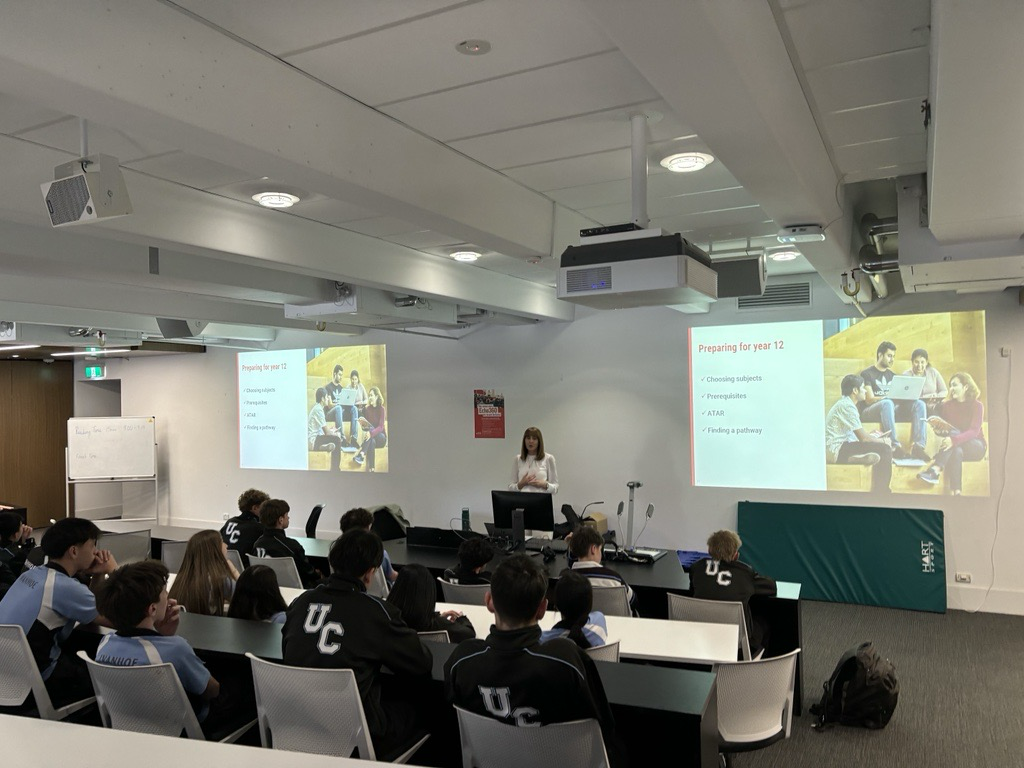
After recess, we participated in a crime-solving activity. We were given clues to begin with and then had to use our critical thinking skills to uncover more evidence and assist the police in finding a missing child. The activity required teamwork, logic, communication, and problem-solving skills.
After lunch, we attended the Model United Nations Situation Room, where we simulated a United Nations meeting by representing different countries. We learnt about veto power and the importance of decision-making in today’s global political climate. Some groups were given advantages while others were disadvantaged, helping us understand the realities of global power and inequality. The activity required teamwork, leadership, planning, and persuasive speaking skills. Overall, it gave us a greater understanding of politics and international relations.
To begin day two, we attended a lecture on the “Philosophy of Bullsh*t.” Despite the unusual title, the session focused on philosophy and misinformation rather than swearing. Presented by Mr Adam Govers, who also runs the Philosophy Club at University Campus, the lecture explored the differences between truth, lies, and misinformation. The session inspired many students to become more interested in philosophy and critical thinking.
After recess, we took part in the Global Game. In the Eastern Lecture Theatre, we were given a giant sheet of paper and tasked with industrialising a rural town through drawing and planning. With only minimal instructions, we worked together to create a town set during the Industrial Revolution. This activity allowed us to physically visualise the process of industrialisation, helping us better understand the Humanities unit we were studying at school.
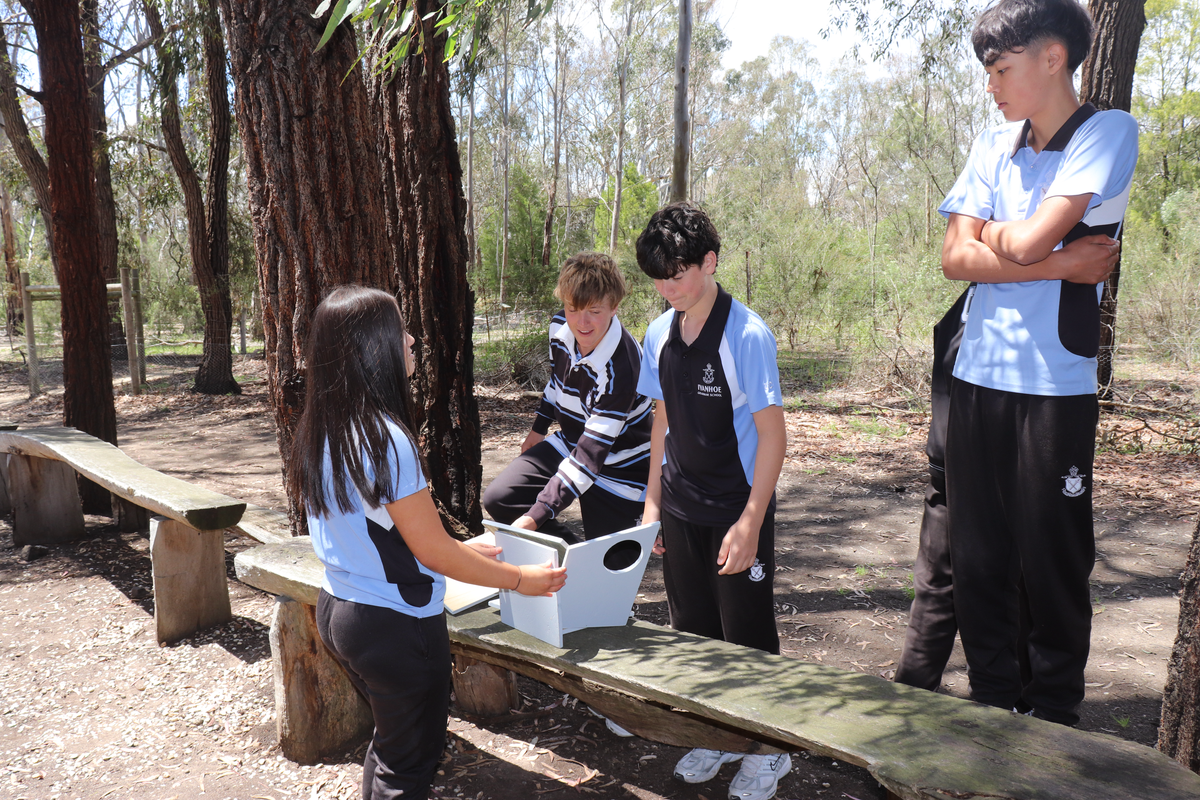
The final activity of day two was Operation Grey Cloud, a role-playing and crime-solving challenge. We worked in groups as detectives trying to identify and prevent an unknown crime. The activity required logical thinking, empathy, persuasive communication, and teamwork. It was both fun and educational, and it helped build our confidence, leadership and communication skills. Overall, the second day was filled with new experiences and opportunities to strengthen important skills.
On the third day, we attended a fascinating lecture by the de-extinction department from The University of Melbourne. We learnt about the process of bringing extinct animals back to life, particularly the Thylacine. It was especially interesting to learn about the differences between cloning and de-extinction. Out of all the lectures we attended, this was one of the most engaging, with students asking many thoughtful questions at the end.
Next, we participated in a moot court session, where we were assigned roles and had to conduct a court case as though we were part of a real trial. We received support from law students at the LaTrobe University Law School, who explained our responsibilities and guided us through the process. The case was intentionally ambiguous so that either side could succeed; however, in the end, the 'criminal' was convicted.
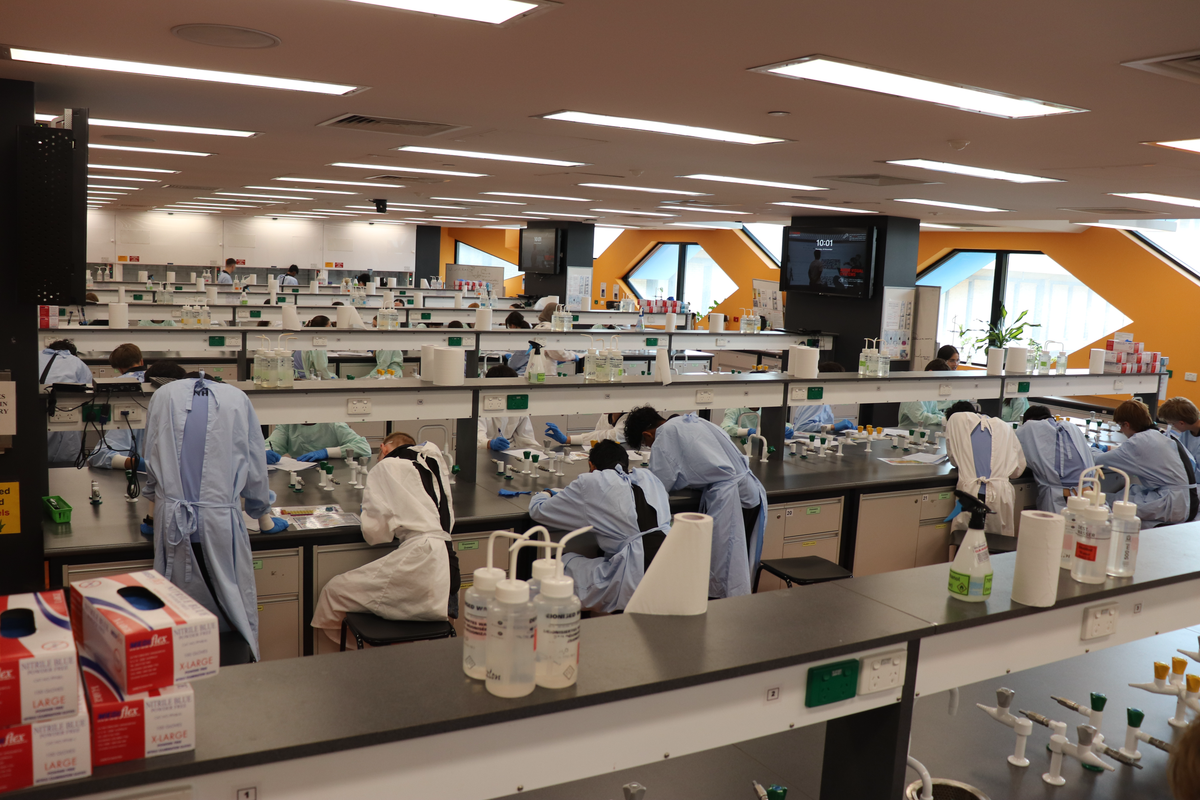
After this, we took part in a forensics lab session in the science laboratories. We learnt about the materials and techniques used in forensic investigations, including DNA testing and methods for identifying unknown substances using chemicals. It was an eye-opening experience that showed us how science can be applied in criminal investigations.
The final activity of the program was a team-building tower challenge. Using limited resources, we were tasked with building the tallest tower possible that could stand independently for a set amount of time. It was a fun and collaborative way to strengthen teamwork and communication skills, and everyone enjoyed the challenge immensely.
In conclusion, the Immersion Program was a huge success, and we are sure the entire year level enjoyed the experiences. We are incredibly grateful for the opportunity to participate in such an engaging and educational program. It was a memorable experience that allowed us to develop new skills, expand our knowledge, and work collaboratively with others, and we are looking forward to similar opportunities in the future.
Competitions
Plenty Campus Downball Competition
Tom Webb, Year 11, Plenty Campus
Last term, around 20 boys and I began what has become a legacy in our time at Ivanhoe, a term-long downball competition. It involved made up rules, chaos, location changes due to noise complaints and lots of fun along the way. Capping it all off, on the last day of term, we held a grand final entertainment lunchtime set with music, food, costumes, photography and much more crazy antics. I was up 9 to 5 in a first to 10 games against Jack Edis, and he ended up on top with an 11 to 9 victory, with the win by 2 rule.
Let’s just say it was limbs at the DB courts. Most importantly, it brought our friend groups together and formed a tight knit alliance of friends. Being at the small cohort brings value to our friendships, which Plenty Campus provides for us. We are still playing games together at lunchtime today, and I don’t see any changes to our plans in the future. The opportunity the school brings for us, like providing us with a game ball, supporting this sort of bonding as much as they support education itself and understanding that balance between friends and education is what it’s all about at Ivanhoe. Our downball competition is able to bring to light the care and support that is behind us, no matter what we do.