
Teaching & Learning
Sue Jackson
Vice Principal - Learning & Teaching
Teaching & Learning
Sue Jackson
Vice Principal - Learning & Teaching
At St Joseph’s, we base all of our learning and teaching on current research. This evidence-based approach is at the heart of our policies, our teachers' planning, and our daily classroom practices.
One of the most vital base skills in Mathematics is the automatic recall of facts. This includes:
Why do we prioritise this?
When students can effortlessly recall these facts, they build the confidence needed to tackle complex problem-solving situations. Think of maths facts like the sight words of numeracy, when a student can instantly recall that 7 + 8 = 15 or 6 x 4 = 24, they free up their working memory to solve more complex, multi-step problems. Without this fluency, students often get bogged down in the basic arithmetic and lose track of the bigger mathematical picture.
To ensure every child succeeds, we use a developmental continuum of skills known as our Fluency Bricks. These bricks were designed using expert research from Melbourne Archdiocese Catholic Schools (MACS), Mathematical educators and researchers, and our own leadership team.
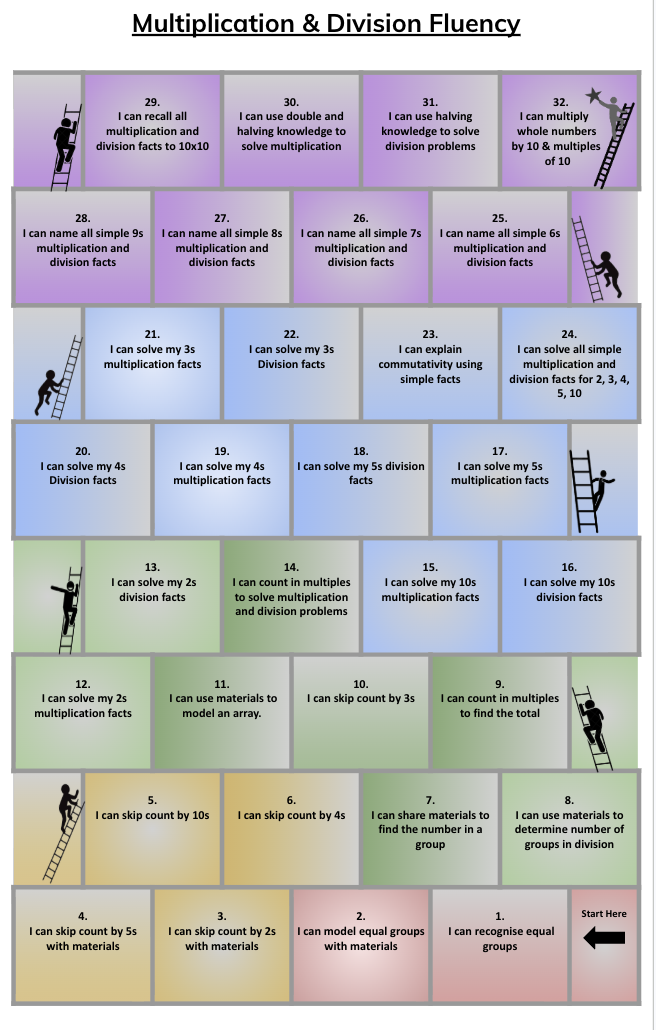
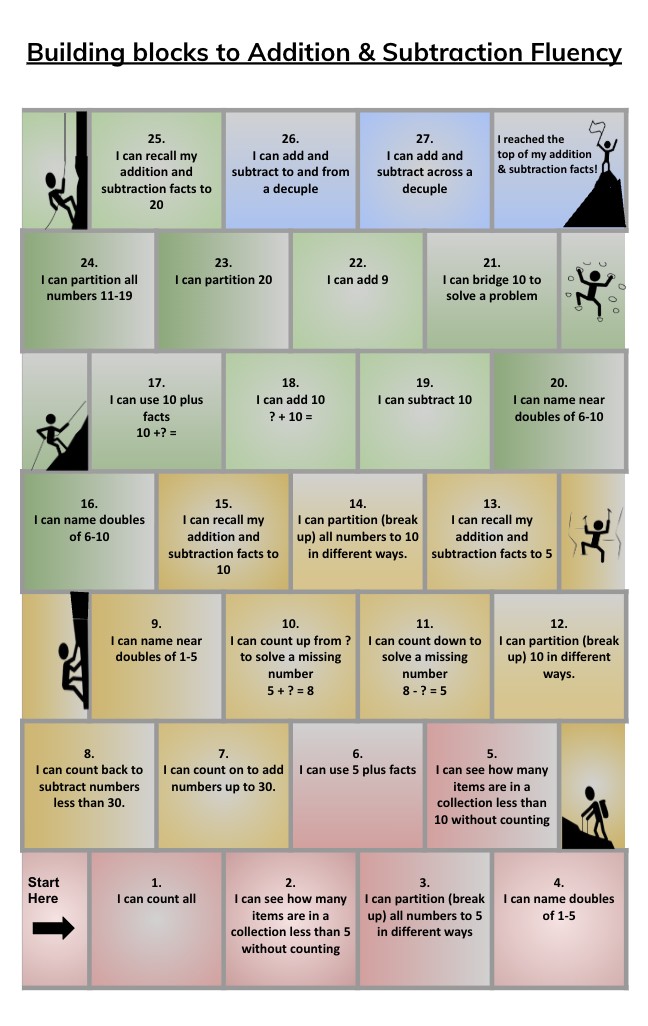
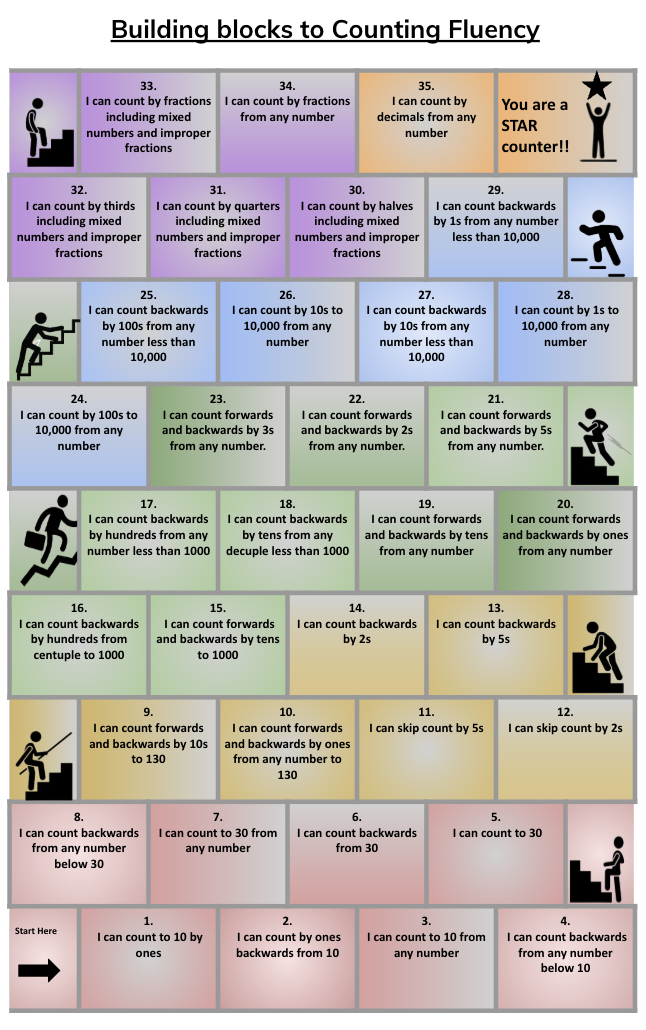
How it works in the classroom:
For these skills to move into long-term memory, "little and often" is the golden rule. You can help your child climb the "bricks" by trying these research-backed strategies:
Talk to your classroom teacher if you would like more ways to build your child's number fluency.