Wellbeing News
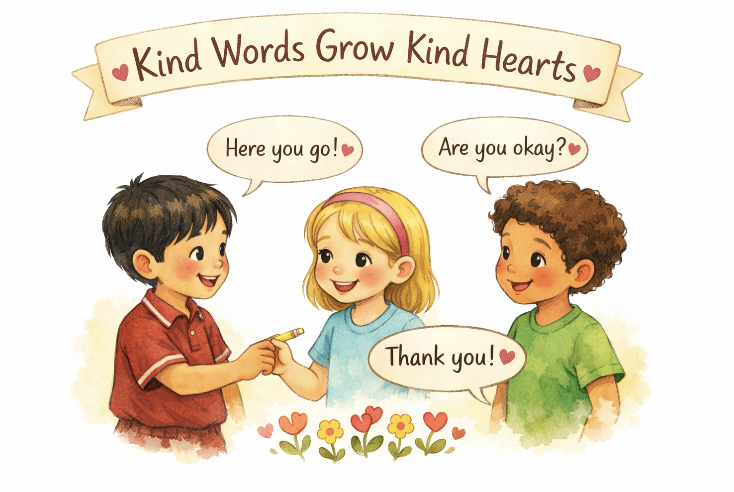
Growing a Culture of Kindness: The Power of Kind Words
Kindness isn’t just a 'nice-to-have' in primary school, it’s a protective factor for children’s mental health, social development and sense of belonging. Research from the Australian Childhood Foundation and Beyond Blue shows that children who regularly experience and practise kindness develop stronger friendships, improved emotional regulation and greater resilience. Using kind words is one of the simplest and most effective ways to build this culture.
Why Kind Words Matter
Experts in child development emphasise that language shapes behaviour. According to child psychologist Dr. Michael Carr‑Gregg, positive language helps children feel safe, valued and connected, all essential ingredients for learning and wellbeing. When children hear and use kind words, their brains release oxytocin, a hormone linked to trust and bonding. This reinforces prosocial behaviour and reduces conflict in the classroom and playground.
What We’re Focusing on at Galilee
We are encouraging students to:
- Use friendly greetings and polite language
- Practise “think before you speak” strategies
- Notice and name kindness in others
- Repair relationships with kind words when mistakes happen
These small habits help children build empathy and strengthen their social confidence.
Children Make Mistakes: Learning From Unkind Words
We recognise that children will sometimes make mistakes and use words that hurt others. This is a normal part of growing up. What matters is how we help them learn from these moments.
As adults, when we respond calmly and guide children to repair the moment, we strengthen empathy, emotional growth and their ability to make better choices next time. This helps children understand that mistakes are opportunities for learning.
Teaching students to pause and reflect on what happened, name their feelings and understand the impact of their words, repair the relationship using kind, respectful language, and practise alternative phrases they can use next time aligns with the restorative practices we use, helping children build responsibility and social awareness
How Families Can Support Kindness at Home
Parents and carers play a powerful role in modelling and reinforcing kind communication. Evidence from the Australian Institute of Family Studies shows that children mirror the tone and language they hear most often. Families can support this by:
- Using calm, respectful language during challenging moments
- Praising children when they use kind words
- Encouraging siblings to express needs without hurtful language
- Encouraging children to apologise sincerely when needed
- Helping children find kind replacement phrases
- Reading books or watching shows that highlight empathy and kindness
Together, We Build a Kinder Community
Kindness grows when it is seen, heard and celebrated. By working together we can nurture a community where every child feels safe, supported and empowered to use their words for good.