Class 5/6 S
Kii Class 5/6 Families,
Main Lesson – Physics
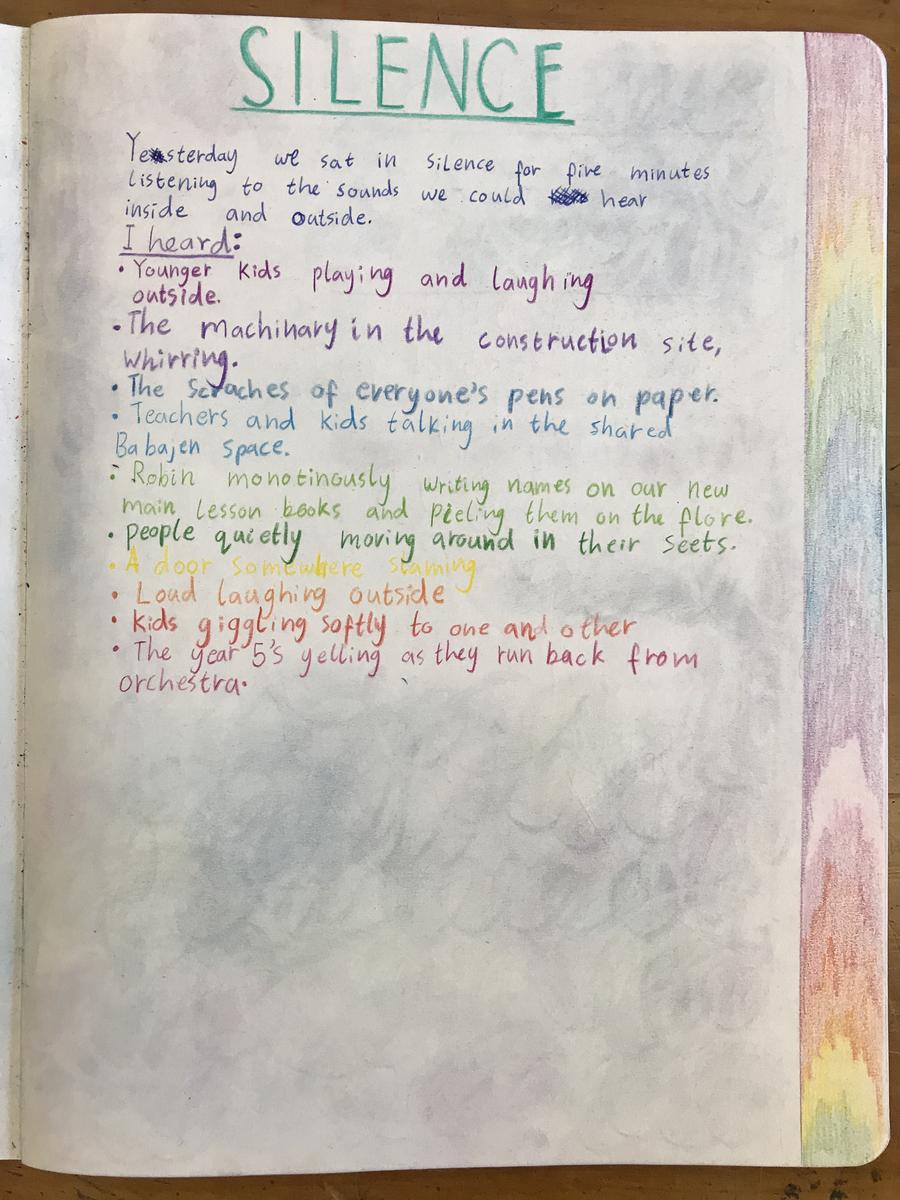
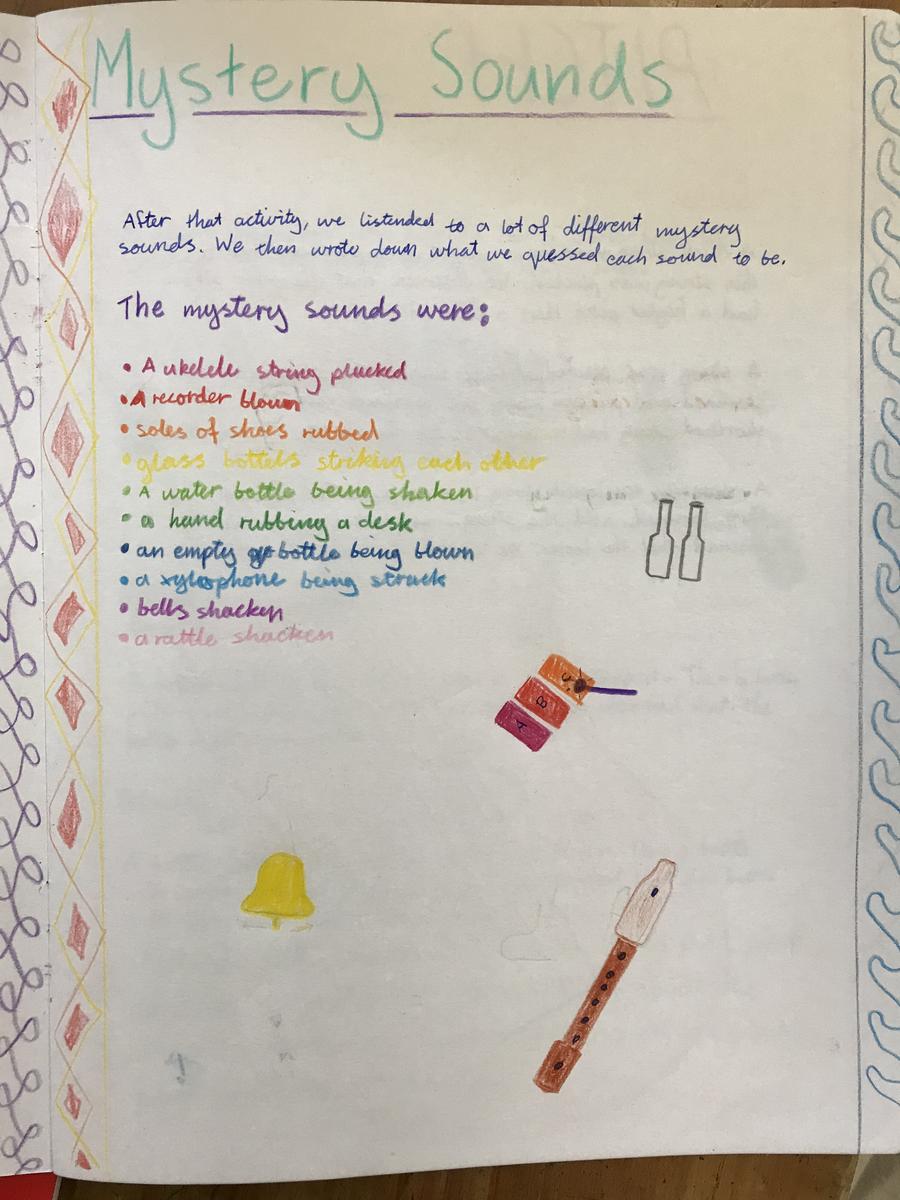
In recent weeks, we have begun a new Physics Main Lesson. We started with the study of acoustics, first by sitting in silence for several minutes and carefully noting the sounds around us. The class then listened intently to a collection of “mystery sounds” and were asked to predict which objects were creating each sound and how the sound was being produced.
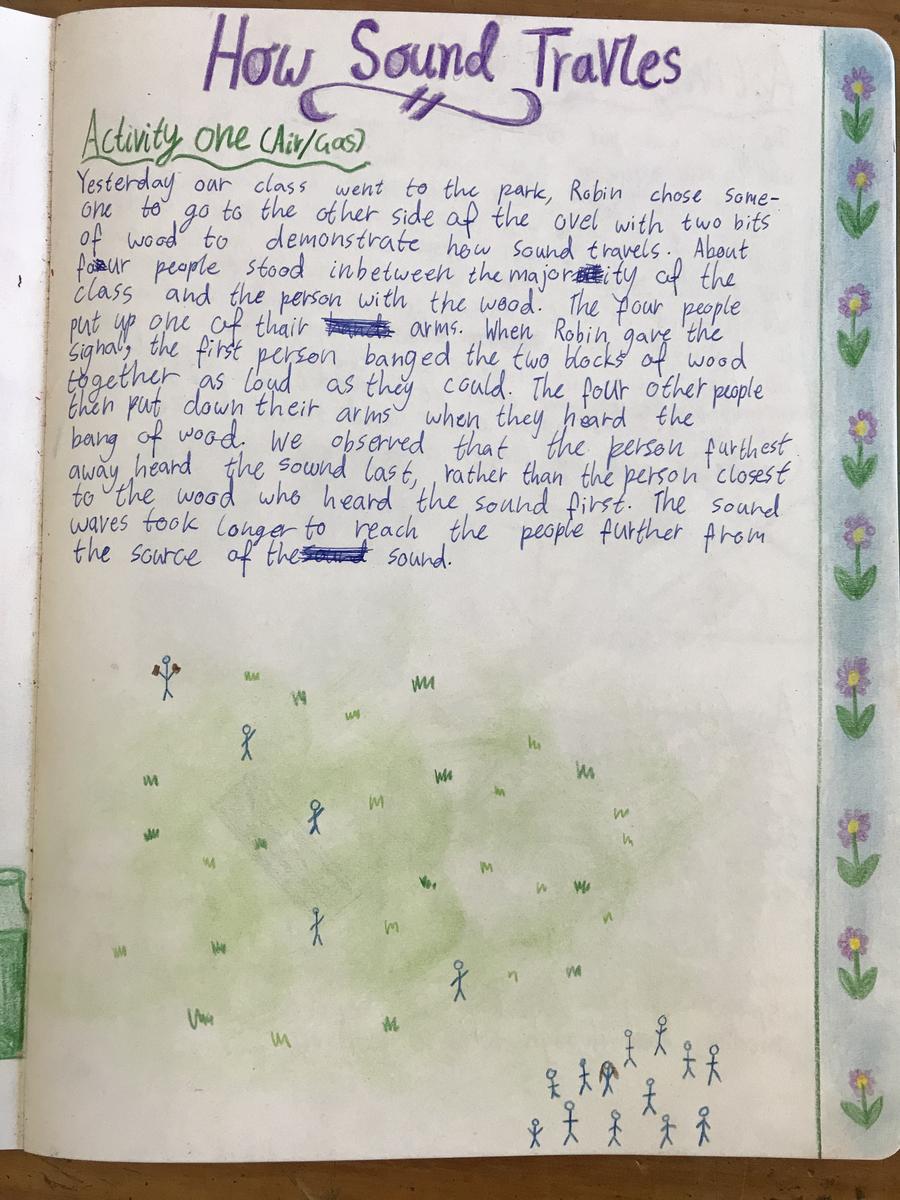
Once the objects were revealed and the students could observe them creating each sound, we identified four main ways sounds can be produced: striking, plucking, rubbing and blowing. This led to a discussion about what happens to objects when these actions take place. We discovered that when an object vibrates, the air around it vibrates too, creating sound waves that travel through a medium until they reach our ears, allowing us to hear the sound.
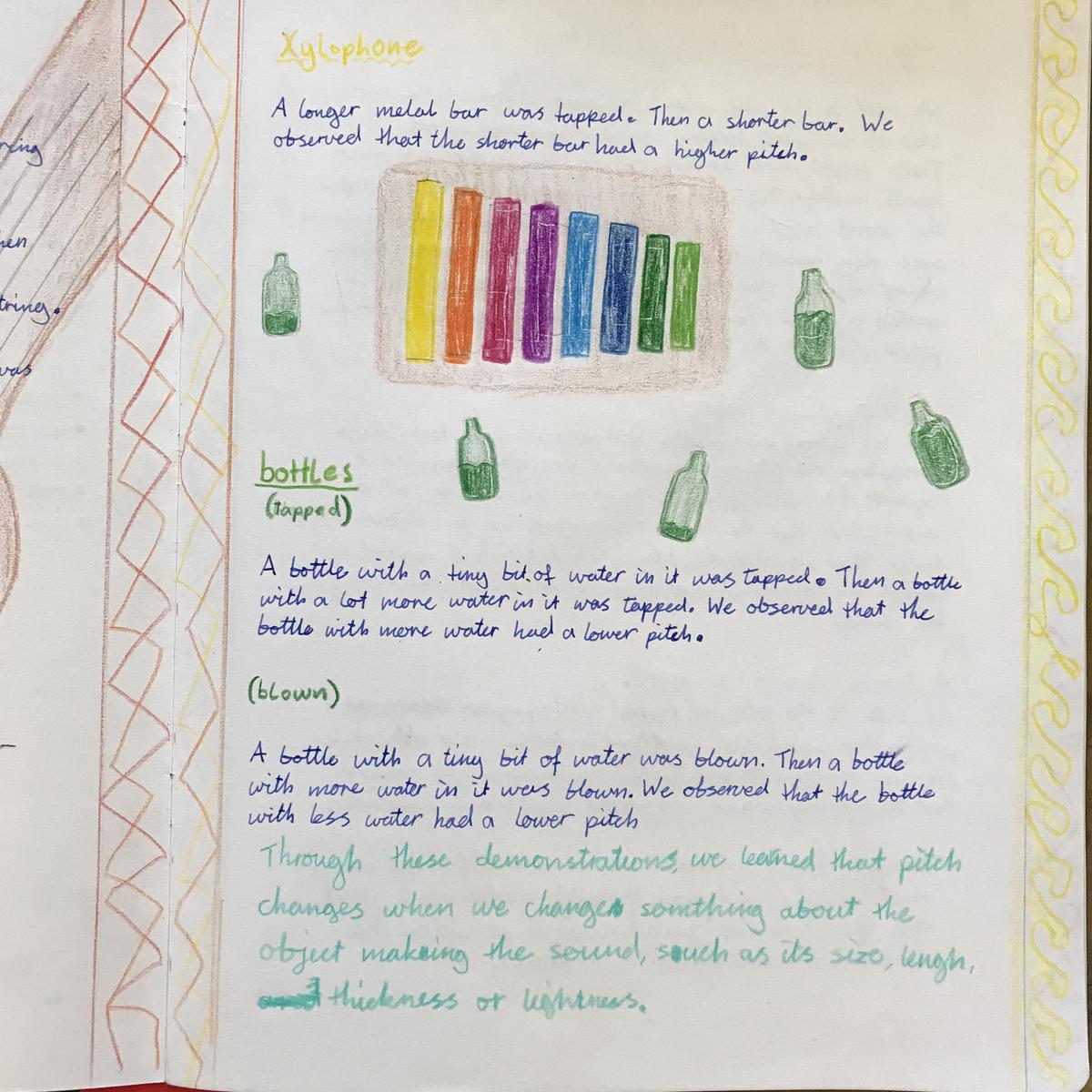
We then investigated pitch. Through exploring different instruments, we observed the variables that result in higher and lower pitches. We discovered that changes to mass, length or tension can alter the pitch of a sound. We next explored amplitude and investigated what causes sounds to become louder or softer.
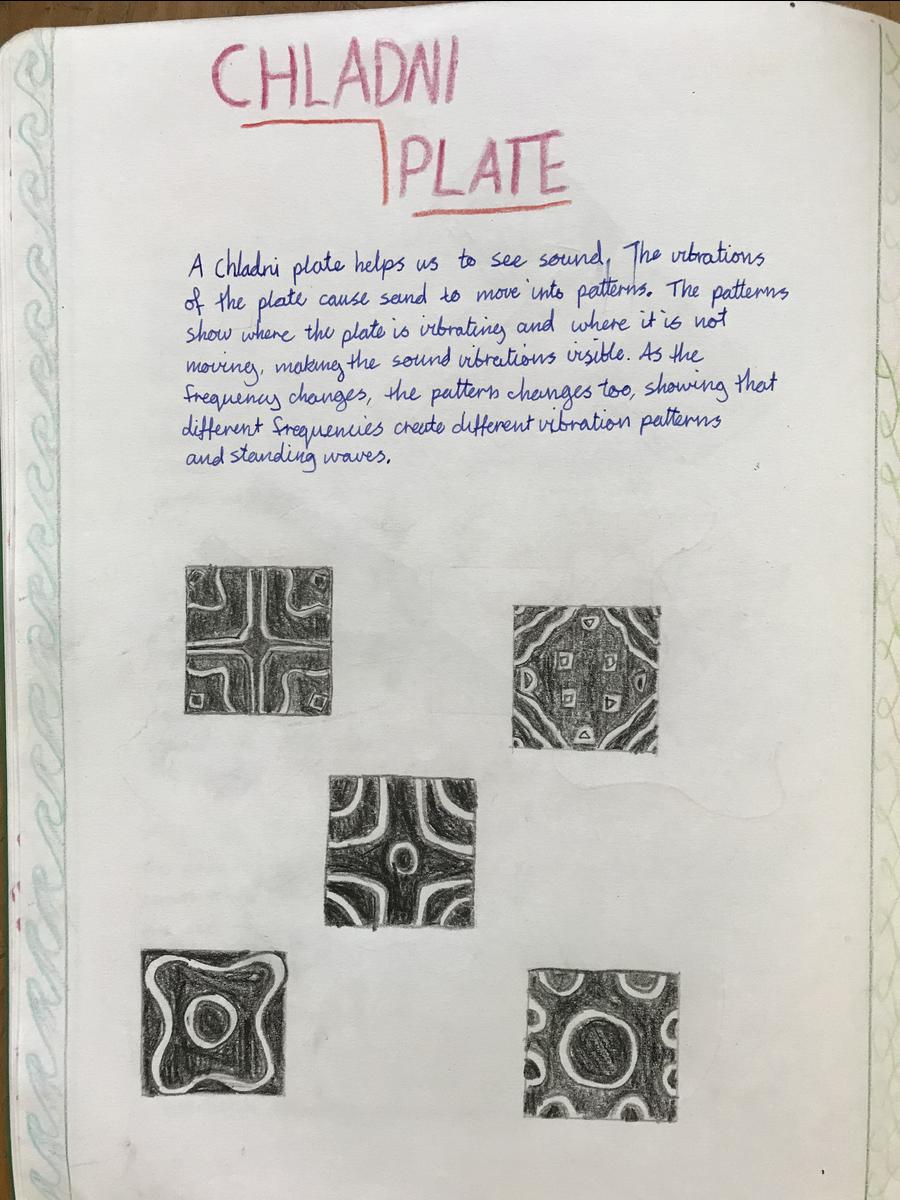
Following this, we explored how sound travels through different media. We discovered that sound travels fastest through solids, then liquids, and most slowly through gases. To conclude our study of acoustics, we explored how sound can be made visible by observing the extraordinary patterns created on the fascinating Chladni plate when different pitches are played.
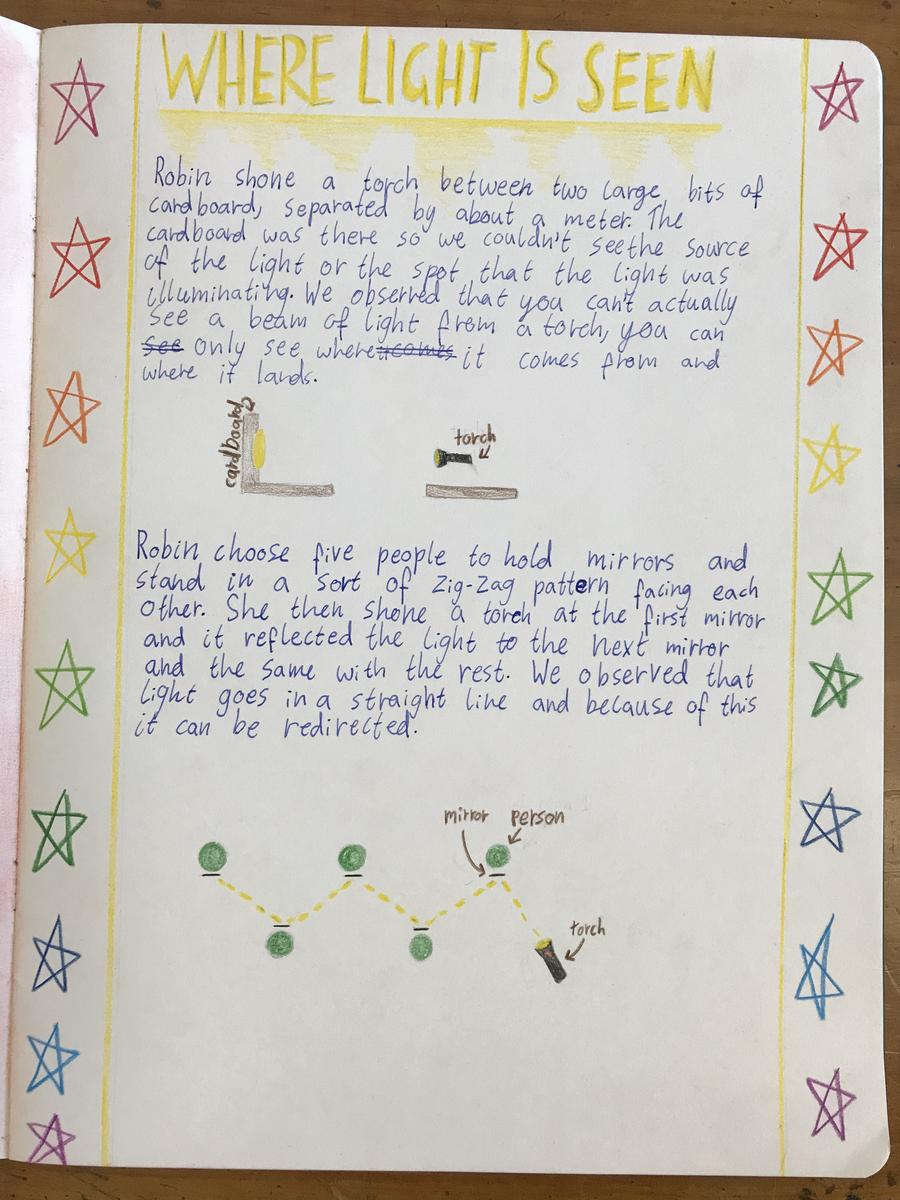
We are now exploring the wonders of light, beginning with how we see light. We discovered that light can be seen directly from a light source or when it reflects off an object and enters our eyes. We then investigated how light travels in straight lines and experimented with how mirrors can be angled to direct reflected light to a specific point.
Alongside our Physics studies, we have continued to enjoy hearing stories about the ancient Roman Republic.
Literacy
In Writing, we have been developing our ability to communicate scientific observations in a clear, concise and impartial way. Through our Physics Main Lesson, students have been practising how to describe demonstrations by carefully recording what they observed, the sequence of events, and the patterns or changes they noticed. We have focused on using precise scientific vocabulary and writing in a way that allows the reader to clearly understand what took place.
The students have also completed an all-day narrative writing assessment task, creating a short story based on one of three writing prompt images. They followed the Writer’s Workshop process of generating an idea, planning, drafting, revising and editing. I was impressed by the class’s ability to maintain their focus, creativity and engagement throughout the entire day.
Through our Black Cockatoo novel study, students have continued to refine their summary writing skills by identifying key events and ideas while selecting the most relevant information to include. We have also been developing the ‘Word Master’ literature circle role, where students explore interesting or powerful words from the text, considering their meaning, how they are used by the author, and the effect they have on the reader.
Mathematics
In Mathematics, we have been developing our understanding of length and measurement. Students have been applying their knowledge of place value and decimals to convert between units of measurement, including millimetres, centimetres, metres and kilometres. We have explored the relationships between these units and practised choosing appropriate units depending on the context. Students have also been strengthening their skills in estimating, measuring accurately, comparing measurements and solving practical problems involving length.
Ngoongodjin,
Robin