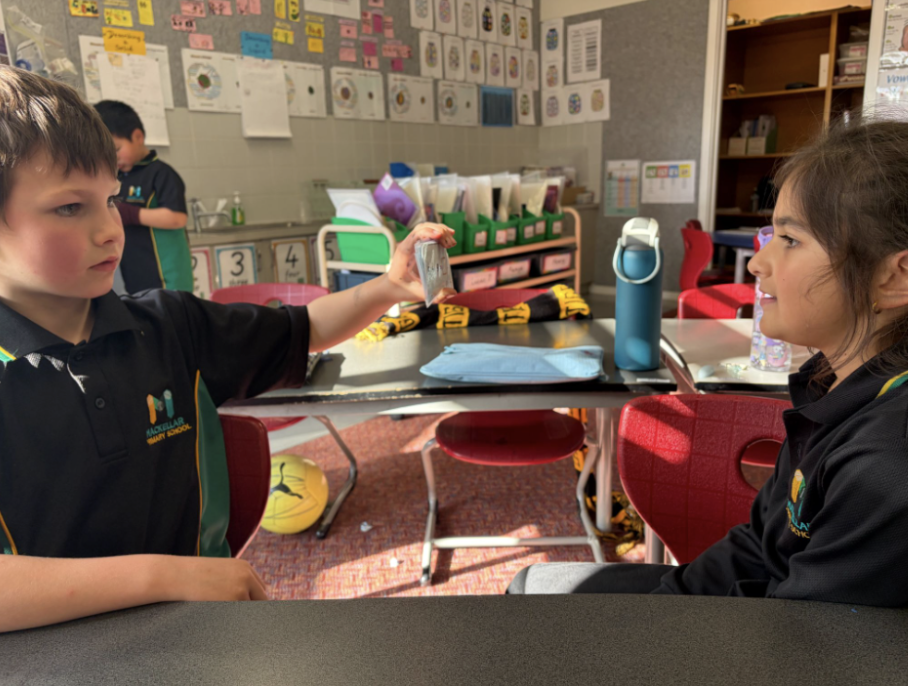
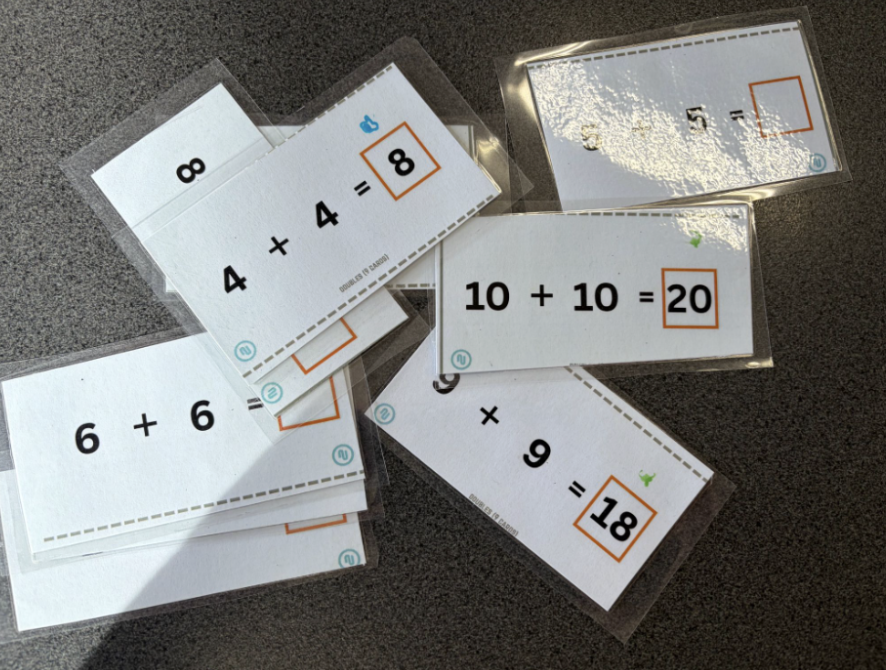
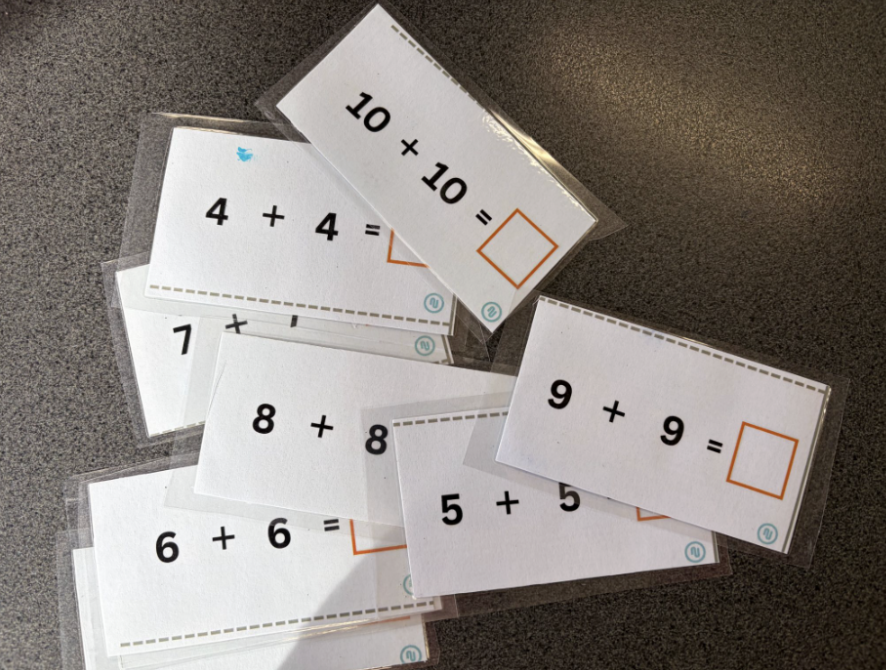
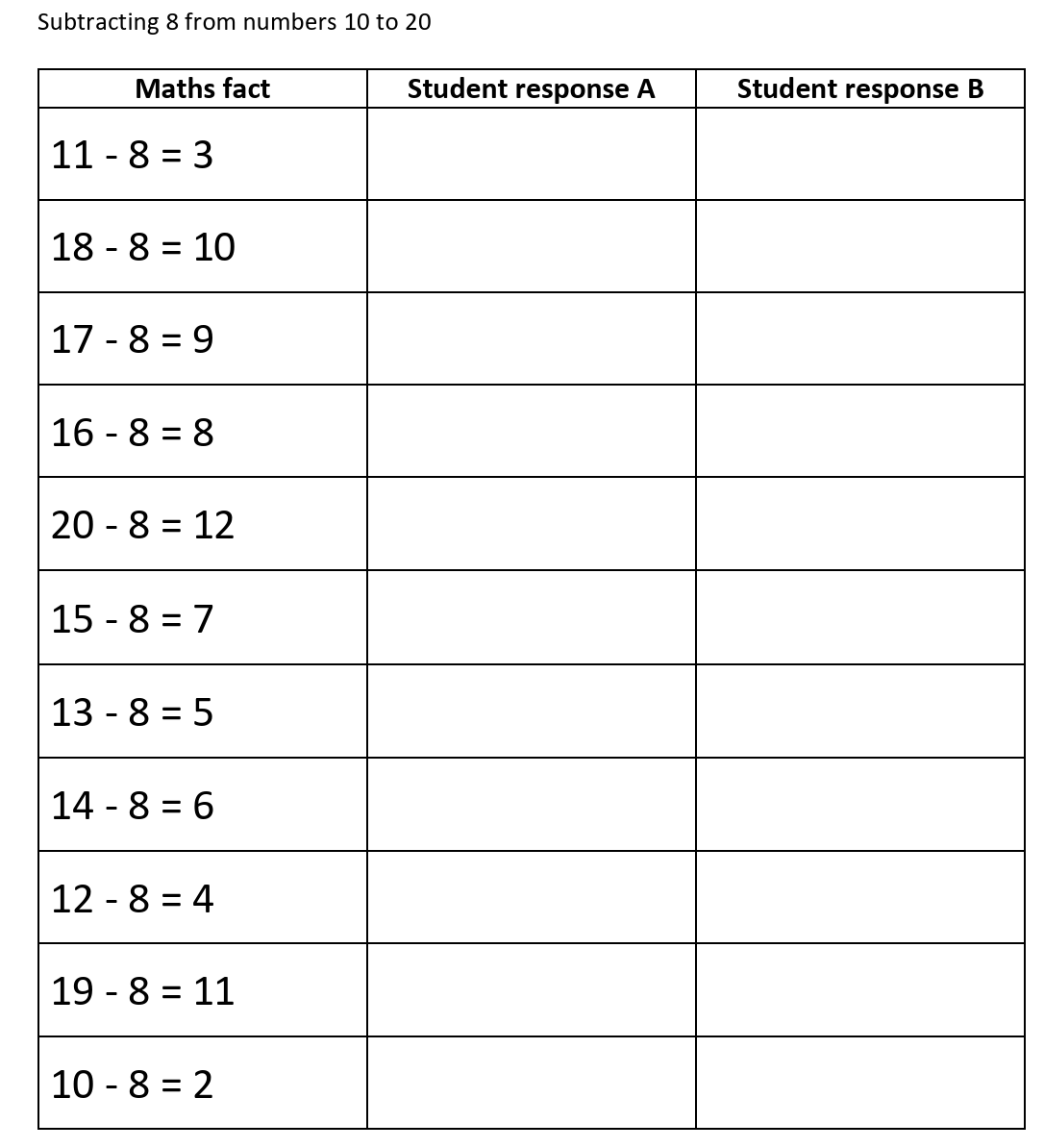
This year we will be incorporating number fact fluency into our daily mathematics routines across the school. Number fact fluency provides students with the strong foundations they need to be successful in all areas of mathematics. When students can quickly and accurately recall basic number facts, such as addition, subtraction, multiplication and division facts, they are able to focus more of their thinking on solving problems, applying strategies and understanding new concepts.
Developing fluency reduces the cognitive load placed on working memory, helping students work more efficiently, accurately and confidently. Just as fluent readers can focus on the meaning of a text rather than decoding every word, fluent mathematicians can focus on mathematical reasoning rather than calculating basic facts. Through short, regular and engaging practice each day, we aim to build students’ confidence, strengthen their number sense and support their long-term success in mathematics.
Thank you to our parent helpers Connie, Lizz, Liza, Casey and Ioanna for all of their help and support in creating these resources in preparation for implementation across the school. If you are interested in supporting the school to create resources please get in touch.
What’s happening across the school?
Prep
Explore the concept of ‘how many’ without counting (subitising)
Connect ordinal names with numeral representations
Compare the number of objects in two groups
Compare collections to identify which has more or less or the same name
Explore the number sequence to 20 forwards and backwards
Name numbers including 0 to at least 20
Grade 1
Developing the concept of 10 as a countable unit
Locate numbers to at least 100 on the number line using relative size
Develop and use strategies for one-digit addition and subtraction based on part part-whole relationships for each of the numbers to 10
Add and subtract numbers within 20 using a variety of strategies such as counting on, counting back, partitioning and part-part whole knowledge of numbers
Grade 2
Add and subtract one- and two-digit numbers - using the associative property of addition to assist with mental calculations by partitioning, rearranging and regrouping numbers using number knowledge
Use a variety of calculation strategies: doubles- near double- part-part-whole knowledge to 10- bridging tens- partitioning
Representing addition and subtraction problems using a bar model and writing a number sentence, explaining how each number in the sentence is connected to the situation
Grade 3
Explore and apply mental strategies for addition including number bonds, doubling, splitting numbers and regrouping numbers
Explore and apply mental strategies for subtraction including inverse operations, using doubles and friendly numbers, and finding the difference between numbers
Follow and create algorithms involving a sequence of steps written methods to solve addition and subtraction problems
Estimate the quantity of objects in collections and make estimates when solving problems to determine the reasonableness of calculations
Grade 4
Explore and apply mental strategies for subtraction including split strategy, compensation strategy and using friendly numbers
Explore written methods for addition and subtraction such as split strategy with extended notation, open number lines and equal additions to friendly numbers.
Choose efficient written methods to solve addition and subtraction problems such as using the vertical algorithm with regrouping
Grade 5
Compare and order common fractions with the same and related denominators
Explore equivalent fractions, improper fractions and mixed numerals
Compare and connect fractions and decimals, representing them on a number line
Converting between mixed numerals and improper fractions
Solve problems involving addition and subtraction of fractions with the same or related denominators
Grade 6
Compare and order fractions and decimals (to thousandths)
Apply knowledge of equivalence to compare, order and represent common fractions, including halves, thirds and quarters, on the same number line and justify their order
Solve problems that require finding a familiar fraction, decimal or percentage of a quantity, including percentage discounts
Apply knowledge of place value to add and subtract decimals, using estimation and rounding to check the reasonableness of answers