STEM News

Dear fellow scientists,
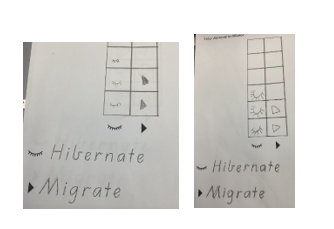
Prep students explored how to draw a pictograph to show what animals do in winter. Students counted and sorted animals that sleep during winter and animals that stay active and move during winter. They then used this information to create their own pictographs to represent the data. Through this activity, students practiced counting, organising information, and interpreting simple graphs. Listen to this storybook about Animals in Winter. A Kids Non-Fiction Read Aloud Story about Migration and Hibernation: https://www.youtube.com/watch?v=xTxh9qm9JSA
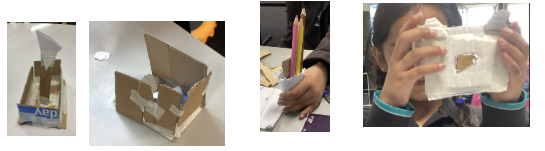
Students in Grade 1 explored how the structure of paper and cardboard can be physically changed to make something purposeful. Students investigated different ways to bend, twist, fold, and cut paper and cardboard safely while developing their creative design skills. They used materials such as scrap paper, cardboard, sticky tape, and Blu Tack to create useful objects and structures. Throughout the lesson, students practiced using scissors safely and learned how different joining techniques can help make their creations stronger and more stable.
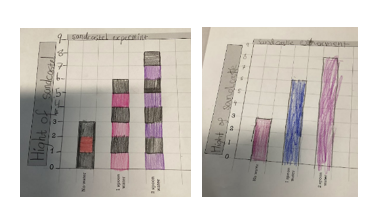
Grade 2 students learned how to draw a graph to represent the results of a sandcastle investigation. Students participated in pair-share discussions to answer questions and share ideas about the investigation findings. They then used the collected data to draw columns to the correct height on their graphs. Through this activity, students developed their skills in interpreting data, creating graphs, and communicating mathematical thinking.
Students in Grade 3 demonstrated their understanding of scientific inquiry by planning and conducting an investigation about Oobleck. Students explored how Oobleck behaves like both a solid and a liquid while practicing important investigation skills. They identified how their experiment was a fair test, reflected on whether their predictions were correct, and suggested ways to improve the fairness of their investigations. Through this hands-on activity, students developed their observation, questioning, and critical thinking skills. Watch how to make Oobleck at home! https://www.youtube.com/watch?v=U-ByKM1ofSo
Grade 4 students used their Science Inquiry skills to investigate the effect of climate zones on the amount of rainfall. Students explored how different climates can influence weather patterns and rainfall levels around the world. They practiced using scientific language when answering questions and followed teacher guidelines to demonstrate their Science Inquiry skills. Through discussions, observations, and data analysis, students developed their understanding of climate and scientific investigation processes. Watch this video on Climate for Kids - Types of Climate: https://www.youtube.com/watch?v=iA23Sm-HI4I
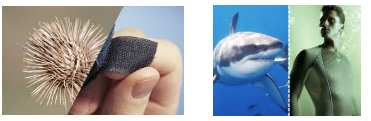
Grade 5 Students in Grade 5 learned about biomimicry and explored how humans use ideas from nature to design useful technology. Students defined biomimicry and identified examples of how it is used in everyday life, such as inventions inspired by plants and animals. They also outlined the steps of fossilisation and explored how fossils are formed over time. Through discussions and investigations, students developed their scientific understanding of natural processes and innovative design. Watch this video on how dinosaur fossils form. | Natural History Museum https://www.youtube.com/watch?v=87E8bQrX4Wg&t=3s
This week in Science, the Grade 6 students learned to identify different types of extreme weather and explored their impacts and characteristics. Students took notes in their STEM books and used full sentences and evidence to answer questions. Through discussions and investigations, students developed their understanding of how weather events such as floods, bushfires, cyclones, droughts, and storms affect people and the environment. Watch this video on extreme weather on https://www.clickview.net/primary/videos/34597058/extreme-weather?referrer=https%3A%2F%2Fwww.google.com%2F
STEM team