Following the strong interest in our recent webinar, MMCRC SchoolTV are pleased to provide a limited-time replay of this session.
With the kind permission of our presenters, the webinar will be available to view until midnight Monday 3 August.
Use link provided to access this webinar
Understanding Anxiety and Depression to Foster Resilience (Part II)
In this session, Dr Emma Woodward and Dr Joe Stammeijer shared practical insights and strategies on how to stay calm and connected, build daily routines and support the needs of neurodivergent learners.
The discussion provides clear, evidence-informed guidance to help parents, carers and educators better understand what a young person may be experiencing and how to respond with confidence, empathy and care.
Watch at Your Own Pace
To make viewing more accessible and flexible, the replay includes video chapters, allowing you to navigate directly to specific sections of the webinar. You can also pause, rewind and revisit important parts of the discussion at any time.
Closed captions or subtitles are also available. To enable this, simply click the “CC” button located in the video controls at the bottom of the player.
Key points from Webinar
Understanding Anxiety & Depression to Foster Resilience Part II
Anxiety and depression can be challenging for young people and families to navigate, especially during moments of distress, emotional overwhelm or withdrawal. Whilst it is only natural to want to remove discomfort, young people also need opportunities to develop coping skills, emotional regulation and resilience in safe and supportive ways.
In Part 2 of this webinar series, Dr Emma Woodward and Dr Joe Stammeijer explore how parents can stay calm and connected during difficult moments, build daily routines that support emotional stability and adapt strategies for neurodivergent children. The discussion highlights the importance of curiosity, co-regulation, predictability, sensory awareness and “good enough” parenting.
Staying Calm and Connected
How can parents validate their child’s feelings during moments of anxiety or distress?
- Distress is a normal part of life and development.
- A parent’s role is not to remove every difficult feeling, but to help their child feel safe while they learn to cope.
- Avoid dismissing feelings with comments such as “You’re fine” or “It’s not that bad”.
- Start with curiosity and presence: “What’s happening?” or “That feels really hard.”
- Children do not need parents to fix every feeling immediately.
- Staying calm helps children feel that their emotions are manageable.
- Co-regulation means lending your calm nervous system to your child while theirs is still developing.
- Parents can validate emotions without becoming overwhelmed by them.
What practical techniques can help both parent and child reset?
- Practise calming strategies before distress happens.
- You cannot teach a dysregulated brain a new regulation strategy in the middle of a crisis.
- Develop a small toolkit of strategies that your child already knows and trusts.
- Depending on the situation, regulation may happen together or separately.
- Helpful options may include quiet time, movement, breathing, a familiar book, a calm space or support from another trusted adult.
- Talk about feelings and coping tools when everyone is calm.
- A simple plan can help children know what to do when emotions become overwhelming.
What’s the difference between supporting a child and “rescuing” them?
- Supporting a child means giving them the space, tools and encouragement to work through a challenge.
- Rescuing means stepping in and removing the problem without allowing the child to be part of the solution.
- Rescue is appropriate when there is a genuine safety risk.
- Children need safe, age-appropriate opportunities to experience challenges, mistakes and problem-solving.
- Over-rescuing can prevent children from discovering their own capacity to cope.
- “Good enough” parenting does not mean always getting it right. It means staying connected, repairing when things go wrong and continuing to learn together.
How can parents avoid unintentionally reinforcing anxiety?
- Try not to become anxious about your child’s anxiety.
- When children avoid every feared situation, they may not learn that they can cope.
- Support should help children face manageable challenges with appropriate safety and reassurance.
- The goal is not to force children into distress, but to help them gradually build confidence.
- If a situation is unsafe, it is appropriate to step in and change the environment.
- Children learn resilience when they experience anxiety reducing it over time and realise, “I can manage this.”
Building Daily Routines for Emotional Stability
How can simple daily routines help reduce anxiety and improve mood?
- Routines provide predictability, safety and a sense of control.
- Children often feel calmer when they know what is coming next.
- Routines do not need to be rigid or perfect.
- It may be more helpful to think in terms of rhythms: “First we do this, then we do this.”
- Predictable patterns help children access the thinking part of their brain.
- Family rhythms can support emotional regulation during both ordinary days and stressful moments.
What practical steps improve sleep for better mental health?
- Sleep is essential for emotional regulation, learning and development.
- A predictable bedtime rhythm helps the body and brain prepare for sleep.
- Keep the evening low-arousal, calm and consistent.
- Helpful steps may include dinner, bath or shower, pyjamas, quiet play, reading, brushing teeth and settling into bed.
- Avoid making bedtime feel rushed, chaotic or emotionally heightened.
- Children may not fully understand future consequences such as “You’ll be tired tomorrow,” so parents need to create the right conditions for sleep.
- Consistency around bedtime and waking time can help children develop healthy sleep rhythms.
What calming activities can support children with anxiety or depression?
- Calming activities need to suit the individual child.
- What feels calming for one child may feel stressful for another.
- Familiarity, predictability and safety are often more important than the activity itself.
- Helpful options may include hugs, quiet spaces, familiar books, weighted blankets, movement, sensory tools, music, drawing or gentle play.
- Some children respond well to breathing or grounding exercises, while others may find these frustrating or overwhelming.
- Match the strategy to the child, not the child to the strategy.
What if a child resists coping strategies?
- If a child refuses a strategy, it may not be the right strategy, the right time or the right approach.
- Avoid labelling the child as “defiant” or “resistant”.
- Be curious about why the strategy is not working.
- Offer choices and involve the child in finding what helps.
- Practise coping tools when the child is calm, not when they are already overwhelmed.
- Be patient. Finding effective strategies takes time and experimentation.
- The aim is to support the child, not force a particular technique.
Meeting the Needs of Neurodivergent Learners
What calming strategies work best for autistic children?
- The best strategy is the one that works for that individual child.
- There is no one-size-fits-all approach.
- Some autistic children may benefit from deep pressure, weighted blankets, headphones, reduced noise, fidget tools, movement or a low-sensory space.
- Some children may need to stim, rock, move or use sensory input to regulate.
- Parents should be flexible, curious and accepting of strategies that may look different from what they expected.
- Boundaries can still exist, but they should support safety rather than suppress regulation.
How can coping tools be adapted for children with ADHD?
- Children with ADHD may need movement, stimulation or multiple forms of input to focus and regulate.
- Strategies may include movement breaks, fidget tools, headphones, audio support, reduced distractions or flexible seating.
- ADHD is often less about a lack of attention and more about difficulty directing attention.
- Some strategies that appear distracting to adults may actually help a child concentrate.
- Parents and teachers may need to be flexible and open to approaches that feel counterintuitive.
- Collaboration with the child is key to understanding what helps.
Why are sensory needs so important?
- Everyone has sensory preferences, but neurodivergent children may experience sensory input more intensely.
- Sensory needs can include sound, smell, touch, movement, balance, texture, light and body awareness.
- Some children may be distressed by things adults barely notice, such as a buzzing light, scratchy clothing or the texture of carpet.
- Sensory behaviours often serve a purpose, such as helping the child feel grounded, alert, calm or safe.
- Parents can help by observing the home environment through their child’s sensory experience.
- Small adjustments can sometimes make a significant difference.
How can visual aids help neurodivergent children manage anxiety?
- Visual supports reduce the pressure on memory and mental processing.
- Schedules, routines, emotion charts and visual prompts help children know what to expect.
- These tools can reduce anxiety by making expectations clear.
- Visual supports can also build independence because children do not always need to rely on an adult for direction.
- Externalising information helps reduce overwhelm and rumination.
- A simple visual timetable or checklist can give a child a greater sense of control.
How can parents balance support with independence?
- Building independence is a gradual process.
- Parents need to consider what their child needs in the moment and how much support is appropriate.
- Some situations require direct support, especially when safety is involved.
- Other situations provide opportunities for children to practise problem-solving and resilience.
- Independence develops through trial, error, support and repair.
- Children’s needs will change over time and parents may need to step in more during periods of stress.
- The goal is not perfect independence, but a flexible balance of safety, support and growing confidence.
Uniform Guidelines
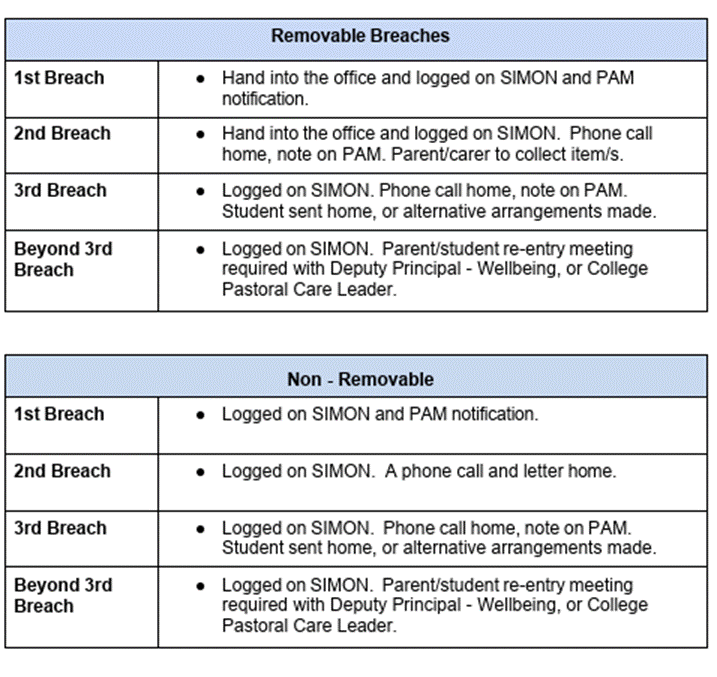
All students are expected to wear the regulation College Uniform whilst at the College and traveling to and from the College. All items of the uniform, including the shoes, must always be kept clean and tidy. Students may wear any MMCRC uniform item commensurate with their timetable for that day. The uniform is a twelve-month uniform, meaning that students may choose to wear a traditional summer or winter item as they prefer.
In the morning homeroom, the teacher in charge will identify uniform breaches that will be recorded on the SIMON student management system. Breaches fall under two categories. See below for more information.
Parents are asked to ensure black flared slacks and personal hoodies are not worn to the College on any given day.
Link to MMCRC Uniform Guidelines: https://www.mackillopleongatha.catholic.edu.au/wp-content/uploads/2025/07/PARENT-MMCRC-Student-Uniform-Guidelines-Updated-May-2025.pdf