Leaders of Learning
From the Instructional Specialist and K-2 and 3-6 Leaders of Learning
Leaders of Learning
From the Instructional Specialist and K-2 and 3-6 Leaders of Learning
Homework Policy at OLSS Miranda
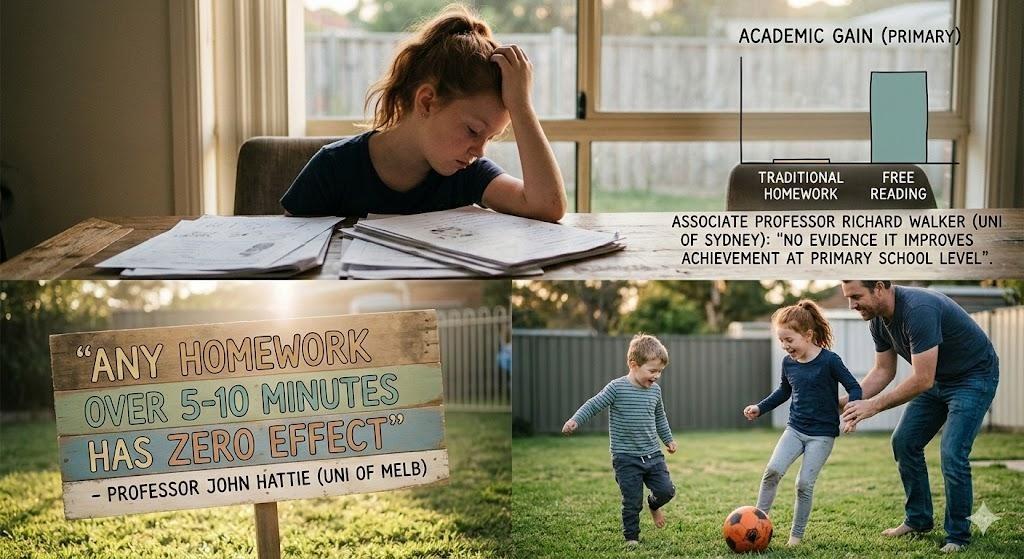
Research from leading Australian institutions, such as the University of Sydney and the University of Melbourne, provides evidence that traditional homework offers very little benefit to primary-aged children. According to research by Associate Professor Richard Walker (University of Sydney), there is no evidence that homework improves academic achievement or test results at the primary school level. His findings suggest that while high schoolers see benefits, younger children often learn "mechanically" without gaining real understanding from repetitive home tasks. The "Five-Minute" Threshold: Professor John Hattie (University of Melbourne) has noted that for primary students, any homework that takes more than five to ten minutes is likely to have zero effect. He argues that traditional homework is one of the least effective ways to improve learning in young children.
Due to the above research, we believe that excessive amounts of written assignments are unnecessary during primary schooling. The below table shows our Homework Expectations for each grade.
Year | Homework |
Kindergarten (Beginning in Term 2) | Daily Reading Log |
Years 1 - 5 | Daily Reading Log, Maths Mentals Textbook |
Year 6 | Daily Reading Log, Maths Mentals Textbook, One assignment per term |
Please note that teachers will not be providing additional homework activities. In addition to the above table, we encourage the following activities:
Interactive games such as Scrabble or card games played with parents provide valuable educational experiences.
This homework schedule aims to provide a research-based and balanced approach to homework, fostering a positive learning environment while respecting students' developmental needs.
Thank you for your continued support!
Mrs Matilda Lennon
Instructional Specialist
Mrs Alison Poole
Kindergarten - Year 2 Leader of Learning
Mrs Lucy Chigioni
Years 3-6 Leader of Learning