
Chaplain's Reflection
Where to?
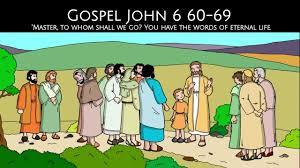
“Lord, who shall we go to? You have the words of eternal life.” (Jn 6:68)
John’s gospel (John 6:60-69) speaks to us at the times we are frustrated over the clay feet of the Church or might even question the tenets of religion.
With Peter we reflect, “Where would I go?” and, like Peter, we return to our core with Peter’s declaration, “You have the words of eternal life.” Disappointments, hesitations, concerns, or doubts might swirl around us at times, but Jesus’ words of eternal life, the Good News, is our constant. St Paul reminds us to, “Never let yourself drift away from the hope promised by the Good News ….” (Col 1:23).
“Religion,” says Jesuit Guy Consolmagno, the Vatican astronomer, “is supposed to serve as a guide, a pointer, a help to God. When it becomes the source or goal of our entire universe, it usurps the role of God.” (Consolmagno, God’s Mechanics, p77).
Seeking guidance in our religion and our Church, Catholics centre our hope on the simple Good News of God’s Kingdom, the Kingdom which was pretty much all Jesus ever taught about. Not a harsh and exclusive Kingdom but an infinitely accepting, forgiving, and welcoming one.
Providentially, “what God cares about is not religion, but a more human and friendly world. What he seeks is a more abundant, healthy, and happy life for all, beginning with the last. Jesus said that in many different ways: if our religion goes against life, either it is a false religion, or we have misunderstood it. What makes God happy is to see us happy, now and forever. That is the Good News revealed to us in Jesus Christ: God gives himself to us just as he is, as Love.” (Pagola, Jesus: An Historical Approximation p447). Proclaiming that Good News, our Christian religion and Catholic Church are channels to the Kingdom.
All Shall Be Well
Occasionally, the issues of the modern world seem to close in on us and we wonder how our lives and the lives of those around us, those we care for, are going to play out. For over 600 years Christians have been learning the answer from the contemplative life of Julian of Norwich, who lived in the English City of Norwich as it experienced the unthinkable devastation of the plague known as “The Black Death”, which killed half the population of Europe. And towards the end of her life, the Peasants Revolt which affected large parts of England in 1381.
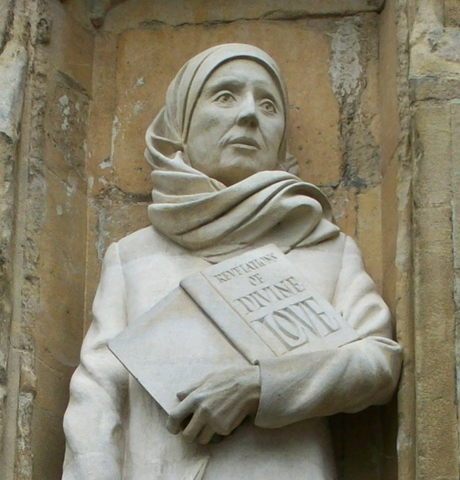
Throughout her works, Julian depicts God with both masculine and feminine qualities. She encourages us to asks us to "be brave; to dig deep within and experience God in our guts, not just in our churches; to engage our spiritual imaginations in the pursuit of a salvation that sets us free today—not just after death…”.
"In the midst of our own discomfort and hesitancies, Julian of Norwich offers an ease, a gentle reassurance, that God is much larger than our finite brains can comprehend. This God we know and love—this God we have experienced—is big enough to hold it all. The question is, can we put aside our fears and prejudices and get on board with that?”
Julian offers us the reassurance of God down the ages: "All shall be well, and all shall be well, and all manner of thing shall be well"
Excerpts from Shannon K. Evans Expanding Our Images of God Aug 19th 2024
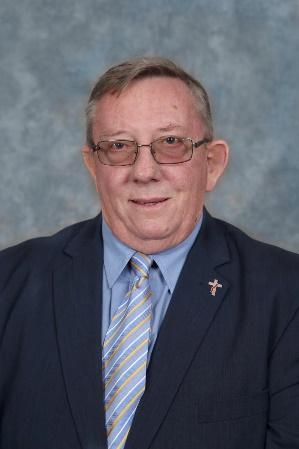
Deacon Mark Kelly
College Chaplain