
Leadership Report
Principal's Piece
When he had finished speaking, he knelt and prayed with them. They all cried as they embraced and kissed him goodbye. They were sad most of all because he had said that they would never see him again. Then they escorted him down to the ship. - Acts 20:36-38 (NLT)
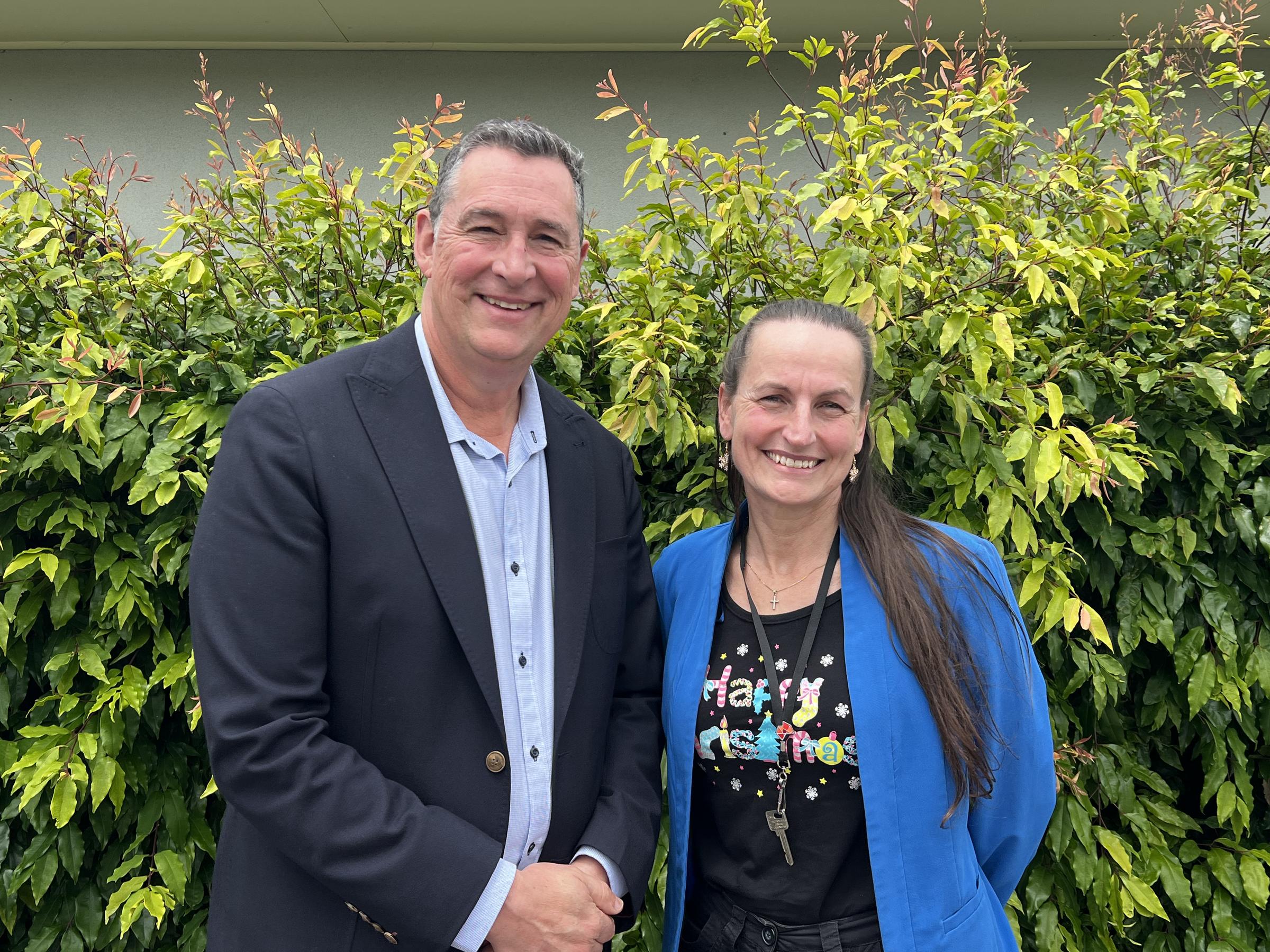
Goodbyes can be hard. Paul’s farewell to the leaders of the church in Ephesus was particularly hard because it was a final farewell. As a School Principal, I have been part of many farewells as students graduated, staff retired, and families relocated.
What I have learnt is that promises to keep in touch are no substitute for ongoing physical presence. Fond memories and social media can compensate to a degree, but memories are not the same as physical presence. Little wonder so many tears are often shed when it comes time to say goodbye and farewell.
And yet, we can’t avoid farewells. And despite the emotions, farewells can be good for us. All seasons come to an end. Farewelling a job, a school, a church or a home, whatever it may be, sees the start of a new season full of new opportunities arising.
In my case, this year, I find myself joining those students, staff and families whose season at Bayside Christian College comes to an end. While I am in many ways sad that my time as Principal at Bayside is ending, I consider myself blessed to have had the opportunity to serve at the College and to soon join the ranks of Bayside Principals who came before me.
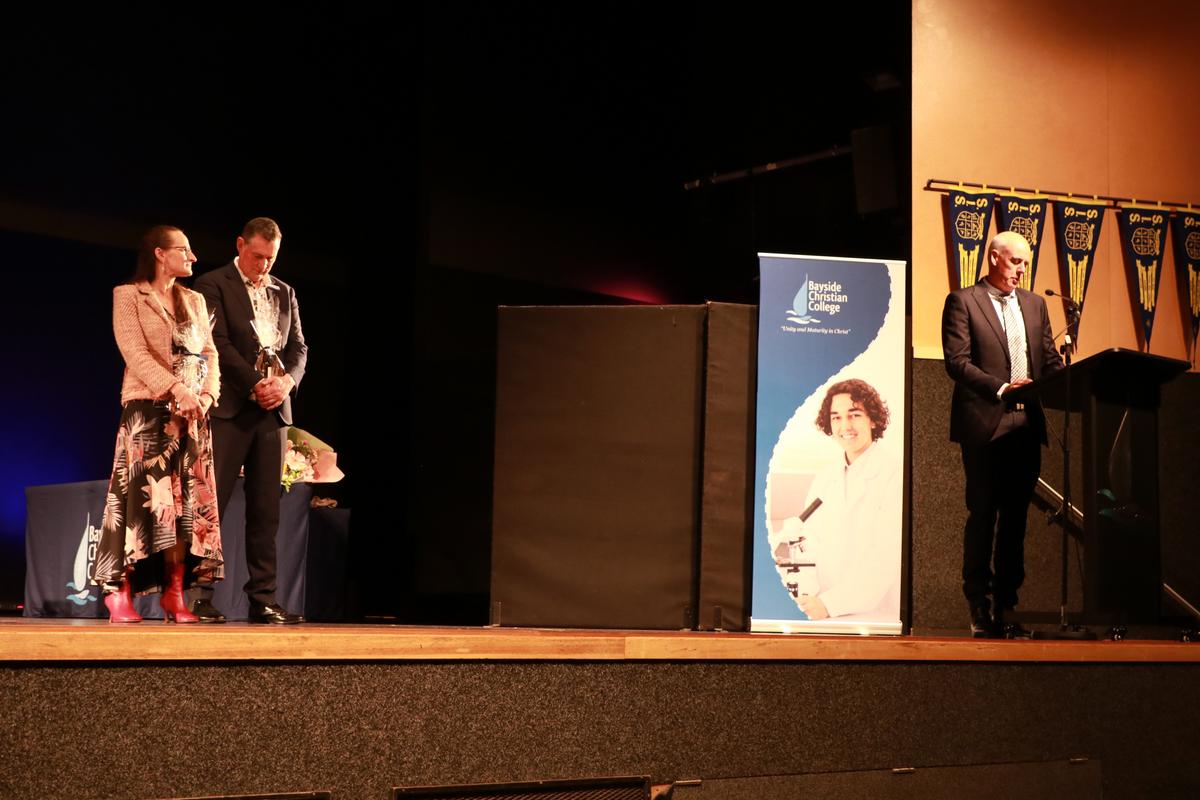





I would like to express my sincere thanks to those who welcomed me, showed me kindness, extended me forgiveness, offered encouragement, collegiality and friendship over the years.
While I will truly miss the Bayside community, I am excited about the next season and wish you all well as you embark on yours.
Thank you and bless you.
Andrew Manning, Principal
From the Deputy's Desk (For the Last Time)
As this year draws to a close, I find myself reflecting on the privilege it has been to serve at Bayside for the past eleven years. My season here is coming to an end, and while farewells are never easy, my overwhelming feeling is one of deep gratitude.
During my time at Bayside, I have witnessed an extraordinary amount of change: new leadership, new staff, new programs, new facilities, new ways of teaching and learning, and new opportunities for students to grow academically, spiritually and personally. Through all of these seasons, God has been faithful. He has guided, sustained and shaped this community in ways that continue to inspire me.
One of my greatest joys has been watching our students flourish, to see them become all that God has called them to be. I have loved seeing little ones in Early Learning take their first steps into school life, journeying through the Primary years, growing in confidence and character, and then standing tall as Year 12 graduates ready to step into their next chapter. To have shared in these milestones has been a profound blessing.
I have also been privileged to work alongside dedicated, gifted staff who love God, love their students and serve this community with wholehearted commitment. Bayside is a place of genuine care, compassion and Christian discipleship. It is a community where families support one another, where students are known and valued, and where faith is woven through our teaching, conversations and decisions. I am blessed to have been part of such a caring and wonderful Christian education community.
As Ecclesiastes reminds us, there is a time and a season for everything under the sun. In every season at Bayside—times of growth, challenge, celebration and change—God has been constant. My prayer is that I have served faithfully and well during my time here, and that the College will continue to be a community where Christ is honoured in all things.
Thank you for the privilege of being part of your children’s lives, your families and this beautiful school. I leave with a full heart, holding you all in my prayers.
May the Lord bless you and keep you. May His face shine upon you and be gracious to you.
Many blessings,
Toni Steinbergs, Deputy Principal







A Safer Digital Future: What Parents Need to Know About Australia’s New Social Media Age Laws
New legislation now restricts children under the age of 16 from creating or maintaining social media accounts — including popular platforms like Instagram, TikTok, Snapchat, YouTube, Facebook, and X (formerly Twitter). (Other platforms such as Roblox and Discord have not been identified as “in” or “out” at time of publication.)
It’s a huge – and positive – step. And for many families, it will mean big changes to how kids connect, communicate, and spend their time online.
Why the Change?
The decision comes after years of accumulating evidence giving more and more indications that social media — while fun, engaging, and sometimes even educational — can also be deeply dangerous for children and teens.
These platforms are deliberately designed to capture attention, keep users scrolling, and reward comparison. They elevate extremism and outrage. They expose children to violent and explicit content, cyberbullying, unrealistic ideals, and a steady stream of social pressure that can erode wellbeing.
As Australia’s eSafety Commissioner Julie Inman Grant explained when she joined me on The Happy Families podcast, “Parents shouldn’t have to fight billion-dollar companies to keep their kids safe online — the responsibility belongs with the platforms.”

How it Works
That’s what this law does. It shifts the onus off parents and onto tech companies, requiring them to take “reasonable steps” to stop under-16s from having accounts or being algorithmically targeted. This means parents won’t face penalties. The responsibility — and the fines, which can reach nearly $50 million — will fall to social media companies that fail to comply.
To be compliant (and keep under 16s off the various platforms), big tech companies who are on the “banned” list will use a combination of age assurance tools — think AI-based content analysis, behavioural signals, and layered safety checks. Regular identification can be used, but if people are uncomfortable with that, the platforms will supply other methodologies for age verification.
Messaging apps like WhatsApp or Facebook Messenger won’t be affected, but it’s likely that some online games and creative platforms (such as Roblox) could fall under review as rules evolve.
The law won’t solve every problem. Kids will still find ways to connect, and not every unsafe corner of the internet will disappear. But this new baseline gives parents a powerful ally — and a clear message that childhood deserves protection.
What Parents Can Do
These next few months are a chance to help your children make a healthy digital transition. Here are seven simple, practical steps to start now:
- Start the conversation. Talk with your child about what’s changing, why it matters, and how it’s designed to protect them — not punish them. Keep it calm, curious, and compassionate.
- Highlight the risks. Explain how social media can fuel anxiety, comparison, or exposure to harmful content, and why limits help everyone breathe easier.
- Review and guide. Look at what your child is currently using. Help them save special memories, photos, or messages before their accounts change — and brainstorm other ways to connect with friends offline.
- Stay informed. Visit esafety.gov.au for up-to-date resources, checklists, and webinars explaining how the legislation will work.
- Watch for changes. Expect some frustration or FOMO (fear of missing out) when these changes arrive. Listen first. Reassure them that they’re not alone — no one under 16 will be able to use these platforms.
- Know the exceptions. Messaging apps and most online games are currently exempt, so your child might migrate to those spaces. Keep guiding conversations about what’s safe and what’s not.
- Understand the scope. The rules apply only to platforms with “social media” features — spaces designed for sharing and following others. New apps will continue to appear, so stay curious and connected.
Perhaps most importantly, create community. Build relationships.
Find ways to encourage your children and their friends to be able to connect, communicate, and enjoy a play-based, rather than a screen-based, childhood. This takes effort on our part. But the effort is worth it.
Get to know your child’s friend’s parents. Arrange for phone number swaps. Organise playdates and hangouts. Create the space your child needs to spend real-world time in real-world activities with friends and family.
Beyond the Legislation
Even with these changes, some parenting principles never change. Keep devices out of bedrooms. Set clear limits on screen time, especially before bed. Encourage real-world play, social time, and rest. And when you can, model healthy tech use yourself — that’s what your kids will notice most.
As Commissioner Inman Grant put it, “We expect car makers to install airbags and seatbelts — but we still teach our kids to drive safely.” The same applies online. The government can help make the internet safer, but it’s still up to families to model good habits, build trust, and keep the conversation going.
If you’d like to understand the new Social Media Minimum Age legislation in detail, visit esafety.gov.au for guides, FAQs, and upcoming webinars for parents.
Let’s help our kids grow up in a world where being connected doesn’t mean being consumed.
Justin Coulson, Happy Families
Happy Families Membership
All College families have access to a Happy Families School Membership. Owned and run by Dr Justin Coulson, one of Australia’s leading parenting experts, the membership offers a wealth of parenting education and resources.
We will regularly share resources available through our membership with you, including Insight Articles and Webinars.
You can also access your resources at any time using the below URL (unique to our school) and the password is: happybcc