
Mathematics

Early addition strategies lay the foundation for understanding and recalling of addition and subtraction facts. Knowledge of these strategies ensures that in a situation where memory fails or the numbers are too large, strategies can be drawn on to derive the number fact or work out the answer. The strategies are designed to promote and develop mental computation. During our maths lessons students have the opportunities to work with these strategies so that they can apply them when working with numbers. The following are three foundational strategies that are embedded in our learning, you can also use these terms with your children at home to help consolidate the learning happening at school.
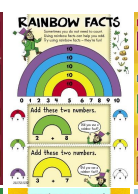
Sometimes called ‘Build to 10 or “Friends of 10” they identify all the pairs of numbers that add to 10. Rainbow facts lay a foundation for understanding ‘friendly numbers’ and more complex algorithms.
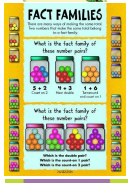
Students need experience with finding pairs of numbers that add to a given total. From experiences with fact families, ideas of equivalence can begin to emerge. Knowing that 4 + 1 will balance with (is equivalent to) 3 + 2 lays important foundations for algebraic thinking in later years.
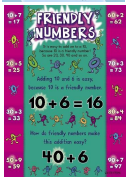
Numbers ending in 0 are called friendly because they are very easy to add a single digit to. It is important for students to notice and explain what happens when a number is added to 10. Working with friendly numbers lays a foundation for understanding the additive features of 2-digit numbers (36 is actually 30 and 6 more).

Sarah, Mathematics Leader