
4. Artificial Intelligence

Is The Latest Google Update Negatively Affecting First National?
👓 3 minute read
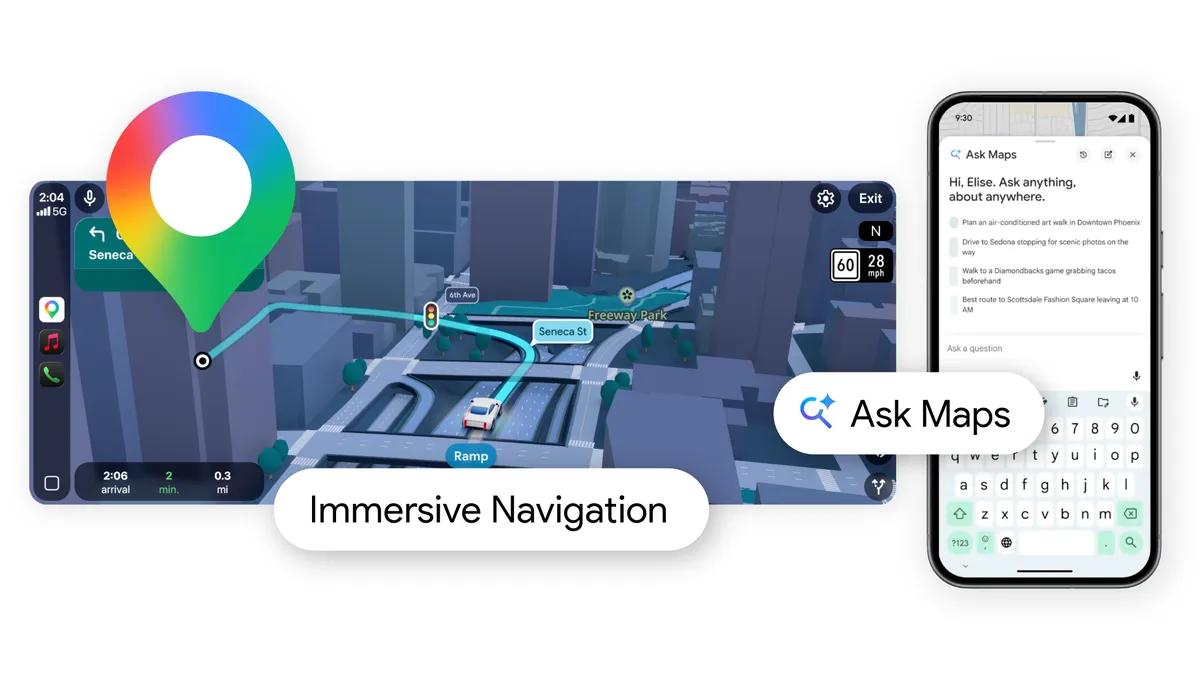
Yet another local search guru company is stretching the truth about a recent Google update called ‘Ask Maps’.
In its email approach, recipients are told that ‘the March 2026 Google Core Update has officially moved the goalposts for Australian real estate’. The email goes on to suggest that Google has shifted from ‘proximity based’ search results to a ‘data authority’ model.
In short, the provider wants you to worry that ‘Google’s AI is now actively recommending competitors over First National because they have higher "signal density" in their digital data’. Other claims made include:
A ‘data authority gap’ is impacting offices
The ‘proximity shield’ that once protected our ‘franchises’ is gone (there’s no such thing)
Without a shift from traditional SEO to Generative Engine Optimisation (GEO), your office runs the risk of being ‘hidden by AI’ (partially true but there’s more to the picture)
What’s the truth?
This email overstates the situation and blends a few real developments with invented terminology.
What is true is this: Google launched ‘Ask Maps’ on 12 March 2026, and it is a new conversational Maps experience powered by Gemini. Google says it is rolling out on Android and iOS in the US and India. Google’s own Maps page also says the feature is only available in the US and India at present. No mention of Australia or New Zealand, yet.
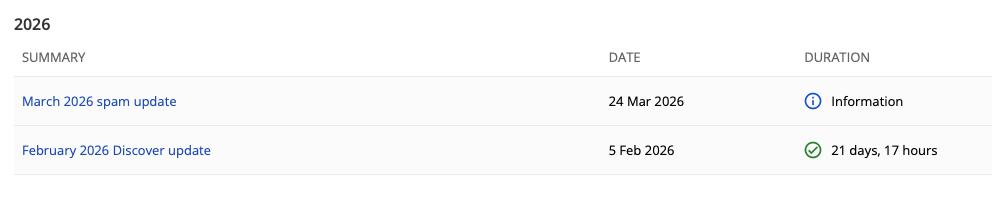
What does not stack up is the claim that a ‘March 2026 Google Core Update’ has ‘officially moved the goal posts’. Google’s Search Status Dashboard currently shows a ‘March 2026 spam update’ dated 24 March 2026, but it does not show a March 2026 core update. The most recent confirmed core update on that dashboard is December 2025.
The ‘proximity is gone’ line is also not supported by Google’s own documentation. Google still says local results are mainly based on ‘relevance, distance, and popularity’ in Business Profile help, and the Google Maps platform documentation uses the closely related wording ‘relevance, distance and prominence’. In other words, distance still matters. It has not been retired and replaced by an official ‘Data Authority’ model.
Likewise, ‘Data Authority Gap’, ‘Proximity Shield’ and the suggestion that Google has formally shifted to a ‘Data Authority model’ appear to be marketing language, not Google terminology. First National could not find any official Google source using those labels for ranking. Google’s public guidance remains grounded in business completeness, verification, reviews, prominence, and structured business information rather than a declared new ranking doctrine.
There is, however, a kernel of truth buried inside the pitch.
Google increasingly pulls local business information from multiple sources, not just your Business Profile. Google says it uses business information to surface relevant local results, and its local listings can include AI summaries compiled from sources such as place summaries and review summaries. That means weak, inconsistent or thin digital signals can hurt visibility and recommendation quality, especially in AI-mediated experiences.

So, the practical answer for First National members is this: no, there is no evidence that our offices are suddenly being outranked simply because Google abolished proximity. But yes, stronger digital signals matter more than ever, particularly where Google is synthesising information from reviews, website content, profile data and other trusted sources.
For ‘Answer Engine Optimisation’ (AEO) or ‘Generative Engine Optimisation’ (GEO) – basically ChatGPT and its competitors – we continue to recommend regular, quality, results and data driven updates on your website:
- strengthen suburb and service pages so they answer natural-language questions clearly
- ensure your website has content-rich pages for key suburbs and services
- tighten naming convention consistency across your Google Business Profile, website, directories and citations
- build Google reviews volume and recency in a compliant way (responding quickly to every review)
- don’t ignore other review platforms but make Google the priority
- use structured data to make office location, services, opening hours and agents easier for Google to interpret
The commercial bottom line is simple: the email is directionally useful, but factually embellished. It is selling urgency by implying Google has made a formal and Australia-wide shift that the public record does not support.
How to Find the Right AI Tool for the Right Task
👓 2 minute read

Source: Elite Agent
Source: Elite Agent
Different AI models are built in different ways. Gemini is Google's AI - and its biggest advantage is that it's plugged directly into Google Search, which means it's pulling from the live web, not last year's data. ChatGPT has warmth - it writes like a human who actually cares. Claude is precise and polished. Perplexity searches the live web. DeepSeek reasons through numbers.
Using the wrong one for the wrong task is why you sometimes get output that feels flat, generic, or just... off.
Here's what thinking “AI first” about the task looks like:
Before you open any AI, ask: What am I actually trying to do right now? Then let AI help you answer the more important question - which tool should I even be using?
This prompt works best in Gemini or Claude. Describe the task you're about to do, and it'll act as your personal AI workflow advisor - telling you which model to use, why, and how to prompt it well.
PROMPT:
I need help choosing the right AI model for a specific task. Here's what I'm trying to do: [describe your task in a sentence or two — e.g. write a warm follow-up email to a vendor who didn't list with me, research median price trends in a suburb, analyse a rental yield spreadsheet, brainstorm ideas for a new marketing campaign]
I'm a real estate agent in Australia. The AI tools I have access to are: [list the ones you actually use — e.g. ChatGPT
Plus, Claude, Perplexity, Gemini, Grok]
Based on my task, please tell me:
1. BEST MODEL FOR THIS TASK: Which tool should I use and why - specifically for this task, not in general?
2. SECOND CHOICE: If I don't have access to that one, what's my next best option?
3. HOW TO SET IT UP: Give me the exact opening instruction or system prompt I should paste in before I start, so the model is framed correctly for this job.
4. WHAT TO WATCH FOR: Any known weaknesses of the recommended model for this type of task — and what to double-check before I use the output?
5. QUICK WORKFLOW: If there's a smarter way to combine two tools for better results on this task, tell me how.
Be specific. I don't need a general overview of AI tools - I need to know exactly what to do right now for this one task.
Try it on the next three tasks you sit down to do this week. Notice if the output quality shifts when you're using the model that's actually built for the job - most people find it does.