
TCE Ancient History Level 3

TCE Ancient History Level 3
This course is not offered in 2028.
| 🎓Course Type | Level 3 - Pre-tertiary |
|---|---|
| TASC Code | ANH315117 |
| TCE Points | 15 |
| ⏱Hours | 150 |
| ✔️Standard | Reading and Writing (Literacy) |
| 📚Prerequisites | HASS courses do not require any previous course knowledge or experience. |
📎Desirable prior experiences | NA |
| 📝Assessment | Internal and external assessment. Criterion based. Examination - Yes Folio/Investigation - No |
What will I learn?

Exploring Ancient Greece - using a popular video game
Exploring Ancient Greece - using a popular video game
The study of Ancient History illustrates the development of some of the distinctive features of contemporary societies including how we organise ourselves socially, how and why we engage in the practice of organised violence and how religion and governance can become intertwined.
Ancient History is also concerned with the possible motivations and actions of individuals and groups, and how they shaped the political, social and cultural landscapes of the ancient world.
The course is divided into four sections:
Introduction - As no prior knowledge is needed, students are provided with an overview of ancient society including:
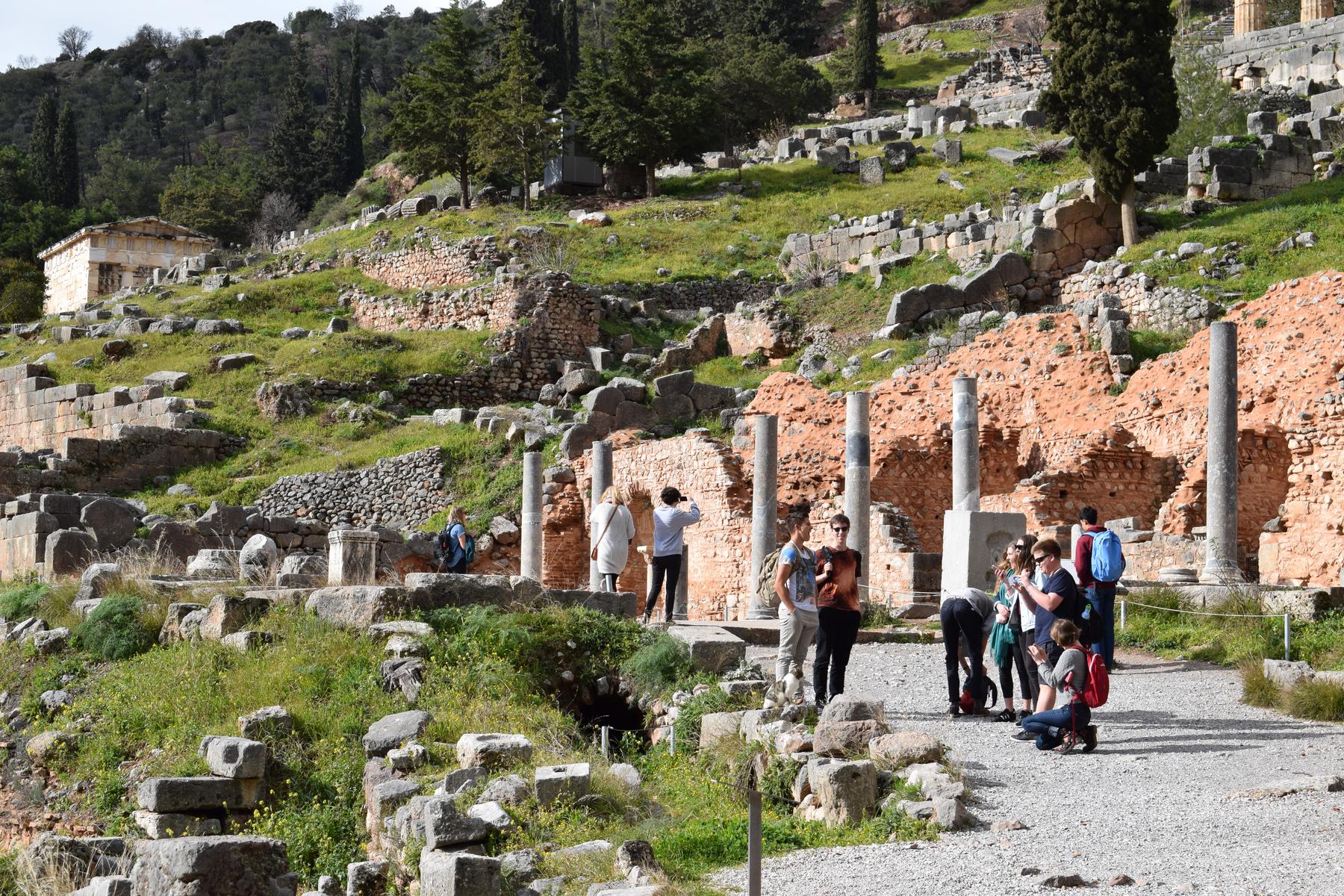
Friends' students visit Delphi in 2017
Friends' students visit Delphi in 2017
- Historical events and developments
- Key individuals and groups
- Values and beliefs
Geographical context
Section A - Investigating the Ancient Past
This unit provides an introduction to the nature of the remaining evidence of the ancient past and issues relevant to the investigation of the ancient world.

Enjoying traditional Greek gyros
Enjoying traditional Greek gyros
- Why were temples and treasuries built?
- Why were dedications made to the gods?
- How could religious ritual be used for personal and political means?
What are the limitations which stem from "digging" up the past?
Section B - Structure of Ancient Society
This unit will see students study four key elements:
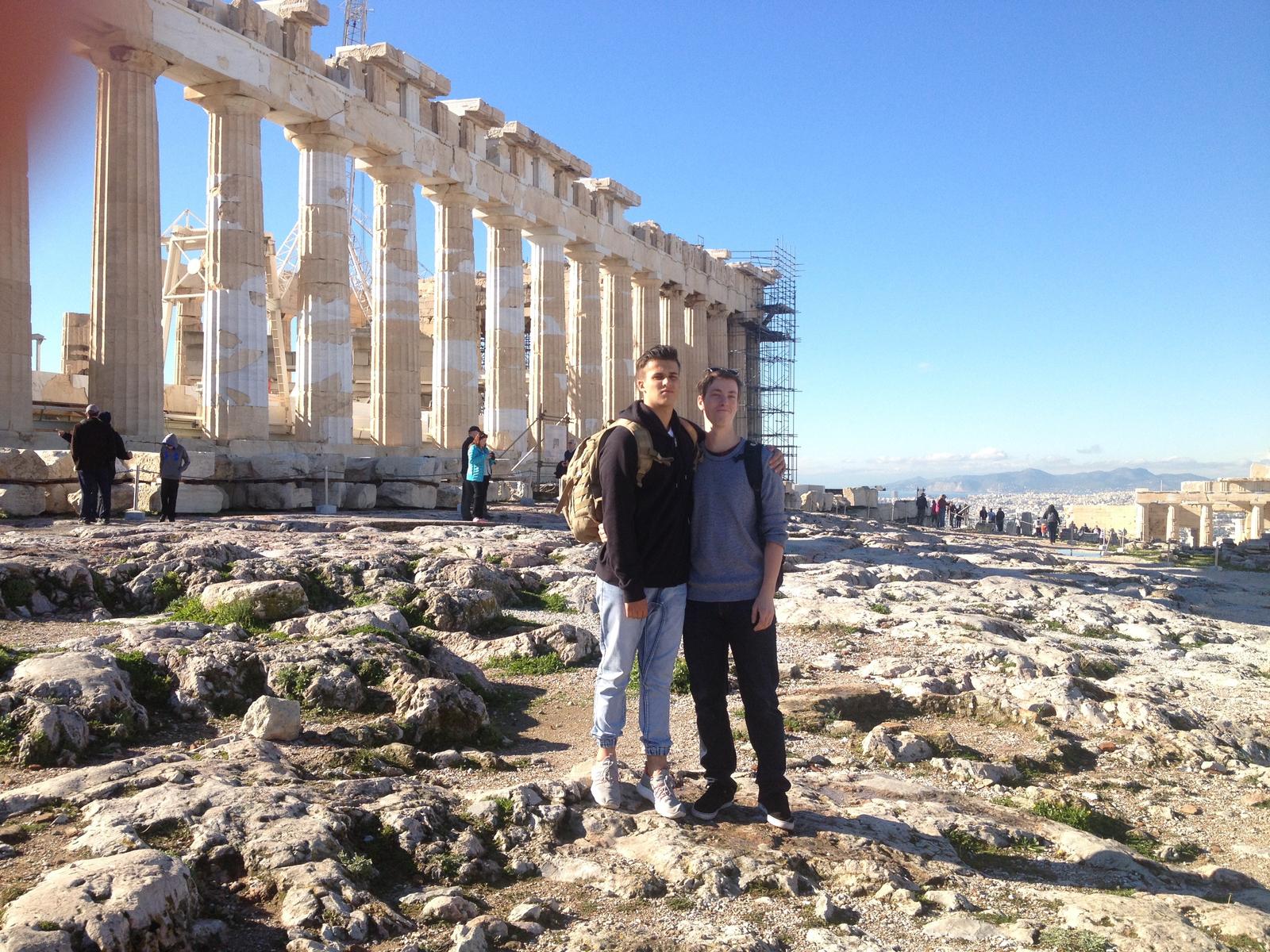
Students visiting the Parthenon in Athens, 2017
Students visiting the Parthenon in Athens, 2017
- political
- social
- economic
- cultural
Students will also investigate key features including:
- Women and families - What were the experiences, expectations and roles that women played in ancient society?
Weapons and warfare - How, when and for what purposes were wars fought in the ancient world?

Students engage in "Peisistratus Speed Dating"
Students engage in "Peisistratus Speed Dating"
Section C - Nature of Power and Authority in an Ancient Society
This unit will see students discover to what extent significant historical individuals:
- were the product of their society
- shaped their society
- used various methods to excercise power and authority
- legacies are shaped by contemporary bias or limitations of the evidence
Traditionally these sections in the order of B, C, A.
Why should I consider this course?
If you are about to begin Year 11 or Year 12 and:
- are interested in learning about the ancient world
- enjoy reading texts and watching films about people, places and events from the past
- prefer a variety of learning activities and assessment tasks
- want to develop your ability to build evidence based arguments in Year 11/12, university, or the workplace
preparing for or supporting senior courses in Year 11/12 or University which require you to summarise, synthesise and evaluate information.
What Skills does this course provide?
• Analytical thinking and innovation
• Active learning and learning strategies
• Complex problem solving
• Critical thinking and analysis
• Creativity, originality and initiative
• Leadership and social influence
• Resilience, stress tolerance and flexibility
• Reasoning, problem-solving and ideation
• Persuasion and negotiation
• Communication
• Written comprehension
• Judgement and decision-making
• Reading and oral comprehension
• Multitasking
• Empathy
• Social perceptiveness
• Attention to detail
• Problem-solving
• Active listening
What Pathway Options does this course provide?
The skills developed during this course help prepare students for a number of university and non-university pathways which can lead to careers and employment in areas such as:
Historian, Cultural or Conservation Heritage Officer, Economic Historian, Geographical Historian, Teacher (Primary, Secondary) University Lecturer/Academic, Screenwriter, Playwright, Media Advisor, Communications Officer, Publishing Editor, Fact-checker, Publisher, Writer/Author, Journalist, Environmental Lawyer, Solicitor, Criminologist, Conservator, Management Consultant, Manager Human Resources, Policy Advisor, Policy and Planning Manager, Policy Analyst, Political Scientist, Foreign Affairs and Trade officer, Parliamentarian, Business Consultant, Resource Economist, Community Worker, Social Researcher Counsellor, Student Advisor, Psychiatrist, Psychologist, Welfare Case Manager, Welfare Worker, Youth Worker, Social Work, Sustainability Activist.