
Principal's Message
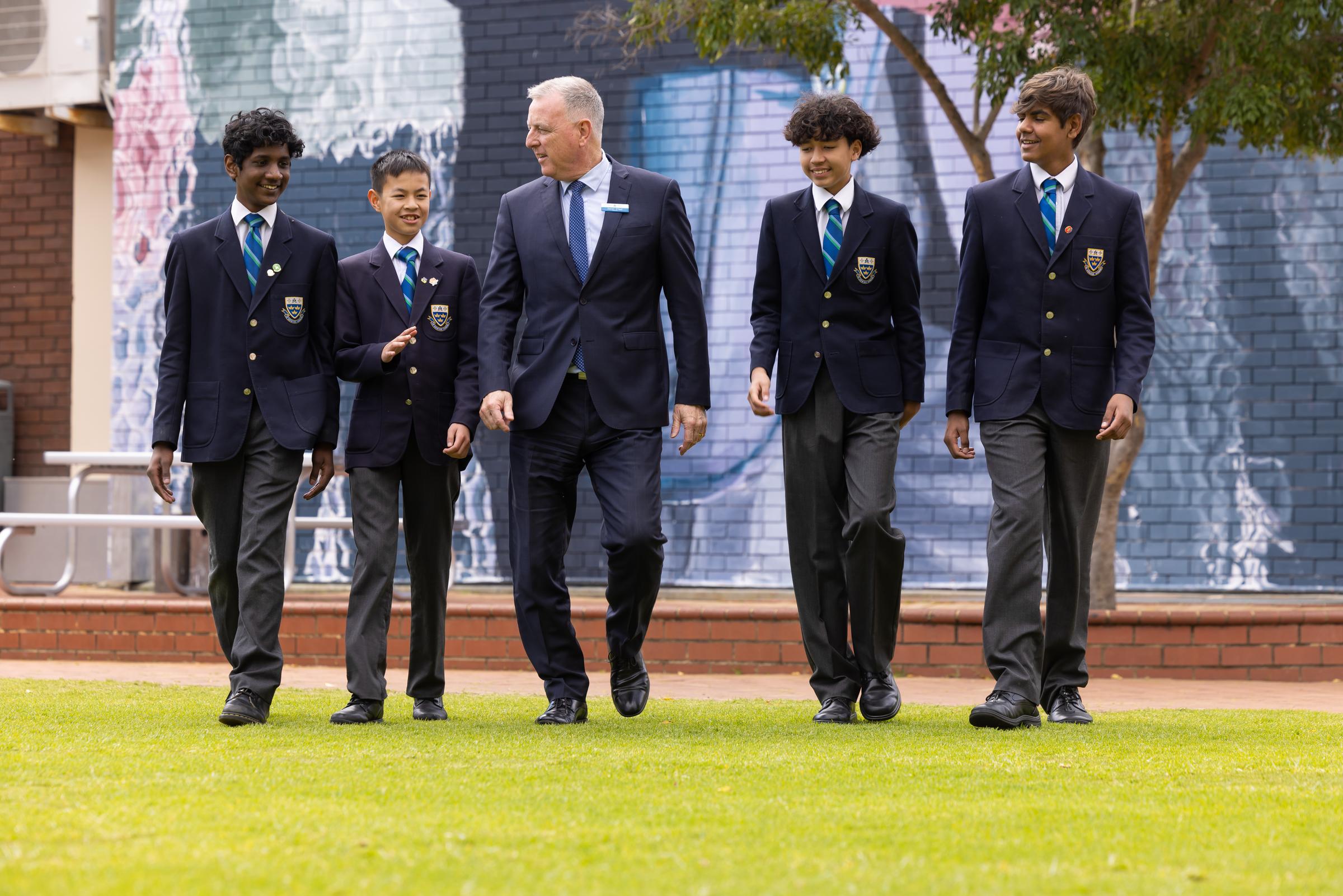
Accepting the Challenge of Personal Excellence

For those of us with ‘some years of experience’ in educating boys, and as is supported by much of the literature about raising boys and boys’ education, we often observe a natural tendency for boys to settle for what is comfortable or “just enough”. At times, they are happy to do the minimum in order to achieve what is just acceptable. For some boys, choosing the path of least resistance (and least effort) may be a well-trodden road.
At Trinity College, however, we believe that the right type of challenge, delivered in the right manner and context, can inspire students to go further. When expectations are clear and support is strong, students are capable of rising to meet, and often exceed, the standards they set for themselves.
Central to this belief is our Spirit of Excellence, which calls us ‘to provide engaging teaching and learning practices that support wellbeing and inspire personal excellence among students. This commitment underpins all that we do, ensuring that each student is both challenged and supported in a learning environment where they can thrive.
Our focus is not simply on achievement in the traditional sense of high exam scores or awards, but on fostering a culture of personal excellence. This means encouraging every student to strive for improvement, to set meaningful goals, and to take pride in giving their very best effort. Personal excellence looks different for each individual. It is not defined by comparison with others, nor by ranking or results alone, but by commitment, perseverance and growth. The establishment and consistent reference to the APA (Attribute Point Average), that focuses on Student Work Attributes which are effectively indicators of personal excellence, is a wonderful example of this. The awarding of Pinder Boor Certificates of Excellence and the sought-after Crown Awards, seek to measure and acknowledge the personal excellence of every student.
A key part of this philosophy is ensuring that every student has the opportunity to experience success. Through engaging teaching practices and a strong focus on wellbeing, we aim to create learning environments where each student can be challenged appropriately and feel a genuine sense of accomplishment. Success builds confidence, and confidence fuels the willingness to take on new challenges. Boys love a challenge; they thrive on structured and healthy competition and by feeling empowered. In seeking personal excellence, doing better than your last effort is paramount for success.
We also recognise that young people thrive when they are given clear goals and a sense of purpose. Encouraging our boys to reflect on their aspirations - whether through goal setting, self-reflection, or envisioning future success - helps them to take ownership of their learning journey. When students believe in their ability to succeed, they are far more likely to apply themselves with determination and resilience.
Importantly, the pursuit of personal excellence is not without its challenges. Growth often involves some difficulty and the occasional setback. Learning to navigate challenges is an essential life skill. Rather than avoiding obstacles, we encourage our boys to see such challenges as opportunities for development and formation. With guidance from staff and support from families, students can learn to take responsibility, respond positively to adversity, and persevere when things become difficult. It is from such situations that true resilience emerges.
Returning to the literature and research, it is often pointed out that accepting responsibility can be a hurdle for adolescent boys. The frustrated cries of, "It's not fair “, or “This is too hard”, can also be accompanied by the defeated shrug or the tactic of waiting for Mum or Dad to step in an do it for them. It is often said that our ongoing development can be linked to our response to problems and failures. This may seem a little counterintuitive, but weaknesses are opportunities and failures are open doors to trying again and improving. Making the job easier for children doesn't necessarily help in the long run. Mentoring, guiding, encouraging and listening as our young men make their own mistakes, and then genuinely celebrating with them as they achieve their goals is extremely important in fostering the life-long habit of seeking personal excellence.
Our partnership with parents and caregivers is vital in reinforcing these values. Together, it is important that we provide a consistent message: that each student is valued, supported, and capable of continual improvement. This foundation of encouragement and high expectation empowers students to take risks in their learning and to extend themselves beyond their comfort zones.
Ultimately, personal excellence is not about perfection, but rather it is about progress. It is about striving to do better than yesterday, embracing challenges, and developing the habits that will serve our young men well beyond their time at Trinity College.
As we approach the end of this first semester, I encourage all students to reflect on their own goals, acknowledge their growth, and consider the next steps in their journey toward personal excellence.
Live Jesus in our hearts.
Mr Darren O’Neill
Principal