Occupational Support
Healthy lifestyle habits (balance of rest, play, and productivity)
Why Balance Matters
Once healthy sleep routines are established, the next step is helping young people find a balance between rest, play and productive activities that support learning, growth and connection.
The Role of Play in Adolescence
Play may look different for teenagers compared to younger children, but it remains just as important. It gives young people space to express themselves, manage stress and build communication, cooperation and empathy. These skills strengthen relationships and foster a sense of belonging.
Rest and Recharge
Downtime is crucial for emotional regulation and physical health. When adolescents balance activity with rest, they build stronger coping skills, better emotional awareness and a positive sense of self.
Through play they continue to build key social skills such as communication, cooperation and empathy, all of which foster a sense of belonging and connection.
Tip for Supporting Balance at Home
- Create a simple switch-off ritual: A small routine that helps teens shift gears between school, rest and play. (A shower, walk, music break or snack break whilst watching a favourite show)
- Invite them to choose one weekly joy activity: Let them pick something fun or creative that isn’t tied to screens or performance.
- Encourage brain/movement breaks: Short pauses between homework tasks help teens reset mentally and avoid burnout.
- Help them to spot early signs of overload: Teach cues like irritability, headaches, zoning out or procrastination as hints they may need rest or a change of activity.
- Normalise saying no: Let them know it’s okay to turn down extra commitments when they feel stretched.
Rest and relaxation are equally important for both physical and mental health.
- Adequate downtime helps recharge energy levels and supports emotional regulation.
- When adolescents find a healthy balance between activity and rest, they are better equipped to develop positive coping strategies, emotional awareness and a confident sense of self, which is essential for navigating teenage challenges and relationships.
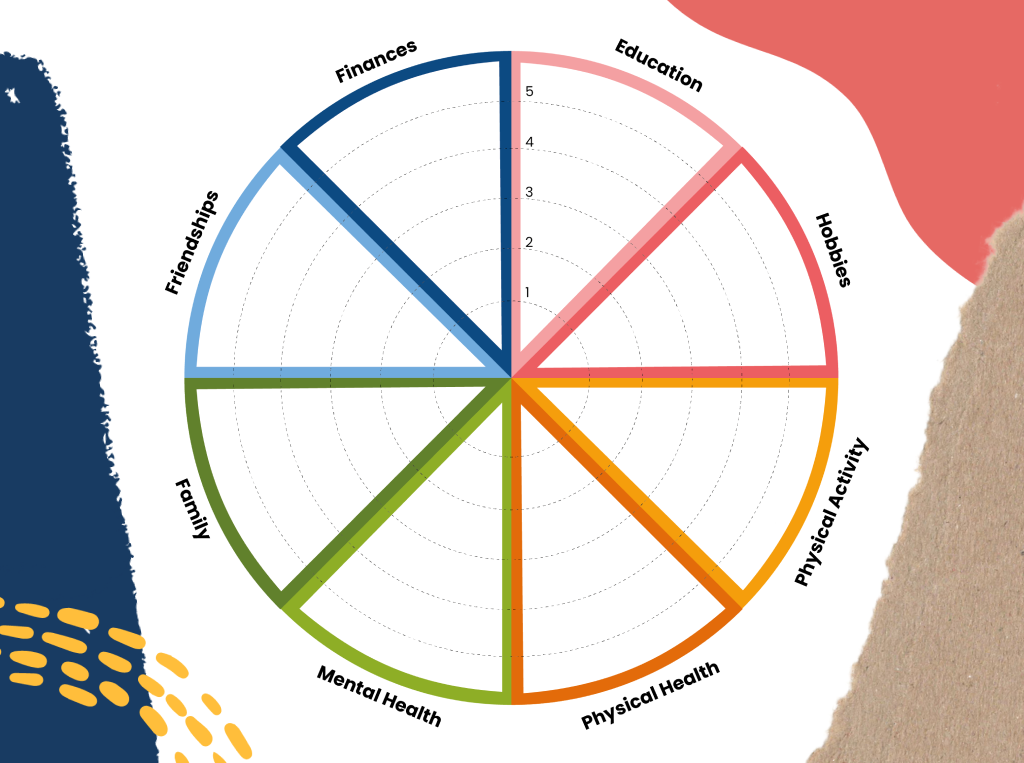
Why this wheel matters:
This Balance Wheel helps parents and teens reflect on how time is spent throughout the week. A quick look at each section can highlight where life feels balanced and where small changes may help support rest, wellbeing and healthy routines.