From the Assistant Principal's Desk - Wellbeing
Sara Johns

From the Assistant Principal's Desk - Wellbeing
Sara Johns
Dear Parents and Carers
Welcome back! We hope you and your children had a wonderful break. In this issue I wanted to share some information around 'positive language' with children and some strategies you could try at home. Please see below
:
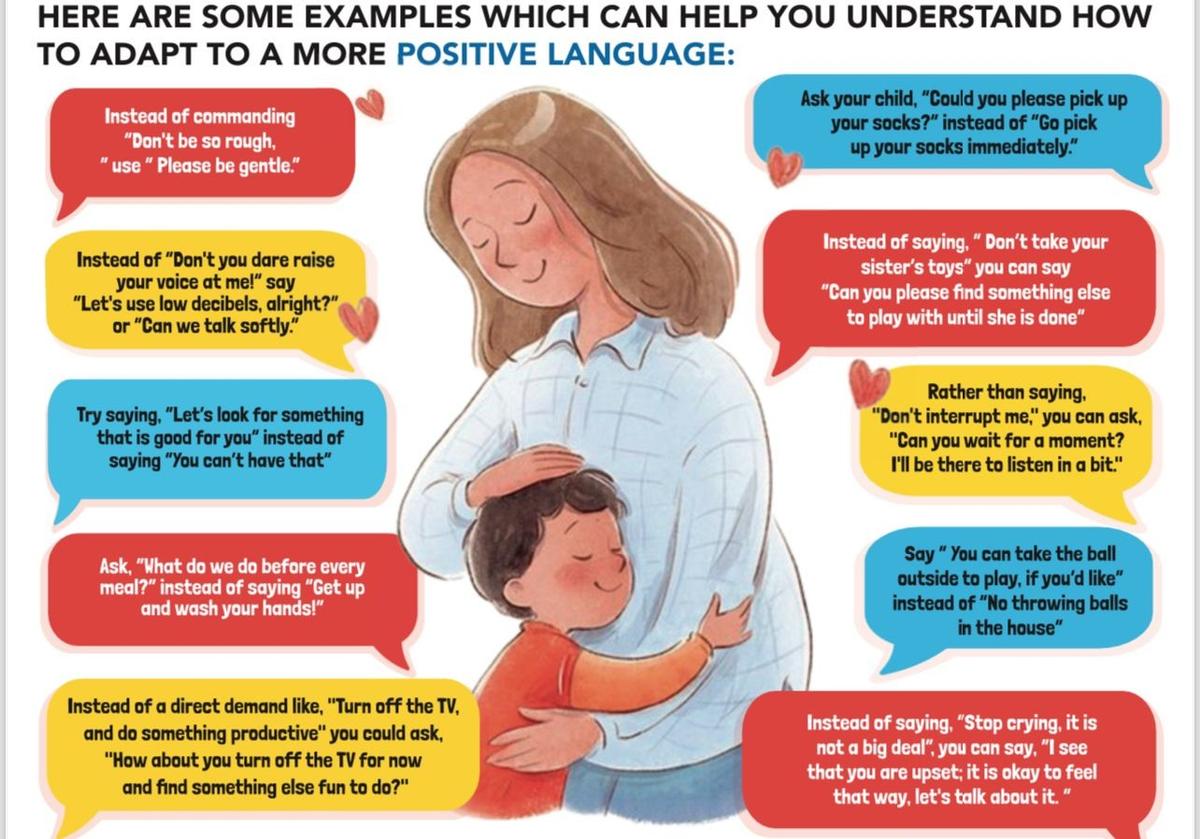
Using Positive Language
Parents and carers play a vital role in the healthy development of children. Sometimes a small shift in language might seem small but be a very powerful positive change in conversations with children.
Thinking time:
Remember to remain calm and patiently repeat statements to your child. Remember that children are also learning language, and it may take seconds or even minutes to process information and decide how they are going to respond.
Offer a choice:
When you provide children with a choice of things that they can do, or wear, or go, a child is more likely to select one of the offered options as this will still make them feel as though they are in control. This strategy will work for you as a parent/carer as you provided the choices meaning you approve of them.
Replace "don't" with "do".
It is more likely that your child will make appropriate choices when you help them understand what options are available. Tell your child what they can do more than what they can't do.
Use language such as "first - then".
Another positive strategy to let a child know they have permission to do something in a positive way is to use a "first-then" statement. For example, if your child wants to play a game but you would like him to pack away his toys first, you could say "First, pick up your toys, then you can play your game."
Using statements such as "I remember".
Sometimes children may need help in remembering certain things. "I remember" statements are very useful as they state the information as a fact, and give students information they need to make the correct choice on their own. For example: "I remember that you need to put your hat on before you go outside in the sun."
Positive relationships with parents, carers, teachers and family members provide the foundation for a positive. happy child. Use of positive language has been proven to be the building blocks for self esteem and future positive behaviour choices.