
Teens & Screens
Digital Habits - tips for parents/carers

Teens & Screens
Digital Habits - tips for parents/carers
Did you know that 93% of video games marketed to young people include features that mimic gambling? And that many games allow players to spend real money for a chance to win virtual prizes? These features may look harmless, but they’re built on the same psychological hooks used in the gambling industry.
If your teen plays Fortnite, FIFA, or Roblox, they’ve likely already been exposed to gambling-like systems without ever stepping foot inside a casino. Today’s digital games blur the line between entertainment and gambling in ways that can be hard for parents to spot.
What is Gamblificiation?
It is the insertion of gambling mechanics into digital entertainment activities, including video games. Although the distinction between gambling, game playing, and consumer purchasing has traditionally been clear cut, diverse and new digital products increasingly blur the lines.
Many products have strong gambling components that might not be perceived as such by adolescents eg, virtual casinos and computer games with randomised rewards.
In-game gambling mechanics offer players an introduction to the fun of gambling through their favourite online games, for those who may then want to investigate other games. They are marketing tools, offering free gifts, like in-game currency or loot boxes, in exchange for posts and shares can help to prompt further user engagement.
Is ‘gamblification’ exposing a generation of adolescents to heightened risks of harm?
Impact on the Teenage Brain
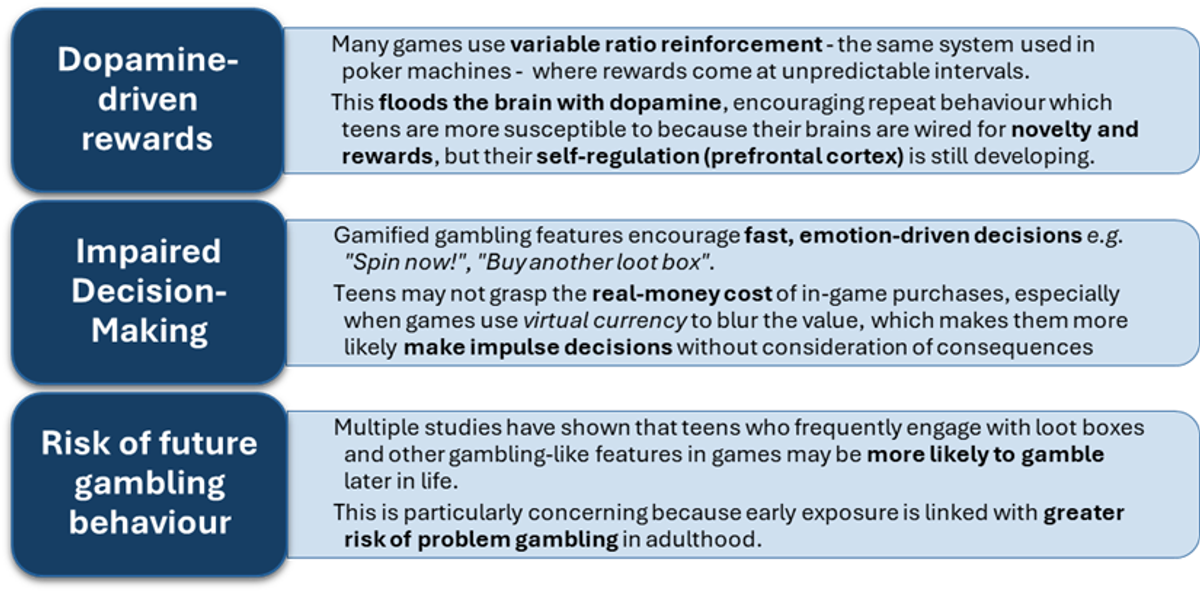
The teenage brain is still developing, particularly in areas related to impulse control, risk evaluation, and emotional regulation. Gamblified features exploit these vulnerabilities in several ways:
Social and Emotional Impacts
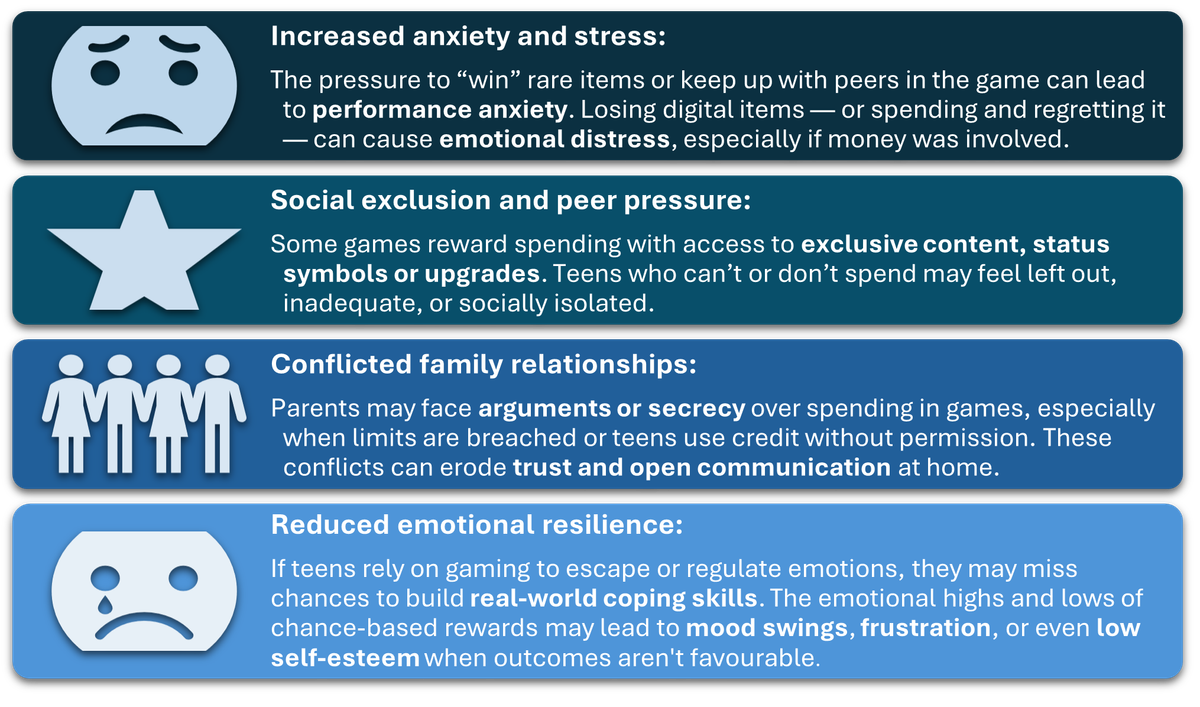
‘Gamblification’ of games is not just a gameplay trend. It is a psychological trap that taps into the same brain systems as real gambling which puts teens at risk of:
Exploitation of their natural craving for rewards
Reduction of their impulse control
Distortion of their expectations around money and increasing the risk of future gambling harm and potentially other addictive behaviours
Undermining their social confidence, family trust, and emotional wellbeing
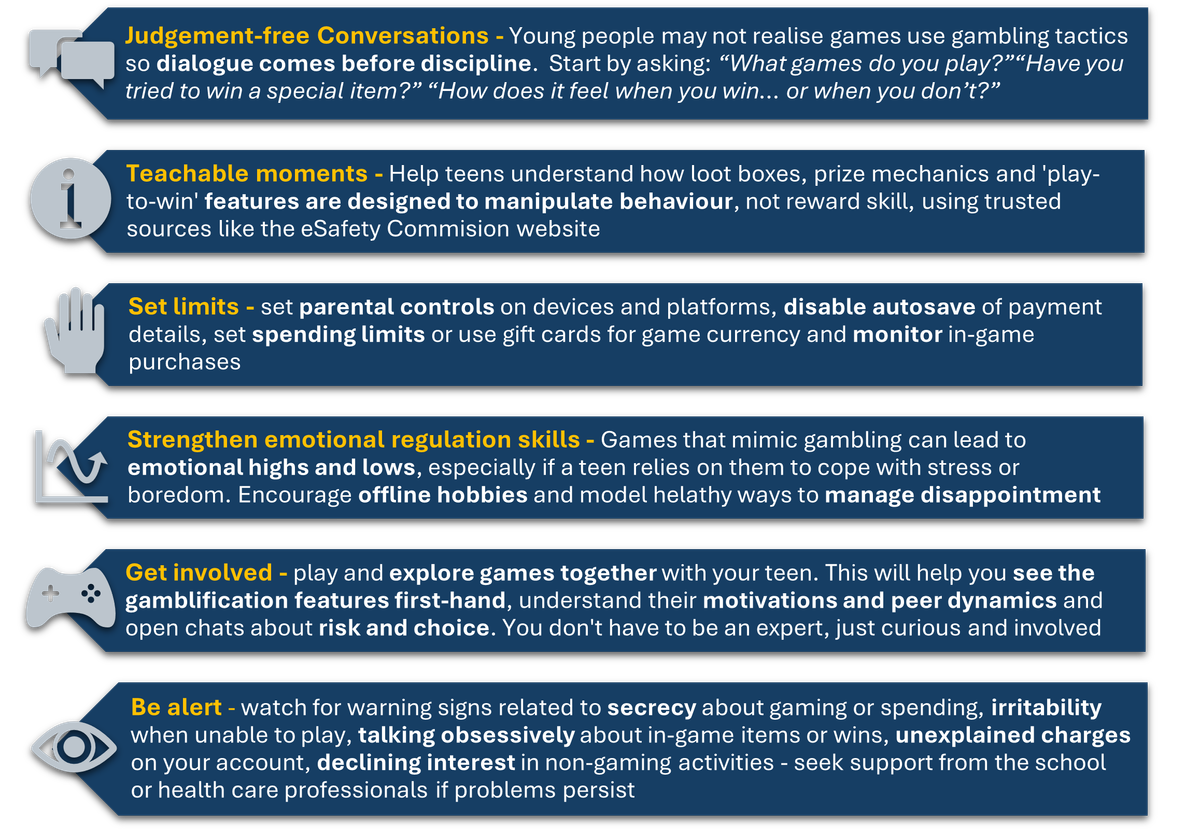
Expert Advice for Parents
Where parents can get help:
eSafety Commissioner – Parents: https://www.esafety.gov.au/parents
Gambling Help Online (Australia): https://www.gamblinghelponline.org.au
Kids Helpline (ages 5–25):
https://kidshelpline.com.au | 1800 55 1800
Or reach out to the Wantirna College Wellbeing Team anytime
Tanya Moran
Leader of Inclusive Practices