Hungry Hungry World
Year 9-10 Humanities Elective
Hungry Hungry World
Year 9-10 Humanities Elective
In the last few weeks, students have been learning about Food Waste; the huge size of the problem, the issues with food waste and the consequences on our planet and people. We have watched short videos about the ‘War on Waste’ (ABC TV) to see how much food Australians and the rest of the world actually wastes, understood what the issues are, and also what globally, people can do about it. Our class also created infographics that summarise the issue and social media campaigns to help promote the issue and what people can do to help reduce food waste, and help provide more security for people currently struggling in society.
Students were asked to look at their local supermarket and see what ‘odd bunch’ fruit and vegetables are currently being sold. As a class students were then asked to pick one of these ‘odd bunch’ foods and find a recipe to create and share to help ‘use up’ excess food (as well as raising the issue of food waste).
Have a look at this wonderful food waste Recipe book, Wantirna’s Tasty Wasties, that students have created:
Oz Harvest has also provided recipes to help use leftovers Use It Up Recipes | OzHarvest | Recipes to Fight Food Waste at home and OzHarvest Recipes for Change Cookbook April-2023.pdf.
As a community we can all help to spread the message and consider our impact. Our students could one day find a way to convert food waste into a power source that can change the world.
Students were also asked to create an infographic or video around the four key themes around food’s global journey:
food waste (food thrown out),
food miles (how far around the world food travels),
food footprint or foodprint (the environmental impact of everything ‘on your plate’, from farm (water, carbon emissions, pesticides) to fork (transport, heating and cooling, waste)), and
food sustainability and innovation (how do we make better choices with what we do with food).
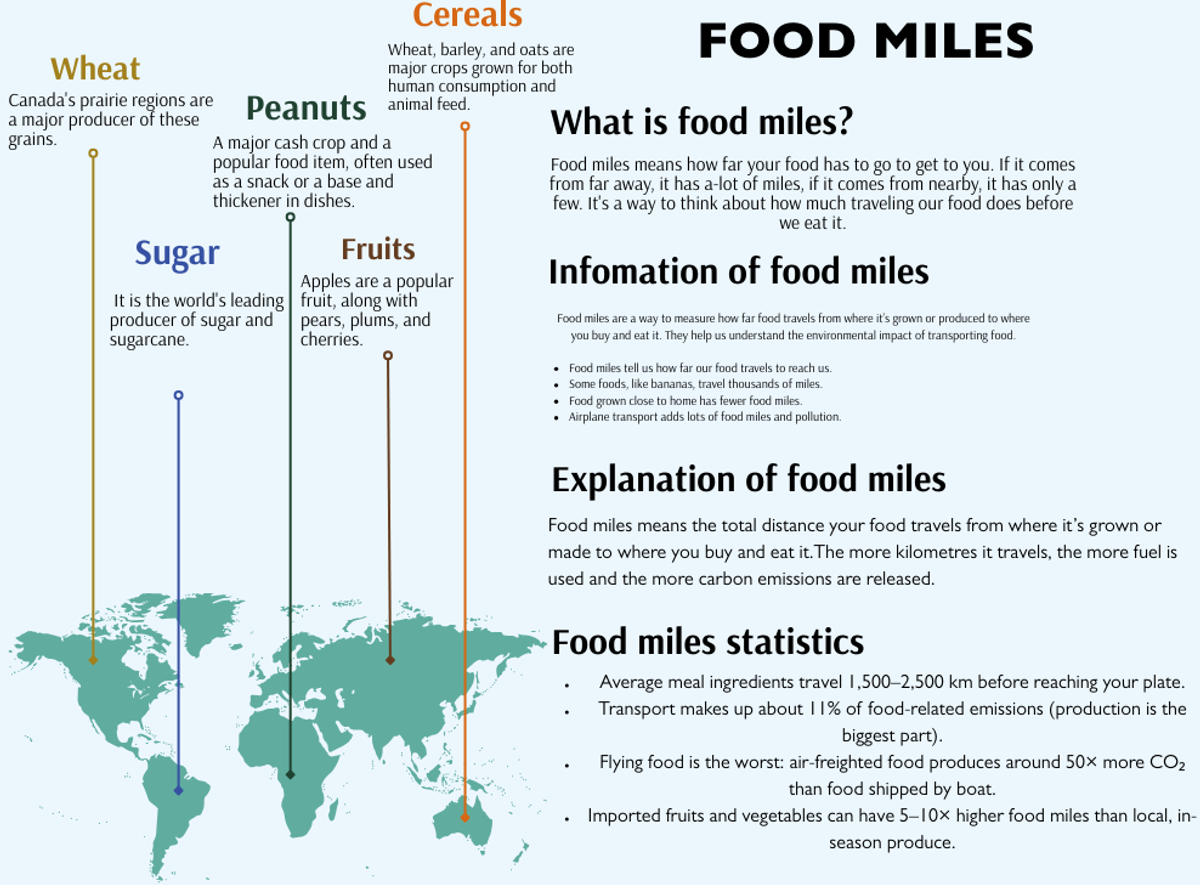
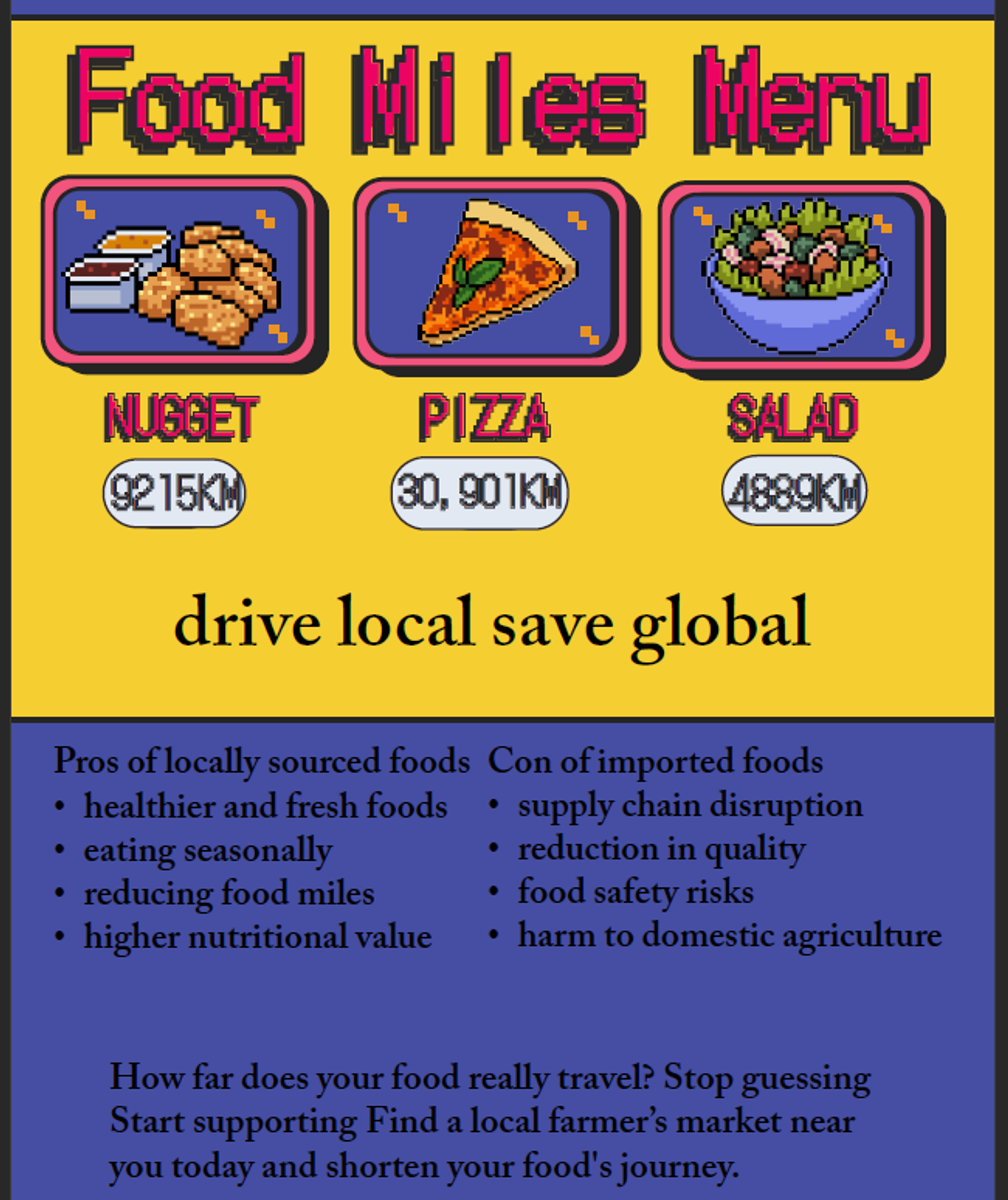
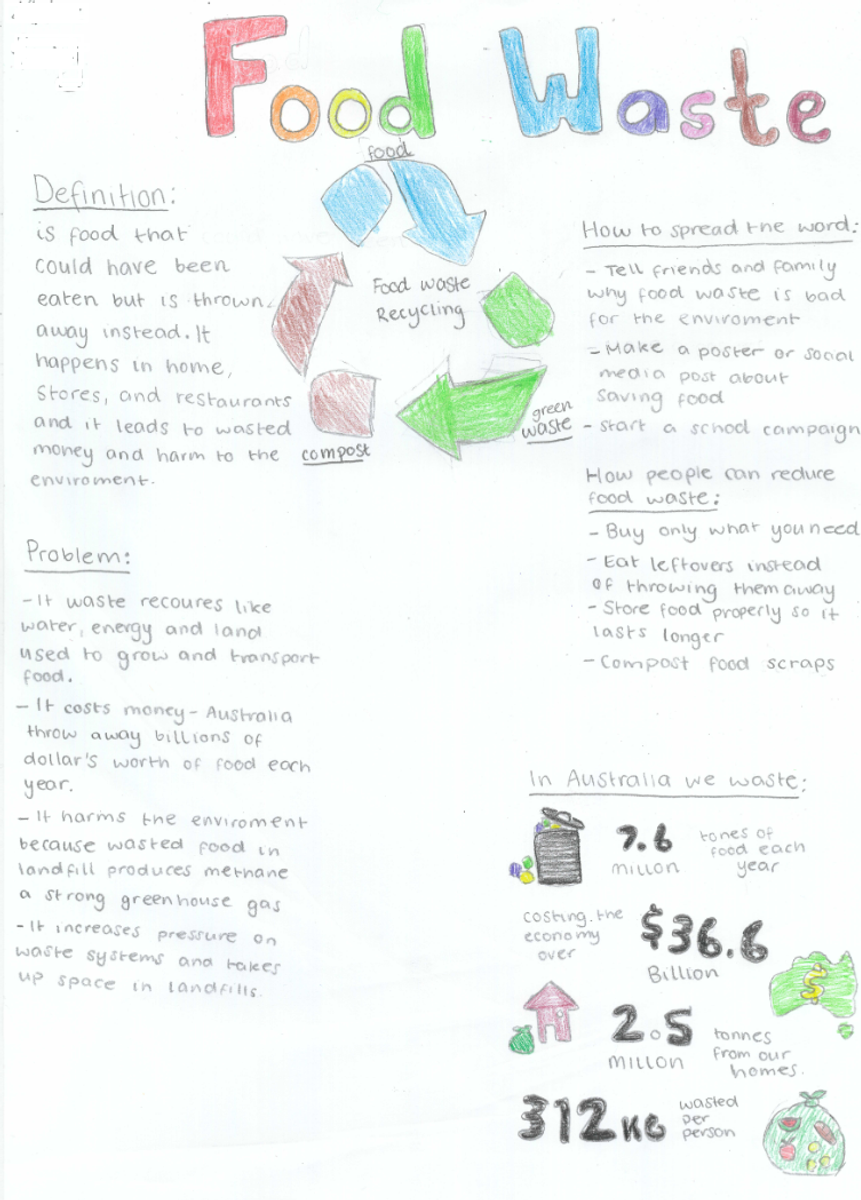
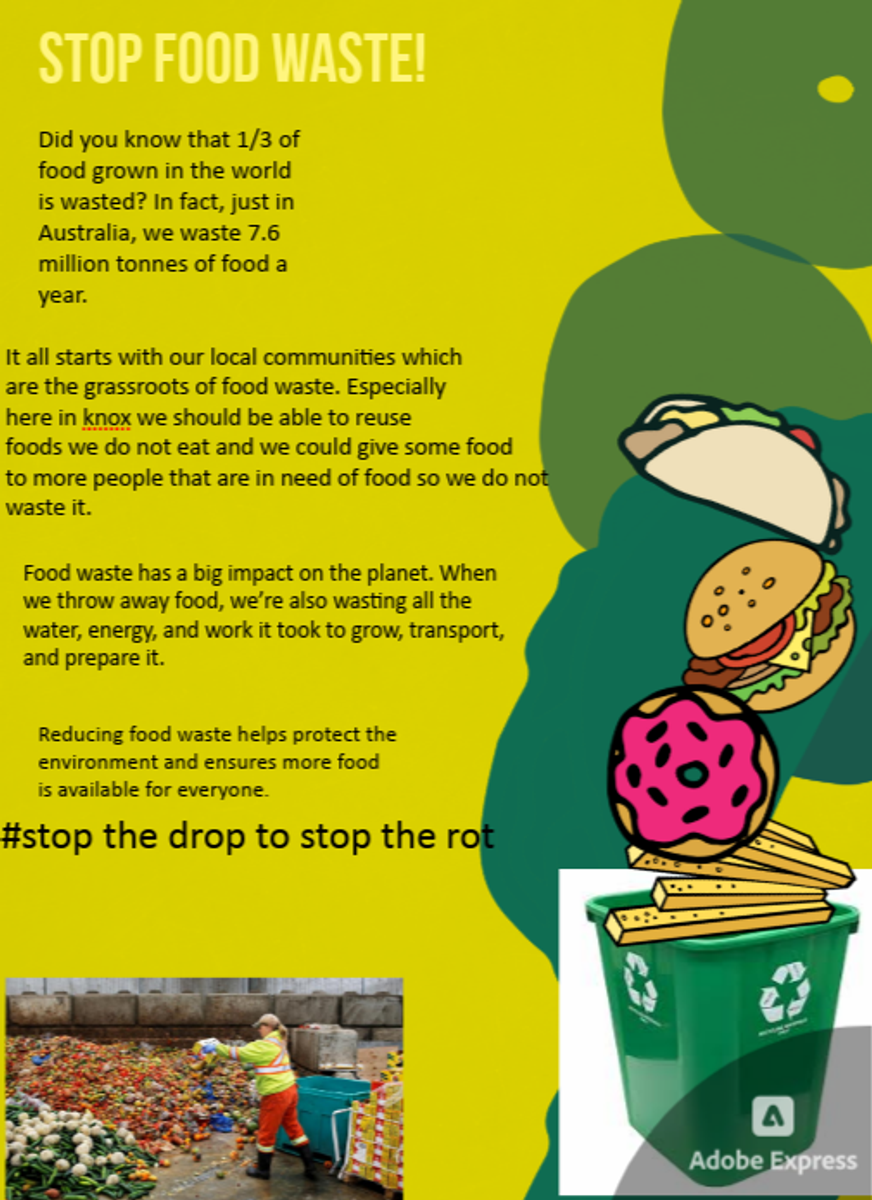
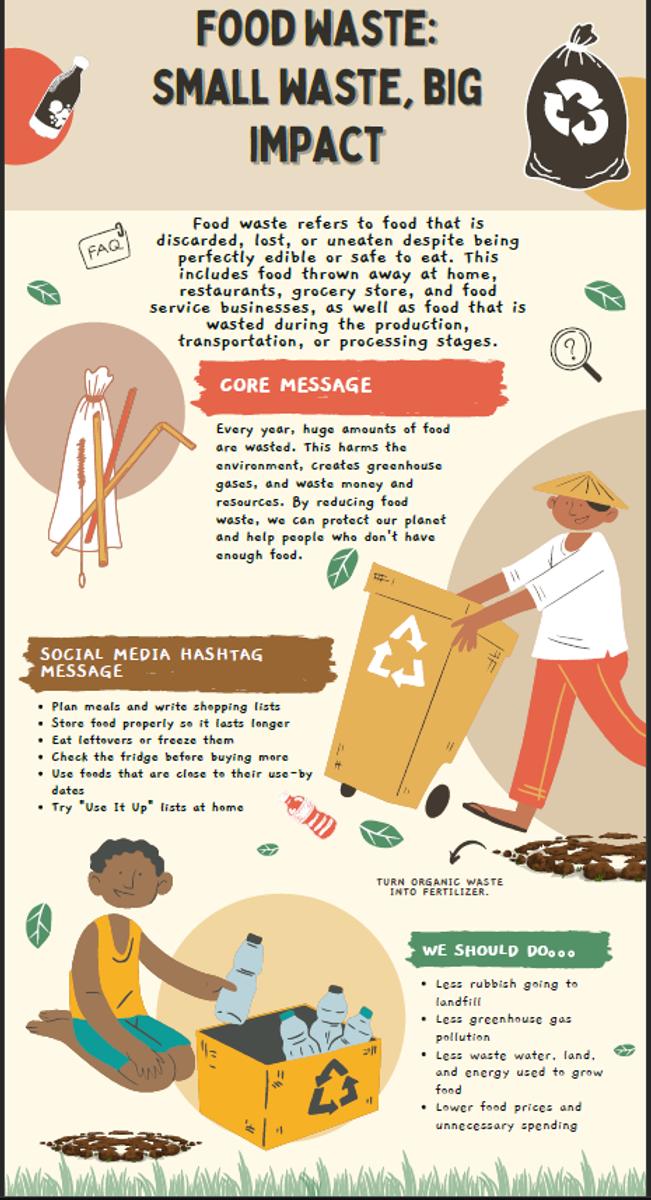
Understanding the scale of this problem, allows students to think about the problem, consider and research what they can do, and suggest ideas on how to innovate food waste, to decrease the issue and be part of making a better future for our world and citizens.
Janine Watt
Humanities