Grade 3/4 Bulletin

Learning Intention: To identify the key features of a text using clues and prior understanding.
Fluency
Students began by brainstorming describing words for three nouns: a clown, a baby and a guitar. They recorded as many adjectives as they could on their whiteboards, then shared examples aloud. This helps students when thinking of adjectives and descriptive language in their creative writing pieces.
Whole
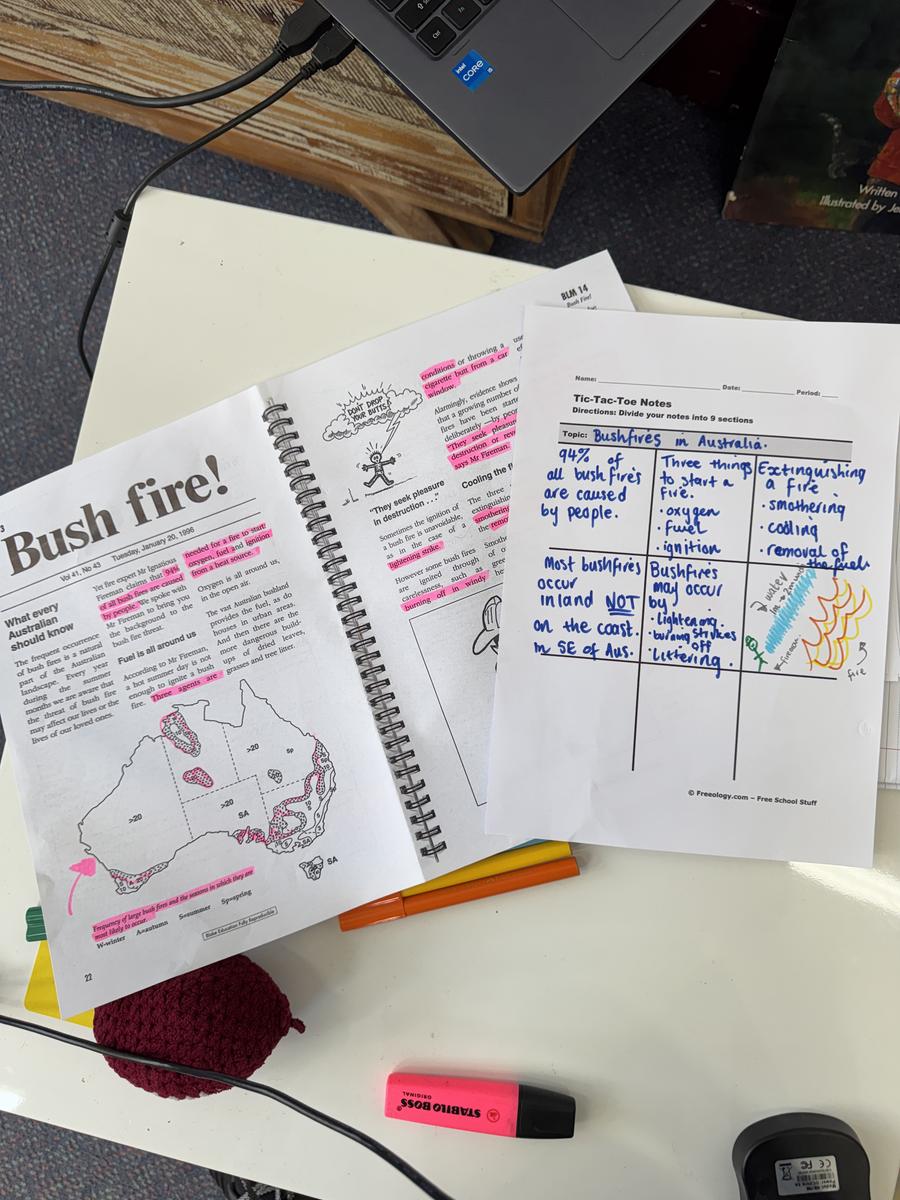
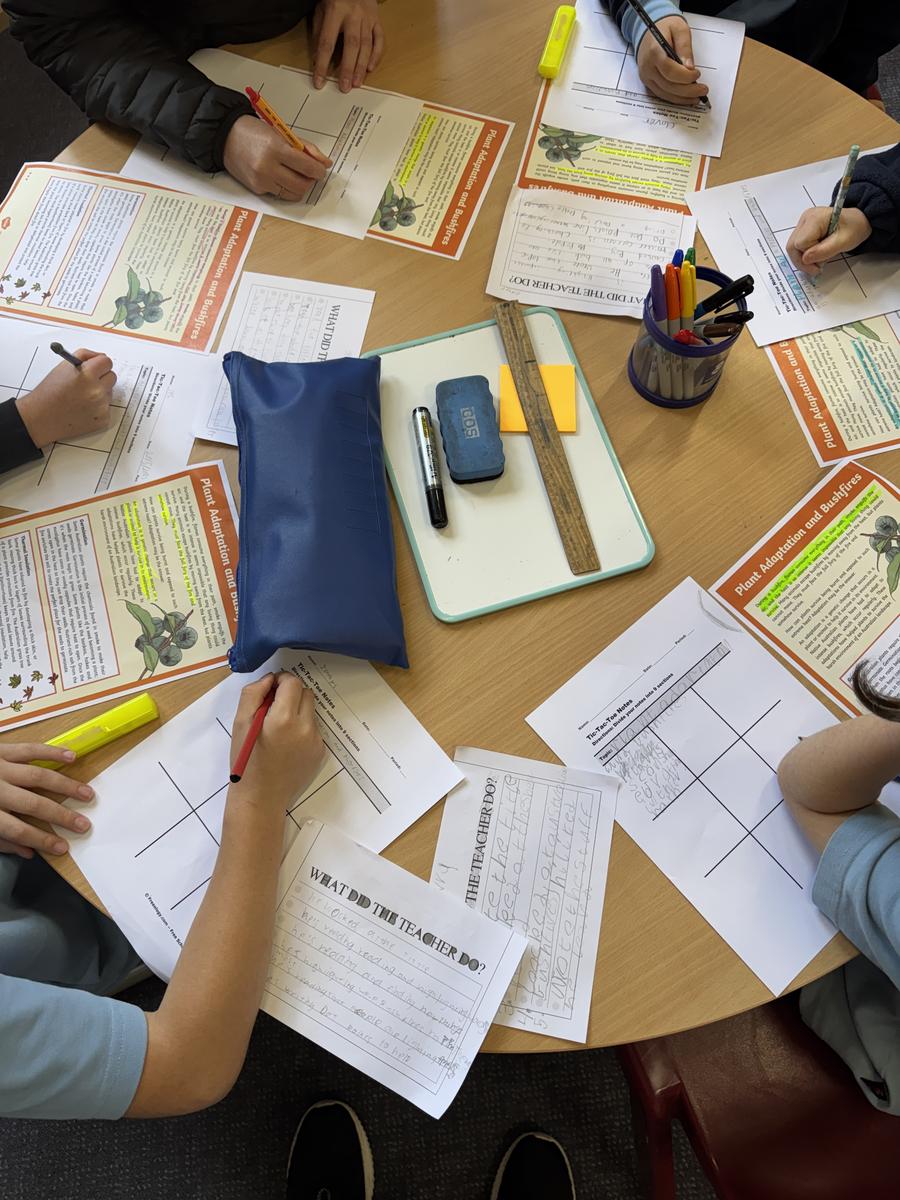
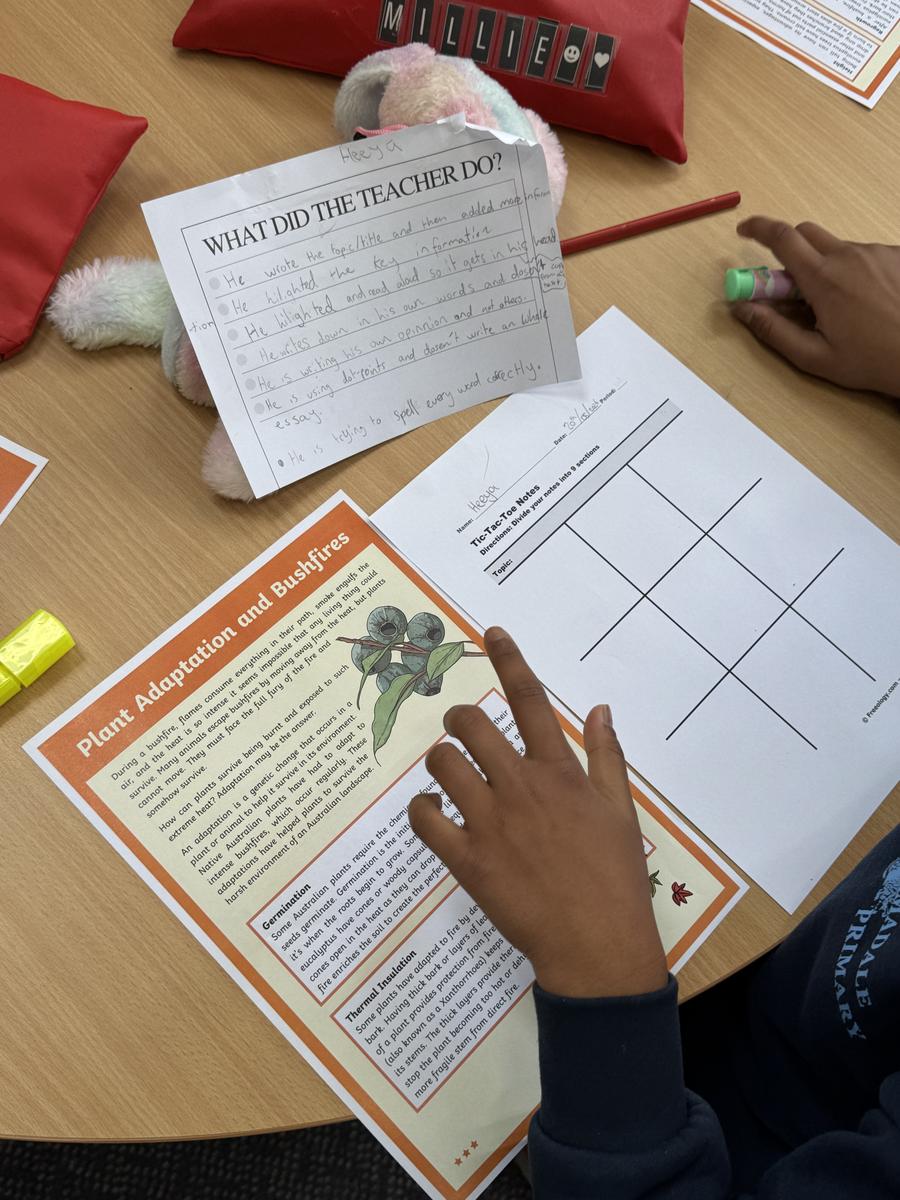
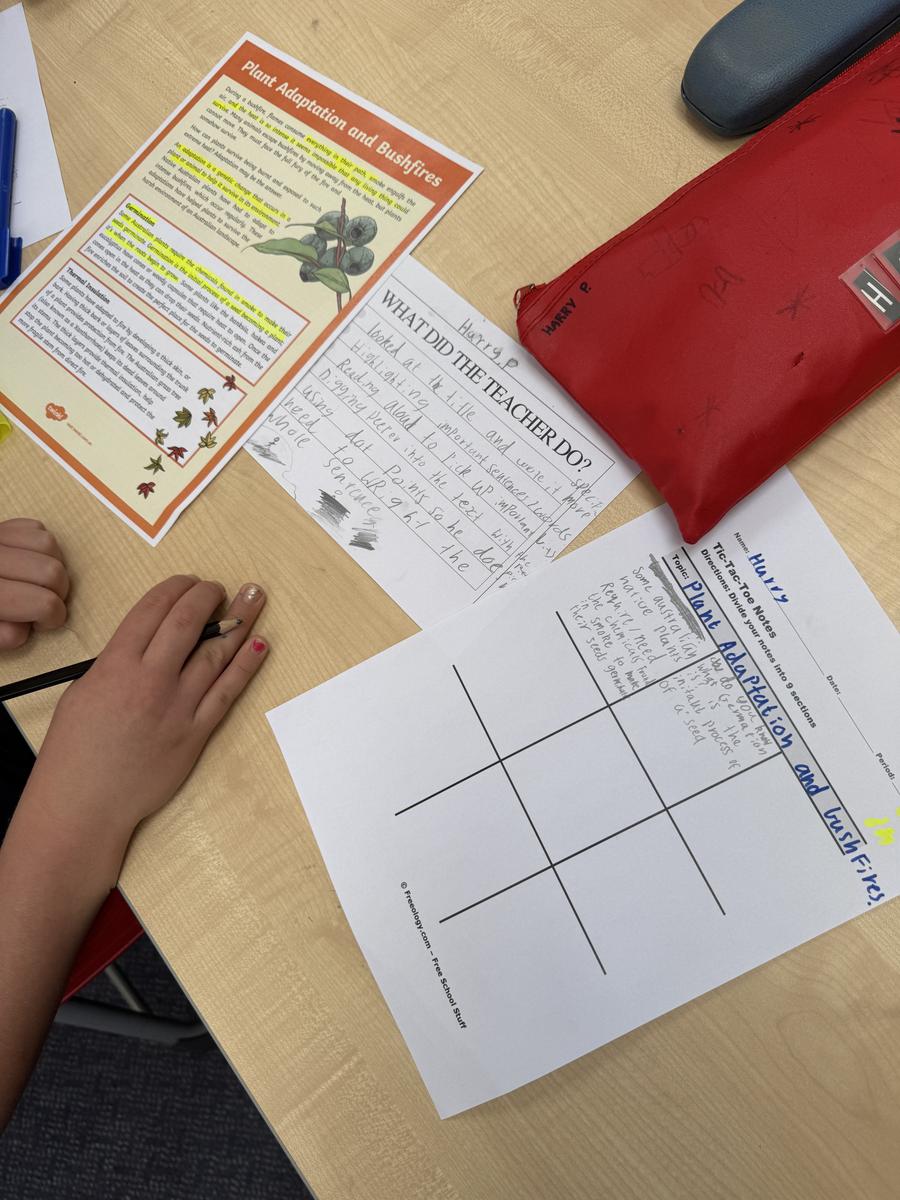
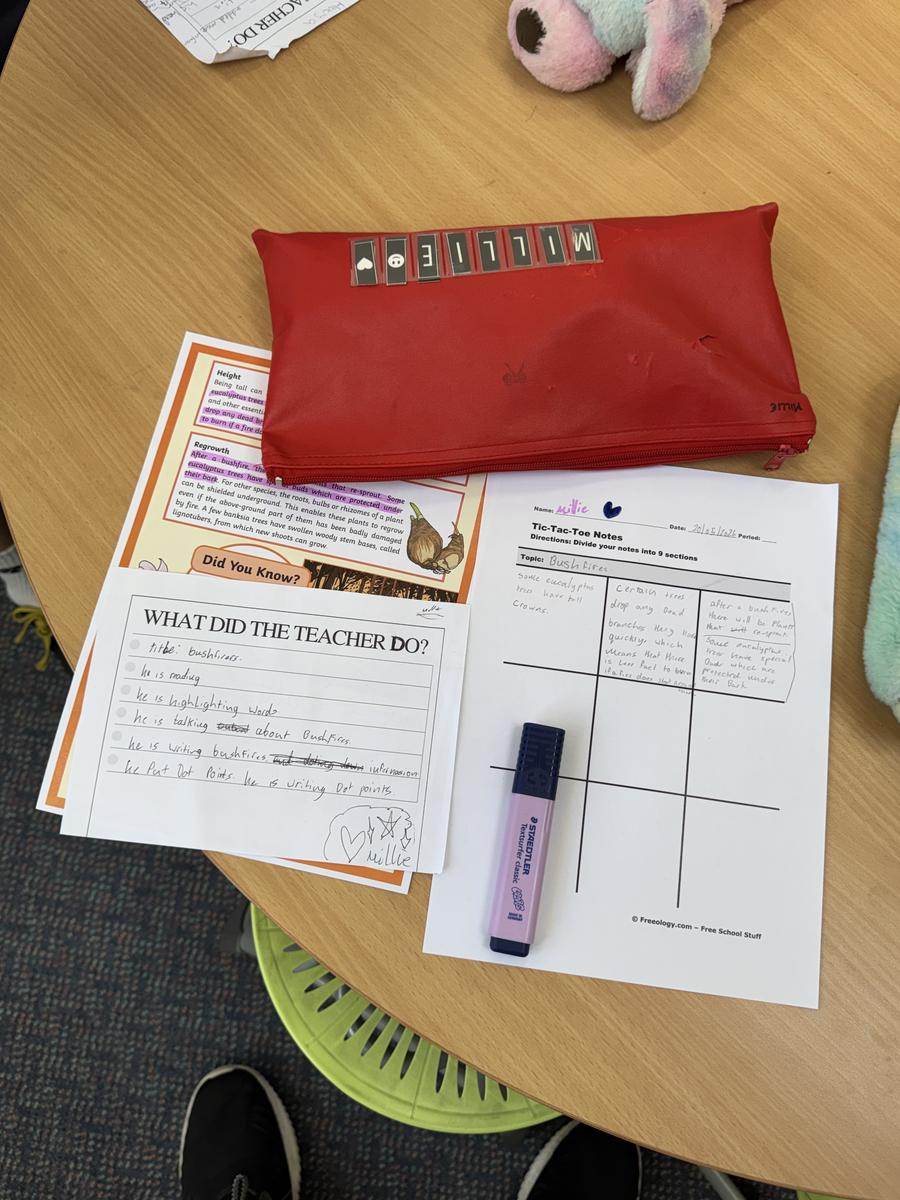
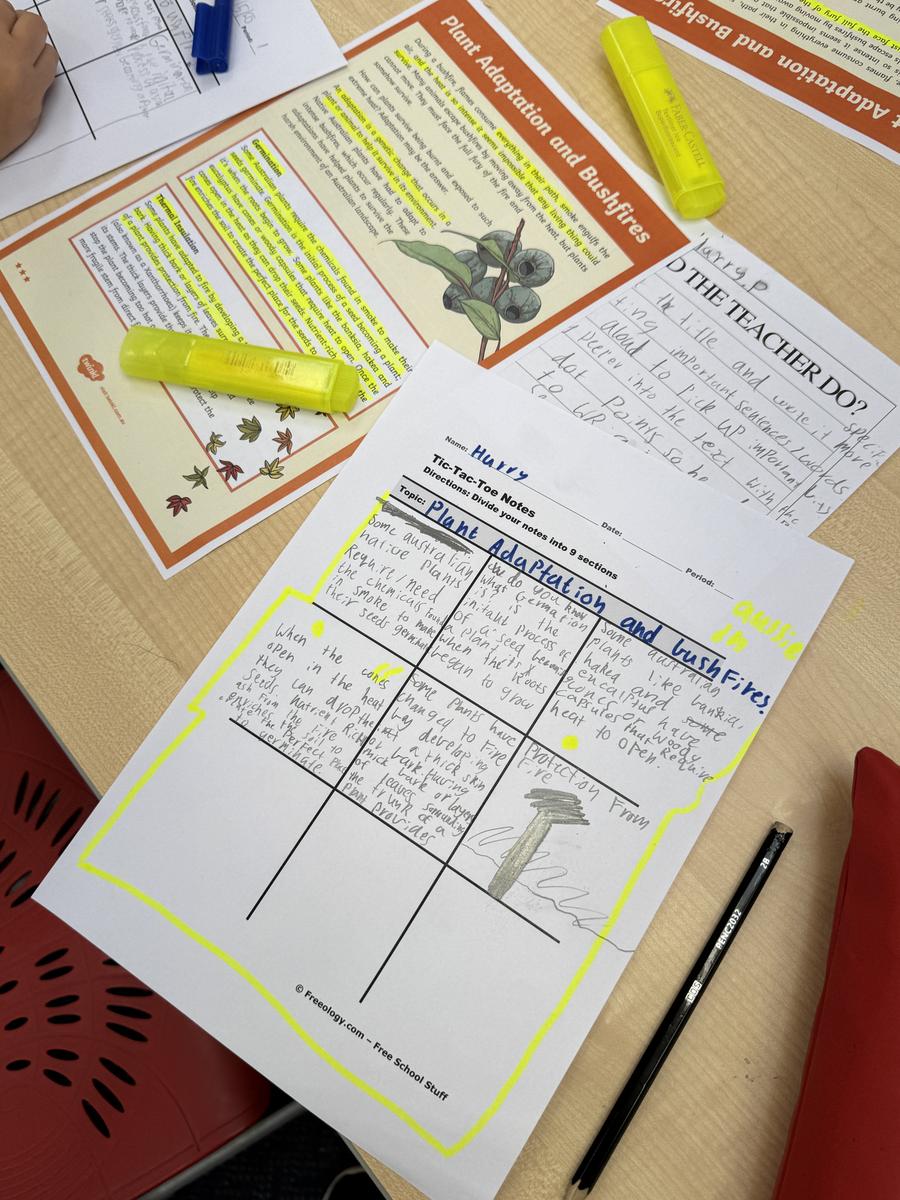
The teacher explicitly modelled how to respond to an information text using a bushfires information sheet. Students sat on the floor and were active throughout the modelling by completing their own "what did the teacher do" anchor chart sheet while the teacher worked through the text. The teacher thought aloud about how to identify important information, record key facts, notice topic-specific vocabulary and begin thinking about how these ideas could later be used in a written response. Students highlighted and recorded what the teacher was doing throughout the process, helping them see how writers collect information.
Small
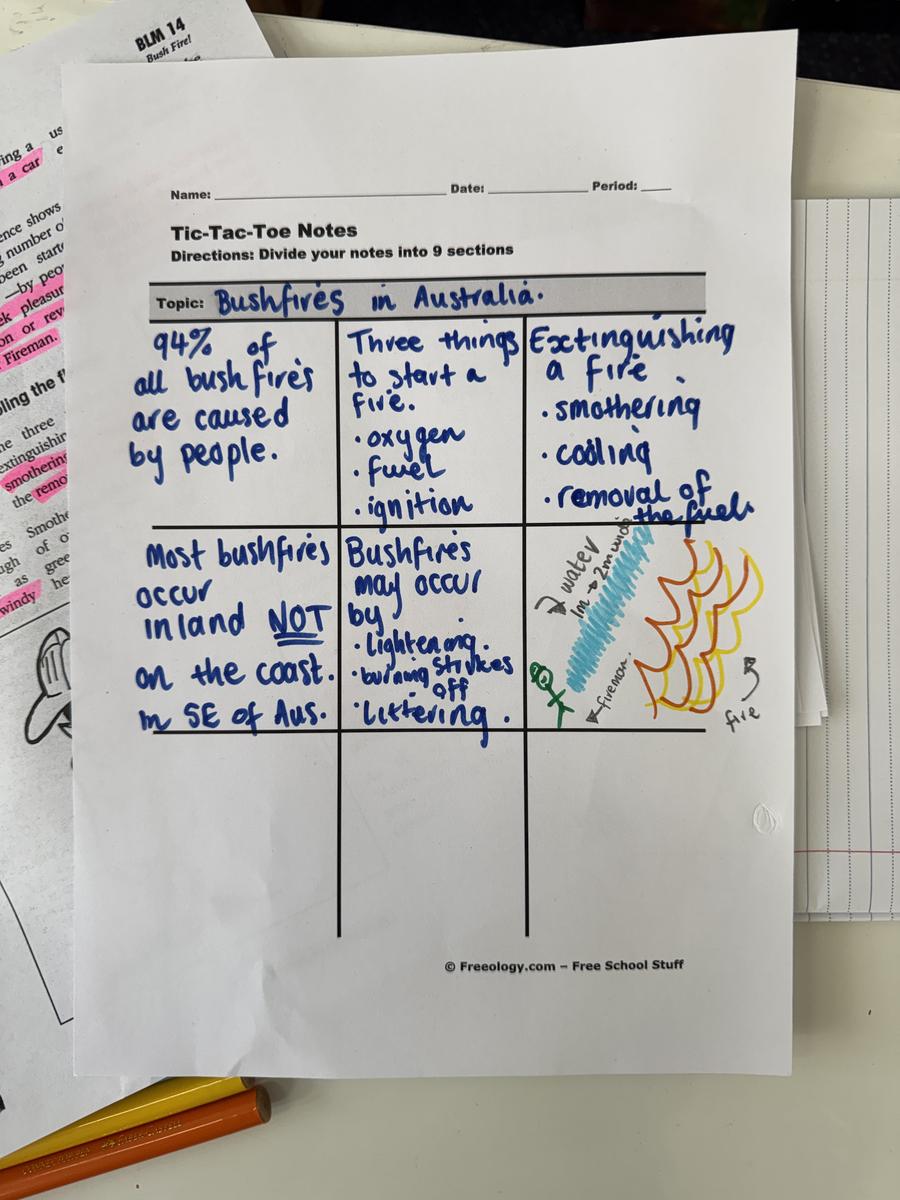
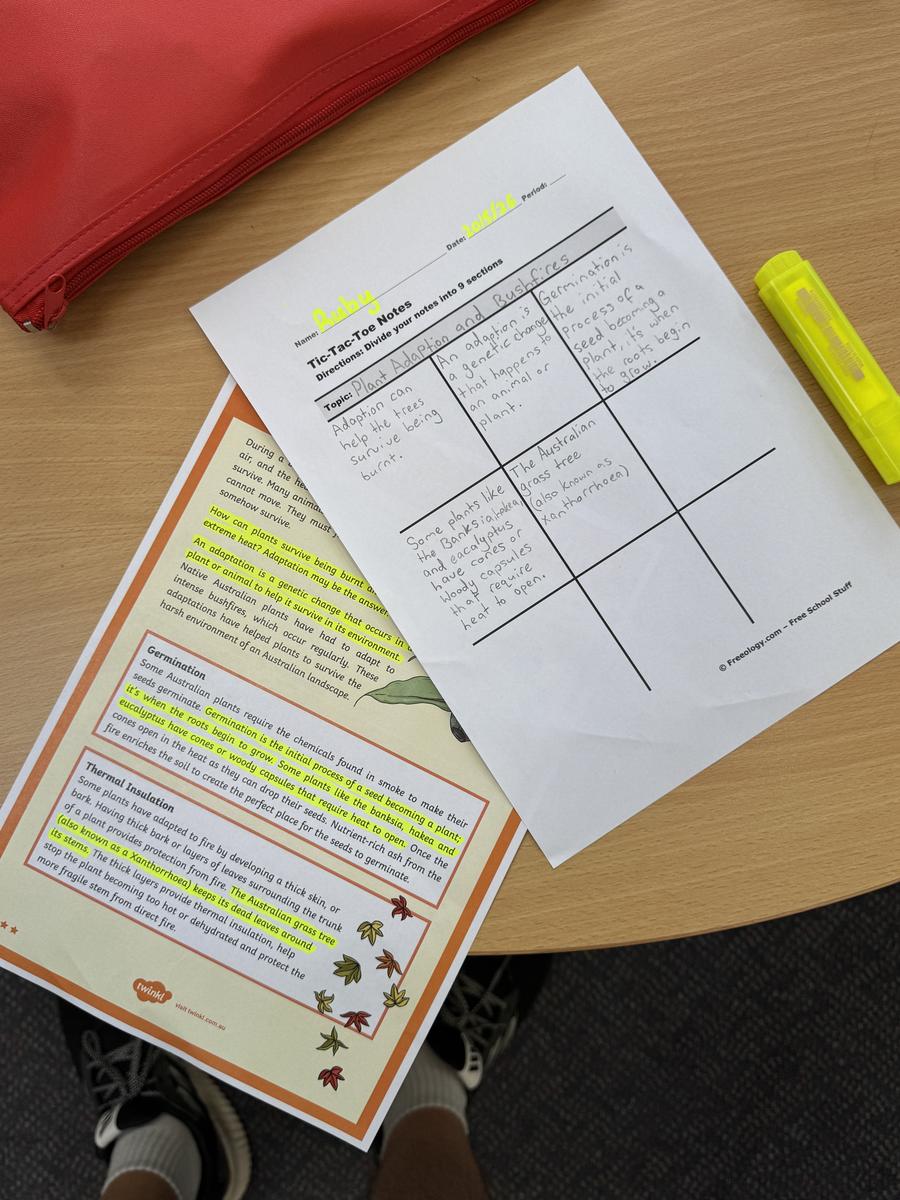
Students then continued working with a new sheet about the germination and growth of plants in bushfire areas using their own Tic-Tac-Toe notes organiser. They practised identifying important facts, interesting vocabulary and information that helped explain the topic clearly. Students were encouraged to think about which details were most useful, rather than copying everything from the page. This supported them in understanding that strong response writing begins with purposeful note taking and selecting information that helps explain their thinking.
Whole
Throughout, students came back together to share examples of the notes they recorded and discuss how these notes could be used to build a written response. The class discussed how a strong response includes a clear topic sentence, facts from the text, topic-specific vocabulary and the writer’s own thinking.
How to continue the learning at home
At home, students can continue practising how to respond to an information text by reading a short article, fact sheet or page from a book and recording key ideas in a simple notes' organiser. You might ask your child to choose the three most important facts, identify any interesting vocabulary and explain what they learnt in their own words. This connects to the work students completed using the Tic-Tac-Toe notes sheet and the bushfires information sheet, where they practised collecting information, noticing key vocabulary and using their notes to support a clear written response.
Thank you for your ongoing support,
Richard, Brigitte and Rosanna
Year 3/4 Team
richard.cornell@education.vic.gov.au