
Chaplain's Reflection

All Are Saved?
How we have indulged over the years in creating complexity out of simplicity! We get tangled up in the very myriad of rules and regulations which Jesus came to untangle for us. He brought us the best of Good News in his proclamation of the Kingdom. 1 Timothy reinforces the Good News that God wants everyone saved (1 Tim 2:1-8). And if that is what almighty God wants, then surely we are saved! Any sense that the Creator’s will is a barrier or hindrance to our salvation is turned on its head. But the final decision remains ours! Only we ourselves can be the obstruction. God wants everyone saved but, in our free will, we need to accept the offer of salvation.
How then do we accept? What are the rules? Jesus teaches that the rules are pretty simple. “Jesus is so simplistic and naïve as to reduce 613 clear Biblical commandments down to two: Love of God and love of neighbour,” (Luke 10:27) (Rohr, R. What do we do with the Bible? p57).
So often our love of God is reflected in our love of the poor and vice versa. We turn to our Creator, “praising the Lord who lifts up the poor” as our responsorial psalm urges us (Ps 112) and “lifting up our hands reverently in prayer (1 Timothy 2: 8) without anger or argument”.
Jesus himself tells us in this week’s gospel, “You cannot be the slave of both God and of money” (Luke 16:1-13) and the prophet Amos (Amos 8:4-7) starkly warns us against trampling on, swindling, deceiving, and oppressing the poor. If our actions set us apart from the Lord who lifts up the poor, we exclude ourselves from salvation but, if we turn to God, loving him and actively loving his children (our neighbours), we have every reason to hope for salvation.

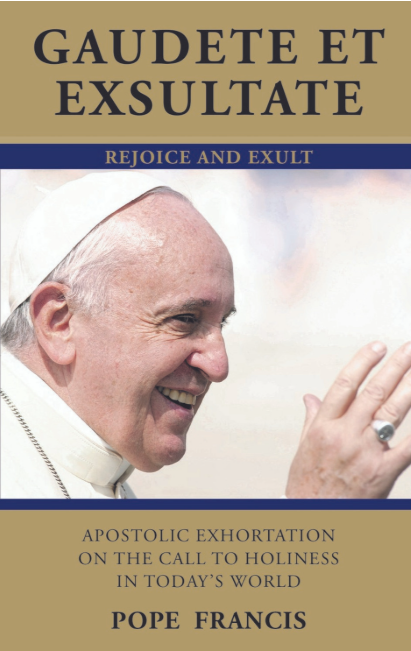
Legacy of Pope Francis No 4: Gaudete et Exsultate (Rejoice and be glad) (2018)
Taken chronologically this series is a summary of seven of the most important writings of Francis’ papacy.
Gaudete et Exsultate is the third apostolic exhortation of Pope Francis, subtitled "on the call to holiness in today's world". It addresses the universal call to holiness, with a focus "to repropose the call to holiness in a practical way for our own time", living the Beatitudes, practicing mercy and fostering joy and meekness.
Key Themes & Insights
Universal Call to Holiness:
The path to holiness is available to everyone, regardless of their state in life.
Holiness in the Ordinary:
Holiness is found in the everyday activities, challenges, and even the quiet moments of life, integrated into our entire existence.
The Beatitudes as a Roadmap:
The Beatitudes provide a practical guide to living a holy life, highlighting qualities like joy, patience, and humility.
Warning Against False Holiness:
The exhortation identifies intellectualism and self-righteousness as deceptive ideologies that distort the true path to holiness.
Importance of Prayer and Community:
Prayer, both personal and communal, is essential, and growth in holiness is best achieved in community with others.
The Reality of Spiritual Warfare:
The document asserts that evil is real and that Christians must be vigilant, practice discernment, and trust in God's mercy.
Practical Signs of Holiness:
Pope Francis encourages qualities like patience, meekness, joy, humour, boldness, and perseverance as indicators of spiritual growth.
Solidarity and Social Engagement:
True holiness involves solidarity with the poor and suffering and cannot be separated from our social engagement and commitment to justice.
The document warns against false forms of holiness, such as intellectualism and self-righteousness, stressing the importance of prayer, community, and recognizing the reality of spiritual struggle and the work of the devil.

Deacon Mark Kelly
College Chaplain