Term 1, 2025 Year 2
Year 2
Term 1
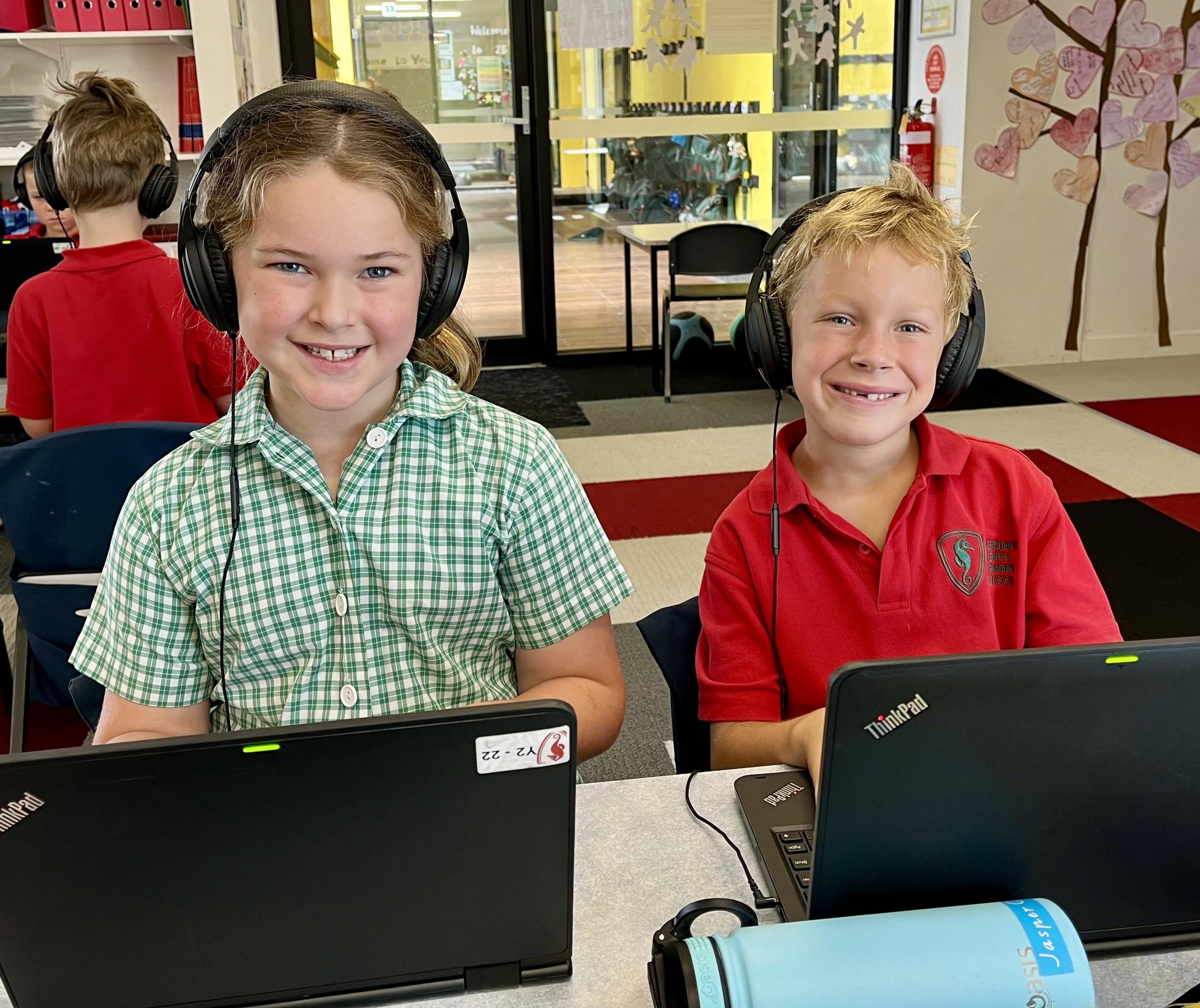
The Year 2 children have settled in beautifully to their new learning environment and have made a great start to the school year. The teachers and students have enjoyed getting to know each other and have learnt a lot already about how our feelings and emotions influence the way we communicate with each other.
We are all excited to continue learning about our emotions in the classroom and reflect on how we can positively respond to varying emotions throughout the year.
Units of Inquiry
How we express ourselves
Communication is influenced by feelings and emotions
Lines of inquiry:
Exploring our emotions
The ways in which we share our ideas and feelings
The ways our emotions affect our communication
During this unit the students investigate their emotions with the help of the Inside Out characters. They also learn why they feel the way they do and how they can regulate their emotions.
Literacy
The Daily 5
The students have been introduced to the Daily 5 for Literacy. These are Read to Self, Read to Someone, Listen to Reading, Work on Writing and Work on Words. We have discussed the expectations for each of these skills, as they are to be practised daily in our classrooms. The students will be participating in aspect of the Daily 5 throughout the week.
Reading
Reading plays an integral role in our everyday learning. In Year 2 there is an emphasis on fluency, expression and comprehension. The students will be exposed to various strategies that will encourage fluent, accurate and expressive reading while expanding their vocabulary. Comprehension is the ultimate goal of reading. It involves understanding and interpreting what is read.
The students will engage in Guided Reading Groups with their teachers where they will practice their reading skills. Guided reading is "small group reading instruction designed to provide differentiated teaching that supports students in developing reading proficiency". The small group model allows students to be taught in a way that is intended to be more focused on their specific needs, accelerating their progress. Teachers will monitor their students' progress on a regular basis by documenting anecdotal records of the behaviours they are observing.
Writing
Students will be exposed to the qualities which make for good writing through the 6 + 1 Writing Traits.
These are:
- Ideas - the main message.
- Organisation - the internal structure of the piece.
- Voice - the personal tone and flavour of the author's message.
- Word Choice - the vocabulary a writer chooses to convey meaning.
- Sentence Fluency - the rhythm and flow of the language.
Conventions - the mechanical correctness of writing which includes basic punctuation skills such as capital letters, full stops, exclamation marks and question marks.
Our Writing sessions this term will focus on letter writing including how to set out a letter and the types of information to include.
Grammar
Students will revise capital letters and full stops and learn that all proper nouns require capital letters and the pronoun ‘I’.
Spelling
Students will continue with the SMART Spelling approach and have 5 words to learn each week based on a Spelling focus and two BOB words (words they have misspelt in their personal writing). SMART Spelling is based around whole words with an emphasis on meaning and vocabulary development. Students must be able to read their spelling words, understand what they mean and how to use them in their writing.
Students will be introduced to the new spelling focus on a Monday and will choose their words for the week, which they will bring home in their communication folders on a Monday. Throughout the week these words will be practiced daily through a variety of Word Work activities, with a spelling test and dictation taking place on a Friday morning.
Speaking and Listening
This term we are focusing on listening carefully with respect when teachers and other students are speaking. We are focusing on whole body listening and what it means to be a good listening during learning time.
Numeracy
The Daily 3 for Numeracy
The students have also been introduced to the Daily 3 in Numeracy, which are: Maths on my Own, Maths with Someone and Writing about Maths. These skills should be undertaken on a daily basis. The teachers modelled positive and negative behaviours for each of the Daily 3 and what is expected during these times. The students enjoyed selecting activities and games to practise their maths skills. They also completed a poster.
Number Fluency
Prior to commencing our Maths lessons, the students have been practising their maths fluency and number facts by engaging in a variety of activities where they are required to share their reasoning and strategies.
Number
During the term the students will be concentrating on developing a firm understanding of place value to the thousands. We will look at the positional value of each number, write it in extended notation and use a number expander to break down given numbers. The students will use hands on manipulatives to assist with this.
Measurement
The students will be exploring reading, writing and telling the time to half past, quarter past and quarter to on both an analogue and digital clock. We will be looking at special events/days, seasons, months of the year and how many days are in each month. The students will learn to locate specific days and dates on a calendar.
Manga High
In Year 2 we will be using Mangahigh to help children develop their mathematical understanding/knowledge through a variety of lessons on concepts, incorporating the use of maths videos/ activities and games.
In class, students will be set tasks related to the current math concept and these can be accessed up at home.
Inclusive Approaches
Zones of Regulation
The Zones of Regulation is a systematic framework that helps children, understand and manage their emotions. It categorises emotions and states of alertness into four color-coded zones:
- Blue Zone (low alertness eg sick, tired, bored, uphappy, moving slowly)
- Green Zone (optimal alertness eg happy, calm, focused, ready to learn)
Yellow Zone (heightened alertness eg frustrated, worried, silly/wriggly, excited, loss of control)
Red Zone (extremely high alertness eg mad/angry, yelling/hitting)
By fostering emotional awareness, teaching self-regulation strategies, creating a Zones-friendly environment, and using visual supports, we empower children with essential skills for emotional well-being and self-control.
Resilience, Rights and Respectful Relationships
For our wellbeing learning, the students have been focusing on Emotional Literacy. As part of our 'Inside Out' focus, we have been discussing various emotions, events that make us feel this way, what happens in our body and things we can do to manage big feelings.
Whole-school Focus on PYP Learner Profile
February: caring
March: communicators
Special Dates
Year 1 Cyber Safety - Monday 17 February
School Photos - Monday 3 March
Labour Day - Monday 10 March
Colour Run - Tuesday 25 March
Term 1 Concludes - Friday 4 April 2.30pm
The Year 2 team
Ms Tania Maxwell, Mrs Melissa Ball, Mrs Melissa Werry & Mrs Jen Lee