Level 3 & 4
Welcome back!
We hope everyone has had a wonderful and enjoyable break and had plenty of time to relax and recharge. As we begin Term 4, we are excited to welcome our students and families back to school and look forward to a term filled with learning, new experiences, growth and plenty of fun. We can’t wait to see everyone and make Term 4 another fantastic one together!
Literacy
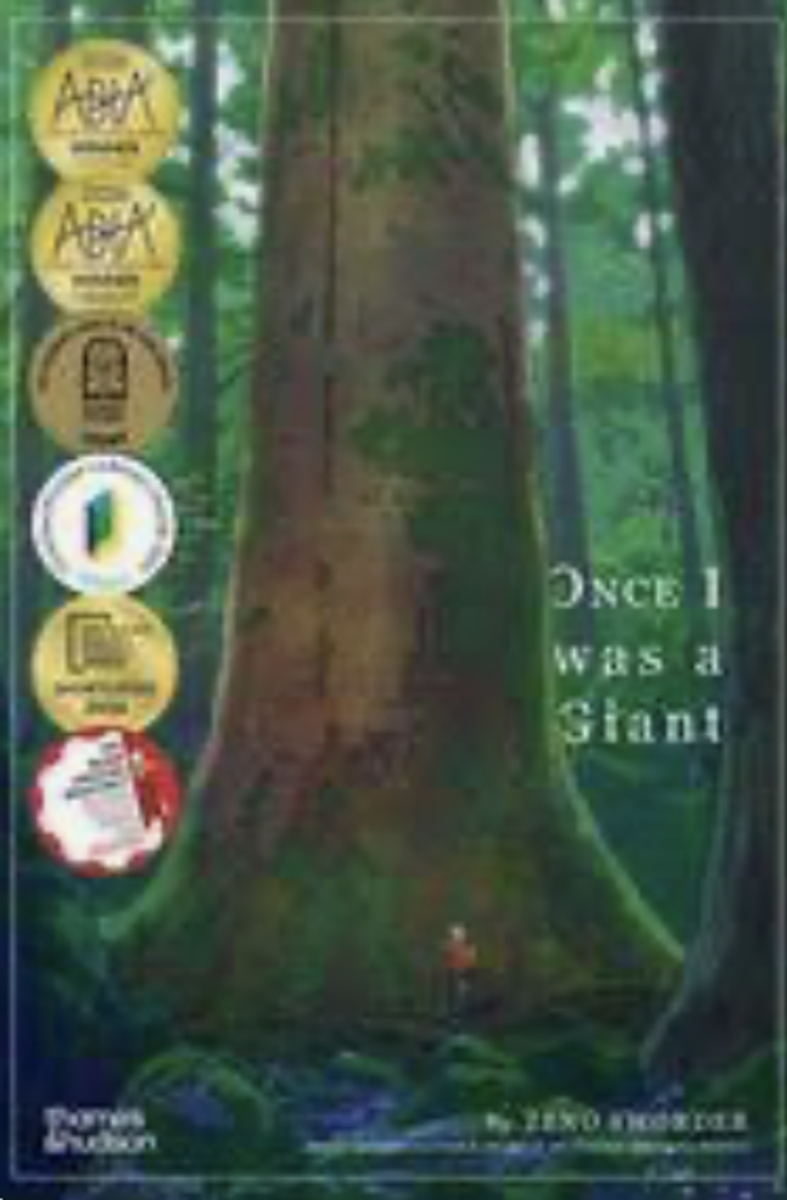
This week we will be exploring the beautiful picture book, Once I Was a Giant by Zeno Sworder. Students will investigate how the author and illustrator use words, images, colour and character actions to communicate meaning. We will closely examine the illustrations and discuss how details such as colour, facial expressions, positioning and what a character is looking at can help us understand what is happening, even when there are no words on the page.
Students will also explore language features including personification, verbs and adverbs and consider how an author's choice of words can create particular feelings and images for the reader. We will pay special attention to the wordless pages towards the end of the book, encouraging students to use their observations and imagination to create sentences and develop their own author's voice. We will also extend our learning through a related text about trees, using comprehension activities to develop students' ability to locate, interpret and discuss information from a text.
Building on our exploration of Once I Was a Giant, students will create their own narrative inspired by the idea of looking back at what an object once was. We will explore the difference between living and non-living things and investigate where everyday objects and natural materials come from. Students will choose an object, such as a feather, fossil, shell, wood or fabric and explore its origins before planning the journey it has taken from being part of a living thing to what it is today. They will map out their ideas on a timeline before writing their own narrative beginning with “Once I was a…”, using the author's sentence structure as inspiration. Students will draft, edit and publish their stories, developing their descriptive language, creativity and understanding of the journey from living to non-living.
WHAT CAN YOU DO AT HOME:
Encourage your child to explore the idea of “Once I Was a…” at home. They might choose an object around the house that was once part of a living thing, such as a wooden item, paper, cotton clothing, shell or feather, and investigate where it came from and how it became the object it is today. Students could draw the object's journey, write a few sentences from the object's perspective, or simply discuss their ideas with a family member. This activity will support your child develop ideas for their narrative writing at school.
Spelling & Grammar
Students will begin exploring the PhOrMeS spelling focus of ti, ci and si and how these letter combinations can represent the /sh/ sound in words. They will learn to identify these patterns when reading and spelling, investigate examples of words containing each pattern, and practise applying the patterns when decoding unfamiliar words. Through word sorting, discussion and spelling activities, students will develop their understanding of how different letter combinations can represent the same sound and begin applying this knowledge confidently in their reading and writing.
Maths
In Mathematics, we will be beginning a new unit focused on data and statistical investigations. Students will conduct guided investigations based on questions of interest, learning how to collect, represent and interpret data. They will explore data involving categories and numerical information, and investigate how data can be represented in different ways to help enhance meaning. Students will have opportunities to organise and analyse their findings, make comparisons and discuss what their data tells them.
Grade 4 students will extending to use surveys and digital tools to generate categorical or discrete numerical data in statistical investigations and communicate their findings in context.
WHAT CAN YOU DO AT HOME:
To support your child’s Mathematical learning, look for data, surveys and graphs in everyday life, such as those found on a weather app, in newspapers, online or in advertisements. Talk together about what the data is showing, what information can be gathered from it and why a particular type of graph or representation may have been chosen to display the data. Encourage your child to explain what they notice, make comparisons and discuss how the way data is presented can help us understand it more easily.
CBL (Challenge Based Learning)
This term, we will be beginning an exciting new Challenge Based Learning (CBL) topic focused on, "Survival". Throughout this unit, students will investigate what it means for living things to survive and the different factors that can help or hinder their survival. Our essential question for the unit is: What is survival?
As we progress through our learning, students will explore two key guiding questions: How do species depend on each other for survival? and How does an environment impact survival? These questions will encourage students to investigate relationships between living things, food chains and ecosystems, as well as how changes to an environment can affect the ability of species to survive.
Our CBL challenge will be: Help a living thing survive in a changing environment.
This week, we will begin by watching a tuning-in video to spark curiosity and encourage students to start thinking about survival. Students will share their wonderings and questions about what they have seen before creating a class word splash of words and ideas they associate with survival. This will provide a foundation for our investigations as we begin to develop our understanding of what living things need to survive.
Wellbeing
SWBPS
As part of our Be a Learner focus, students will continue to develop responsible and safe online learning habits. We will discuss the importance of only using school-approved apps and websites when using digital devices at school. Students will learn to make safe choices online, follow teacher instructions and use technology appropriately to support their learning.
Respectful Relationships
We will be exploring gender norms and stereotypes and discussing how these can influence the way people think, behave and make choices. Students will celebrate the different qualities, interests, strengths and characteristics that make each person unique. We will encourage students to recognise and appreciate individuality, while understanding that people should not be limited by stereotypes or expectations based on gender.
Kitchen Garden
We continue to rely on the support of our wonderful parent helpers to ensure this program is safe and successful. We also warmly welcome help from extended family such as grandparents, aunts, and uncles. Please watch out for the new link for Term 4, this will be sent as an email soon!
We post our recipes on Showbie for students who would like to recreate the amazing dishes they make in our cooking classes.
Please use the Showbie code below if your child would like to access these recipes:
9JYVE
INFORMATION & REMINDERS
GRADE 4 CAMP – Phillip Island 14th -17th October
Reminders
-All students are required to have a hat at school, ‘No Hat No Play’
-Please help support your child to make sure their iPad is charged and ready to use each day