Allied Health
Art Therapy, Occupational Therapy & Speech Pathology

Allied Health
Art Therapy, Occupational Therapy & Speech Pathology

From The Informed SLP
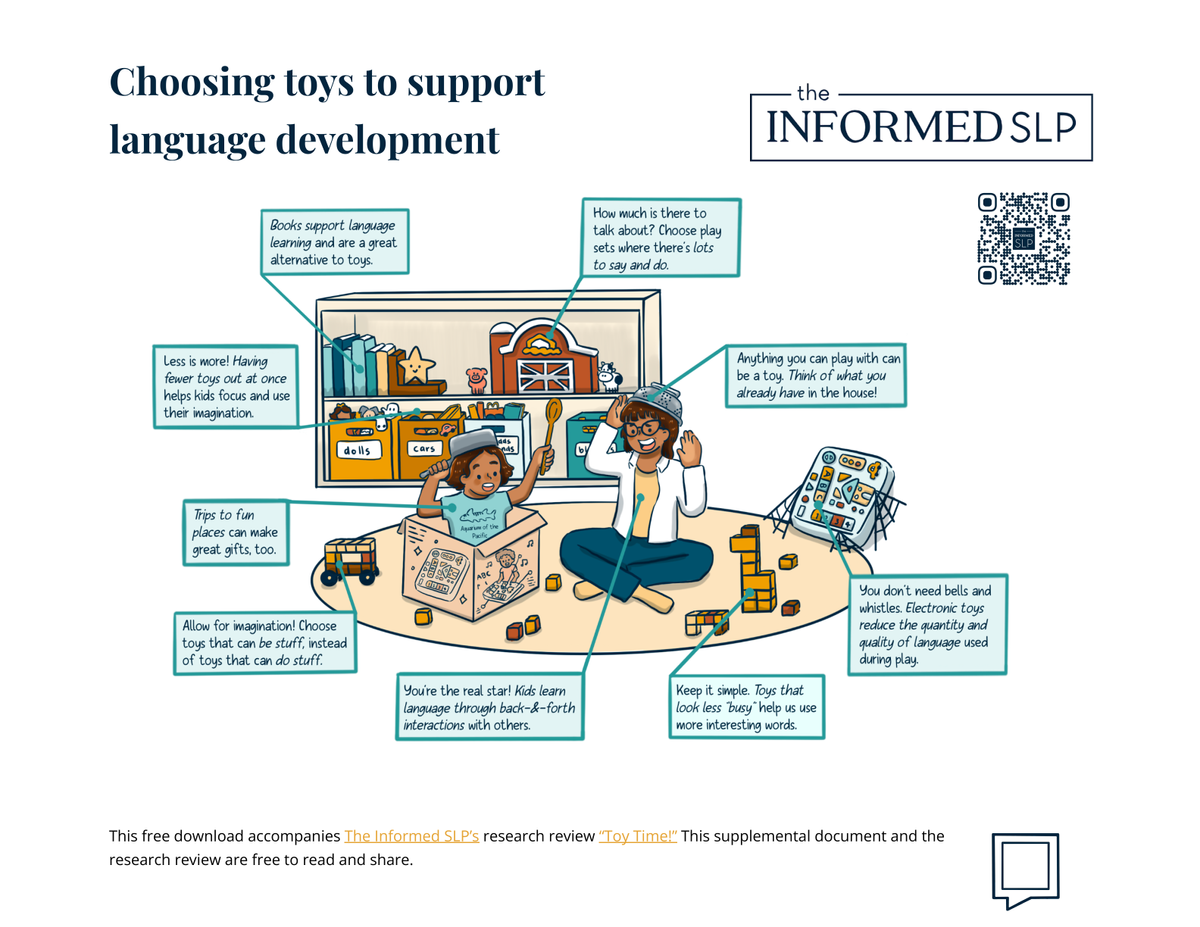
Toys, if used appropriately, can be incredibly useful tools for supporting language development and social engagement. The best toy is one that gives you lots to do and talk about but doesn’t steal the spotlight away from the child's play partner.
Research says:
Questions to ask when toy shopping:
Do I need a toy? Not necessarily! Consider how gross motor activities, daily routines, books, and outings (zoo, library, etc.) offer excellent opportunities for supporting language. Outings and experiences can make great gifts in lieu of toys!
What’s already around the house? Many household objects can serve as excellent tools for modelling language and social communication skills like turn-taking (e.g., salad spinners, cardboard boxes, sock puppets, pots and pans).
What types of things can you say and do while playing with this toy? All toys are not created equal in this regard. Take a moment to consider what you could name and what actions you could do with the toy. The more vocabulary and sentences you can model with the toy, the better it is for language, broadly. Consider these examples:
"Parents should be assured that they (not the toys) are the most important part of play interactions and that no toy can take the place of an engaged play partner."
– Sturman et al., 2022
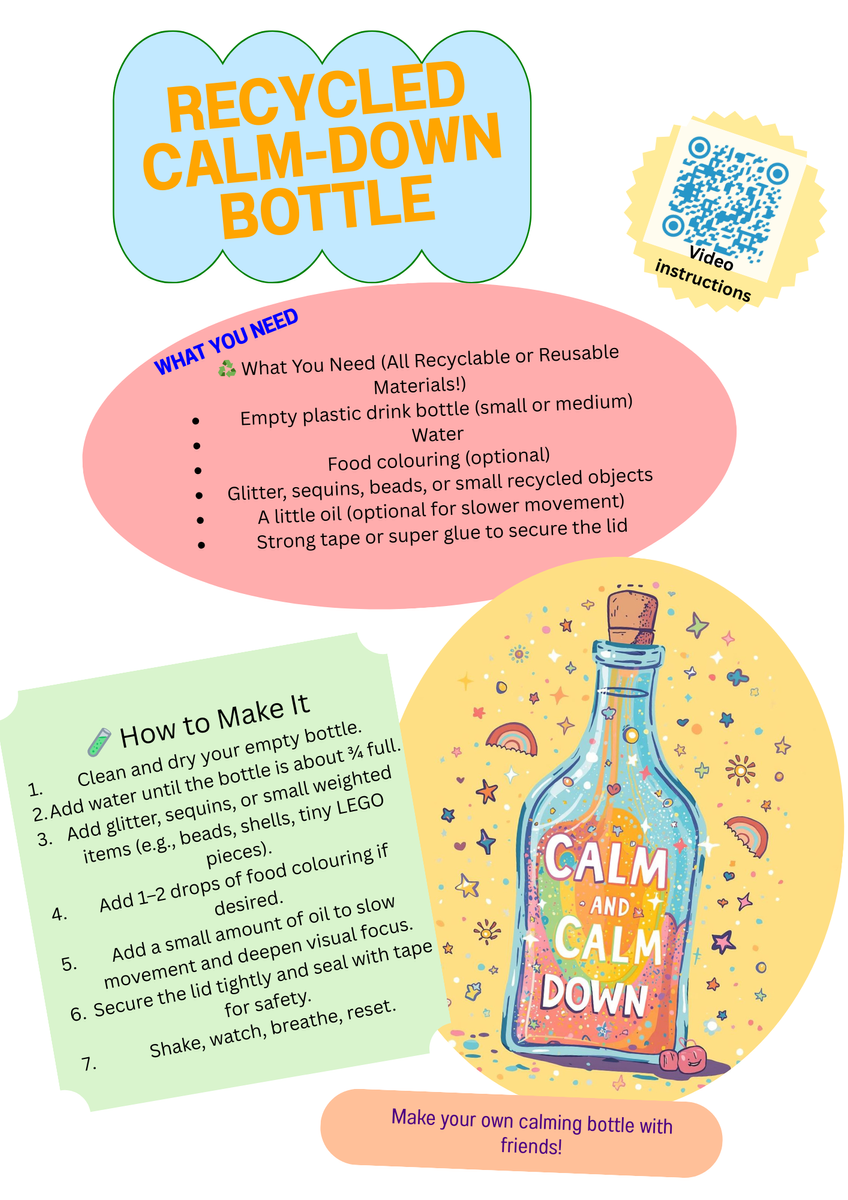
A calm-down bottle is a clear bottle filled with water, glue, and items like glitter or beads. When shaken, the contents slowly settle, giving children something steady to watch. This helps them pause, focus, and calm themselves down. Calm-down bottles are simple to make and useful in classrooms, therapy settings, and at home!
Big Life Kids
This podcast helps children develop a growth mindset! Join Leo and Zara as they explore the world, discover growth mindset strategies, and hear inspiring stories of real-life role-models who've overcome real challenges.
Emerging Minds
Supporting Children with Big Feelings - In this episode, host Alicia Ranford talks with social worker, parent educator, author, founder of Connected Parenting and mother to four boys, Gen Muir. Gen shares ways parents can support their children when they experience big feelings, especially if they don’t yet have the words to tell us what they need. Gen also offers support for parents who may find this stage of child development difficult and ways they can look after themselves.
Supporting Your Child's Emotions - Children experience big feelings, it can be a rollercoaster for them and you, as you both navigate daily life, from tears and tantrums to joy and laughter. There are so many emotions as children grow and experience new things, and it can be difficult for parents and caregivers to know how to help our children manage these emotions. In this podcast we talk to Ben Rogers, a father and occupational therapist who has spent much of his career looking at emotions and how to help children and parents manage them in a healthy way.
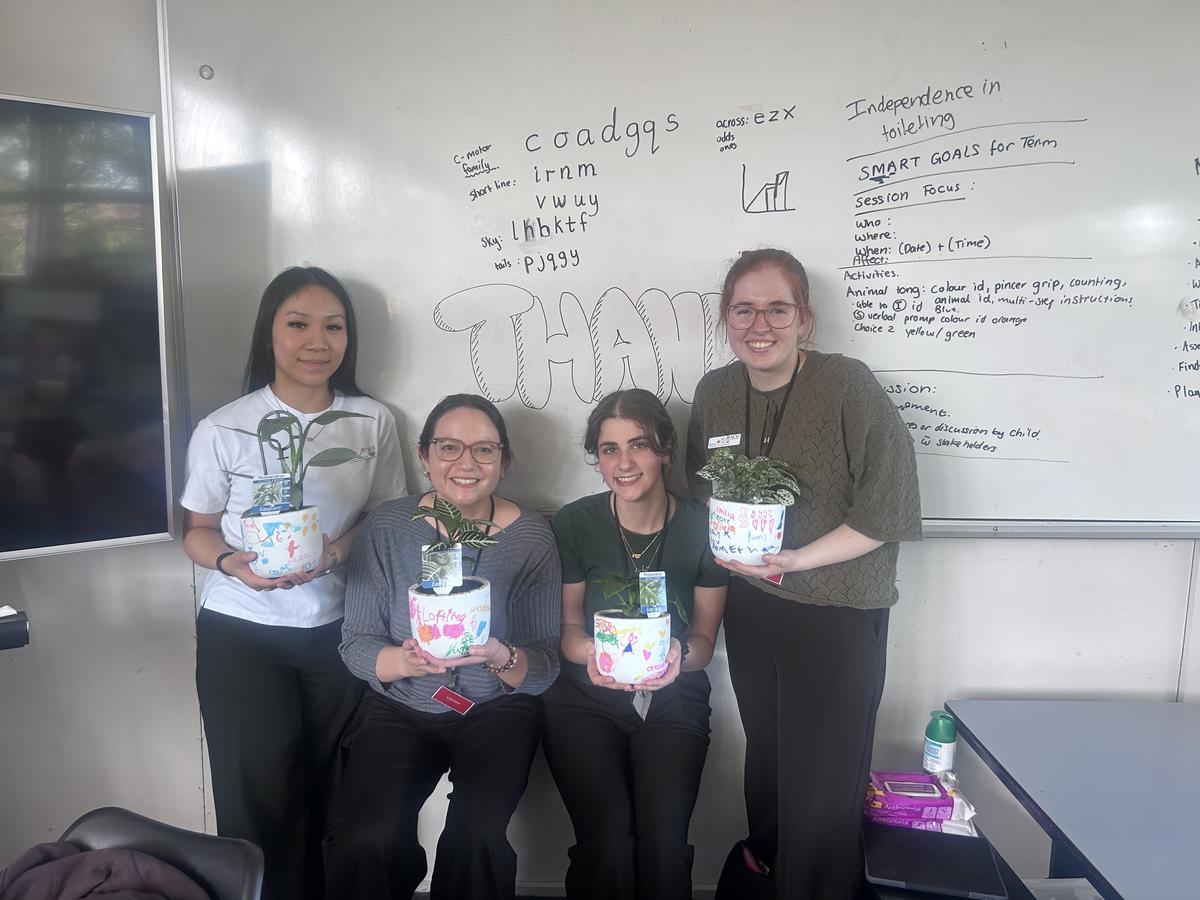
This week, we said goodbye to our occupational therapy students as they finished their 5-week placement with our OT Vanessa. We appreciate all your support and dedication to helping the staff and students at Sunny Heights. Congratulations and all the best with your university journey!!!