
Science

Year 3 and 4
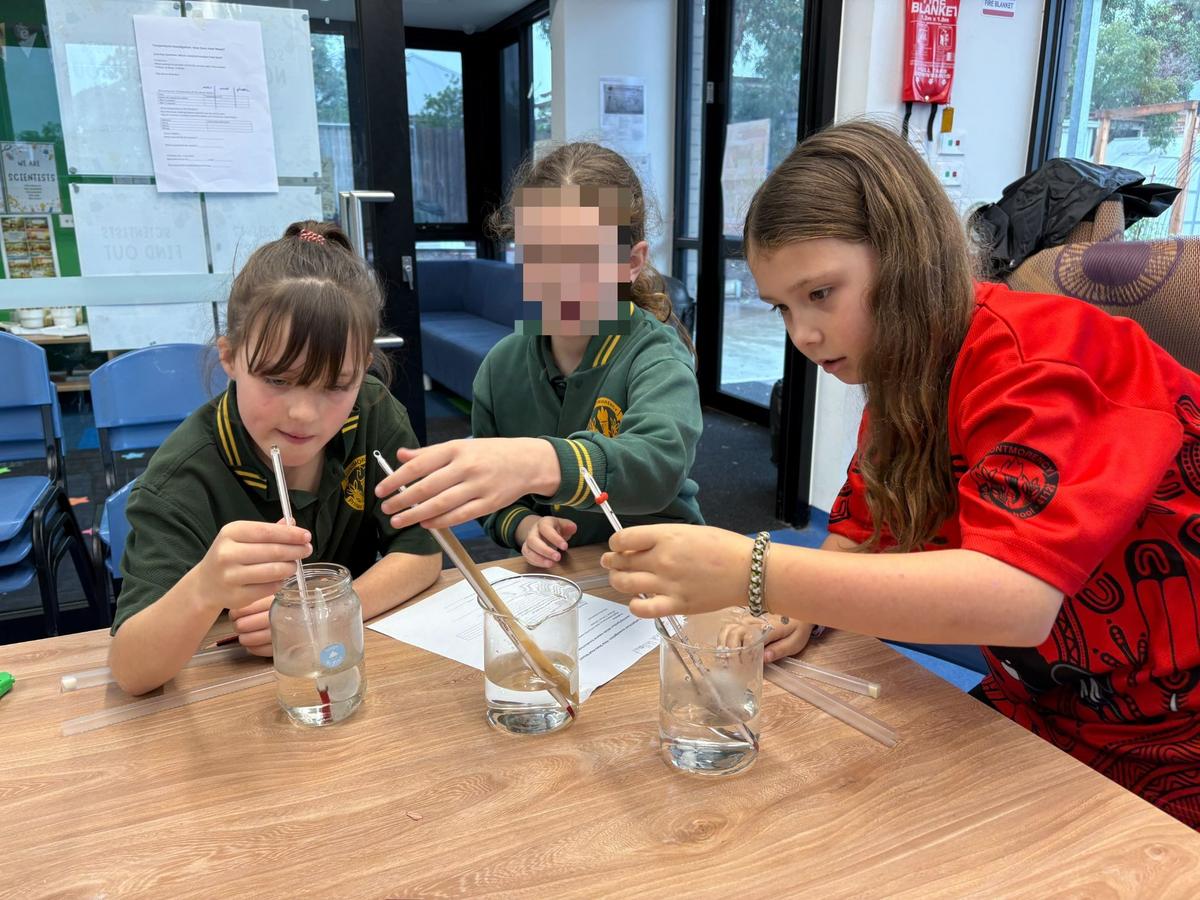
Over the past two Science lessons, students have been exploring how heat moves and how animals stay warm in cold environments. They used thermometers to measure temperature and investigated conduction by testing how different materials transfer heat from warm water. Students then explored insulation, testing a range of materials to discover which were most effective at slowing heat loss. These investigations helped students understand how penguins and other Antarctic animals use features such as feathers, blubber and huddling behaviour to stay warm in extreme conditions.
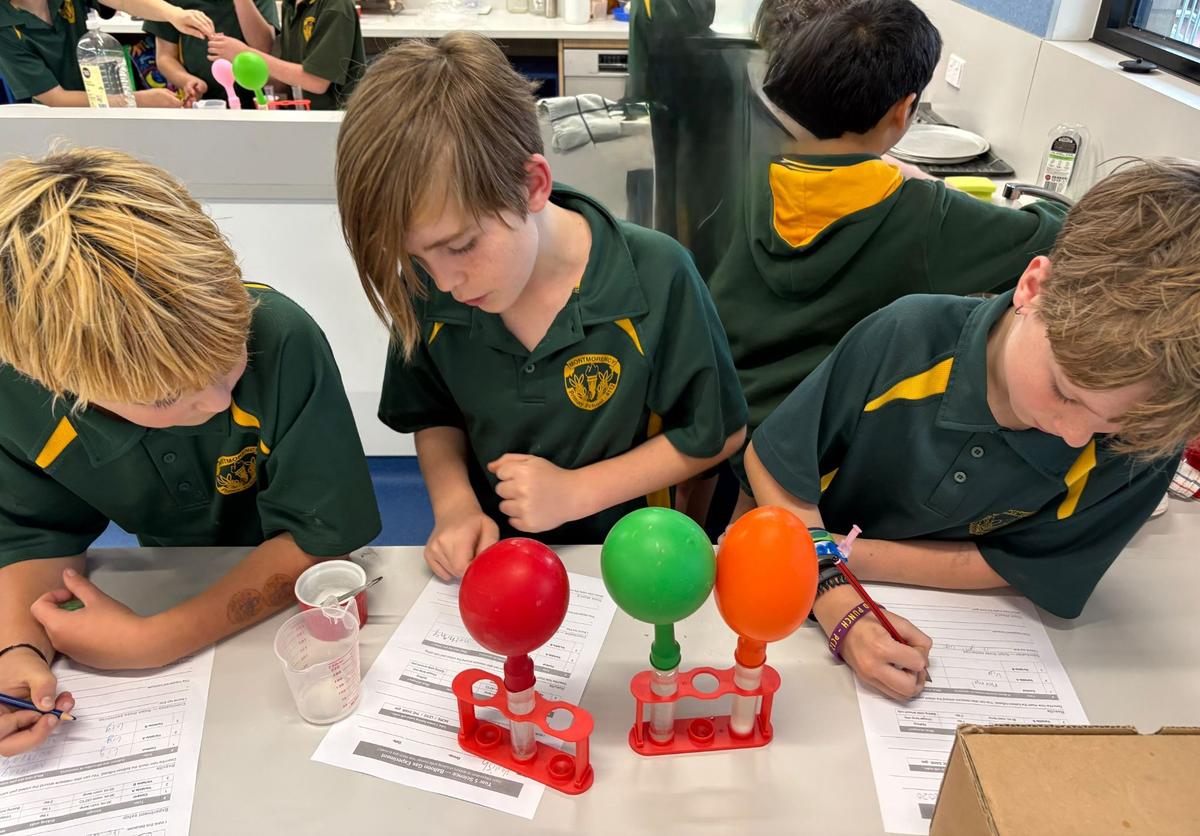
Year 5 scientists got hands-on in the lab this week, investigating chemical reactions by mixing baking soda and vinegar to produce carbon dioxide gas — captured live in a balloon! Students designed a fair test using three tubes: a control, one with warm vinegar, and one with a double dose of baking soda, making predictions beforehand and recording their observations as the balloons inflated before their eyes. It was loud, it was bubbly, and it was brilliant science.
As part of our Forces and Motion unit, students investigated whether Bee-Bots travel at a constant speed and whether they move at the same speed when travelling forwards and backwards. Before testing, students made predictions and worked collaboratively to design fair tests, considering which variables needed to remain the same to ensure reliable results.
Using timers, measuring equipment and careful observation, students collected data on Bee-Bot movement and recorded their findings. They then represented their results using graphs and analysed patterns in the data. Students discovered that while Bee-Bots move more consistently than humans, their movement is not always perfectly constant. They also compared forward and backward motion and used evidence from their investigations to support their conclusions.
This investigation provided an excellent opportunity for students to develop their scientific inquiry skills by making predictions, conducting fair tests, collecting and analysing data, and communicating their findings using evidence.
Elisa Cleeve,
SAKG Science Teacher