Grade 3 News

Dear Year 3 Parents/Guardians,
Our Year 3 students have settled into their new classrooms beautifully! They have quickly adjusted to their learning routines and are demonstrating great enthusiasm and dedication to their learning. It’s wonderful to see them embracing new challenges, participating actively in lessons, and building strong learning habits.
Just a friendly reminder that all students must bring their satchel to school each day, which contains their diary and reader. This helps us stay organised and track important notes and reading progress.
Additionally, nightly reading is an essential part of our routine. Students should be reading at home every night to build their fluency and comprehension skills. To support this, all students have access to an online platform called Little Learners, which provides extra reading practice. Login details can be found in their diary. (A picture of what this looks like is below for your reference, which will have your child/rens login details on it.)
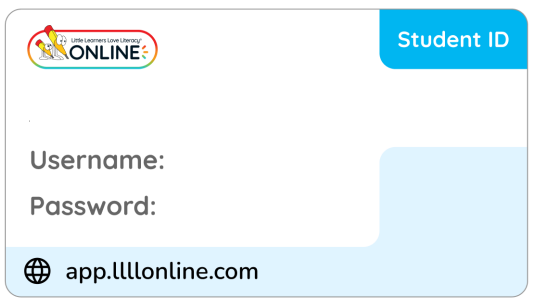
Learning Focuses- Below is what we have been focusing on with our learning at the start of this term. We have also suggested some activities you can do with your child/ren to support their learning outside of the classroom if you wish to.
Phonics
Our focus has been on revising sounds with alternative spelling patterns to strengthen students' reading and writing skills. The English language is made up of many sounds, some of which can be tricky because they can be spelled in multiple ways.
Recently students have been learning about the placement of alternative spellings patterns for the /tch/ sound, short e sound /e/, the short i sound /i/ and the short o sound /o/. Each of these sounds have alternative ways the sound can be represented below are the ways that these sounds can be represented.
/tch/ - watch /ch/ - chicken
/e/ - bed /ea/ - bread
/i/ - lip /y/ - Sydney /-age/ -cottage
/o/ - log /a/ - wash
Some ideas of things you can work on at home this week with the phonics we have been learning are:
- Reading Together: Encourage your child to read a variety of books at home, paying attention to different spellings of familiar sounds. Point out tricky words and discuss the sounds and their spellings together. (Remember we have the LIttle Learners Online Platform)
- Sound Games: Play sound games such as “I Spy” with a focus on spelling patterns. For example, “I spy something with the sound /i/.”
- Word Hunts: During reading or everyday activities, have your child spot words with the sounds they are learning. This reinforces their understanding of the sound-to-spelling connections.
Morphology
In our lessons, we have been teaching students about the prefixes anti-, de-, re-, and the suffix -en to help them understand how words are formed and how their meanings can change.
Anti- means against or opposite (e.g., antibacterial – against bacteria).
De- means reverse or remove (e.g., defrost – to remove frost).
Re- means again or back (e.g., rewrite – to write again).
-en means to make or become (e.g., strengthen – to make stronger
Some ways you can continue to work on this at home include:
- Word Hunts: Go on a word hunt in books, newspapers, or even around the house. Look for words with anti-, de-, re-, or -en and write them down. Discuss their meanings and how the prefix or suffix changes the base word.
- Find Opposites & Similar Words: Challenge your child to think of words with opposite or similar meanings using these prefixes. Example: Antiwrinkle (opposite of wrinkle), Rebuild (similar to construct again).
- Real-Life Connections: Talk about real-life examples of these prefixes/suffixes. Anti- (antibiotics, antifreeze), De- (deflate a balloon, decode a message), Re- (recycle, redo homework), -en (soften butter, strengthen muscles)
Grammar & Syntax
In Grammar and Syntax, we have been focusing on helping students understand verbs and their categories, how to use verbs in the correct tense, the role of apostrophes in contractions, and how to identify fragments and complete sentences.
- Verbs and Their Categories: Students have learned that verbs are action words and can be categorized into different types:
- Action Verbs (e.g., run, jump, think)
- Helping Verbs (e.g., is, are, was, were)
- Linking Verbs (e.g., am, seem, become)
- Using Verbs in the Correct Tense: We have practiced choosing the correct verb tense by:
- Identifying past, present, and future tenses in texts.
- Converting sentences into different tenses (e.g., Yesterday, she walked to school. Today, she walks to school.).
- Apostrophes for Contractions: Students have learned how contractions shorten words using apostrophes, such as:
- do not → don’t
- she will → she’ll
- we are → we’re
- Identifying Fragments and Complete Sentences: Students have learned to recognize sentence fragments (incomplete thoughts) and how to turn them into complete sentences by adding a subject, verb, or additional details.Example: "Because he was tired." → (Fragment) Fixed: "He went to bed early because he was tired."
At home to support their learning in Grammar and Syntax you could try these ideas:
- Verb Action Charades: Write different action verbs on slips of paper (e.g., jump, run, think, laugh). Have your child act out the verb while others guess. Discuss how the verb might change in different tenses (jump → jumped → will jump).
- Verb Tense Switch-Up: Give your child a sentence in one tense and ask them to rewrite it in a different tense. Example: Today, I play outside. → Yesterday, I played outside. Use daily experiences: “What did we do yesterday?” “What are we doing now?” “What will we do tomorrow?”
- Contraction Match-Up: Write full phrases on one set of cards (do not, will not, I am) and contractions on another (don’t, won’t, I’m). Have your child match them correctly. Challenge them to write a sentence using the contraction.
- Fix the Fragments Game: Say or write sentence fragments (e.g., “Because it was raining.”). Have your child complete them into full sentences (“We stayed inside because it was raining.”). Turn it into a family challenge—who can fix the most sentences?
- Spot the Mistake: Write a short story with errors (wrong verb tense, missing apostrophes, sentence fragments). Have your child find and fix the mistakes.
Literature/Knowledge
In Literature and Knowledge, students have been learning about a text called Fox, written by Margaret Wild, is a book about an unlikely friendship between a dog and a magpie and how they work together to thrive after a bushfire. Their friendship is strong until Fox appears. Fox is angry and jealous of Magpie and Dogs’ friendship and sets out to ruin it. This unit focuses on inferring through the examination of characters' thoughts and feelings as indicated by their actions. Students evaluated the author's decision making around vocabulary related to character actions.
To support their learning at home, students can engage in activities that reinforce their ability to infer characters' thoughts and feelings and analyse vocabulary choices in the books you read together
Maths
In Maths, students have been developing a strong understanding of numbers up to 10,000 through a variety of hands-on and interactive activities. Our focus has been on helping students read and write numbers, identify place value, partition numbers, compare and order numbers, estimate quantities, and round numbers.
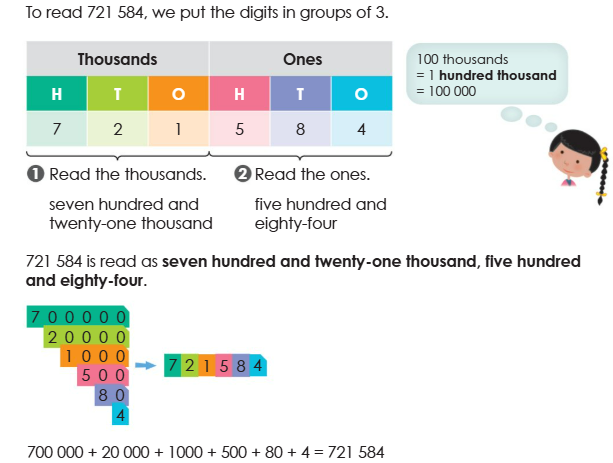
To support their learning at home, students can engage in fun and practical activities that reinforce reading and writing numbers, place value, partitioning, comparing, estimating, and rounding numbers up to 10,000. Here are some great ideas:
- Number of the Day: Choose a four-digit number each day (e.g., 3,472). Ask your child to:
- Write it in words (three thousand, four hundred seventy-two).
- Identify the value of each digit (3 = 3,000, 4 = 400, etc.).
- Partition it into thousands, hundreds, tens, and ones (3,000 + 400 + 70 + 2).
- Place Value War (Card Game): Use a deck of cards (or write numbers on paper). Each player picks four cards and arranges them to make the largest possible number. Compare numbers—who has the highest? The lowest? Bonus: Round the number to the nearest 10, 100, or 1,000!
- Estimation Challenge: Fill a jar with small objects (beans, pasta, marbles). Have your child estimate the number inside before counting. Discuss rounding—if the actual number is 863, what is it rounded to the nearest 10, 100, or 1,000?
- Shopping with Numbers: When shopping, point out prices (e.g., $3,876 for a fridge). Ask your child to:
- Say the number aloud.
- Identify the place value of a digit (What is the value of 8?).
- Round it to the nearest 10, 100, or 1,000.
- Guess My Number: Think of a number between 1 and 10,000. Give clues using place value and comparison (e.g., It is greater than 2,500 but less than 3,000. The digit in the tens place is 7.). Have your child guess the number!
- Writing & Reading Numbers in Real Life: Ask your child to read numbers on house addresses, car plates, or sports scores. Have them write numbers in words and break them into place values.
- Rounding Numbers in Daily Life: When looking at prices, distances, or populations, ask: “What is 3,875 rounded to the nearest 100?” Check the weather forecast: If the temperature is 27.6°C, round it to the nearest whole number!
SEL - In Social and Emotional learning students have been actively developing their ability to recognise, understand, and appropriately respond to their own emotions and the emotions of others through various targeted activities and discussions in our lessons.
Some ways you can continue this at home is by:
- Model emotional honesty by sharing your own feelings in a simple way, e.g., "I feel a little tired today because I didn’t sleep well.
- Start or end the day by asking, "How are you feeling today?" and encourage your child to describe their emotions.
- Read books about emotions and discuss how characters feel and why. Ask, “What would you do if you were in their place?”
Thank you for your ongoing support in fostering a love for learning at home! 😊📚
Miss Stapleton & Miss Henzell