
Mathematics

Some more addition and counting strategies will help to build conceptual knowledge that you can practice at home with your child.
Subitise
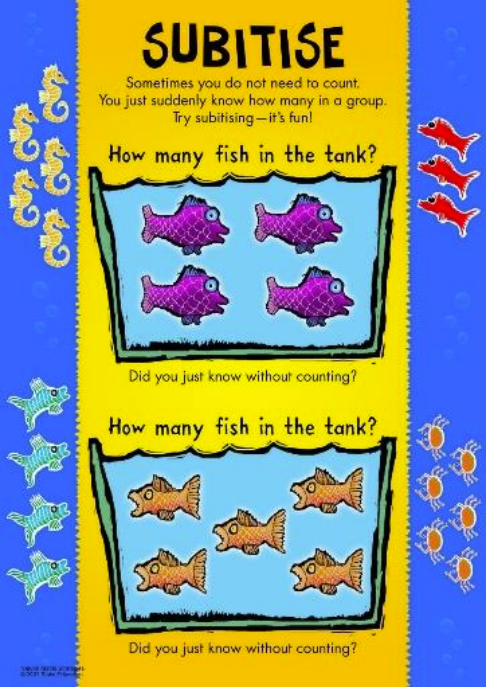
Subitising is an important skill that lays down the foundation for much maths later. Perceptual subitising means looking at a single group of objects and knowing just by looking how many there are.
Subitising builds on from this: eg. when throwing two dice,
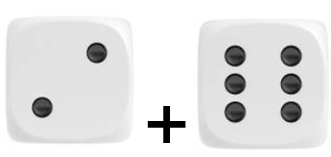
a student can subitise the six and count on 2 more.
Count On
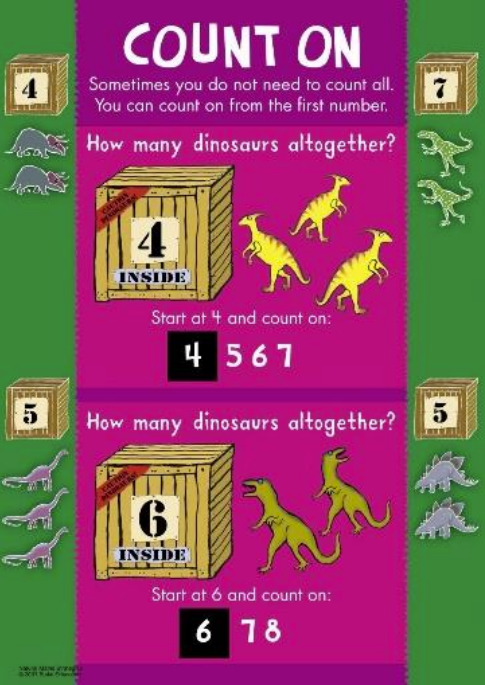
Although an early strategy, it is more complex than it first appears as the strategy rests on students having two distinct concepts- one is understanding altogether as the joining and counting of objects in two groups and the other being that of breaking the counting sequence. The latter involves counting on from a starting number other than 1. Looking at a range of objects , knowing how many and then counting on from that number is the first step towards addition.
Skip-Counting
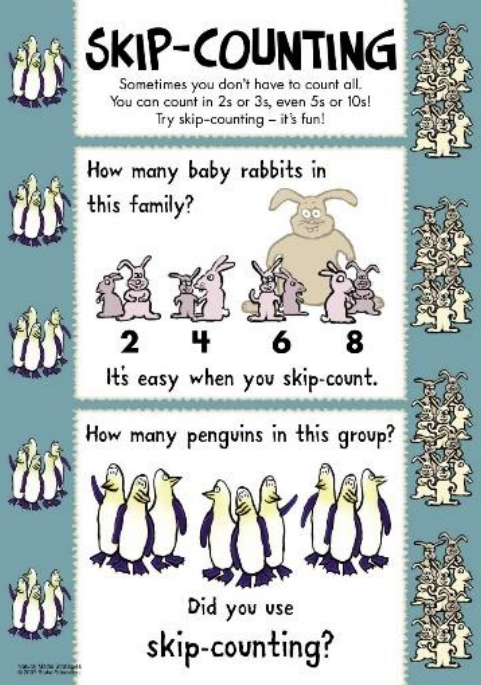
When there are more things to count than can be subitised it makes sense to spot or make equal groups and to skip count. Skip counting lays the foundation for understanding multiplication.
Subtraction Undoes Addition
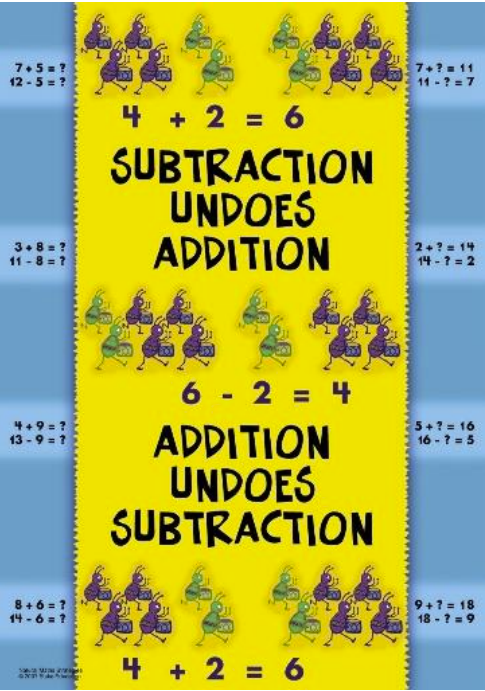
Students need opportunities to understand that groups of objects can be put together (added) and taken apart again (subtracted) into their original groups. An early strategy when carrying out subtraction is to convert into an addition.
Change the Order
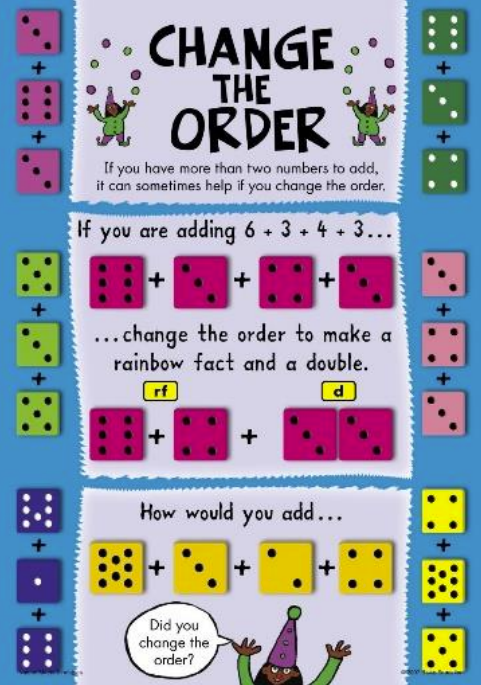
Addition is commutative: it does not matter which order the numbers are added in. This is useful when adding strings of numbers because it means that numbers can be added in an order that makes applying strategies more logical. For example when working out 8 + 3 + 2 + 4, it makes sense to match the rainbow facts (8 and 2) to make 10 and then adding the near doubles (3 and 4) to make 7. It is then very easy to finish with 10 + 7.
Sarah, Mathematics Leader

Sarah, Mathematics leader