From the Head of Visual Arts

Stage 5 Visual Arts Excursion at the Lewers Gallery
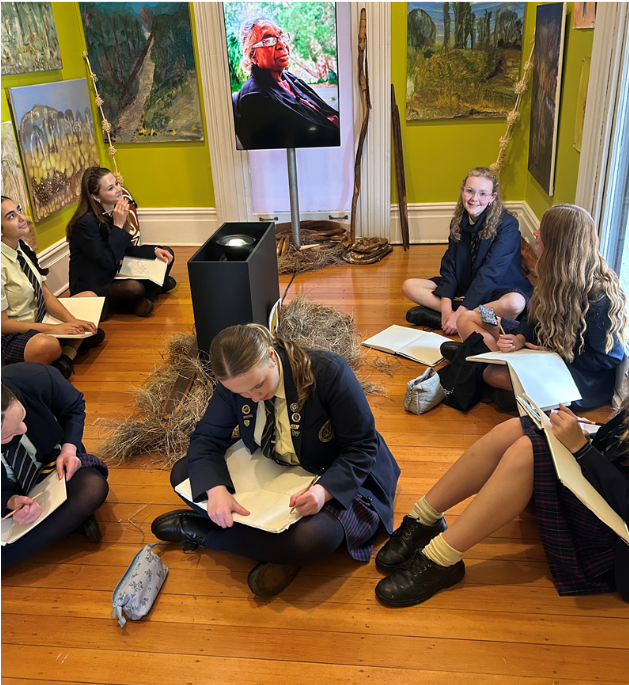
The Stage 5 Visual Arts students recently attended an inspiring excursion to Penrith Regional Gallery & The Lewers Bequest to experience the 25th edition of the Biennale exhibition, Rememory. The exhibition explored the powerful relationship between memory, history, identity, and belonging through the work of contemporary artists from around the world.
The concept of Rememory acted as a means of revisiting, reconstructing, and reclaiming histories that have been erased or repressed. The exhibition examined the intersection of memory and history, where recollection becomes an act of piecing together fragments of the past — whether personal, familial, or collective. Through deeply personal and culturally significant artworks, students were encouraged to reflect on how remembering and forgetting shape identity, community, and human connection.
Throughout the exhibition, students explored how artists use visual language to highlight marginalised narratives, share untold stories, and challenge audiences to reconsider the ways memory influences contemporary society.
One of the featured artists was Monica Rani Rudhar and her work The fire in me was lit long ago (2026). Working across sculpture, video, and performance, Monica Rani Rudhar explores themes of longing, loss, migration, and cultural identity. Born to Indian and Romanian migrant parents, her practice investigates intergenerational family histories and the impact of displacement within a settler colonial context. Through fragmented oral histories and ritualistic imagery, her work seeks to restore and reclaim familial traditions and stories that have been dispersed through migration.
Students also examined the work of Fernando Poyón, whose artwork Bringing joy to the earth (2025) reflected on Indigenous identity, resistance, and geopolitical relationships. As a Maya Kaqchikel artist from Guatemala, Poyón draws upon cultural, political, and historical perspectives to explore how symbols such as maps, flags, and urban landscapes shape identity and community. His practice highlighted the importance of Indigenous knowledge and the preservation of cultural traditions within contemporary art.
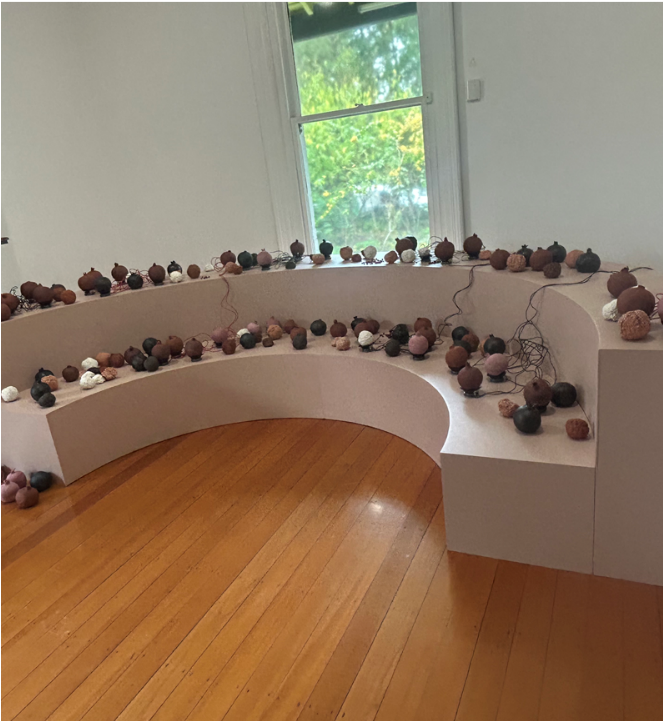
Another significant artist featured in the exhibition was Nora Adwan and her work Pomegranates/Rumman (2021/2026). Adwan’s practice combines poetry, documentary, fiction, and translation to create layered narratives connected to place and memory. Her work encouraged students to think about the role language, migration, and storytelling play in shaping personal and collective histories.
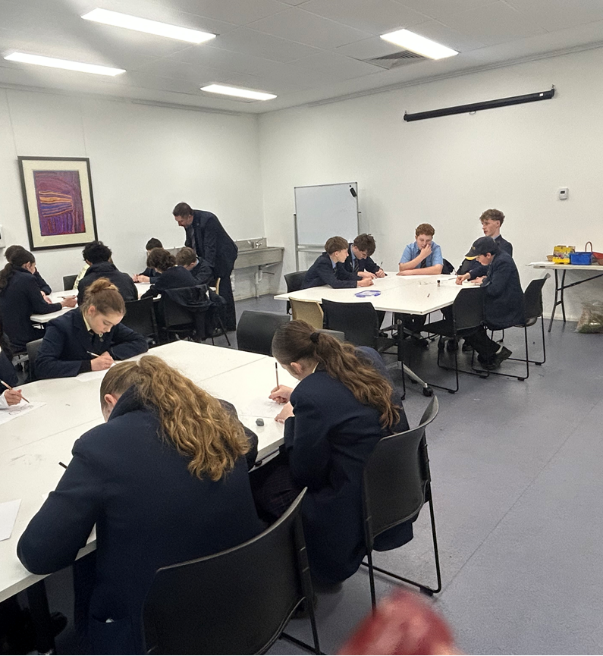
As part of the excursion, students also participated in a hands-on sculpture workshop where they experimented with a variety of materials, including found objects. The workshop encouraged students to think creatively about material practice, assemblage, and the ways ordinary objects can be transformed to communicate meaning and narrative. Students demonstrated enthusiasm and imagination as they explored sculptural techniques inspired by the themes of the exhibition.
The excursion provided students with an invaluable opportunity to engage directly with contemporary art practice while deepening their understanding of conceptual artmaking, cultural perspectives, and the significance of storytelling within the Visual Arts. It was an enriching experience that inspired thoughtful discussion, creative experimentation, and meaningful connections between art, history, and identity.
Amal Siorokos
Head of Visual Arts