
Learning and Teaching
Anna Robertson, Director of Learning and Teaching
Learning and Teaching
Anna Robertson, Director of Learning and Teaching
Over the past two weeks, I've shared evidence-based study techniques that challenge students to work differently – using Spaced Practice and Retrieval Practice to strengthen memory over time, and Interleaving and Dual Coding to deepen understanding. I hope students are beginning to experiment with these approaches, even when they feel less familiar than traditional study methods.
This week, I'm focusing on two techniques that work powerfully together: Active Recall and Elaboration. Both ask students to engage more deeply with their learning, moving beyond passive reading or highlighting to genuine understanding.
Active Recall is the practice of testing yourself on material without any prompts or cues – essentially recreating information from scratch. While this overlaps with Retrieval Practice (which I introduced in Week 3), Active Recall takes it further by removing all scaffolding and asking: what can you actually produce without any help?
The research is compelling: students who test themselves using Active Recall outperform those who simply re-read notes, even when the re-readers spend significantly more time studying. The act of forcing your brain to produce information – rather than just recognising it – creates much stronger, more flexible knowledge.
How students can use it:
The blank page method: Close all notes and write everything you can remember about a topic on a blank piece of paper. Then check against your notes and identify gaps.
In Maths and Sciences: Cover worked examples and attempt to recreate the solution method from memory before checking your work
In essay subjects: Without looking at notes, write out a paragraph answering a key question or explaining a concept, then compare it to your class materials
Past exam questions: Attempt questions under timed conditions without any notes, then mark yourself honestly and identify what you couldn't recall
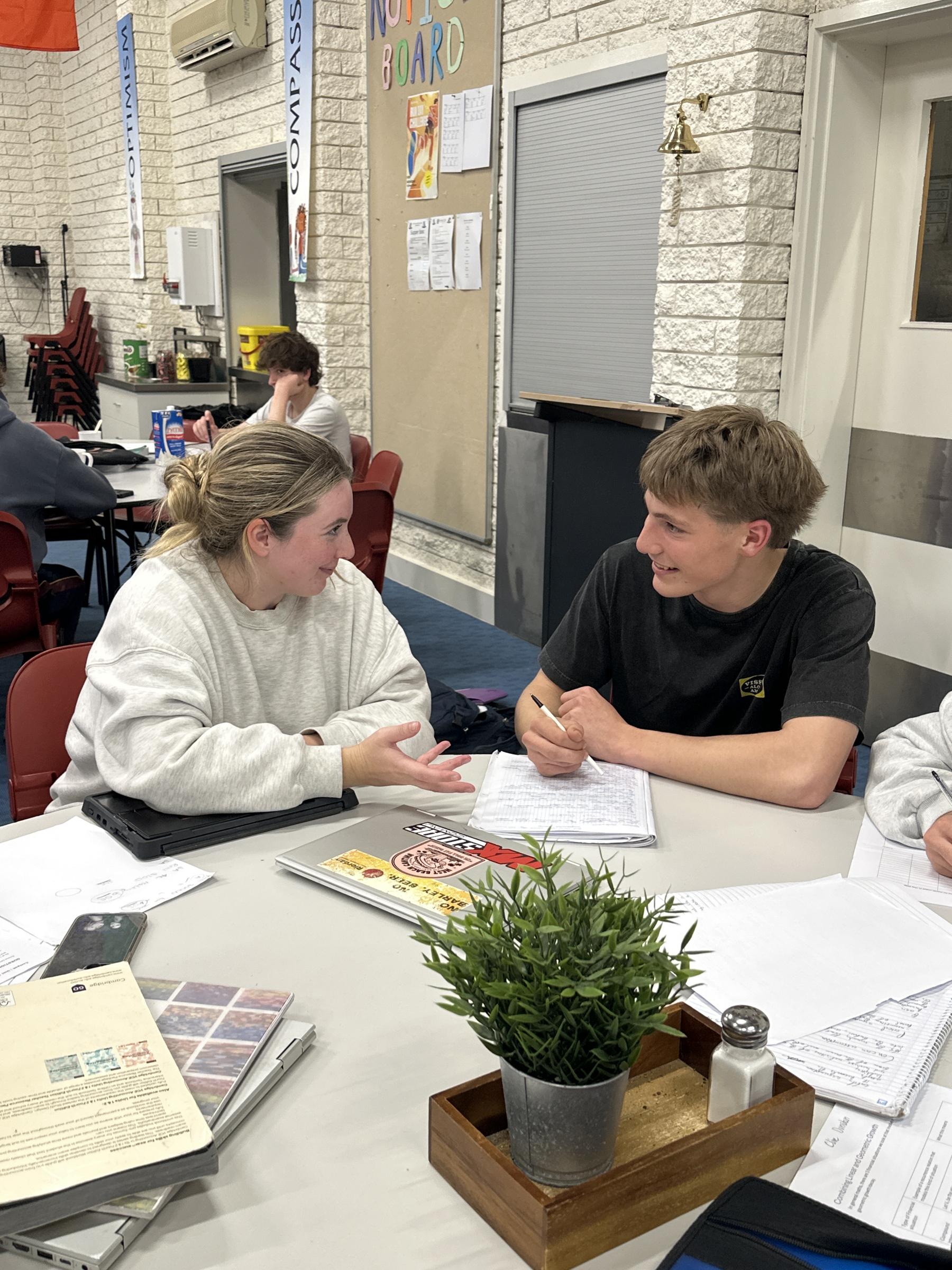
Teach-back method: Explain a concept out loud to someone else (or even to yourself) without referring to notes – stumbling points reveal what needs more work
Here's what makes this challenging: Active Recall often reveals how much we don't actually know. Students might think they understand something because they recognise it when they see it, but producing it from memory is an entirely different task. That uncomfortable realisation – "I thought I knew this, but I can't explain it" – is exactly where growth happens.
I encourage students to see this not as failure, but as valuable diagnostic information. The gaps you discover through Active Recall show you precisely where to focus your study time.
Elaboration means expanding on new information by connecting it to what you already know, asking yourself questions about how and why things work, and explaining concepts in your own words. Rather than memorising isolated facts, elaboration builds a web of connected understanding.
When students elaborate, they're not just storing information – they're making it meaningful, which is what allows them to apply knowledge in new situations rather than just repeating it back.
How students can use it:
Ask "why" and "how": Don't just accept that something is true – ask yourself why it's true and how it connects to other concepts
In Sciences: When learning a formula or process, explain why each step happens. For photosynthesis, don't just memorise the equation – think about why plants need sunlight, what they're actually doing with it, how this connects to respiration
In Humanities: Connect historical events to themes you've studied before; link literary techniques to their effects on the reader and why authors might choose them
Create examples: Generate your own examples of concepts rather than just using the textbook's examples
Make analogies: "This is like..." – comparing new information to something familiar makes it stick. "Mitosis is like photocopying because..."
Connect across subjects: Notice when concepts from one subject relate to another – resilience in PE connects to growth mindset in English; patterns in Maths appear in Music
The key is active engagement. Elaboration requires students to do something with information rather than passively absorbing it. This takes more effort initially, but it creates understanding that lasts.
This week, I encourage students to combine these two techniques. Choose a topic you're currently studying and use Active Recall first: close your notes and write everything you can remember on a blank page. Then, use Elaboration to fill the gaps: for each concept, ask yourself how it connects to something else you know, why it works the way it does, and generate your own example.
For instance, in Maths, recall the method for solving quadratic equations, then elaborate: why does this method work? How does it connect to graphing parabolas? Can I create my own word problem that would use this approach?
Parents and carers, you can support this by asking your child to explain their learning to you without looking at their notes. The questions they struggle to answer reveal exactly where they need to focus their study. It's also worth acknowledging that this type of study can look less "busy" than traditional note-taking – there might be more thinking time and less visible output, and that's perfectly appropriate.
These techniques demand curiosity and the resilience to sit with not-knowing before understanding emerges. Our students have demonstrated both throughout this term, and I'm confident they're ready to take on this challenge.