NIHONGO
Senior School - Nengajō Designs
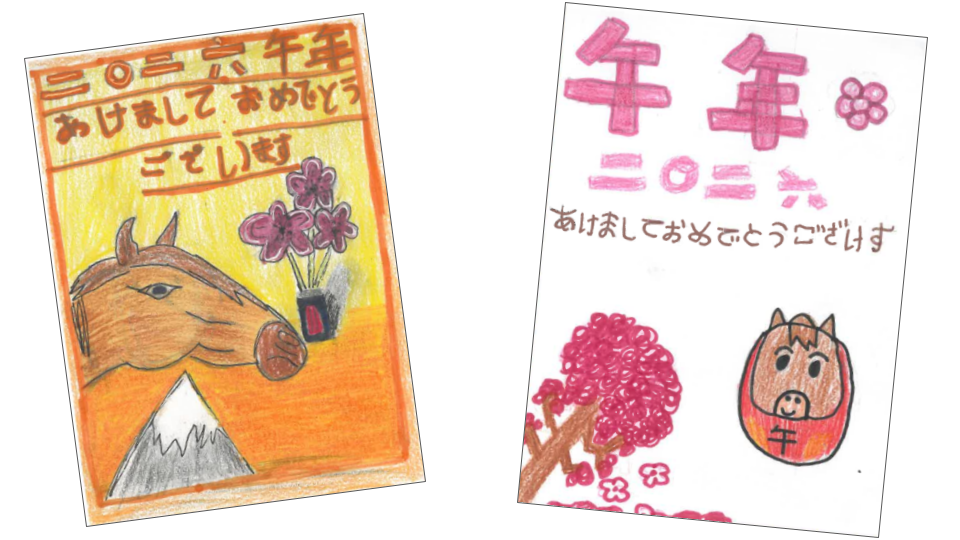
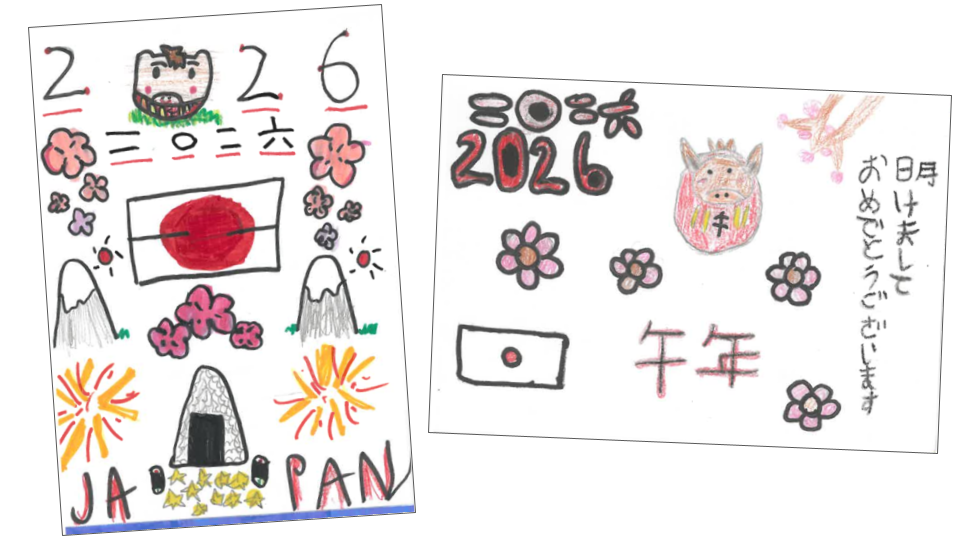
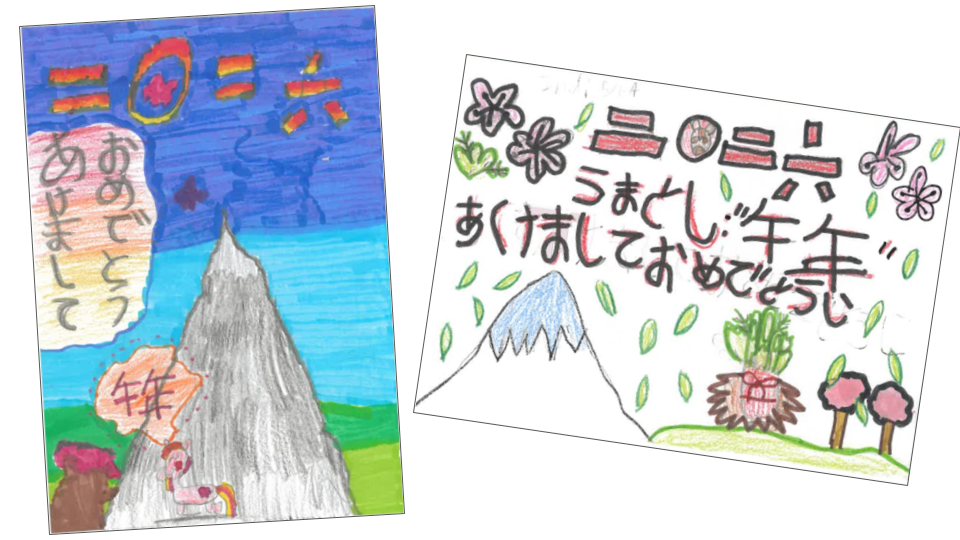
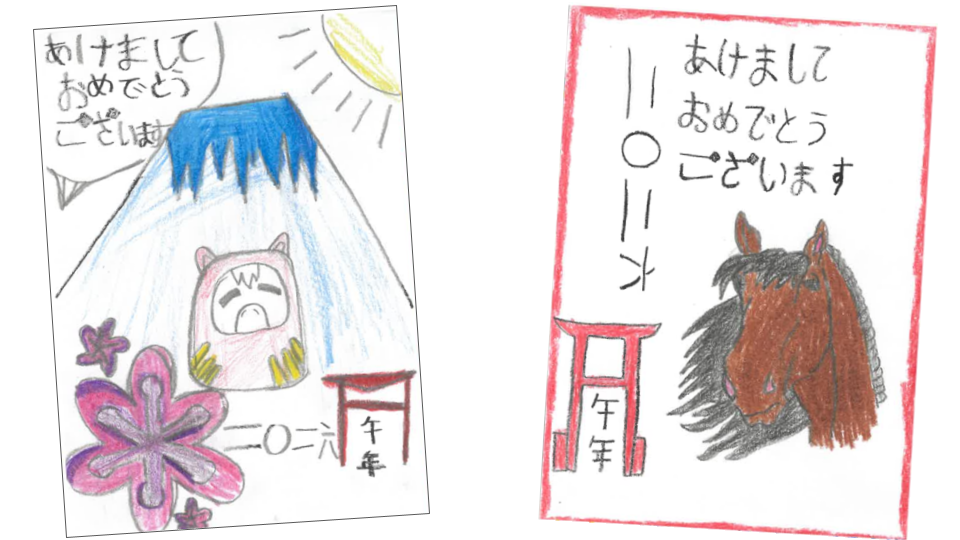
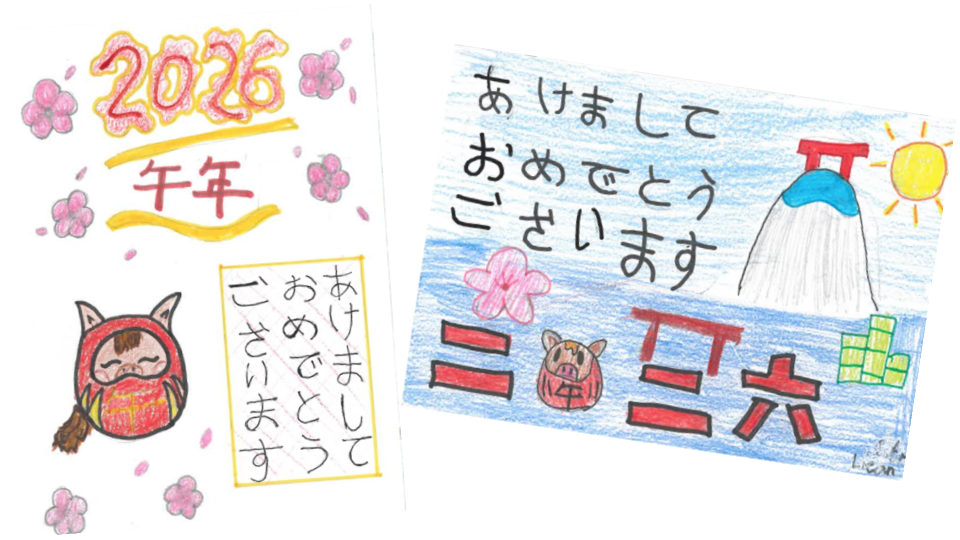
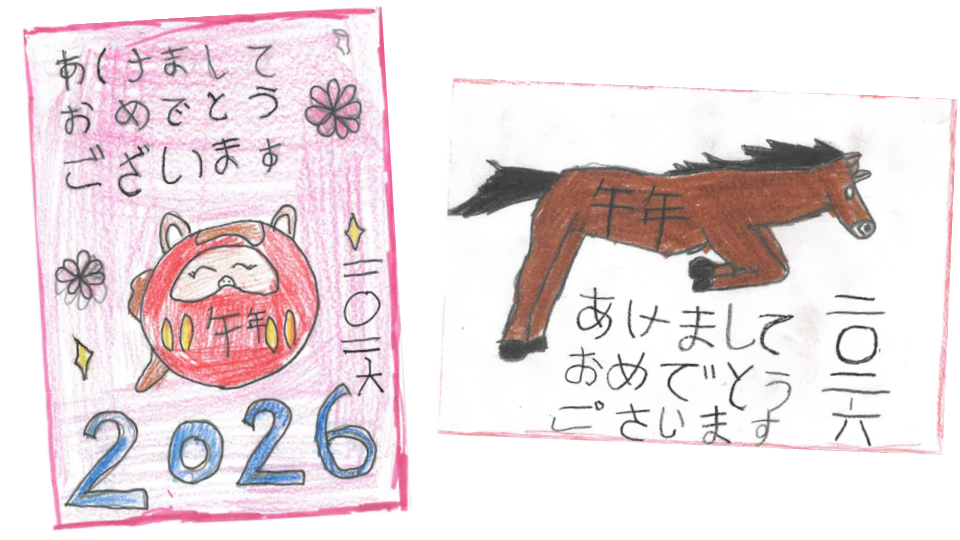
The senior students galloped into the Year of the Horse with learning about New Year traditions, in particular, the nengajō.
In Japan it is customary to send New Year greetings cards, known as nengajō, to relatives, friends and colleagues. The cards are decorated with special greetings and seasonal illustrations, and are delivered on New Year’s Day.
あけましておめでとうございます!"Akemashite omedetō gozaimasu" is a polite Japanese greeting used to wish someone a Happy New Year. The phrase is often found on New Year cards. Students practised writing the greeting using Hiragana.
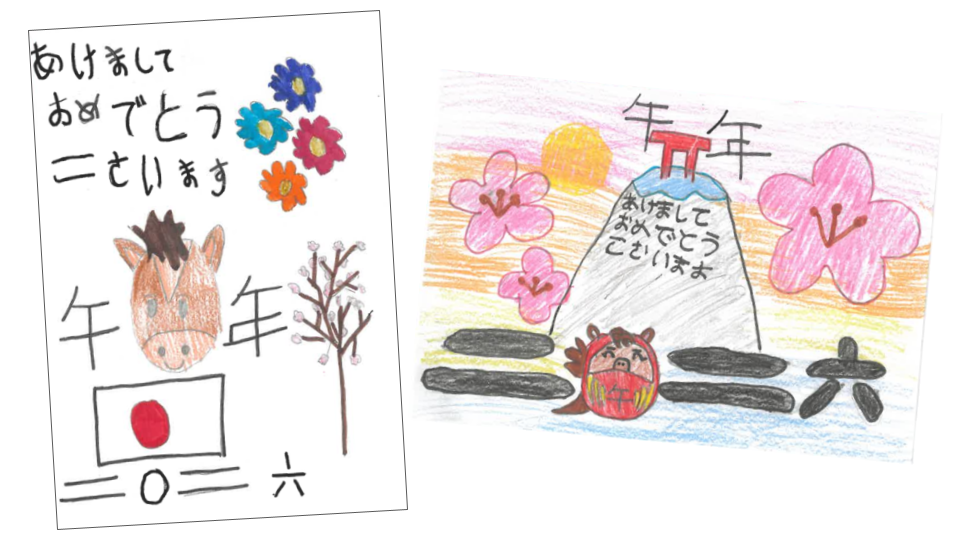
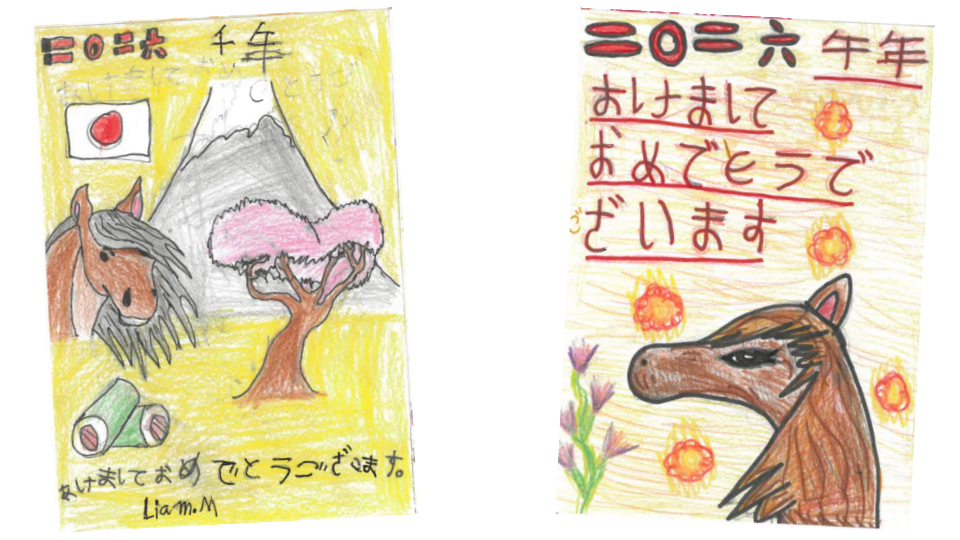
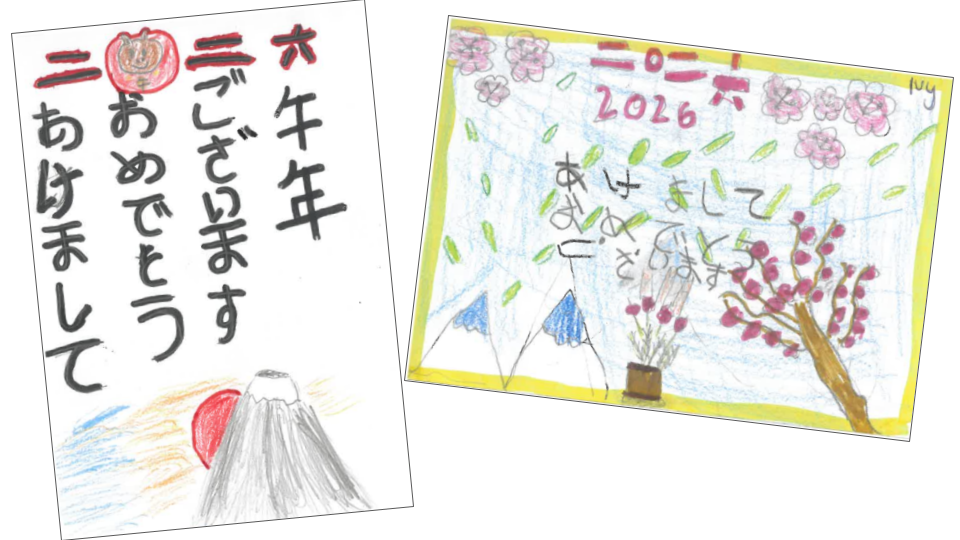
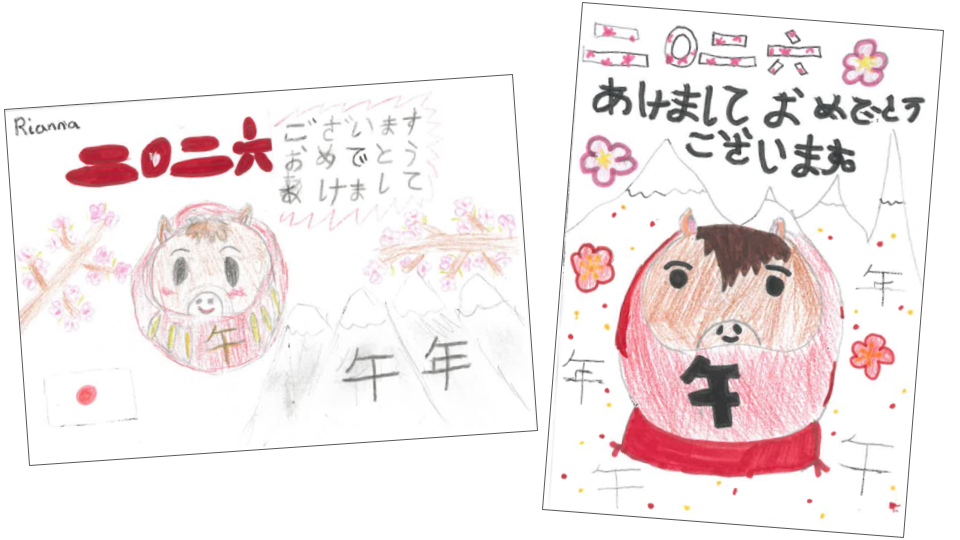
The students followed a design brief that included components required for nengajō, such as new year greeting, picture of the zodiac year sign animal, the Kanji for Year of the Horse - 午年, and images relating to the Japanese New Year.
What an amazing effort!
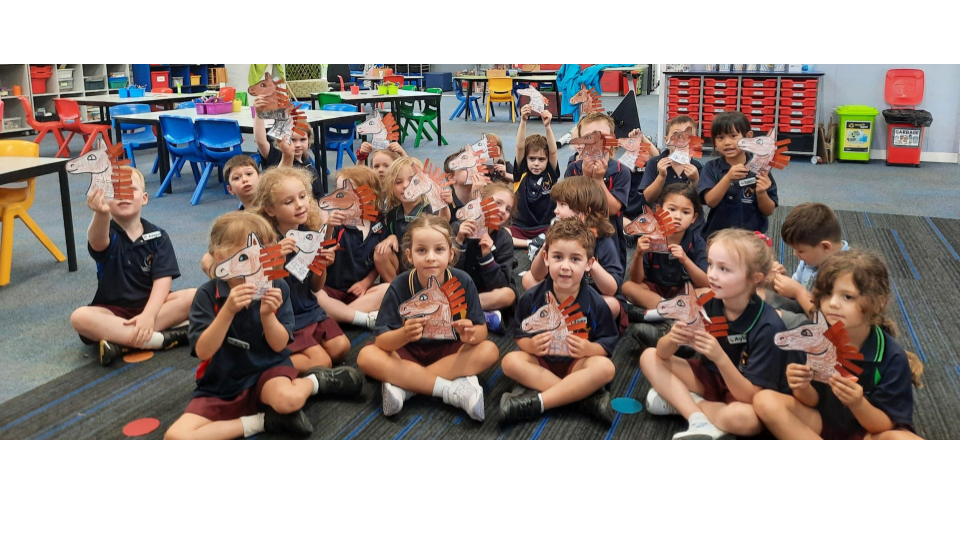
Foundation - Year of the Horse
The Foundation students also leaped into the year showing off their creativity with their Year of the Horses!
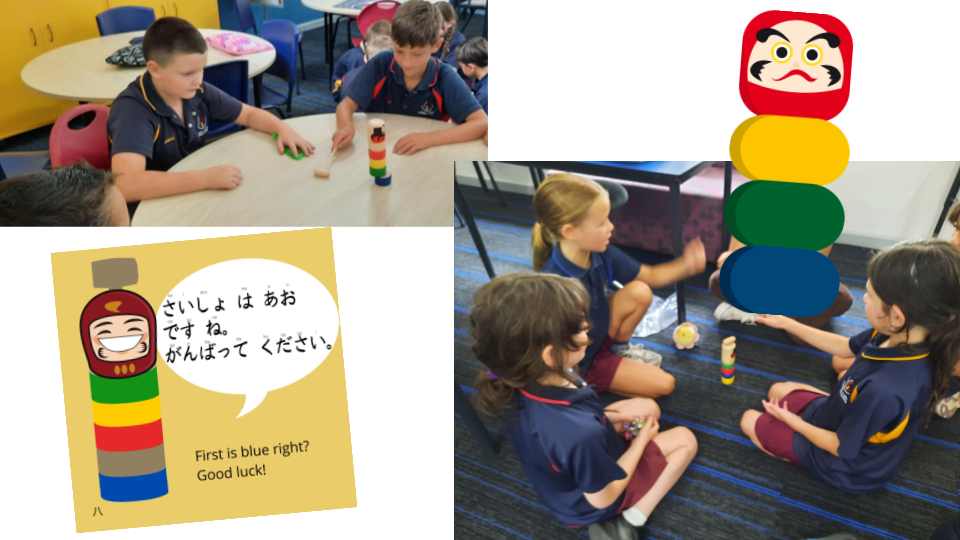
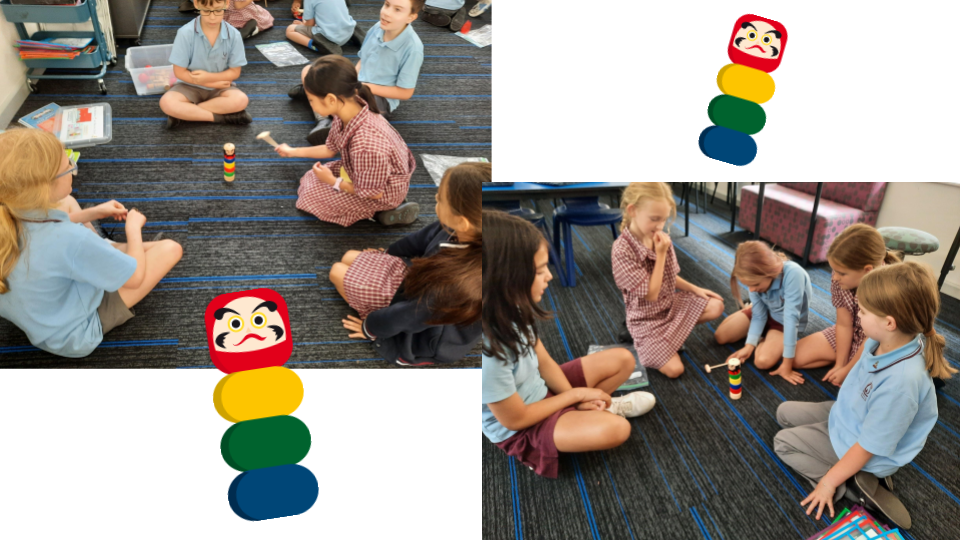
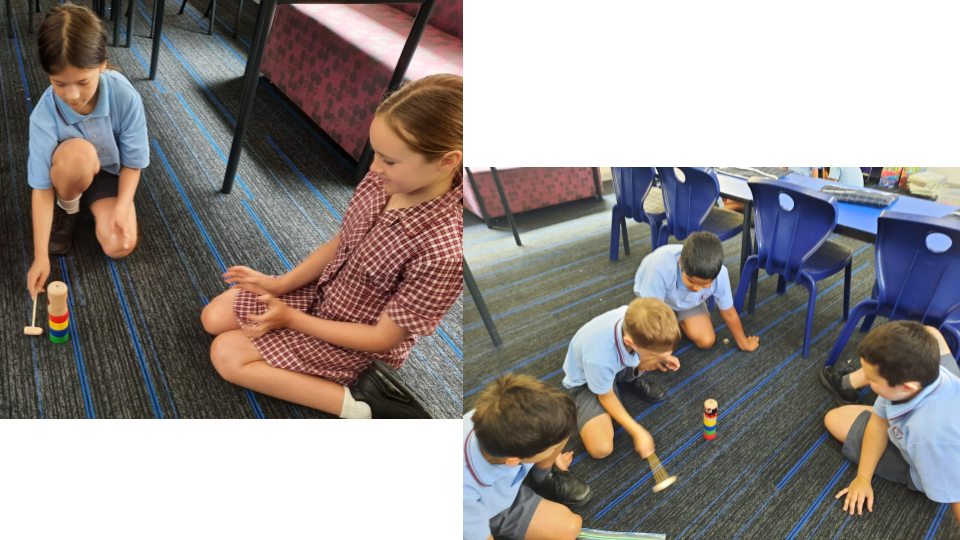
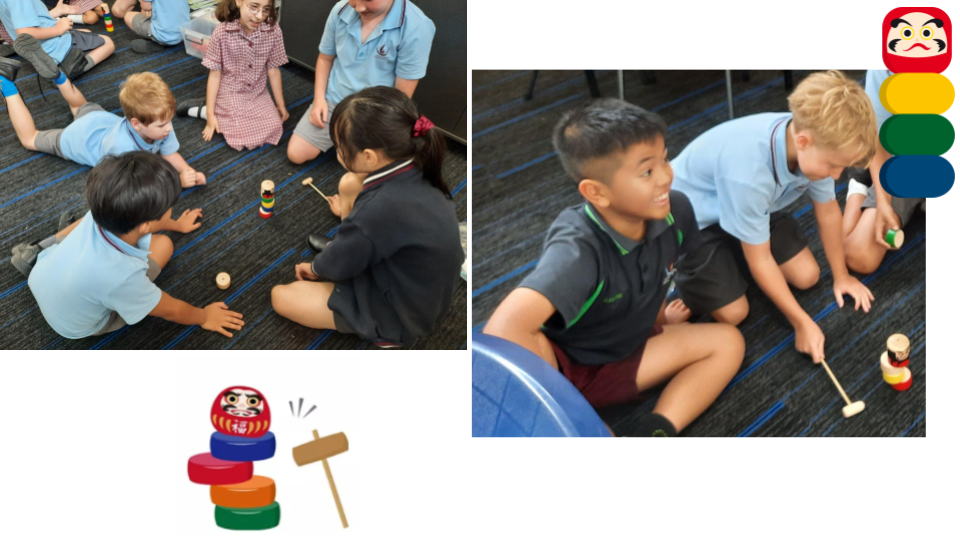
The 3/4s Daruma Otoshi Skills!
The Grade 3/4s tested their skills in concentration with the Daruma Otoshi - a traditional Japanese toy. A wooden doll called "Daruma" is stacked on top of several colourful cylindrical pieces. Players use a small wooden hammer to remove the lower pieces in order without knocking over the Daruma.
Junior School - Festivals
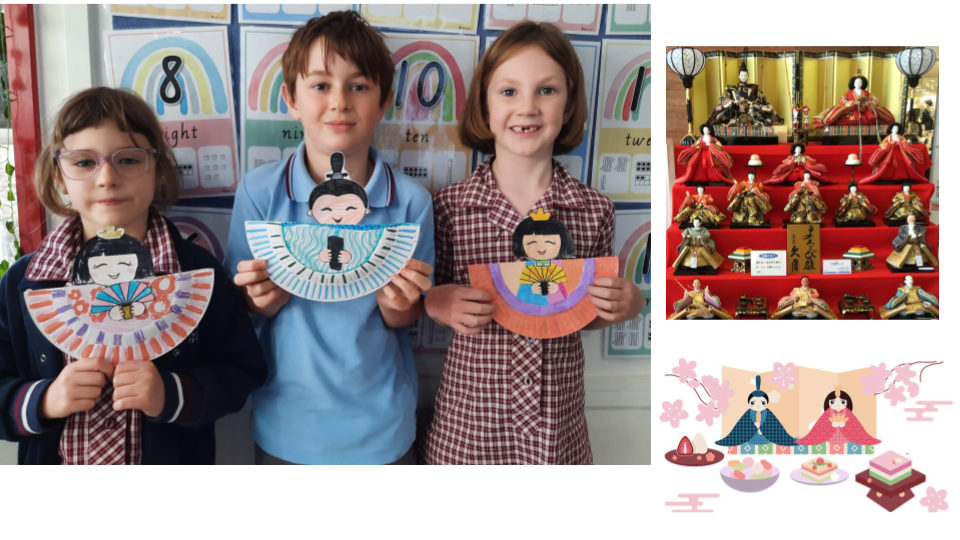
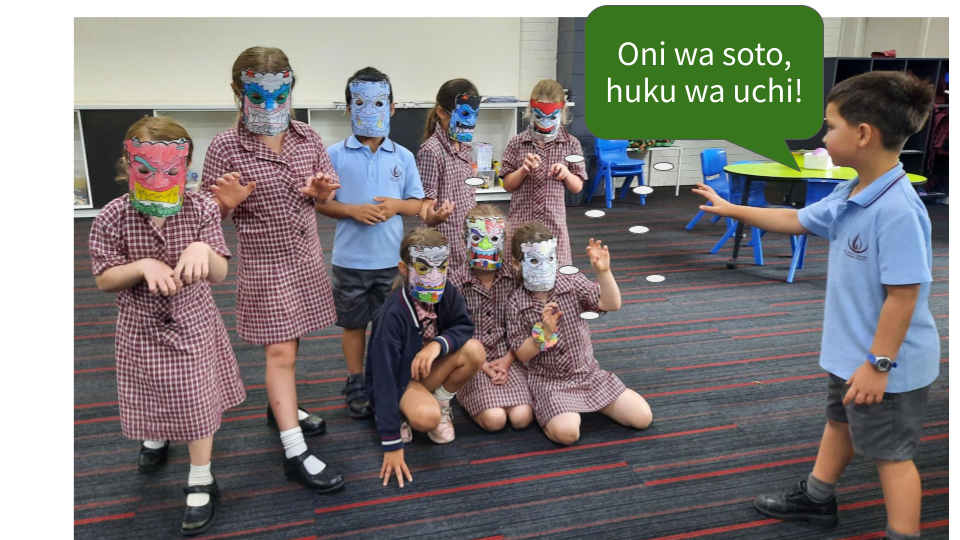
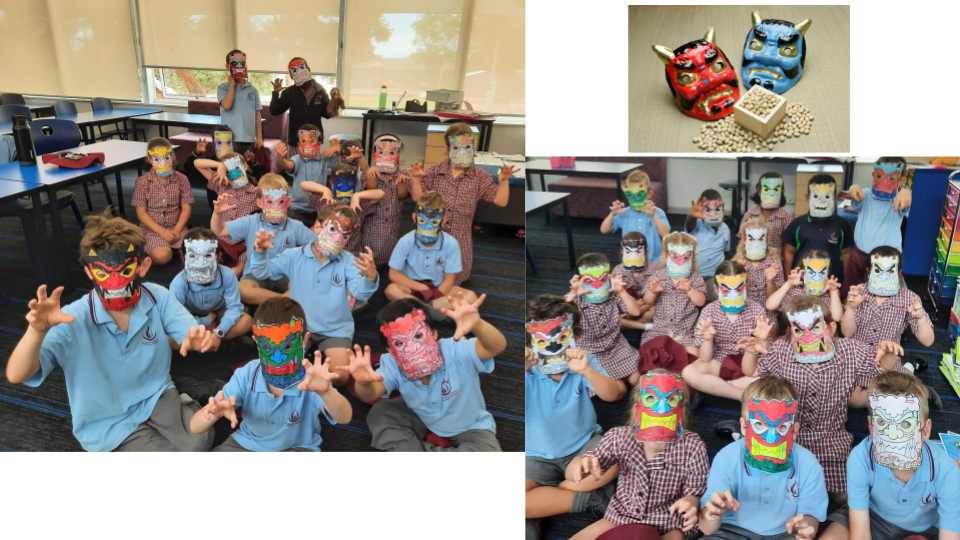
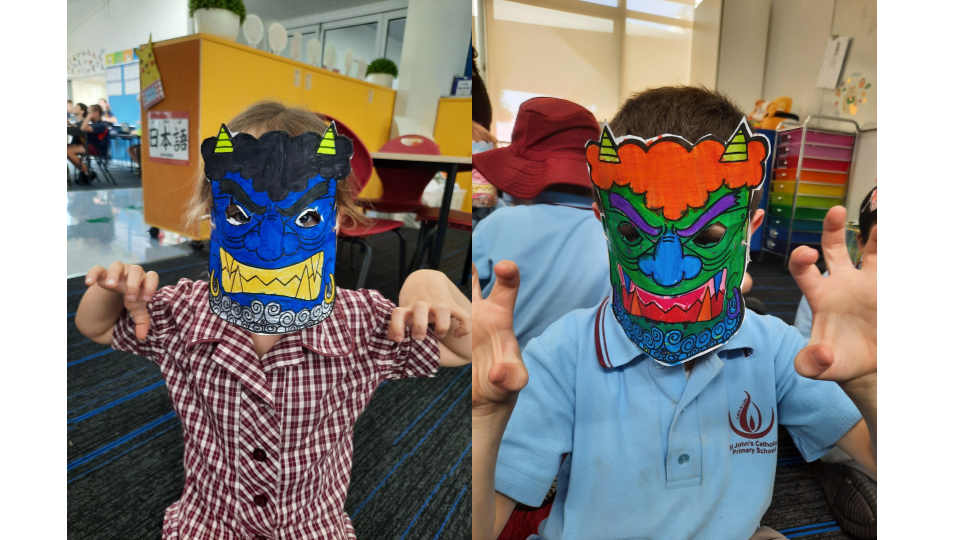
The Grade 1/2s learnt about the festivals of Setsubun and Hinamatsuri.
Setsubun is a popular Japanese festival held around February 3, on the day before the traditional start of spring, with the aim of ensuring good luck for the year ahead.
The best-known custom is mamemaki, in which people throw roasted soybeans to drive away oni (demon-like creatures) while chanting “Oni wa soto, fuku wa uchi” (oni out, good luck in). Bags of Setsubun-themed beans and paper oni masks begin appearing on supermarket and convenience store shelves. Children often make masks as a craft activity at kindergarten or daycare, which are then used for mamemaki at school as well as at home.
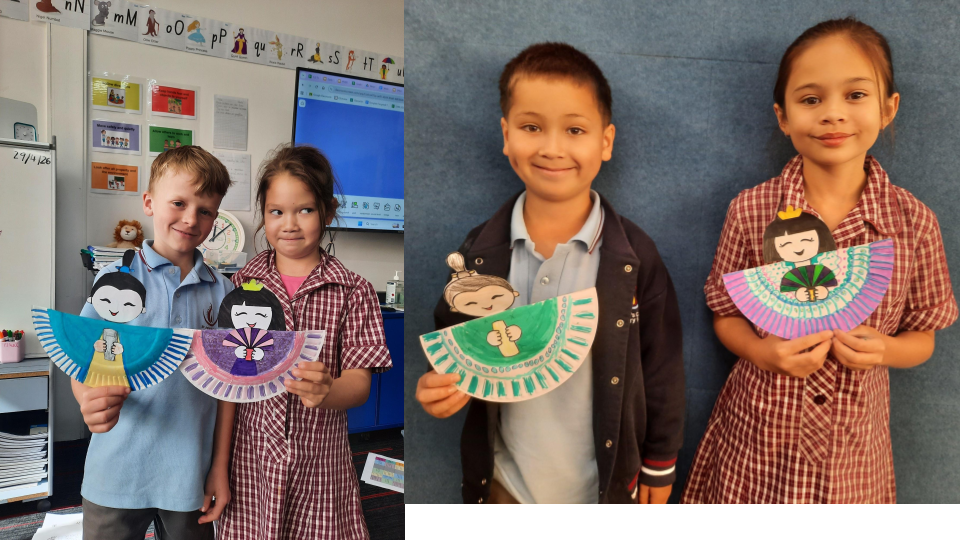
Hinamatsuri, celebrated on March 3, is “Girls’ Day” or “Doll’s Day” in English. As the festival approaches, families with girls display hina ningyō, ornate dolls expressing wishes for their daughters’ health and happiness. The students learnt about the displays of dolls and the Emperor and Empress, and made their own hina ningyō.