Learning & Teaching
Literacy News
Prep Hub: Our Prep children have been tracking along in their Phonics sessions. This term, they are focusing on the letters and corresponding sounds for g, o, b, h, e, r, f, u, and l. Alongside these graphemes, the children are mastering "tricky words" which are high-frequency words that are not easily decoded such as to, his, no, of, into, has, and go.
Children are using their letter and sound knowledge and applying this to books by using key reading strategies.
Smooth Blending: By connecting individual sounds into words eg mmmaaatt.
Finger Tracking: Ensuring eyes follow the text accurately across the page.
Rereading: Returning to the start of a sentence to improve comprehension and flow.
In Literacy, children have been immersed in well-known stories such as The Three Billy Goats Gruff. This serves as a springboard for their writing, where they are learning to structure a narrative by identifying and composing a clear beginning, middle, and end.
1-2 Hub: Our 1-2 children are currently refining their phonetic knowledge by reviewing R-controlled vowels, including: ar, or, ur, ow, oi/oy, ear, air, ure, and er.
Our focus has shifted toward reading multisyllabic words and exploring morphology. Children are learning how suffixes like -ing and -ed alter the meaning and tense of base words. To apply these skills, they are engaging with a diverse range of books both in print and digital. We will spend some time reading poetry and applying what we have learnt int our own poems.
In Literacy, the 1-2 children are learning about the genre of Instructional Writing. Children are learning how to produce clear, procedural texts, such as recipes. They will learn about how these texts are formed and have a go themselves to ensure clarity for the reader:
Title: A clear indication of the task.
Materials/Ingredients: A comprehensive list of requirements.
Steps: A chronological sequence of actions.
Conclusion: A final summary or expected outcome.
How Parents Can Help at Home
- The "I Read, You Read": alternating reading pages or paragraphs helps model fluent reading for children while still requiring their active participation.
- Ask "Why?": Ask your child why they think a character acted a certain way. This develops deep comprehension and critical thinking.
3/4 Hub The Grade 3/4 children are currently immersed in their class novel, Brindabella. This text serves as a rich resource for developing advanced comprehension skills. Children are moving beyond surface-level plot points to explore:
- Text-to-Self Connections: Relating the characters’ experiences and dilemmas to their own lives.
- Evidence-Based Analysis: Using specific citations from the text to support their interpretations of key messages.
- Atmosphere and Tone: Analysing how the author employs descriptive language to create a specific mood.
- Inferencing: Identifying character feelings through their actions and dialogue to demonstrate a nuanced understanding of the narrative.
Grades 3–6: Procedural Writing and Poetic Expression
Across the senior levels, Writing sessions are focused on the writing genre of Procedure Texts. Children are learning to apply a formal structure including titles, requirements, and sequential steps to create their own recipes and instructions.
Children will explore the creative realm of Poetry. This unit encourages children to experiment with figurative language, rhythm, and structure to evoke emotion and imagery in their own original works.
Grades 5–6
In 5/6 reading, children will re engage in Book Club. This collaborative model encourages children to take ownership of their literary discussions. Each week, children adopt specific roles to prepare for their group dialogue:
- Connector: Finds links between the text and the real world or other literature.
- Passage Picker: Selects significant sections of the text for group analysis.
- Word Wizard: Identifies and defines challenging or impactful vocabulary.
- Illustrator: Creates a visual representation of a key scene or concept.
- Discussion Director: Develops high-level questions to facilitate group engagement.
Through book club, we aim to build active listening, and sharing of what they got out of the text, ensuring that children are not just reading the text, but deeply interrogating it with their peers.
How Parents Can Help at Home
For Grades 3/4:
- Ask for Evidence: When discussing a book or movie, ask your child, "What specifically happened in the story that makes you think the character feels that way?"
- Mood Awareness: If you are reading together, pause to describe the "feeling" of a chapter and ask what words the author used to create that atmosphere.
For Grades 5/6:
- Role Play: Ask your child which Book Club role they are focusing on this week. You might ask the "Word Wizard" to share a new word they discovered or the "Connector" to tell you how the book relates to current events.
- Follow the Leader: Have your child write a simple set of instructions for a household task (like setting the table or making a snack) and follow them exactly as written to test the clarity of their procedural writing.
Maths News…
Prep Mathematics: Counting and Place Value
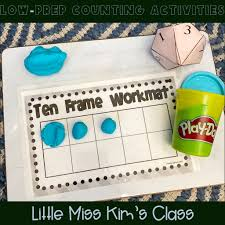
In Mathematics, the Prep children are continuing to build on their understanding of numbers through hands-on and engaging activities.
They are learning to:
- Name, represent and order numbers using objects and numerals
- Develop their subitising skills (instantly recognising the number of objects in a small group without counting)
Count and compare collections of objects
Explain their thinking and how they reached their answers
Through these experiences, children are building strong number sense and confidence in working with numbers.
How Families Can Support at Home
- Practise Subitising
- Use dice, cards or small groups of objects
- Quickly show a group (1–5) and ask: “How many did you see?”
- Count Everyday Items
- Count toys, snacks, steps or items around the house
- Compare Collections
- Order Numbers
- Write numbers on paper or use cards
- Ask your child to put them in order (smallest to largest)
1-2 Mathematics: Length
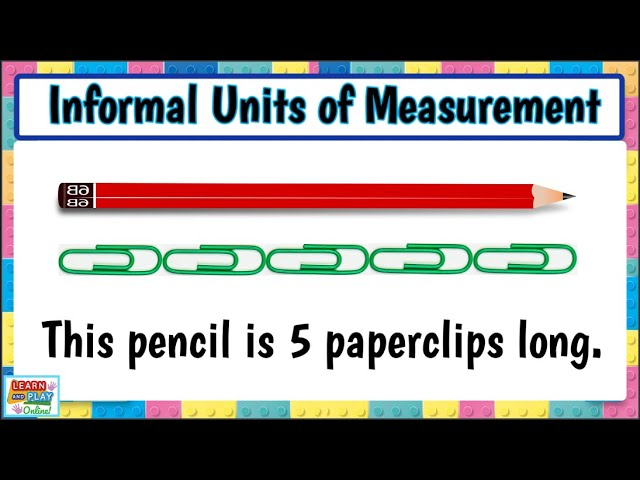
In Maths, the Year 1–2 children are currently learning about length. They are exploring how to compare and describe objects as longer, shorter, or the same length. Using practical tools like rulers, measuring tapes, hands, or even classroom objects such as pencils and sticks, children are learning to measure objects in both informal and more structured ways.
To support your child’s learning at home, you can try a “Length Hunt” together:
- Find the longest and shortest items in your home.
- Compare two objects and ask, “Which is longer? Which is shorter?”
- Use a ruler, tape measure, string, or even your hands to measure and record lengths.
- Encourage your child to line up objects from shortest to longest or group items of similar lengths.
1-2 Addition and Subtraction
In Mathematics, the children in Year 1-2 are continuing to build on their understanding of addition and subtraction through a range of strategies and hands-on learning experiences.
They are learning to:
- Use a variety of strategies to add and subtract numbers, including skip counting
- Use concrete materials (such as counters, blocks and drawings) to support their thinking
- Understand part-part-whole relationships, by breaking numbers into parts and combining them to make a whole
- Explain their thinking and reasoning when solving problems
How Families Can Support at Home
- Use Everyday Addition & Subtraction
Ask questions such as:
“If you have 5 grapes and eat 2, how many are left?”
“If we add 3 more, how many do we have now?”
- Practise Part-Part-Whole
Give a number (e.g. 8) Ask:
“What two numbers make 8?”
“Can you show it in a different way?”
- Skip Counting
Practise counting by 2s, 5s or 10s
- Play Simple Maths Games
Roll two dice and add the numbers
Start with a number and subtract (e.g. start at 10, take away 3)
3-4 Mathematics: Time
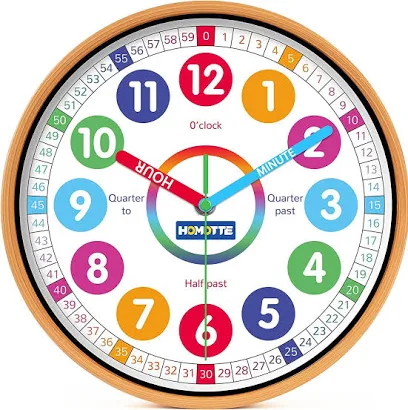
In Mathematics, the children are developing their understanding of time through a range of practical and real-life learning experiences.
They are learning to:
- Read and represent time using both analogue and digital clocks
- Tell the time to the minute with increasing accuracy
- Convert between units of time (seconds, minutes, hours, days, months and years)
- Use calendars and timetables to identify key information
- Calculate elapsed time and solve real-life problems involving durations
- Understand and use both 12-hour and 24-hour time in everyday contexts (e.g. transport schedules, digital devices)
How Families Can Support at Home
Tell the Time
- Ask your child to read the time on both analogue and digital clocks “What time is it?” “Can you show that time another way?”
Explore Elapsed Time
- Ask questions like: “If we leave at 3:15 and arrive at 4:00, how long did it take?” “How long until dinner?”
Use Calendars
- Look at a calendar together Ask: “How many days until your birthday?” “What day will it be in one week?”
Read Timetables
- Look at bus, train or TV schedules Ask: “What time does it start?” “How long does it go for?”
Practise Time Conversions
- Ask simple questions: “How many minutes in an hour?” “How many hours in a day?”
5-6 Mathematics 3D Objects and Nets
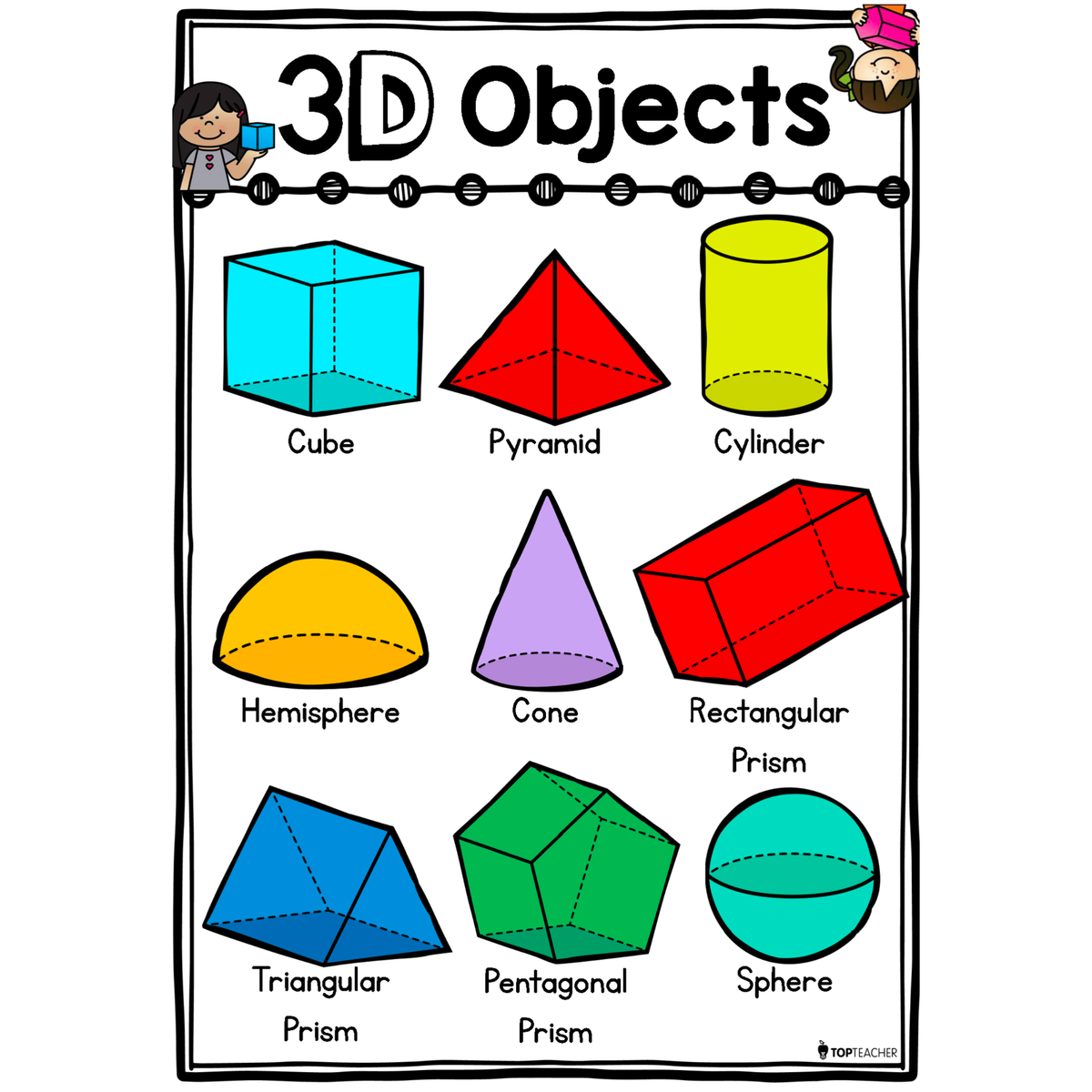
In Mathematics, our Year 5–6 children are exploring three-dimensional objects and learning how to connect two-dimensional nets to the objects they form.
They are learning to:
- Understand how nets can be folded to create three-dimensional objects
- Build solid objects themselves using paper, card or other materials
- Compare different cross-sections of solid objects
- Connect their understanding of cross-sections to three-dimensional shapes, including right prisms
How Families Can Support at Home
Explore Nets and Shapes
- Use paper or cardboard to create nets for simple shapes (cube, rectangular prism)
- Fold nets to make the 3D object
- Ask: “What shape will this net become?”
Build and Compare
- Build 3D shapes from nets or LEGO
- Compare with other shapes and discuss differences in faces, edges and vertices
Investigate Cross-Sections
- Slice a loaf of bread, a cake, or use modelling clay
- Ask: “What shape is the cross-section?” Relate this to classroom learning of prisms and other solids
5-6 Angles
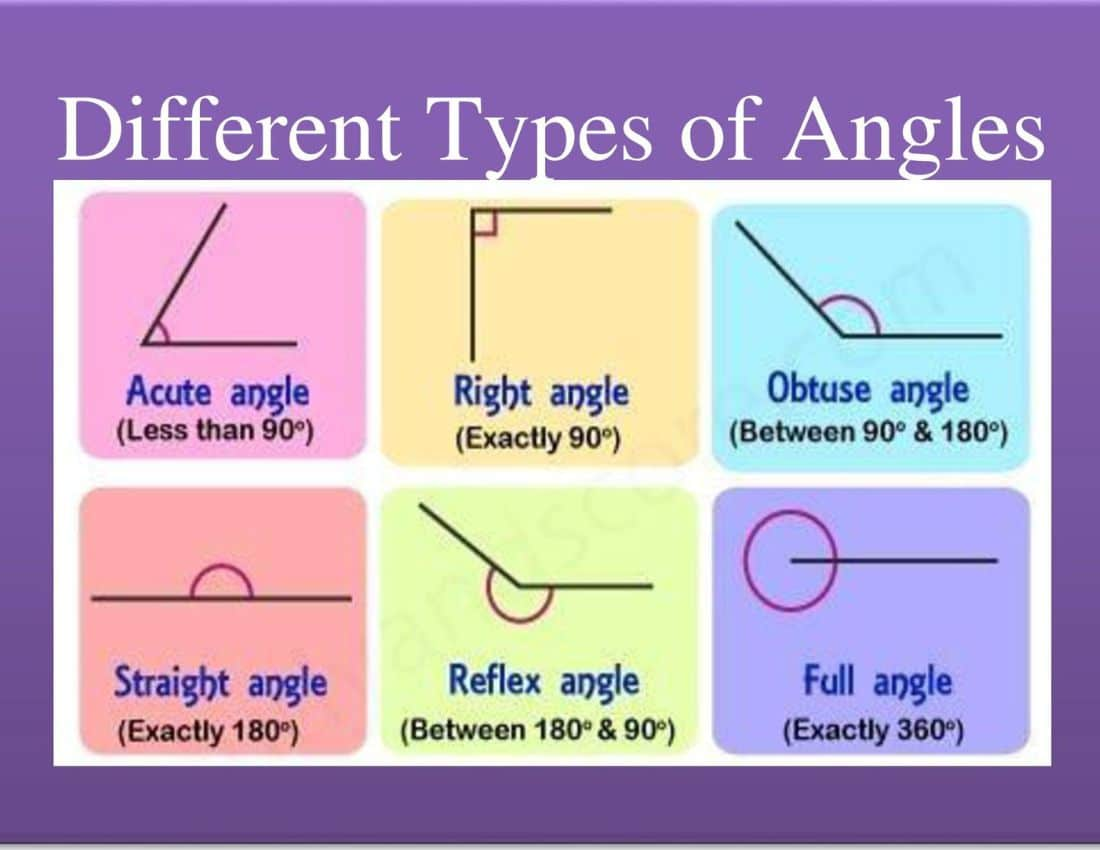
The 5-6 children are learning about Angles. They are exploring and identifying different types of angles, including right, acute, obtuse and straight angles.
Children are comparing and classifying geometric shapes based on their properties, such as the size of angles and the number of sides. They are also applying their understanding to solve problems, including finding unknown angles in triangles, quadrilaterals and regular polygons. This supports their ability to reason mathematically and explain their thinking.
As part of their learning, children are developing skills to estimate, measure and calculate angles, as well as use appropriate mathematical language to describe their ideas. They are encouraged to justify their answers and make connections between different mathematical concepts.
Faith News
Throughout the season of Lent, our school community has demonstrated a remarkable commitment to social justice through our support of Project Compassion. We are proud to announce that through the collective generosity of our children and families, we have raised a final total of $1,006.05. This impressive result includes the proceeds from our recent icy pole sales, which were a highlight for many children and contributed significantly to our goal.
These funds will be directed to Caritas Australia to support their vital work in empowering vulnerable communities and building a more just world. We would like to extend our sincere gratitude to all the families who contributed so generously. Your kindness ensures that we are making a tangible difference for those in need, and we are incredibly proud of the spirit of service shown by our school community.