Grade 1 Community News
Dear Grade 1 Families,
Welcome to Term 2! We hope you had a wonderful holiday break. PLC1 is excited to share our learning focus for the next two weeks. Congratulations to the following students on receiving awards:
Principal Award | Anayra 1D | |
Students of the Week (Weeks 1 and 2) | ||
1A | Mariya & Aria | |
1B | Mustabshirah | |
1C | Poppy & Sukhveer | |
1D | Miraya & Japman | |
1E | Ghufran & Israel-James | |
1F | Rehmat & Absalat | |
1G | Rudra & Hriaan | |
1H | Jasraj | |
1I | Shruti & Tarani | |
1J | Smaya & Abeer | |
1K | Kashaan & Xavier | |
1L | Jazlyn & Oshin | |
InitiaLit - New Sounds
In InitiaLit, we have been reading and writing words with the sound /ee/.
We learned 2 new ways to spell /ee/, pictured below. There is no rule for which spelling to use; we just have to use what looks right.
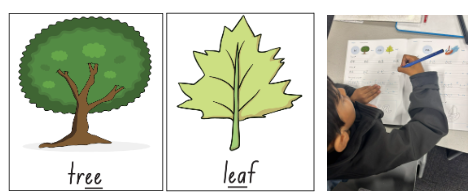
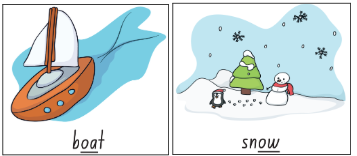
We focused on the /ow/ sound, represented by ‘oa’ and ‘ow’. Students learned that ‘oa’ is typically used in the middle of words, while ‘ow’ is often used at the end.
InitiaLit: Concept Review
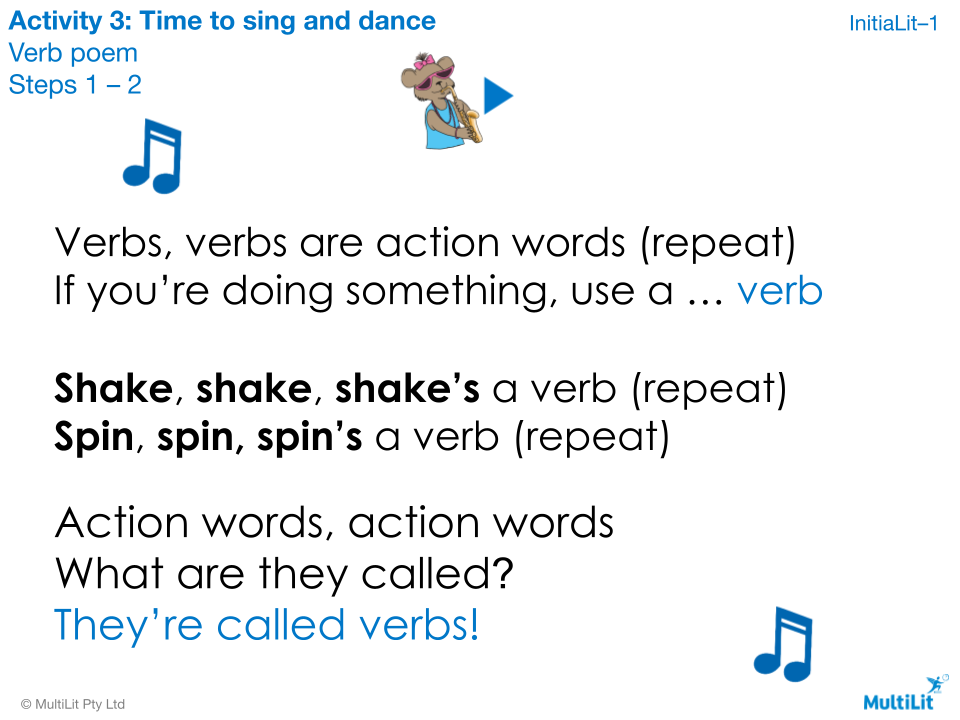
We revisited verbs, learning that verbs are action words.
We enjoy singing the Verbs Poem at school - here are the lyrics so you can sing along at home too!
We also learned about homophones, which are words that:
- Sounds the same
- Have a different spelling
- Have different meanings
For example, see - sea, meet - meat, eight - ate.
InitiaLit - Tricky Words
who, many, any, love, over, says
How you can support at home:
- Read for a few minutes each night and ask your child to spot words with our focus sounds (ee, ea, oa, ow)
- Practice tricky words by writing them on paper, saying them aloud, or using them in a sentence.
- Find verbs and homophones you find in your books while reading and write them down.
Storybook & Vocabulary
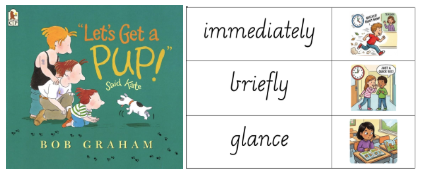
We are reading the text “Let’s get a Pup!” in which Kate and her family adopt new dogs named Dave and Rosy. We have been discussing what it is like to take care of a new pet and what sort of pets we like. We have been focusing on the 3 vocabulary words below:
Writing
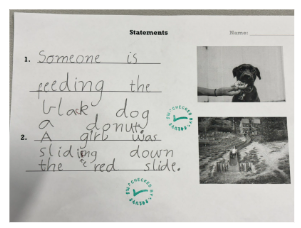
In Writing, students have been learning about different sentence types and their purposes:
- Statements tell us something and end with a full stop.
- Questions ask something and end with a question mark.
- Exclamations show strong feelings and end with an exclamation mark.
- Commands give an instruction and end with a full stop.
How you can support at home:
- Encourage your child to identify sentence types when reading books together.
- Practice writing a mix of sentence types about a familiar topic (e.g., their day).
- Play simple games by turning a statement into a question or an exclamation.
Maths
In Maths, students have been learning about:
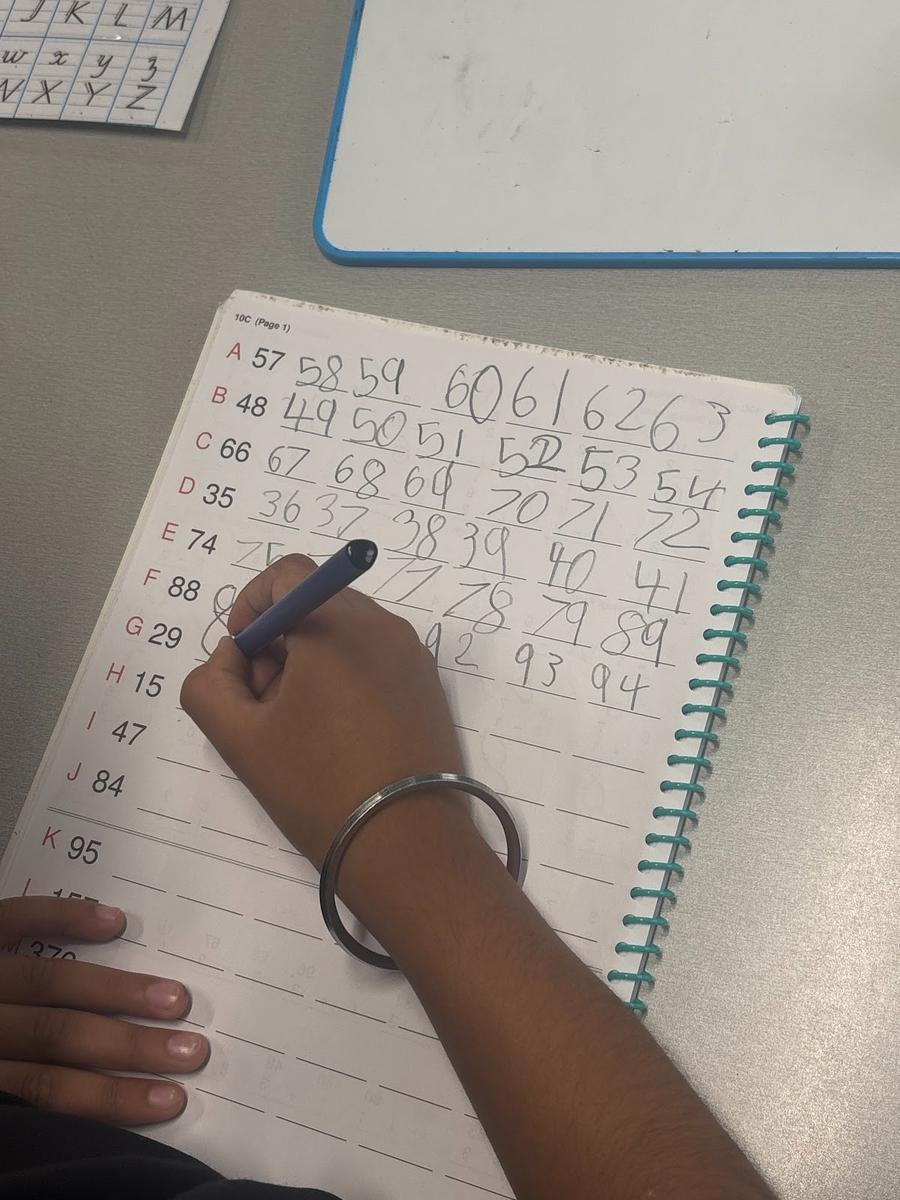
Crossing decades when counting forwards and backward across tens. For example, knowing what comes after 59 (60) or 29 (30), and practicing counting across a decade (e.g., 77, 78, 79, 80, 81, 82, 83).
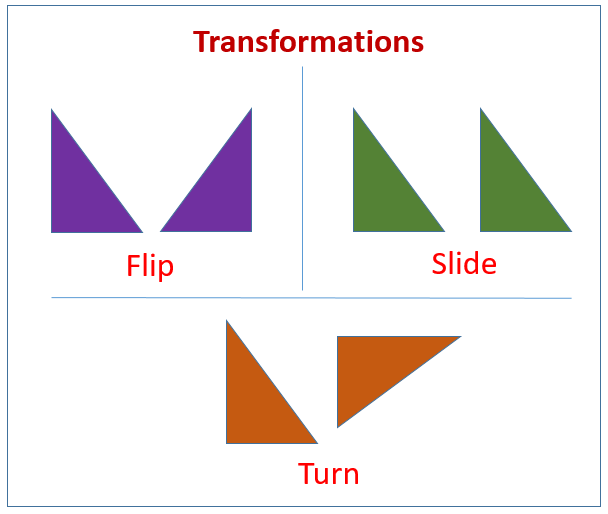
Reflections and slides, as shown below.
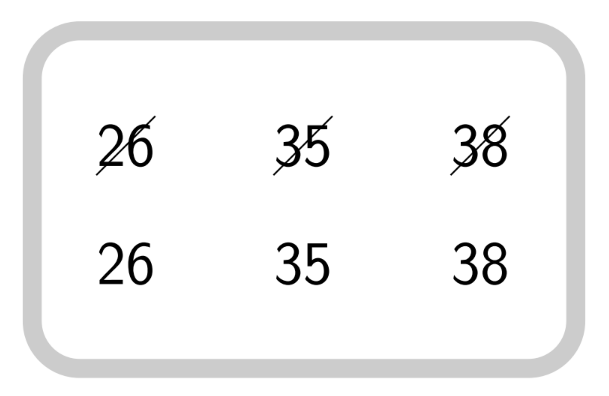
Ordering three 2-digit numbers by comparing the tens first, then the ones,
Symmetry - understanding that it means both sides are the same, like a mirror image, and creating symmetrical drawings.
How you can support at home:
- Practice counting forwards and backward across decades (e.g., 48–52, 69–73).
- Tracing or drawing shapes and showing examples of reflections or slides.
- Explore symmetry by folding paper or drawing mirror images.
- Practice ordering 2-digit numbers by comparing tens and ones.
Humanities
In Humanities, students are learning about how places change over time and how we can care for them.
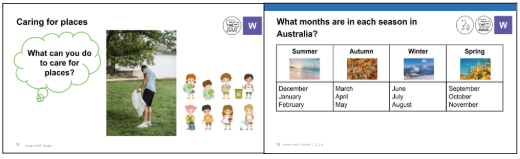
Students will also revisit the four seasons and explore what makes each one unique. We will be learning about the typical weather patterns in each season, such as warmer or cooler temperatures, and noticing how the environment changes. For example, how plants, animals, and our surroundings look different throughout the year.
At home, you can support your child by talking about the current season and what changes you notice outside. You might go on a short walk together and look for signs of the season, such as leaves, the weather, or how people are dressed.
Respectful Relationships
In our Respectful Relationships lessons, we are learning about the different strengths we all have and how we can use them to be kind, caring, and supportive friends and family members. We are exploring what it looks like to show respect, include others, help when someone is in need, and build positive relationships both at school and at home.
At home, you can support your child by talking about their strengths and encouraging them to use these in everyday situations - for example, showing kindness, helping with small tasks, listening to others, or including siblings and friends in play. These conversations help children recognise their own strengths and understand how they can use them to build strong, positive relationships.
Reminders
- Hats are not compulsory for Terms 2 and 3, but students may still wear them if they wish.
- Please label uniform items with your child’s name clearly. The weather is getting colder, so we are expecting more students to bring jackets and beanies to wear during outside play.
- Please continue to read every night and ensure your child swaps their take-home readers on their allocated day.
- Please check Compass for information on the upcoming Grade 1 Incursion (The Superhero in You). Consent and payment ($14) is due on 04/06/2026. During this experience, students will get to explore what a superhero is, what they do, and why people like them.

Scan the QR code to view Tricky Words Video.
- Please watch UNTIL 1:23 to view and practice the words we have learnt so far.
Warm regards and looking forward to working with you for the term ahead,
Ms. Santos, Ms. Duncan, Ms. Yianni, Ms. Marsden, Ms. Newman, Ms. T, Ms. Hannah, Ms. Stafford, Ms. Chandler, Mrs. Mill, Ms. Fetolofai and Ms. Doris of PLC1 😊