Parent Support

Save money (and the planet) on school books and uniforms for 2026

As you get ready for next year’s school supplies, we encourage families to use the Sustainable School Shop to buy and sell textbooks, uniforms and other school items affordably. It’s a simple way to save money, cut down on waste, and give items a second life.
Our school has organised a subscription for families. The school’s book and uniform lists are already loaded into the system, so you can easily find the exact items you need.
Getting started is easy. Just register at www.sustainableschoolshop.com.au and start browsing or listing.
A few quick tips for families:
• List both “Wanted” and “For Sale” ads
• Be realistic with your asking price
• Peak trading: late November to February for books and season changes for uniforms
• Delist items once they’re sold to keep things tidy and helpful for everyone
Let’s make smart purchases, save as a community and reduce our environmental footprint together. Alternatively, if you don't want the bother of selling your old textbooks, please consider donating them to our school library so they can be collated and loaned to families in need.
What the new Social Media age rules mean for your family
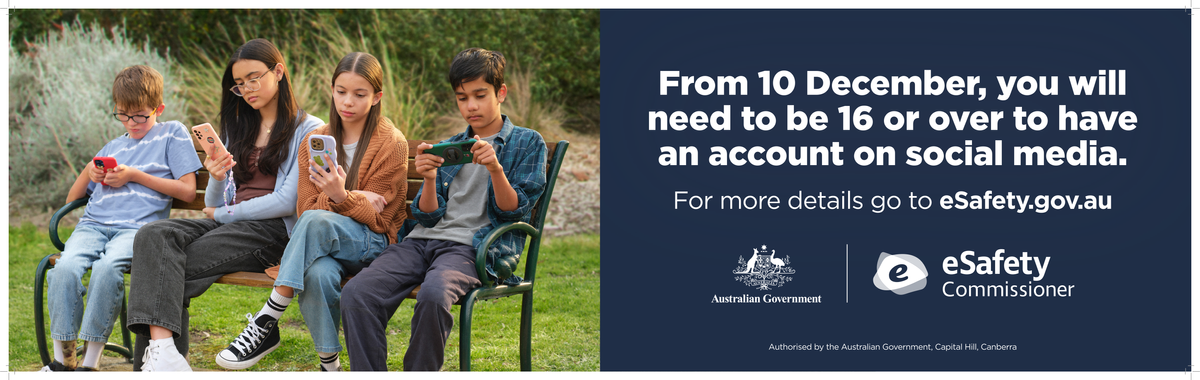
From 10 December 2025, major social media platforms including Instagram, Snapchat, TikTok and YouTube, must no longer allow children under 16 to create or keep accounts. Our library has an information bulletin board detailing the changes for students to help them understand what is happening and why. Here is some more information to help families navigate the new rules together.
This change comes because social media is increasingly recognised as a risk to young people’s physical and mental health and their wellbeing. This is because of the way the platforms are designed as well as because of the type of content they provide. It's not just lost sleep, poor concentration and increased stress levels at stake. Social media platforms can also expose teens to harmful content and experiences, including sexual abuse and bullying.
The goal with introducing age controls is to keep children safe and give them more time to build resilience, to make real-world connections and develop good judgement before stepping into the social media world.
These new rules also make social media companies more responsible for protecting young people and helping them use their platforms safely.
So what is actually changing?
These “age-restricted social media platforms” will now have legally enforceable age limits.
What the changes don’t mean
- This is not a ban on internet use. Many services - like messaging apps, gaming platforms and education or health tools - are not affected.
- Families won’t be fined or penalised if a child already has an account. The responsibility lies with the platforms, not parents or children.
What this means for your family
- Start the conversation early: Ask your child what apps they use, what they enjoy and what they see online. Use this as a chance to explore their digital habits together.
- Check existing accounts: If your child is under 16 and has an account on one of the major platforms, it may soon be deactivated or blocked.
- Think about other platforms: Apps like Discord and Roblox aren’t covered by the new rules but can still present risks to child safety and wellbeing.
- Set clear family boundaries: Decide together which apps are okay, how much screen time is reasonable, what’s appropriate to post or share, and how to manage privacy settings. Remember - you own the device and the internet connection.
- Build offline balance: Encourage face-to-face friendships, hobbies, sport, family time and regular chats about online wellbeing.
- Use support tools: The eSafety Commissioner website offers practical resources - family tech agreements, guides to privacy and safety settings, and advice on managing online risks.
A chance to pause and plan
These new rules don’t lock children out of the internet—but they do create a useful moment to ask, “Is my child ready for this?” Instead of a simple yes or no, think about “when and how” your child can join social media safely. Use this time to reflect, talk and plan for a healthy digital future together.