
STEM @ Koonung

The Viral Enigma
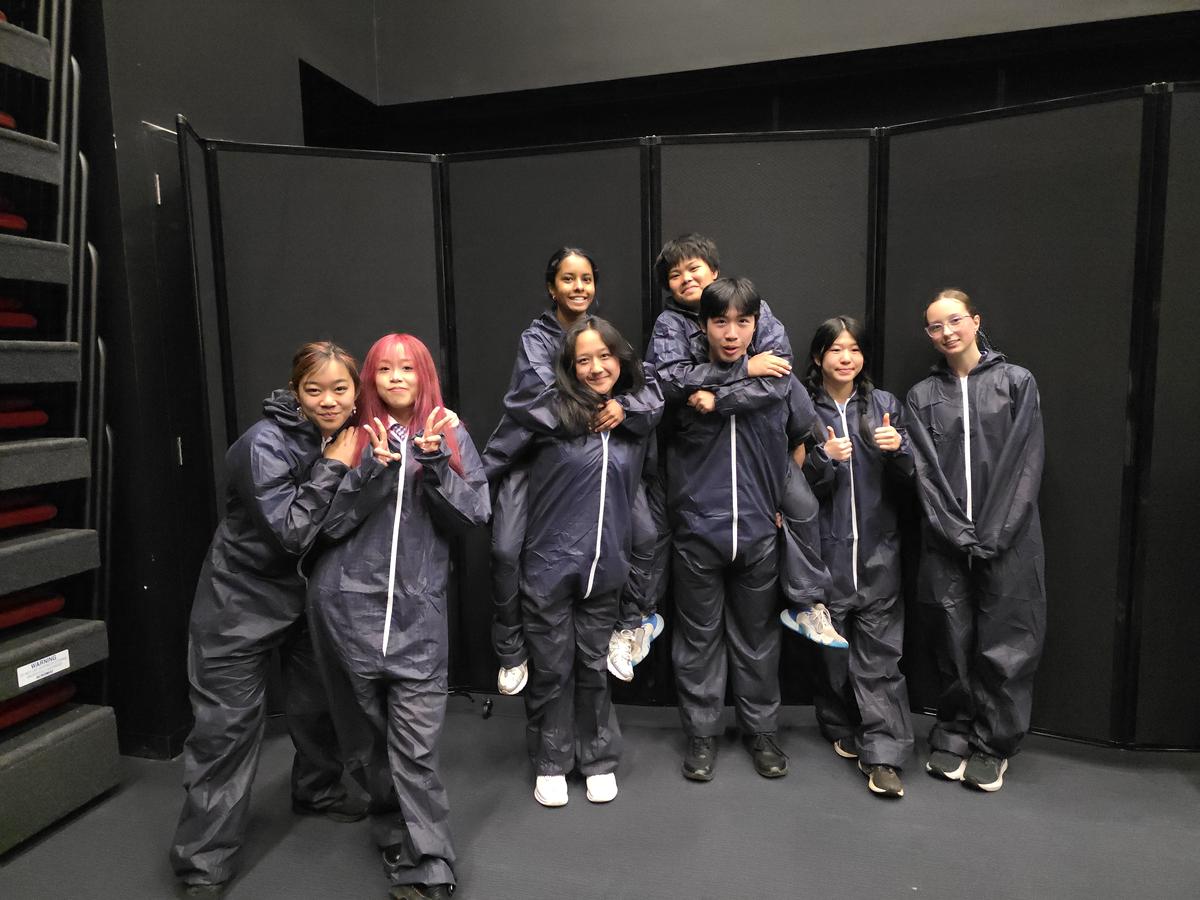
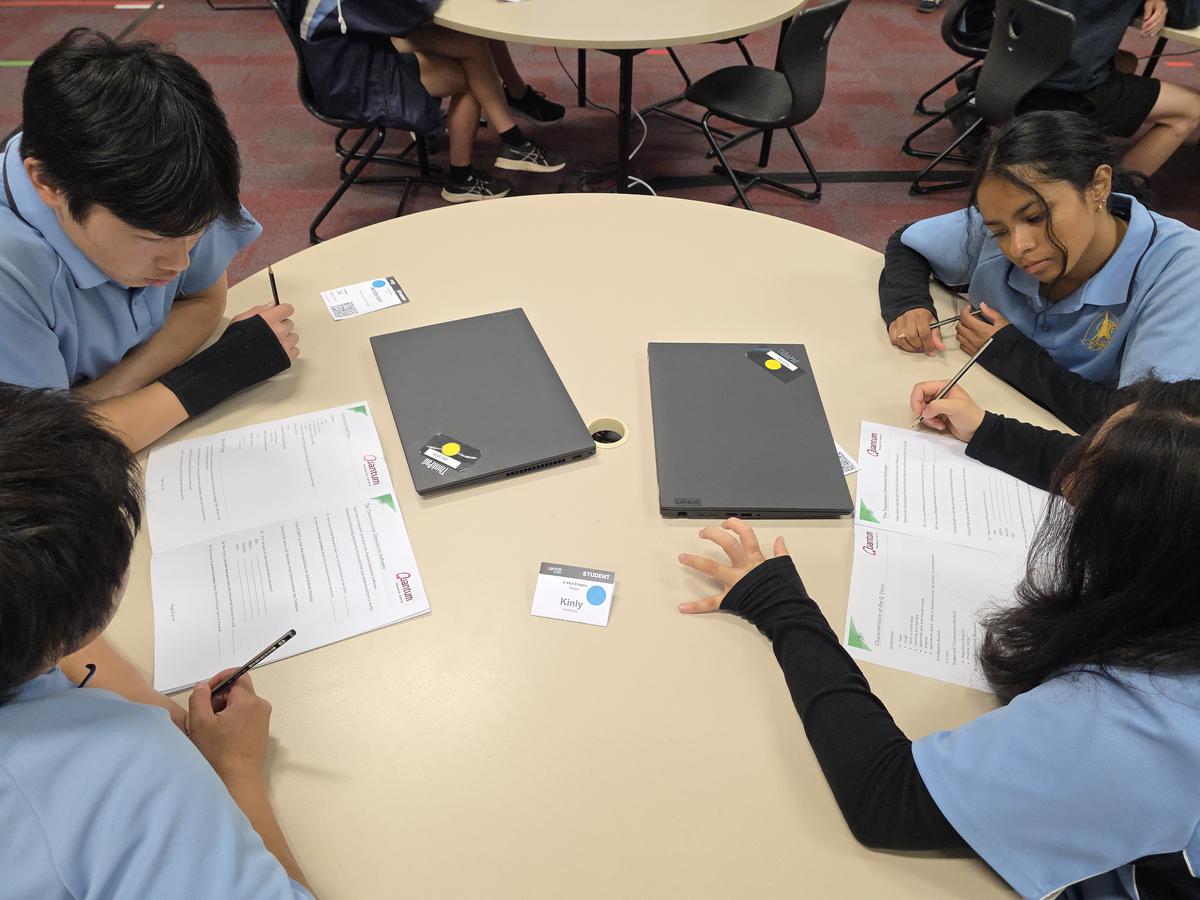
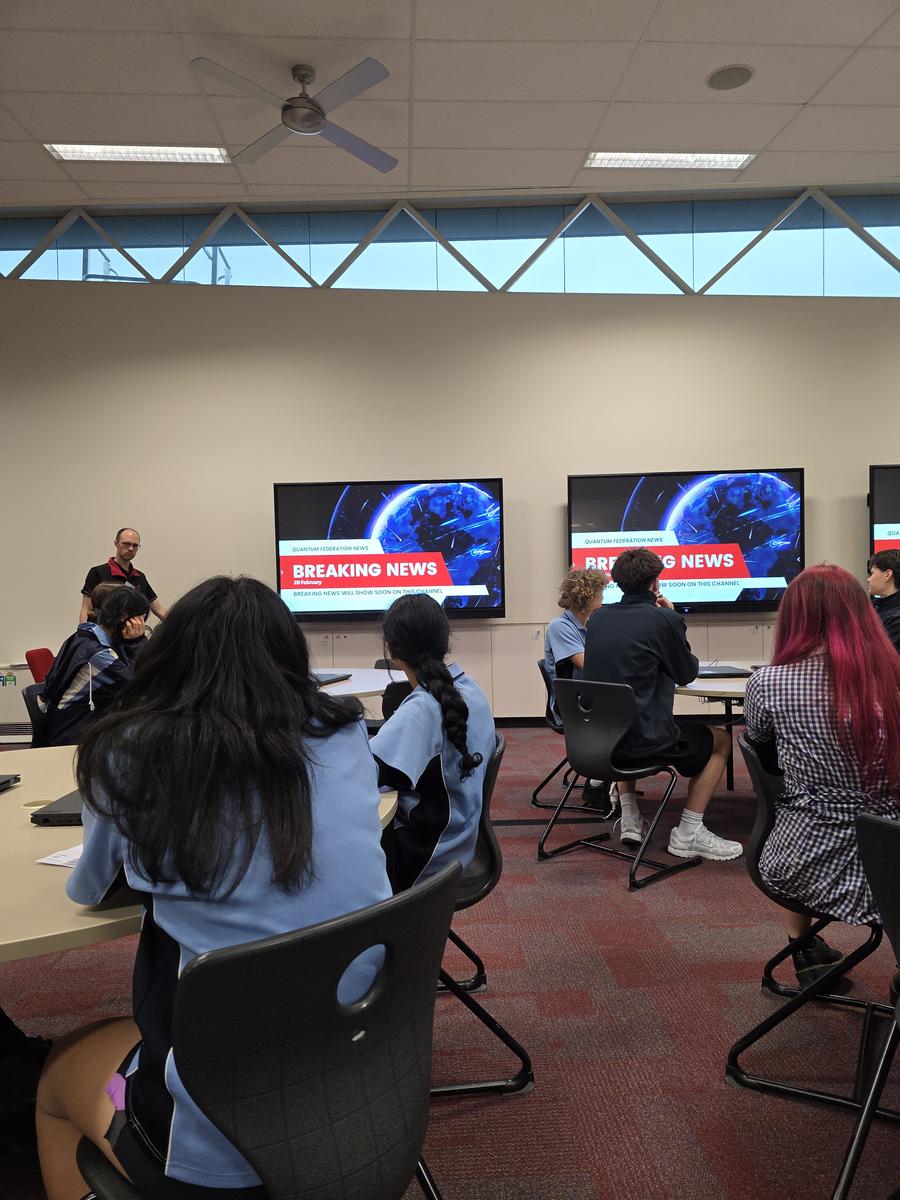
Forty of our high-ability Years 8, 9 and 10 students took part in an exciting full-day excursion to Quantum Victoria, where they immersed themselves in the Viral Enigma challenge — a hands-on exploration of genetics, DNA coding and viral behaviour.
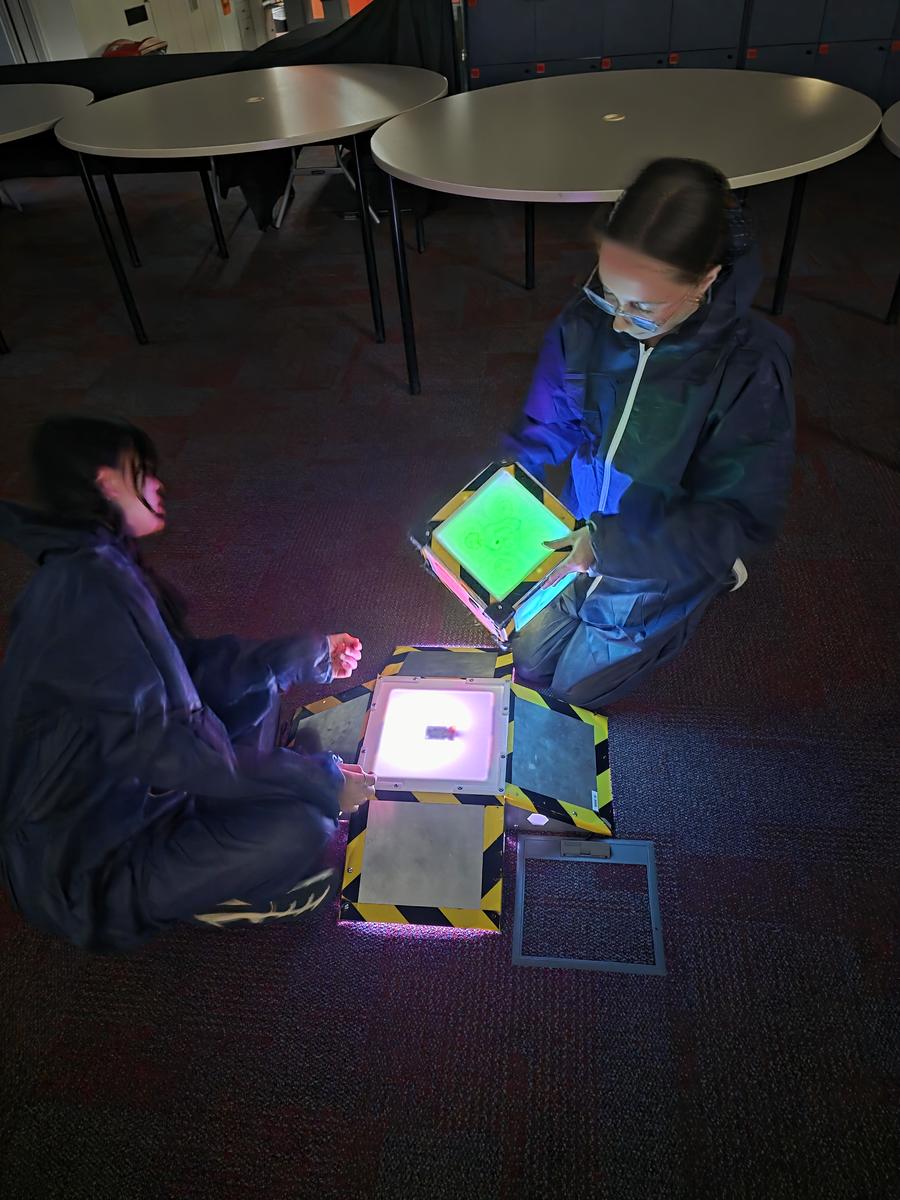
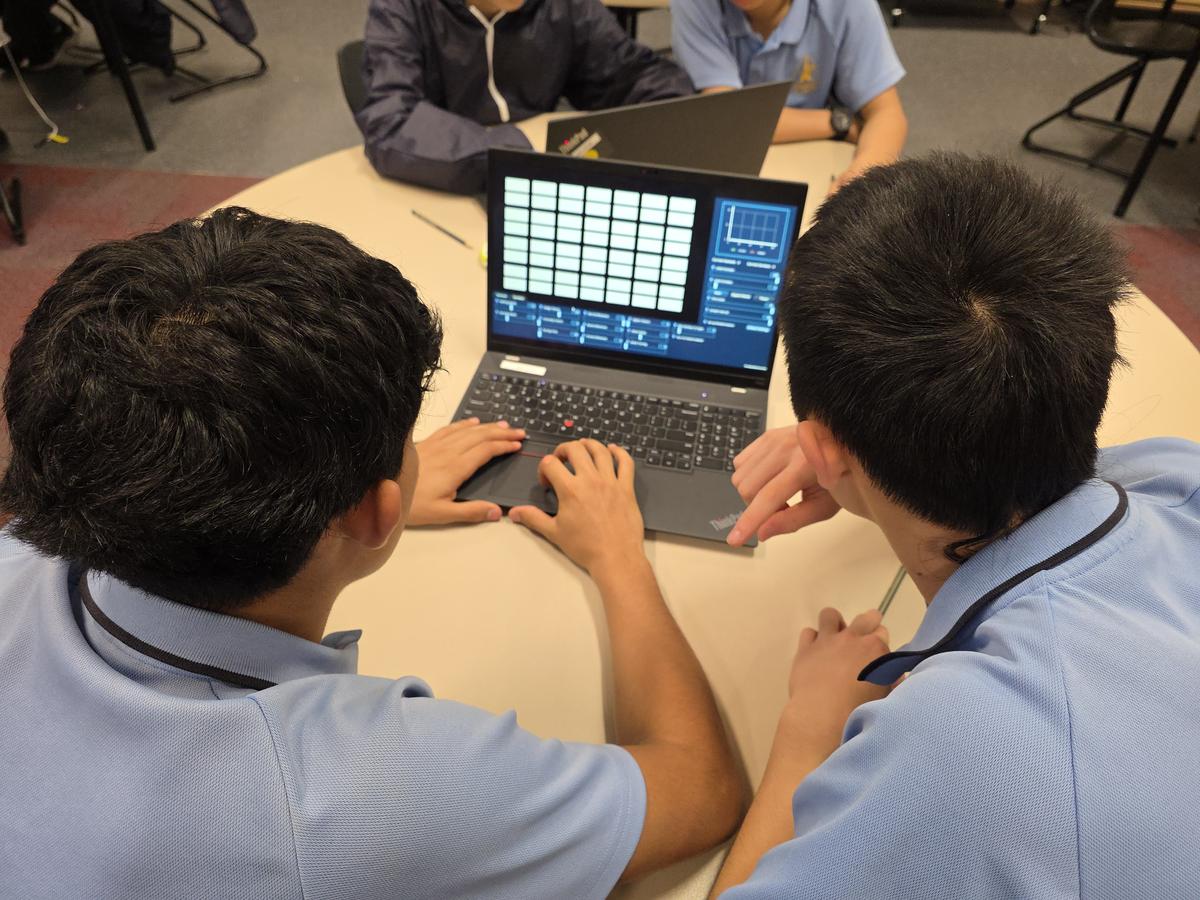
Working collaboratively in small teams, students investigated key genetic concepts by sequencing nucleotides and using advanced computer simulations to transcribe and translate their constructed DNA into proteins. They were able to observe firsthand how mutations can alter protein structure and function, and how these changes can influence a virus’s ability to increase its virulence. This practical experience brought complex biological ideas to life and deepened students’ understanding of real-world scientific challenges.
A highlight of the day was The Virus, Quantum Victoria’s bespoke alternate-reality game. In this fast-paced scenario, students raced against time to solve problems and prevent a global pandemic from overwhelming civilisation. Their creativity, critical thinking and teamwork were put to the ultimate test — and they rose to the challenge brilliantly.
Overall, the excursion was an outstanding opportunity for our students to extend their learning, apply scientific concepts in engaging ways, and experience the thrill of STEM problem-solving on a whole new level.

Lydia Tomic
Mathematics Teacher | Excellence and High Ability Practice Leader
Cyber Security Escape Room
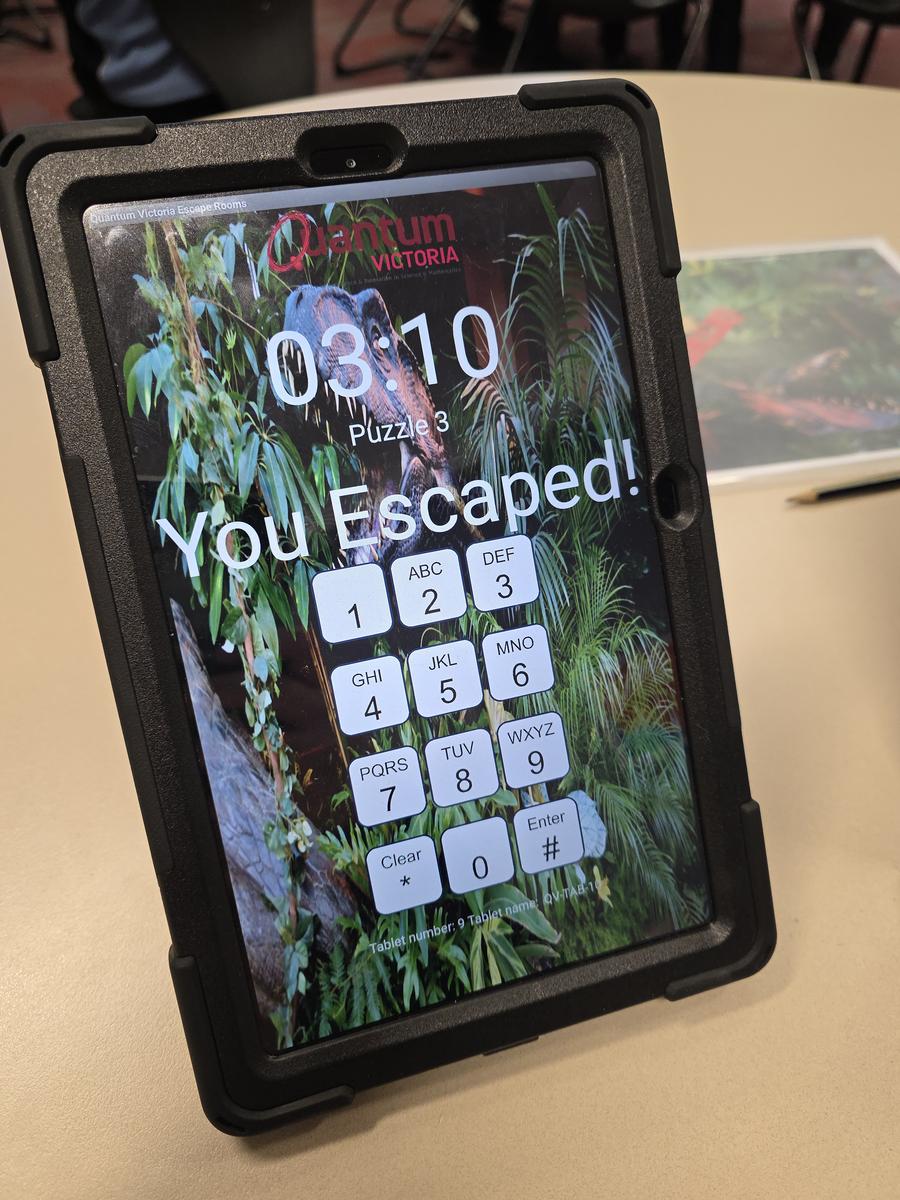
Our high-ability Year 7 and 8 students recently enjoyed an action-packed full-day excursion to Quantum Victoria, where they stepped into the world of digital defence through an immersive Cyber Security Escape Room experience.
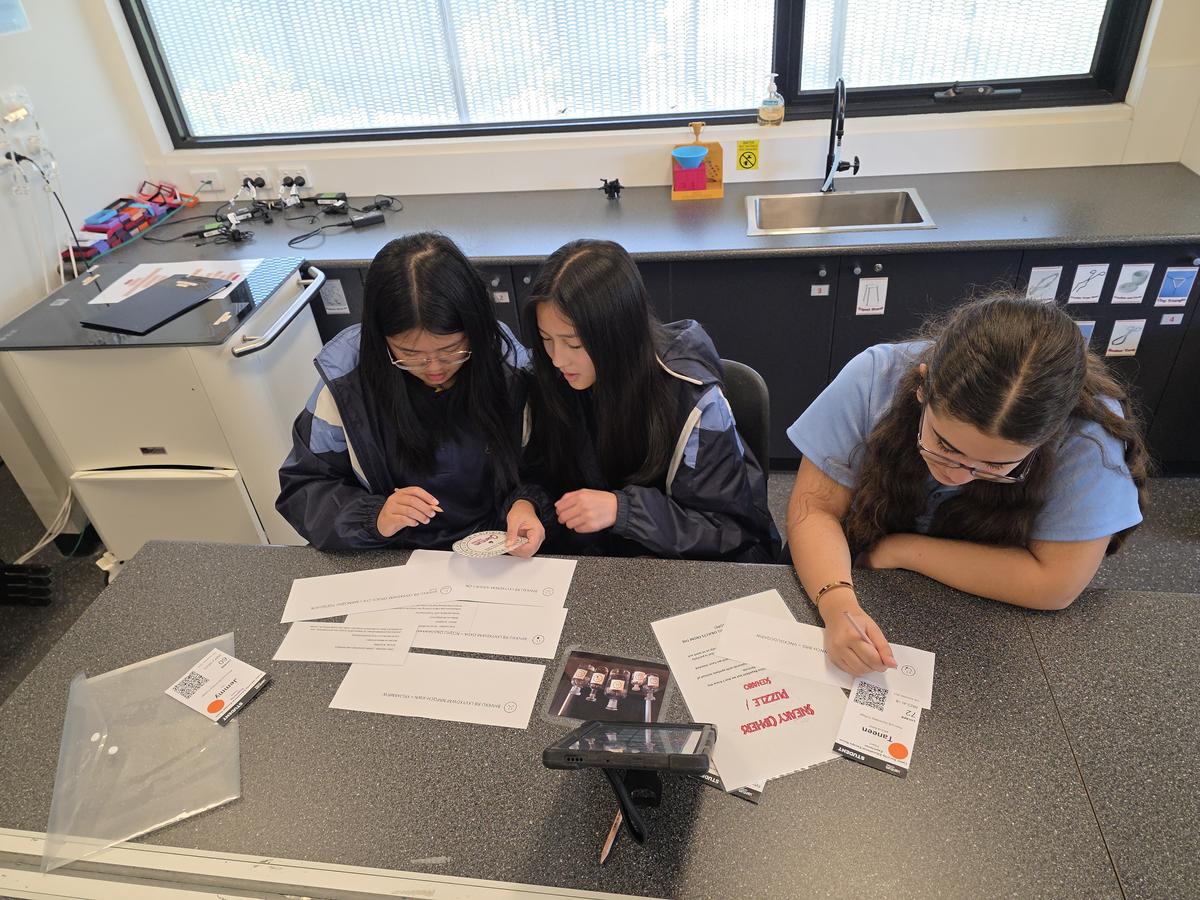
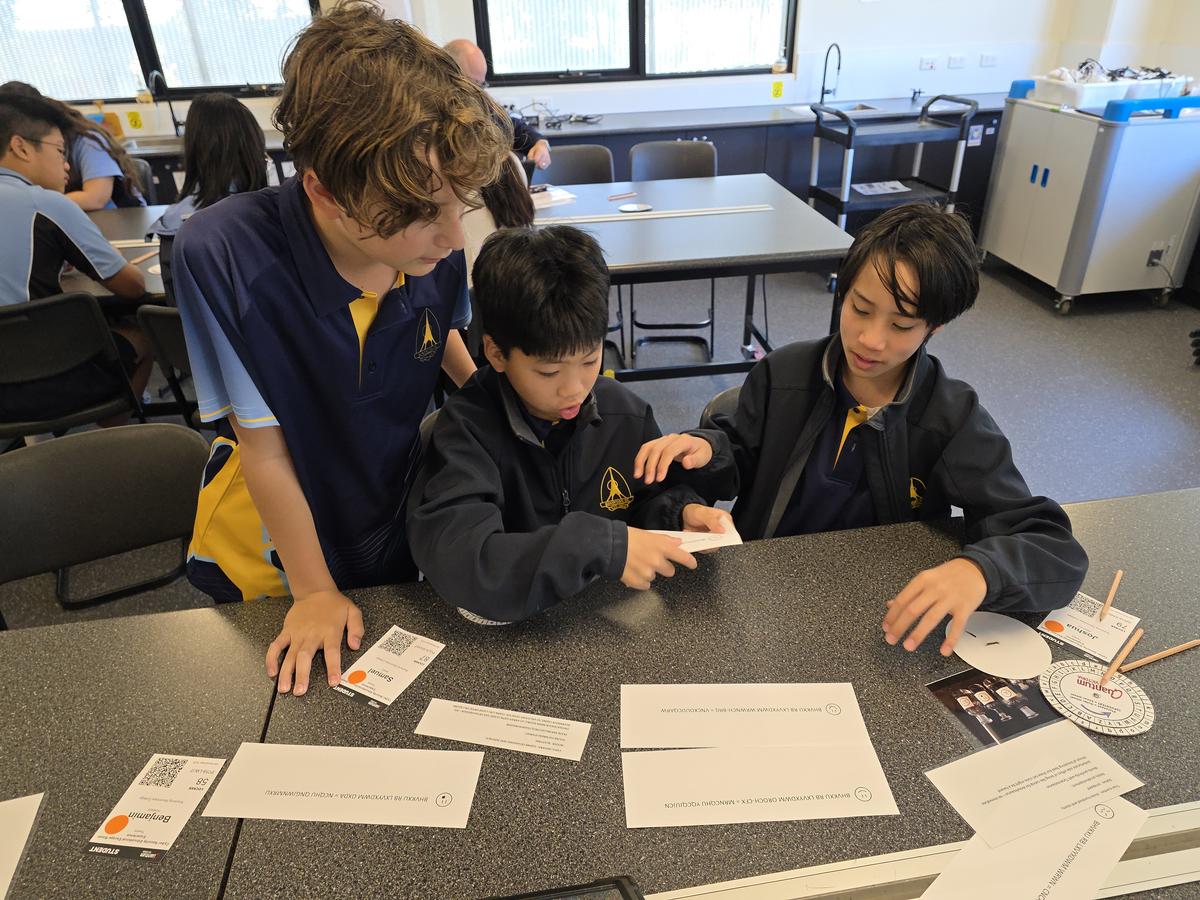
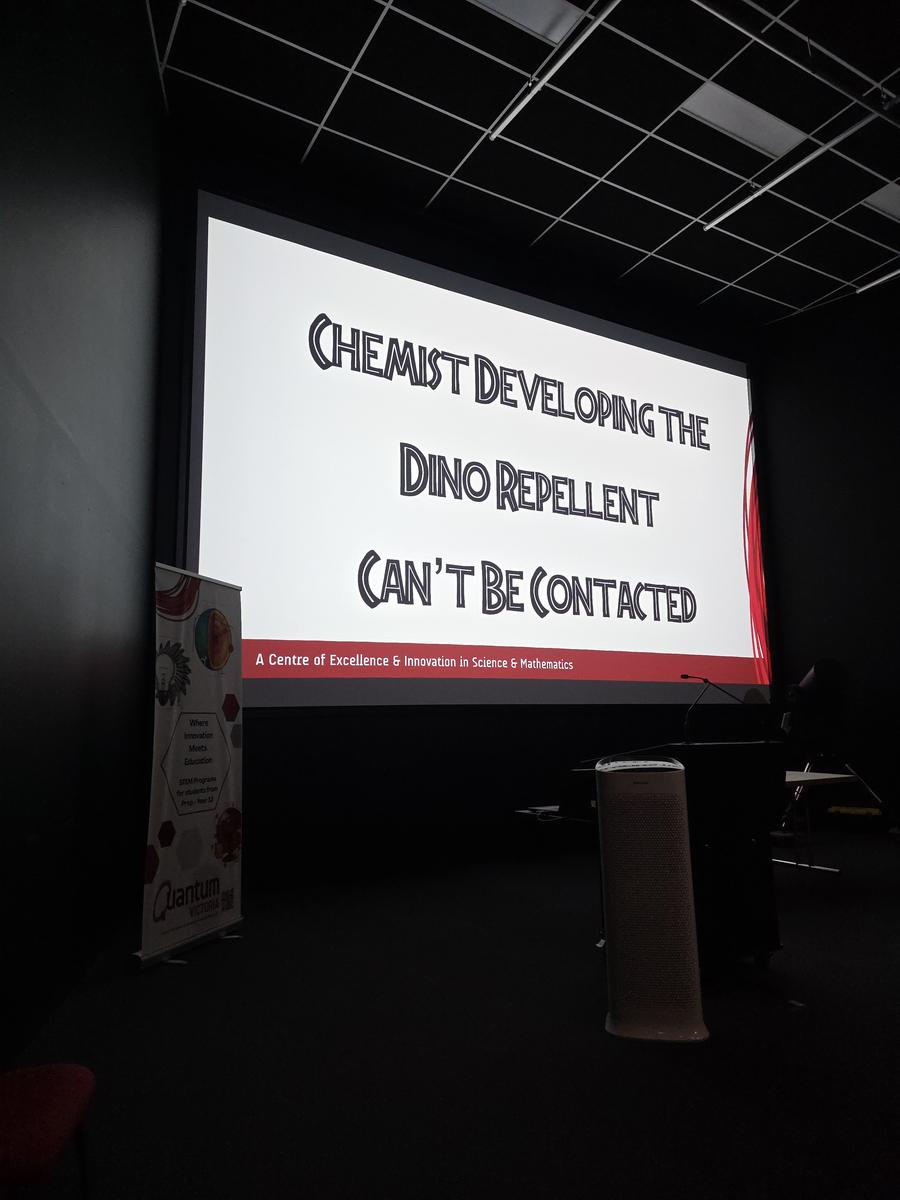
This cutting-edge, game-based learning program placed students in collaborative teams as they tackled a series of scenario-driven cyber challenges across three interactive workshops. The storyline unfolded in Cretaceous Cove, a prehistoric wildlife reserve thrown into chaos after major breaches in security, communication and access control. With gates jammed open and communication to the mainland severed, students were tasked with restoring order before the situation escalated further.
Acting as Cyber Security Experts, students worked together to detect phishing attempts, decode ciphers, strengthen compromised passwords and troubleshoot security flaws — all while racing against the clock to stabilise the park and protect staff, visitors and ancient inhabitants alike.
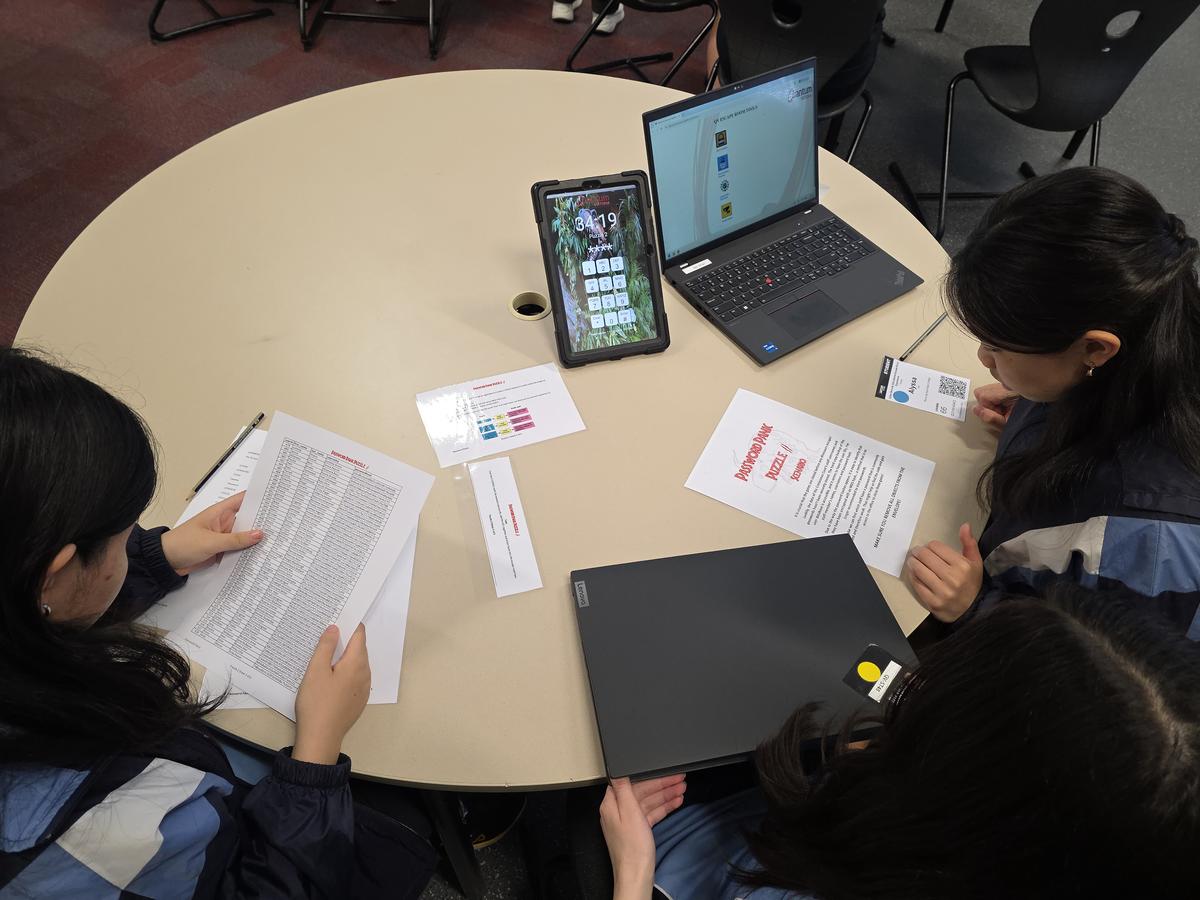
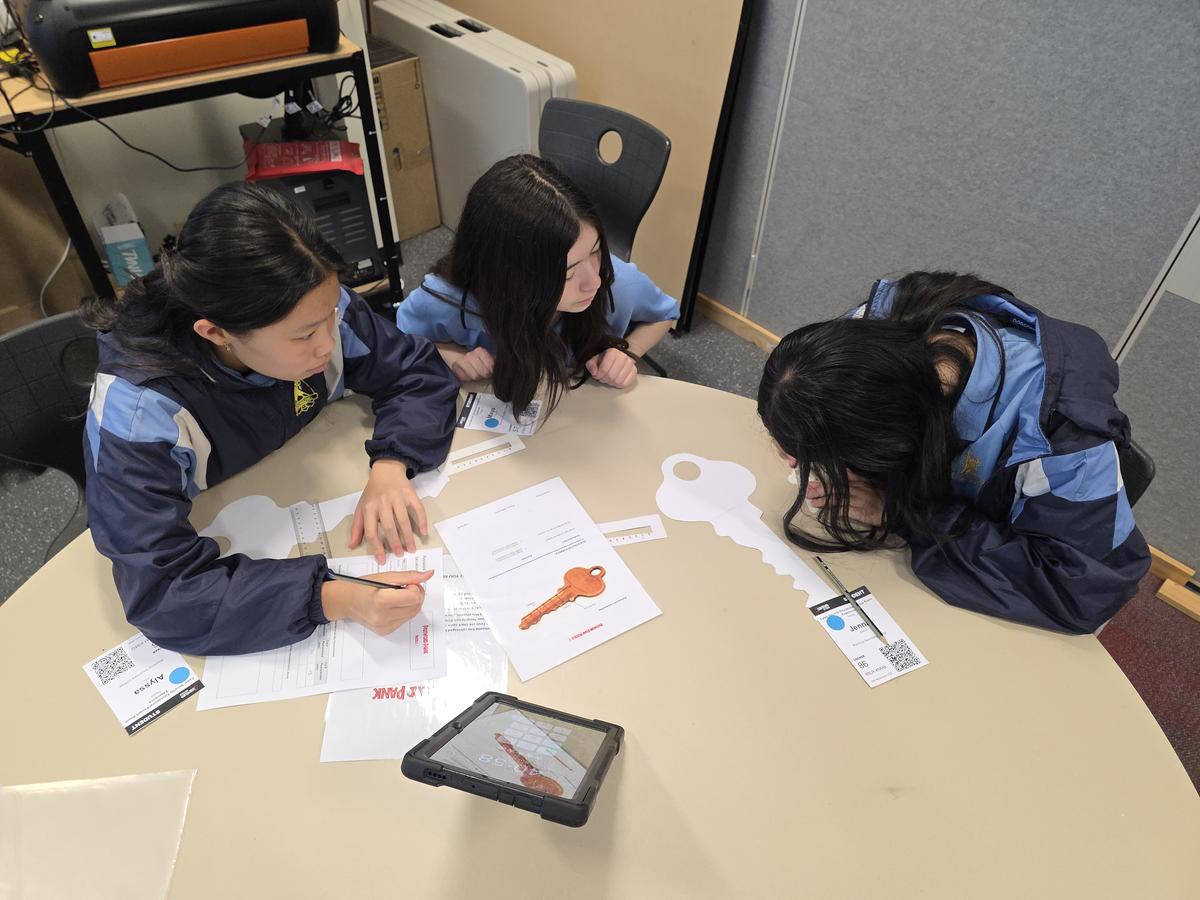
Throughout the day, students rotated through three specialised workshops:
Fishy Phishing – identifying scams and securing communication
Password Panic – analysing password strength and preventing breaches
Sneaky Ciphers – cracking codes and protecting sensitive data
The excursion provided an exciting, hands-on introduction to key cybersecurity principles while fostering problem-solving, teamwork and critical thinking. Our students rose to the challenge with enthusiasm, making it a memorable and meaningful learning experience.


Lydia Tomic
Mathematics Teacher | Excellence and High Ability Practice Leader
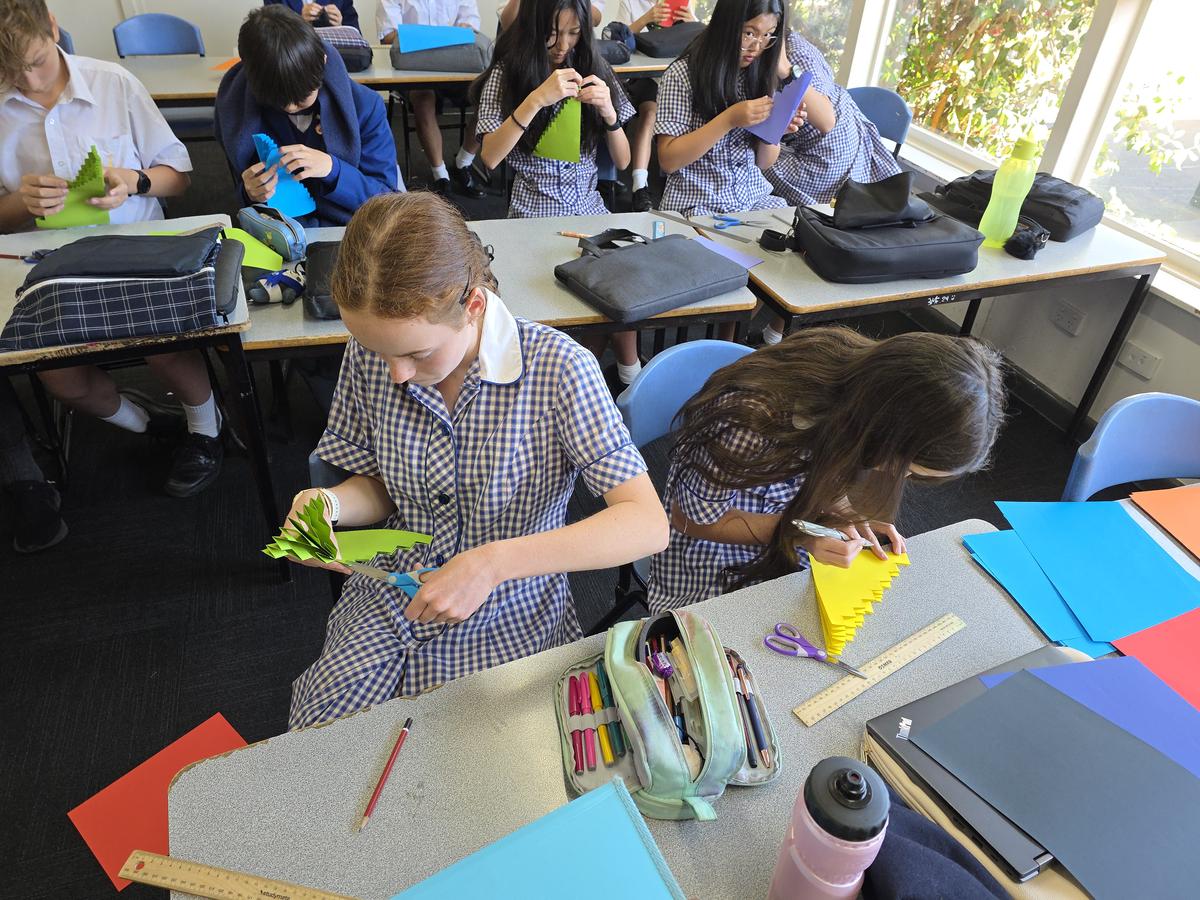
Wrapping up the year with Fractal Card Making in 7 SEE@K
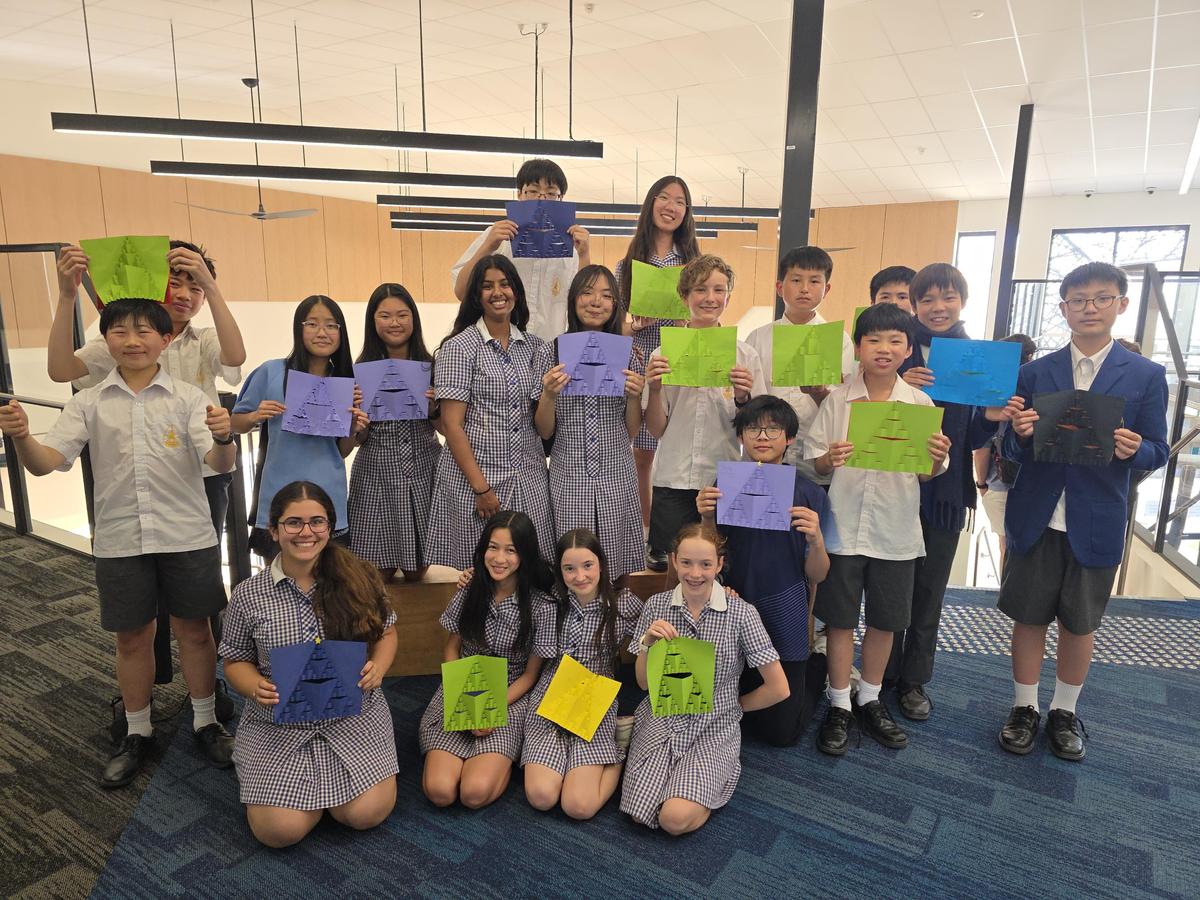
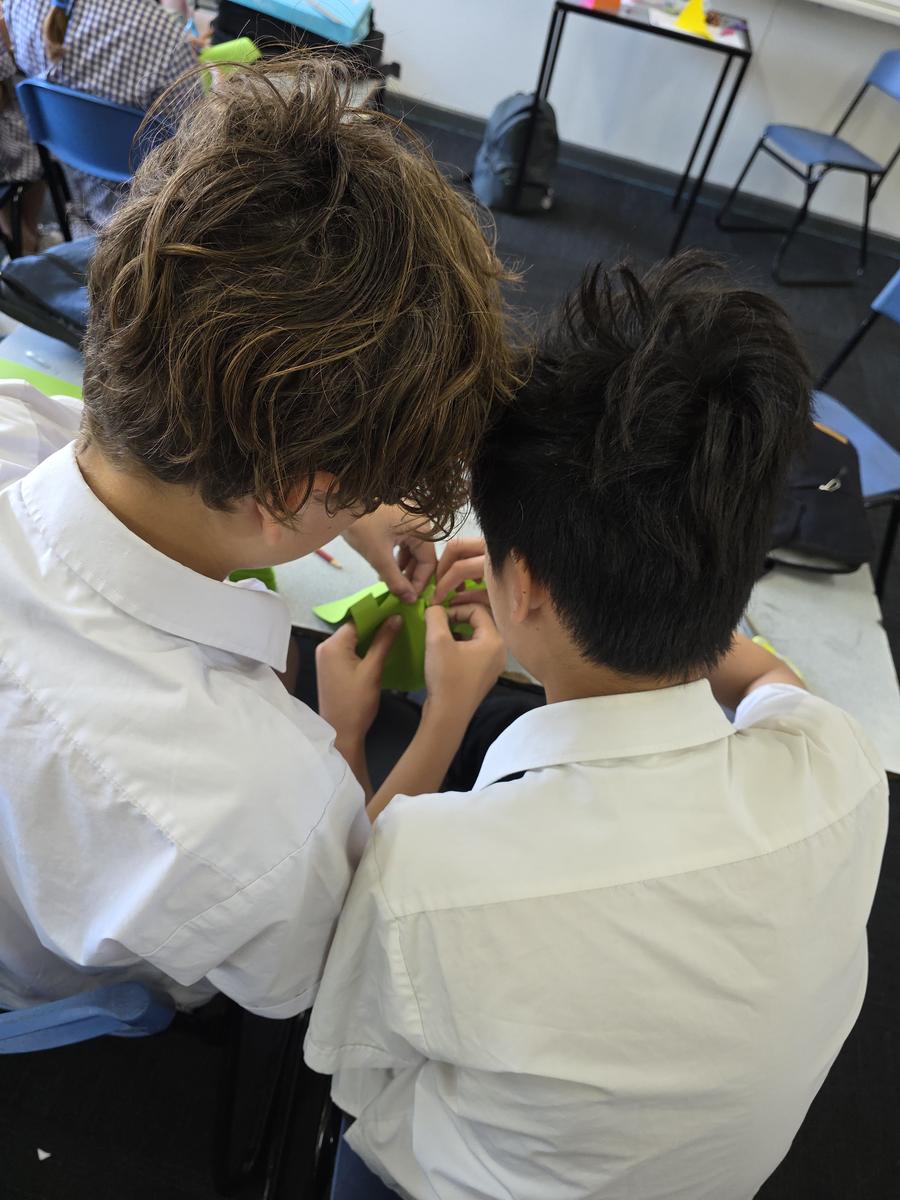
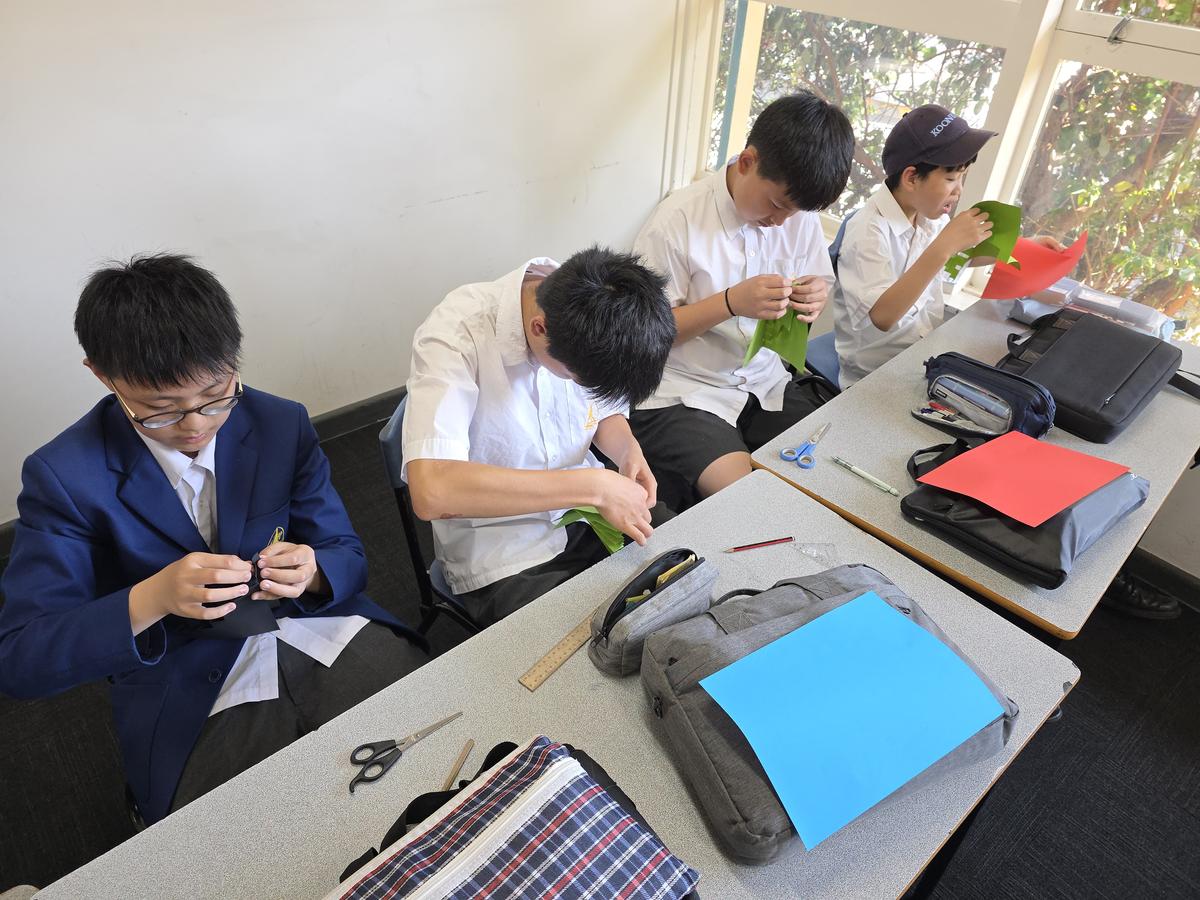
As the academic year comes to an end, 7D worked tediously to create Fractal Cards in their final session of maths for the year.
Fractals > a curve or geometrical figure, each part of which has the same statistical character as the whole. They are useful in modelling structures (such as snowflakes) in which similar patterns recur at progressively smaller scales, and in describing partly random or chaotic phenomena such as crystal growth and galaxy formation.
Learn to make your own mathematically inspired festive season card here > https://youtu.be/4YDHsMUQbVg
Student reflection on their year in SEE@K
Being part of SEE@K has genuinely shaped my year in ways I didn’t expect. I not only learned new skills and faced exciting challenges, but I also made connections I never thought I would. At the start of the year, I showed up clueless, no idea where A block was or 35, but after a long year, you would think I know my way around by now. But no, there are still so many things I have yet to discover. Just a week ago, I remember running a lap of the school, trying to figure out where 29 was.
Working closely with people who share the same curiosity and drive helped me feel supported and inspired every day. One of my favourite moments this year was camp. Spending that time together, trying new activities, and laughing with people I’d only just met made me realise how quickly strong friendships can form. The projects, excursions, and fast-paced learning pushed me to think deeper and believe in myself more.
Looking back, I’m proud of how much I’ve grown, not just academically, but in confidence, resilience, and the friendships I’ve built. SEE@K has truly been a place where I’ve felt a sense of belonging and felt truly challenged and understood. I am not only so grateful for what an amazing class I have, but I feel so, so privileged with the hard-working and kind-hearted teachers I had this year. Every one of them has helped shape who we are today, and I truly don’t know what I would have done. So, I would like to thank every single person that has helped me along the way, you are all so remarkable.
~ Sabrina 7D
Lydia Tomic
Mathematics Teacher | Excellence and High Ability Practice Leader
STEM Industry Insight Session for students in Year 9
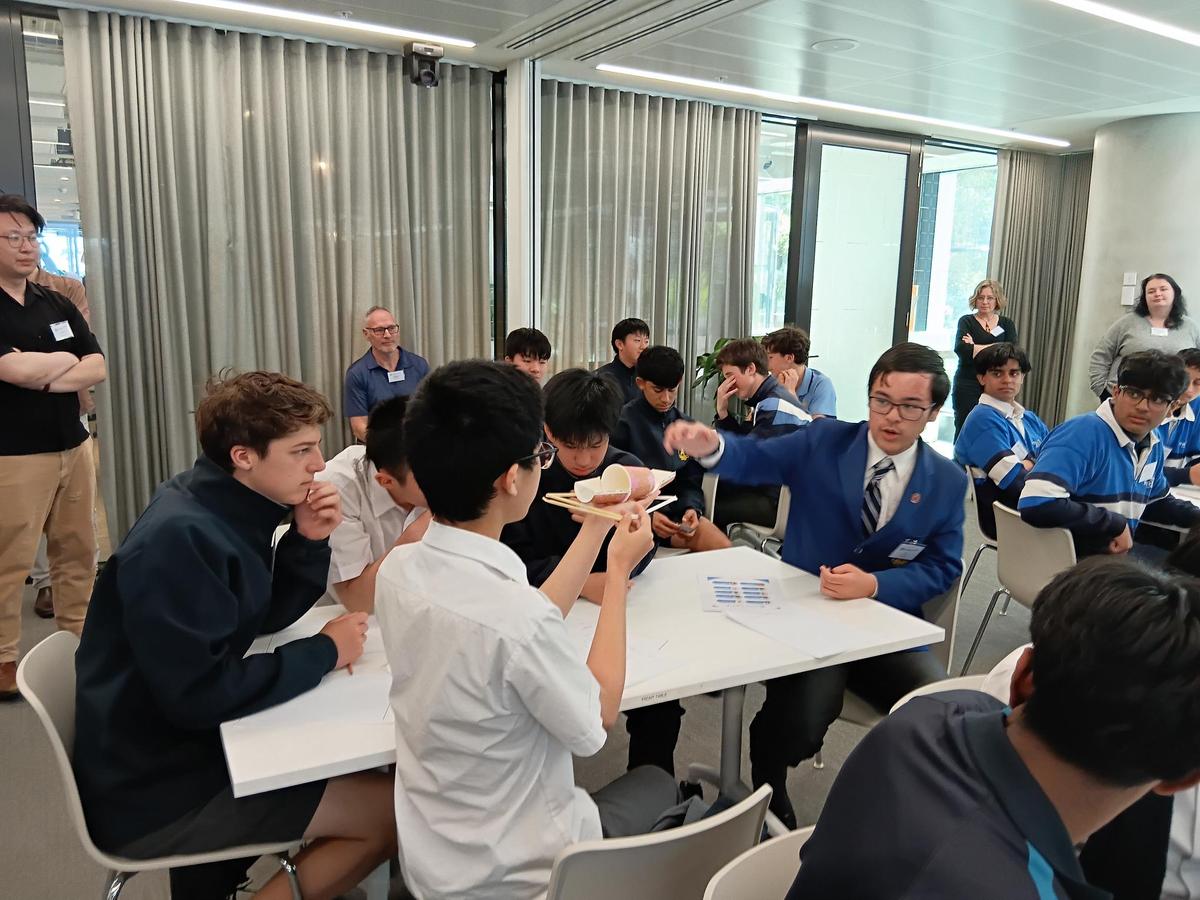
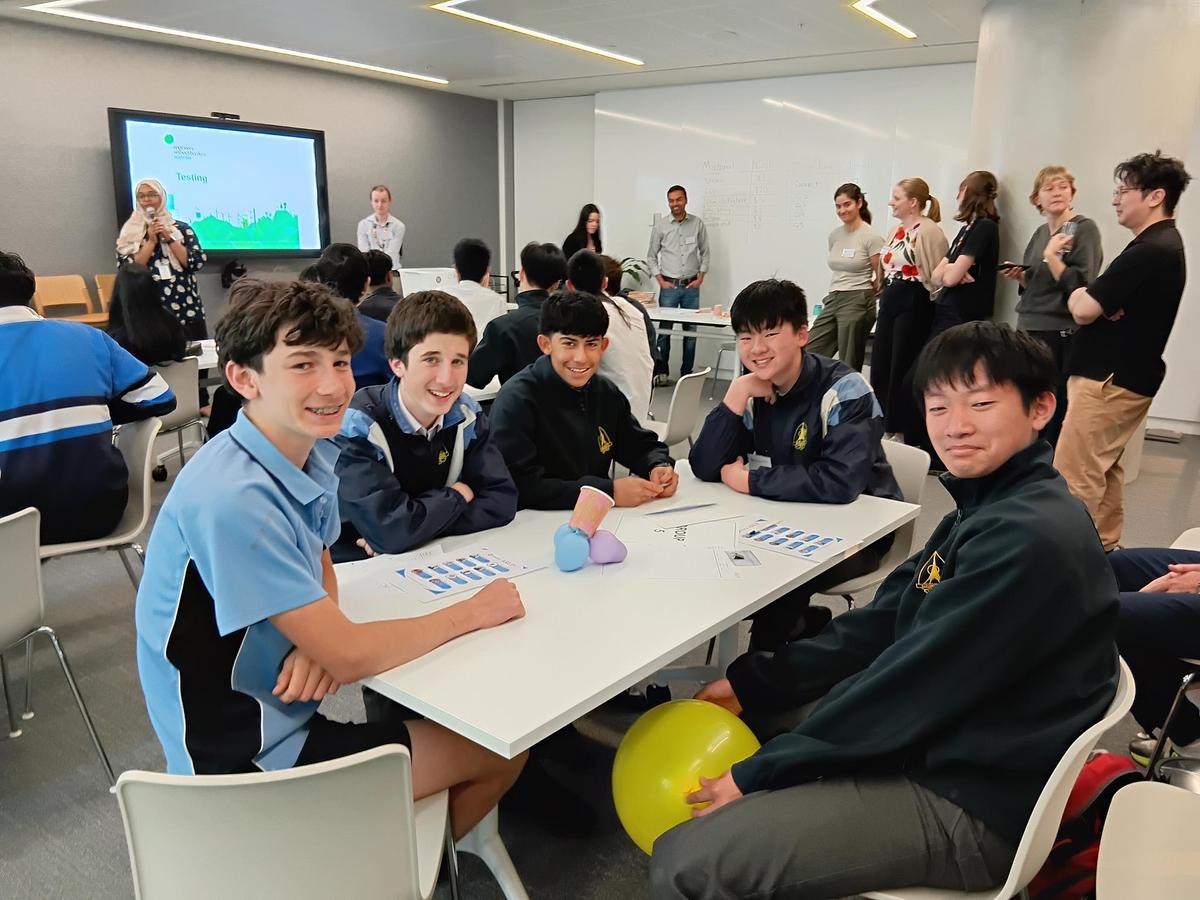
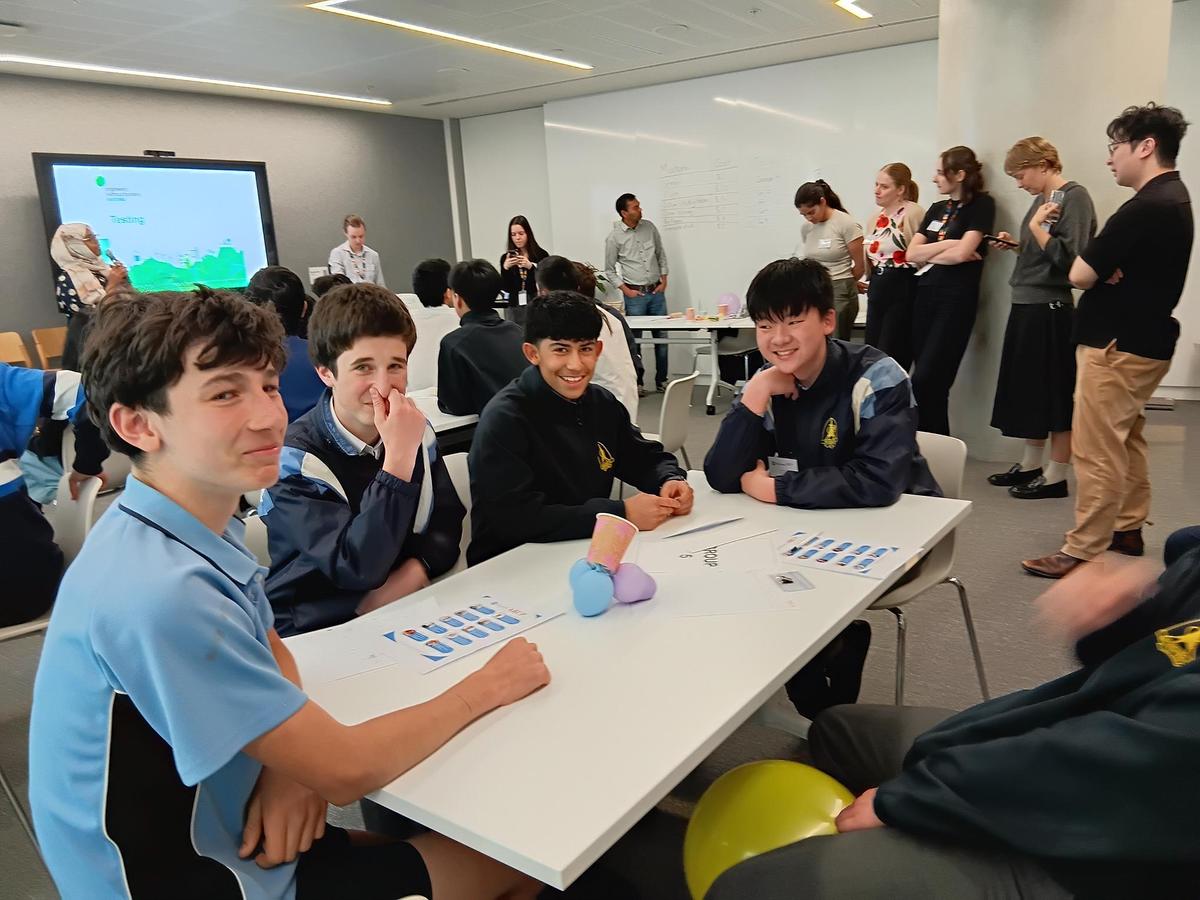
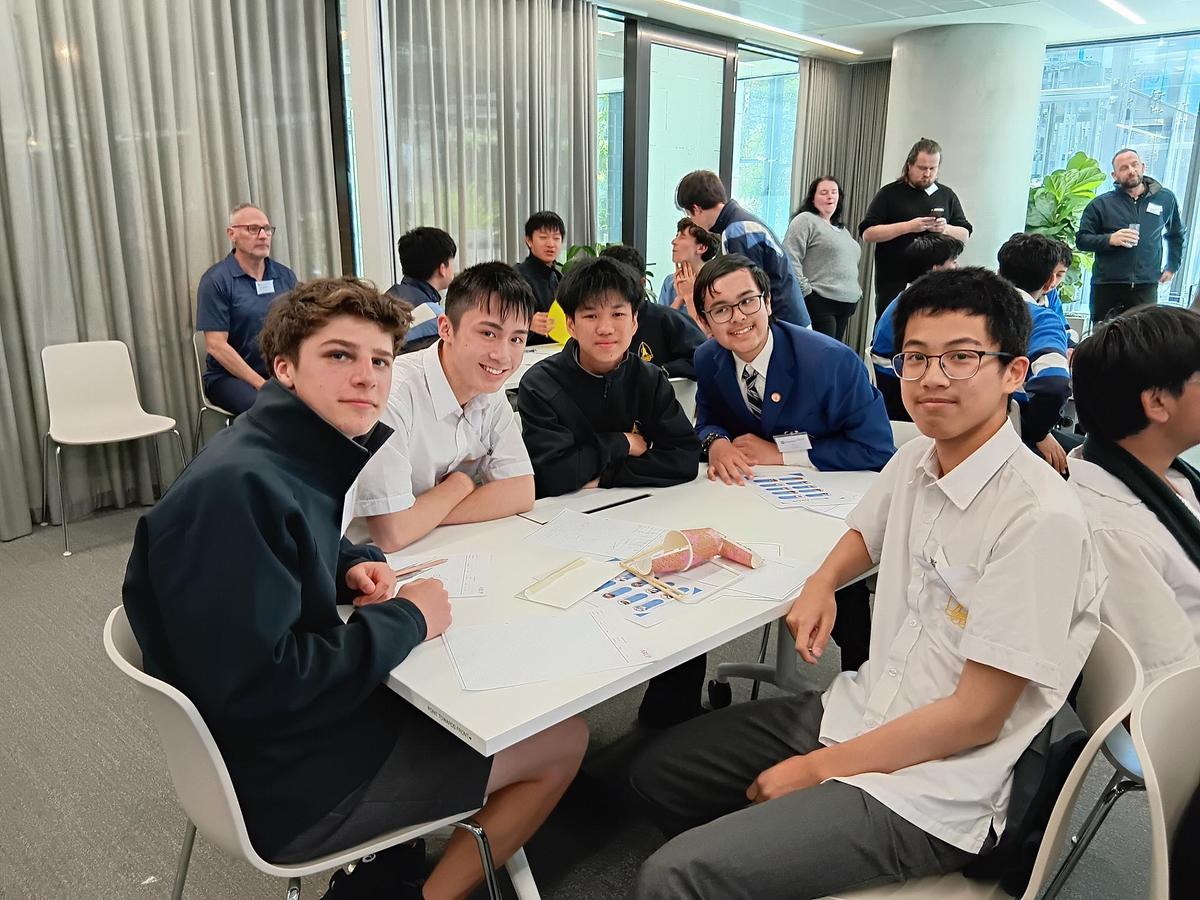
On 14 November, ten of our Year 9 SEE@K students, all with strong interests in STEM, environmental sustainability, urban design, renewable energy and business, participated in a valuable half-day STEM Industry Insight Session hosted at the ARUP Head Office.
This interactive event brought together 40 students from ARUP partner schools for an inside look at one of the world’s leading engineering firms. Students heard directly from ARUP professionals about the wide range of career pathways within engineering, sustainability and emerging green industries. Students also participated in a guided tour of ARUP’s innovative, sustainably designed office space. Students were able to see firsthand the building’s environmentally conscious features and learn how it achieved its impressive Green Star rating.
A highlight of the excursion was competing in small teams to build a 'floating house for Cambodia' out of cups and straws where one of our teams were awarded the best design prize.
This experience offered our SEE@K students an inspiring glimpse into the future of STEM and sustainability careers, broadening their understanding of industry trends while reinforcing their passion for creating a more sustainable world.
Karen Riding (Careers & Pathways) & Lydia Tomic (Excellence & High Ability Practice Leader)
Science Talent Search 2025
The Science Talent Search is an annual competition run by the Science Teacher’s Association of Victoria (STAV). This year had a theme of "Decoding the Universe – Exploring the Unknown with Nature’s Hidden Language.”, which invited students to explore the mysteries of nature, quantum science, and the cosmos, encouraging them to dive into the secrets of the universe.
Students can create short stories, scientific posters, working models and even video games for judgement. This year we had 20 different entries across our middle school, where two of our students; Nathan Goh and Kara Tan each received a minor bursary award for their outstanding contributions. There are thousands of entrants to the competition each year and our Koonung students really deserve congratulations for their hard work. I invite you to have a read of a selection of work contributed by our talented students:
The Return of the Photons
By Taneen Mazloomian 7D
I was born in darkness. The whole world has been living in darkness for over two- thousand years. Stories and artefacts show us exactly what happened. What really happened, not just what your parents tell you.
The sun had slowly been dimming, not that anyone noticed or cared. At first, it was subtle, shadows lingered longer than they should, the golden beams of the sun hesitated at the horizon. Then, as days stretched into dimness, the truth became undeniable, sunlight was fading. Not because the Sun had vanished, but because those precious photons were trapped. In the boiling core of the sun.
Crops withered, food became scarce, and wild theories clawed at humanity. Did humans do this? Or did something else do this, something bigger than anything we ever expected?
While people scrambled for the truth, the world turned dark and cold. Lake and rivers turned to ice and oceans turned to slush. Schools were terminated, stores abandoned, and humans dug underground homes to insulate what little heat was left.
Over these thousands of years, humans adapted to the climate and the darkness. Larger eyes, paler skin, and even hairier bodies with increased body fat to keep us warm against the numbing cold. Special plants were harvested and planted that thrived in the cold and needed little water. Humans were advancing, finding ways to channel heat from the core of the earth into their homes.
However, all of this changed, when an unforeseen circumstance occurred. The thing humans had been craving for years. Sunlight. Lots of it. It scorched the land, melted the lakes, and raised the temperature back to what it used to be. Some 2000 years ago. But how did it really happen, why did the photons come back one week ago, and what stopped them from coming back earlier? Years of research about the sun lead me to these conclusions, and you are about to read it all.
The day the sun came back, I was outside, hauling blocks of ice over my shoulder to put in one of the storage units in my underground home, when a thunderous noise ruptured the sky. A blast of white flooded the atmosphere, and sun licked the earth for the first time in what seemed like forever. Everyone covered their large- pupiled eyes, screaming in pain. The searing heat tickled, no, blistered my skin. Warmth. I had never truly felt anything like this. It was terrifying.
Yet, what I realised was shocking. My research was finally complete; I had found the reason these photons didn’t escape the core. The Sun’s power was weakening, like it had been for years, but it was so weak that the photons weren’t energised enough to leave the sun. So, for two millenniums, these photons had been piling onto each other, until the pressure became so much that the sun exploded.
Small fires of chaos spread around the world and yet again the rumours and theories arose. People who were afraid of the sun’s return stayed underground, making no contact with the outside world, believing the sun was unstable, whilst others wore protective clothing and eye protection like sunglasses to see the world in the light, for the first time in their lives. Medication was produced to help us withstand the heat and the UV rays on our pale thin skin. Places that hadn’t been explored in years reopened, and parents started getting employed to provide for their families as money started being used again.
But between countries, there was tension. Political leaders advise, no, forced their citizens to not come out, whilst others covered all underground homes and moved their people into new ones. Protests erupted, and people tried to overrule their governments.
Nevertheless, the most frightening thing was the fact that scientists didn’t even know if this was the end of eruptions coming from the sun, and whether more eruptions were already building beneath the Sun’s surface.
Radio metricians had already discovered that the waves of electromagnetic radiation inside the photons were much stronger when they arrived on Earth than what they used to be.
So, I kept on with my research, practically drowning in it, until I realised, maybe there is no definite answer? Were we even meant to figure out why this really happened? Or were we meant to just live this mystery, constantly doubting our existence and everything around us.
I stared up at the sky, unfamiliar and blue, the sun warmed my body, but I didn’t feel safe. I didn’t know how to feel. We got back the sun we begged for, but at what cost? And deep withing the Sun’s surface, who knows if it’s only begun? After all, no one knew how long it would take for the Sun to abandon us all once again.
The Quest for the Golden Ratio
By Cody Wang 8D
There was once a time in Athens when life flourished under the divine presence of the Golden Ratio. Mathematics guided all things: buildings stood still in their perfect place, leaves spiralled with order, and nature gleamed with harmony. This sacred number, known as Phi (approximately 1.618), was the breath of life to geometry, aesthetics, and thought.
Ariadne, a brilliant student of Euclid and Pythagoras, marvelled at its power. While others saw numbers and symbols, he saw balance—found in seashells, sunflower spirals, and ancient temples. He helped guard a hidden place whispered among the brightest minds: the Temple of Divine Proportion, located deep within a jungle. Strangely, each mathematical school lay exactly 1.618 kilometres from it. Inside the temple lay a vault containing misleading mathematical knowledge—only accessible by entering the correct number. Any error would release misinformation powerful enough to destabilise Greece’s order.
One weary evening, after a long day of study, Ariadne approached the vault to check its integrity. Fatigued, he accidentally keyed in 1.168 instead of 1.618.
What followed was destruction. The columns of the Parthenon twisted unnaturally. The Erechtheion collapsed in dust. Seashells became rectangles. Spirals vanished. Nature itself recoiled in confusion.
Panic spread. A new group rose to prominence: The Extinguishers. They blamed Phi for the destruction. “Its complexity is dangerous,” they said. “Simplicity is what we need.” They replaced it with a crude 2:1 ratio. It was straightforward—but dull, lifeless, unbalanced. Still, the frightened citizens followed, and soon, The Extinguishers became the ruling authority.
In secret, Euclid and Pythagoras opened a school, aiming to revive Phi’s teachings. At first, only a few trusted minds were admitted. But they knew knowledge should be for all. More joined. Their message spread: Phi brings order and beauty.
But the government had already made Phi illegal. Anyone found teaching or using it was punished. Euclid, unaware of the recent decree, lectured his students on spirals in pinecones and architecture’s symmetry. Suddenly, Jenkins, an Extinguisher spy, burst in and seized him. Euclid was thrown into a prison built under the weak 2:1 ratio. The walls slanted oddly. Even stone didn’t seem comfortable there.
As Euclid sat alone, a scroll flew through a crack in the wall. It was signed by Ariadne and Pythagoras.
“Without Phi,” Pythagoras wrote, “the patterns of nature become trivial—no longer discoveries, only coincidences.”
“Phi,” Ariadne added, “is the soul of balance in architecture, proportion in the body, and the breath of form in design.”
These words sparked hope. Not only hope, but an ounce of rediscovery.
Shortly after, the prison—built on poor ratios—collapsed. Euclid returned to his school. He brought with him objects of nature: pinecones, sunflower heads, flower petals—all marked by Phi. The students were amazed. The people began to doubt The Extinguishers’ teachings. Phi, once feared, began to glow again in the minds of the public.
Then came the final act, an essential and life-changing act.
Ariadne led a mission into one of The Extinguishers’ greatest banks. Inside was a vault with a four-digit passcode. It had to reflect true mathematics.
“1.61…” he whispered.
Was it 6? 7?
“…8!” he declared.
The vault opened. Truth returned.
Greece began to heal. Buildings restored themselves. Spirals returned to plants. Artists, engineers, poets—everyone found renewed harmony. Euclid’s teachings became mainstream. The Extinguishers lost favour, and eventually, power.
In a surprising speech, Blasis, their leader, stepped forward.
“The Golden Ratio was not the villain. Our thinking was. We confused simplicity with beauty, when in truth, Phi shows us elegance through complexity. We abandoned discovery for comfort.”
Ariadne followed him.
“This world is shaped by patterns. From Euclid and Pythagoras, I’ve learned that mathematics is more than rules—it is exploration, creation, and the thrill of ideas unfolding. No one begins with all knowledge, but everyone can enjoy the pursuit.”
Then, he raised his voice in a chant:
Life can be chaotic, yet it is a balance
Of creatures and the most divine men
All such beings find it a challenge
Nourish the soul and enjoyment shall stem
From poetry to quadratics, knowledge is an expanse
No limit, no fear of wrong, no certainty: always new
Discover, invent, pursue and take your chance
Everything is enjoyable, for many or for few
Ariadne became a hero—not just a mathematician, but a philosopher, poet, and visionary. The Golden Ratio returned not only to Greece, but to the hearts of thinkers across generations.
Though Greece today may not shine as brightly as in its golden age, its ideas remain. The Golden Ratio continues to shape art, science, nature, and human understanding.
And one truth echoes forever: Mathematics lives not in simplicity, but in harmony. Phi remains eternal.
Whispers of the Quantum void
By Nathan Goh 8D
The sky shimmered under pressure, like glass, and then it tore—but didn’t break. By 2325, time itself bowed to human will. Dark matter powered our cities. Quantum entanglement stitched continents together with invisible threads, transmitting thoughts faster than light without ever breaking Einstein’s laws — not by moving matter, but by collapsing distance. These forces—once riddles whispered by stars—were woven into the fabric of everyday life. Among the laws of physics, we lived like gods. And here I am, leading Operation Nexus Frontiers—our first journey into quantum space
It started 20 years ago, when I uncovered a fracture in reality—a wound in the cosmos—that shattered everything we thought we understood —a distortion in space-time, a quantum rift. Not a hole but it is like a snag in tightly stretched cloth, where probability folded in on itself. Back then, I was a theoretical physicist simulating quantum entanglement across galaxies, chasing the dream of instant communication. That’s when I saw it—a strange disruption. A pattern that didn’t belong. A rhythm out of place. A ripple that defied causality — a fold in the quantum veil, as though the universe had blinked and forgotten how to be whole.
We first detected it as a flicker—barely a ripple in the quantum field. But it was consistent. Measurable. Real. A rupture in space-time. Simulations failed. Models collapsed. This wasn’t noise—it was a rift.
Sometimes, alone on the observation deck, I’d see the stars shimmer wrong—not twinkle, but shiver, as if aware. And beneath the ship’s low hum, I’d hear it: faint static, like the universe whispering behind the silence. Not language—just presence. Watching. Waiting.
We thought it was a minor anomaly. But the rift magnified quantum ripples—normally self-cancelling—into chaos. Energy spiked. Gravitational waves warped spacetime like a struck drum. Even our black hole-rated instruments failed.
We turned to quantum entanglement, our most precise tool. Entangled particles should react instantly, no matter the distance. Near the rift, that link dissolved. Correlations vanished. It was as if causality itself began to fray.
Some believed it linked distant corners of the universe. Others called it a doorway. A few of us quietly wondered if it was alive. The way it pulsed—rhythmic, deliberate. The way it seemed to notice when we looked too long.
Today, Operation Nexus Frontiers marks humanity’s leap into the unknown. Aboard Astralis, our quantum slipstream craft, surfed the galaxy by compressing space ahead and expanding it behind—manipulating spacetime itself to breach the light-speed barrier. Yet even with all our mastery, the rift waits, unpredictable and alive.
As we neared the rift, an uneasy chill crept through me. I was speaking to my youngest student, Andrew, when suddenly he flickered—like a signal glitch—and vanished before my eyes. My face paled.
“Andrew?” I stammered as he reappeared, clutching his head. His eyes were vacant, then suddenly filled with fear. Behind him, the stars pulsed, their light echoing his distress. Beneath the ship’s hum, that whisper returned—the universe speaking, urgent and sorrowful. Something was terribly wrong.
In the days that followed, more crew felt the rift’s grasp—space and time twisting, reality distorting. When we arrived, gravitational spikes and bursts of radiation overwhelmed our systems. Energy surged beyond any model, signalling a collapse of spacetime at the rift’s edge.
Then Andrew collapsed. His body flickered, eyes wide with surrender, until he dissolved into flickers of probability—a wave function collapsing into nothing. His loss hit like losing a limb. The rift wasn’t just a phenomenon—it was alive. And it was hungry.
The stars outside flared—not with light, but with soundless screams. Whispers rose, suffocating and countless. The rift pulsed violently; asteroids trembled, and gravitational waves surged. I collapsed, body stretched painfully as the void grew. The Astralis and nearby debris vanished. I stumbled—then darkness, as my head struck something hard.
I woke to silence. Not absence of sound—but a silence too perfect, unnatural. Emergency lights bathed the corridor in dim red glow. I tried to stand, but gravity buckled around me—parts of the ship floated, caught in timeless drift; others were locked in viscous slow motion. Somehow, I was alive.
“Commander?” Dr. Halims’ voice crackled through static. “A few of us are left. Deck C held. We’ve found a stable zone near engineering. Whatever this is—it’s disrupting the ship’s temporal signature.”
I staggered through flickering corridors to Deck C. Five survivors waited, wide-eyed and hollow. I joined Halims, who’d already begun analysing.
“Localized instability,” he muttered. “The quantum field is folding back on itself. Time’s bleeding. Some were… erased. Others, split.”
I suited up and stepped outside. The Astralis drifted through a warped expanse—shifting colour fields, vanishing stars, the universe smeared like wet paint. Then I heard it again: whispers, faint at first, then rising. Not voices. Intentions. Pleas. Desperation. The stars pulsed like thoughts. Suns aged in moments, collapsing into black holes that pulsed with something... aware.
Not remnants of death. Not entropy. These things were alive—watching. Hunting.
Awe collapsed into dread. These entities weren’t just collapsing light—they were consuming meaning.
I suddenly remembered Andrew.
He wasn’t just a student. He was brilliant. Curious. I mentored him since his first academy year.
I rushed to the crew log. His name was wiped, like he never existed. Dr. Halims walked by and looked down at the log.
“Who’s Andrew?”
Andrew was wiped from living memory.
The pulsing black-hole-like entities were alive. They must be assuming a mortal form—consuming realities. And even now, the stars whispered one final truth through the collapsing dark:
"You are next."
As we drifted deeper into the fractured dark, a single thought gripped me: in reaching too far, we had summoned what was never meant to be seen. Had we pulled too hard in our quest for the infinite? The cost was clear now—Astralis’s crew was the price.
Butterflies of Chaos
By Kara Tan 9D
A warm, distant breeze overcomes the swallowing smell of the sea while I could hear the hundreds of people chattering outside from every edge of the edge of the archipelago, probably towards the ever-changing sky, as per usual. As I could hear the sounds of the clouds silent as they should be, to immediately crash loudly the next. Another unpredictable thunderstorm, creating uproar between the weather soothsayers and the tarot readers down the road, as unmistakable salty raindrops pummel towards me as I laugh. The foolish fortune-tellers have yet to know it is impossible to predict its patterns exactly, for you cannot repeat a state of the system or simply predict what will tip a system, thus the exponential growth of errors. The behaviour of non-linear systems is impossible to predict. Initial conditions from what they measure with, are not adequate enough signs to predict the future weather.
How can the tiniest of changes in an initial system that could cause such substantial results over time, bring me so much joy? I think to myself, and the purpose of these exact discoveries that the fortune-tellers wish to achieve. Nevertheless, I search over my room to find my slate and stylus to record my senses of today’s weather, slowly etching dots on the page until I hear footsteps approaching.
Slow, yet thumping and graceful. Ercole’s steps were unmistakable. Then I hear my rival yelp my name for a response.
“Foolish friend, are you still scribing useless details upon the past again?” he yelled towards me.
I peeped out the window. “Well, with the idea that all events are bound to happen, and will be determined by events and conditions, it is important to understand the present and avoid past mistakes in the future?” I replied.
“You do realise, not a lot of people are willing to, you know, listen to you? Because of your-”
“I am aware, but my other senses are heightened, I can sense when something is off.”
“Right..”
After his footsteps grow fainter, a sudden large gust of sharp wind rips into my window, roughly shoving my tools out of my grip, knocking me to the floor. Soon followed by the shattering onto the ground below. But the gust is unlike anything I have sensed, one with the rain, roaring like a jet engine as it passes. Smelling the air, the stench of faint ozone and sulphur pollutes the climate. My consciousness slowly fades for a while, as my thoughts interpret me to go to sleep.
A morning day, yet the morning breeze instead shoots over the hills. A simple, normal wind but then brought by a rabble of butterflies that would create that breeze into a rotating storm surrounded with harsh rain and rotting smells stinging my tongue, circulating and tearing anything in its path.
I breathed out in shock and despair as I woke from the floor. Limbs trembling as I desperately peered out the hole of the wall. It’s a new day. The air, the odour is even more intense, the wind loud as a lion. Is this chaos? No, the weather, there are underlying patterns, occurring within deterministic systems. Outcomes are put back into a system, which increases or decreases the effect of tiny changes for resulting outcomes.
I bolted with supplies and my white cane then yelled to the people, “A cyclone is afoot! Evacuate away from the coast and settle in a closed shelter!”
The soothsayers and merchants stared in confusion, along with Ercole in the crowd. But then someone yells, “How could we believe a young sightless fellow with no prediction prowess herself? How could you know that such a fate will be upon us today in the random weather?”
“The system here is not random! They merely appear random because they are sensitive to their initial conditions. Don’t you see? Making your long-term predictions exact is unfeasible!” I screamed above all the chatter, following dead silence. “A vision, despair will be brought by a group of insects, and the flap of their wings will lead to our demise. The air smells like rotten earth odour! I may not wield the gift you all have, but my other senses are greater than yourselves! We must leave!”
I hear a figure leap out of the masses with unmistakable dignified steps, as I pass a smile. As my heart warms, I identify who it is. “I know you might doubt my disabled friend, however, she is right. She is talented with her senses. There is no risk of leaving after all.”
Suddenly, a group of people stood in support of Ercole and unify to traverse the nearby hills. Soon enough, others band together and pack their supplies, and as others notice, they start leaving themselves. Joining the crowd myself, I scurried to safety. Moments after, the clouds begin to rumble, as a buzz of butterflies escape from nearby environments, with their wings creating currents towards the town below. The further shattering rain, accompanied with thunder crackled across and a looming cyclone decimated the foundations of the town in the distance.
But as I climbed away from the remnants of the town ears ringing while my legs trembled, I realised that this world’s weather has a sensitive independence of a non-linear system, however it still follows the rules of a deterministic one in a defining boundary in the chaos, yet its patterns emerge are stable, this land’s weather as a whole is stable globally, not locally.