
Social Stencil Groups
Term 3

Social Stencil Groups
Term 3
I’m very excited to introduce Mariska to our school community. Mariska is currently completing her Social Work degree. Throughout her studies, she has completed courses on Small Group Facilitation and is a trained Social Stencil Facilitator. Next term, Mariska will be taking the Social Stencil Small Group Program for selected students from Grade 2s-Grade 6.

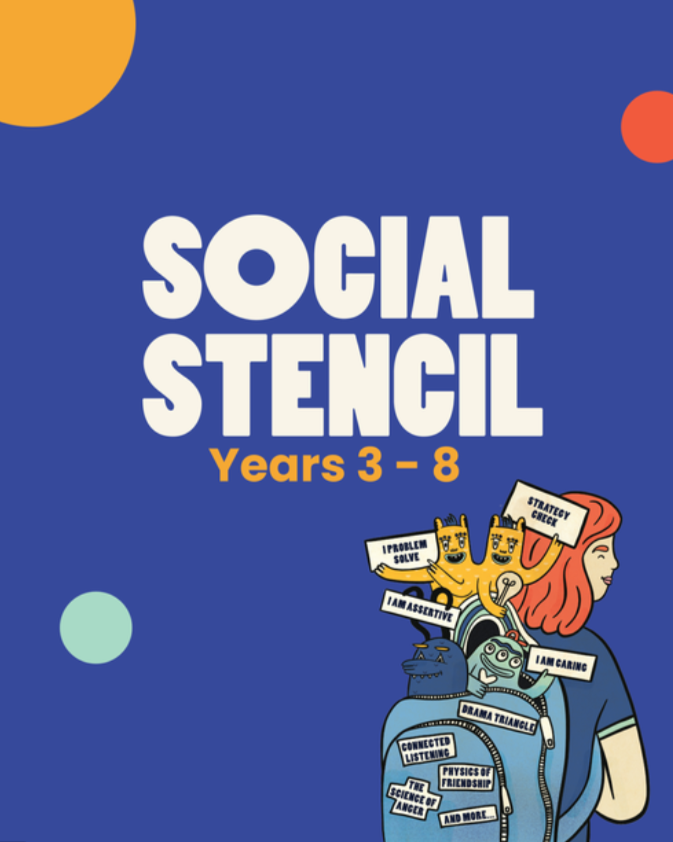
Social Stencil is an evidence-based and engaging social-emotional learning program designed to help young people:
● Understand friendship styles
● Explore different communication and listening styles
● Recognise why peer conflict can occur
● Learn practical social problem-solving strategies
Each session includes group discussions, games, and paired activities, with the goal of building meaningful peer connections and support social confidence.
https://www.socialstencil.com/
FAQs:
This is a question I get a lot and the short answer is that you should not be concerned as we select students of various social and emotional skills to be in the groups. If you’re child is struggling socially or emotionally, we would expect that you would have already had conversations with classroom teachers about this. Selecting a child for a Social Stencil Group Program should not be seen as a way of communicating to families that their child is struggling.
The group will take place for 1 hour per week for each group throughout Term 2. It will be on a Wednesday or a Friday. We make sure that it is not during Specialist times (e.g. Indonesian, PE, Science, Arts) or during play times. So the group session will replace one Classroom session per week over Term 2.
Participation is always voluntary for families and the child. You are welcome to opt out of the program or withdraw your child at any time. Your child is also welcome to opt out or withdraw at any time.
Social Stencil is carefully designed to be neuro-affirming while also being appropriate for neurotypical brains. This includes the program being carefully and frequently reviewed by neurodivergent experts. For example, when highlighting emotions, Social Stencil teaches that different people show emotions in different ways; and that no one can fully know what you’re feeling unless you tell them and vice versa. Social Stencil also looks at different friendship styles people may have, including the ‘just me’ style; and highlights that each friendship style can be fluid, meanwhile having its benefits and its challenges.
As always, feel free to contact me if you have any further questions: Rebekah.Tankard@education.vic.gov.au