Mental Health
& Wellbeing update

Mental Health
& Wellbeing update
During Term 2, our students have enjoyed the opportunity to participate in a variety of sports, including swimming, croquet and AFL. We aim to continue offering diverse sporting experiences throughout the year, including lesser-known options such as hockey, lawn bowls and pickleball. Research shows that regular participation in sports and physical activity positively impacts emotional and social health.
Why is physical activity so important?
Participating in physical activity is central to a child’s health, development and psychosocial wellbeing. Regular activity supports brain development, bone strength, muscle control, balance and coordination, and helps to achieve and maintain a healthy weight. Being active can positively affect sleep patterns, assist in developing social skills, improve mental health, increase concentration levels, build self-esteem and confidence, reduce stress, anxiety and depression help build teamwork and cooperation skills.
How much physical activity is recommended daily for children?
For good health, development and wellbeing, school-age children should do at least one hour of moderate to vigorous physical activity and several hours of light physical activity each day.
Sport for school-age children
Many children are ready for organised sport by the middle years of primary school. Playing organised sports and activities can be good for your child in many ways. For example, it can help your child to:
Most sports have modified versions that are appropriate for children at this age. These include Cricket Blast, Aussie Hoops basketball, NetSetGo netball and Auskick.
Modified games have different rules and equipment. This can all help your child develop skills without getting hurt or losing confidence.
How else can I encourage everyday physical activity?
Most primary school-age children need plenty of unstructured play and activity like running, chasing and playground games.
Everyday physical activity can also include walking to school, riding bikes or around your neighbourhood, and playing outside in your backyard or local park.
These kinds of unstructured, everyday physical activities can be more affordable and easier to fit into busy family life than organised activities and sports. And they all add up to a more active lifestyle for your child.
My child likes screentime, how can I balance that and physical activity?
Sometimes screen time can mean school-age children sit still for too long without a break. But you can use screen time to get your child/ren up and moving. For example, you can try things like:
And remember – healthy screen time is all about balance. It’s good for your child’s development to do plenty of different activities, including physical activity, creative play, social play, reading and screen time.
For more information and support, you could visit Health Direct-
https://www.healthdirect.gov.au/benefits-of-physical-activity-for-children
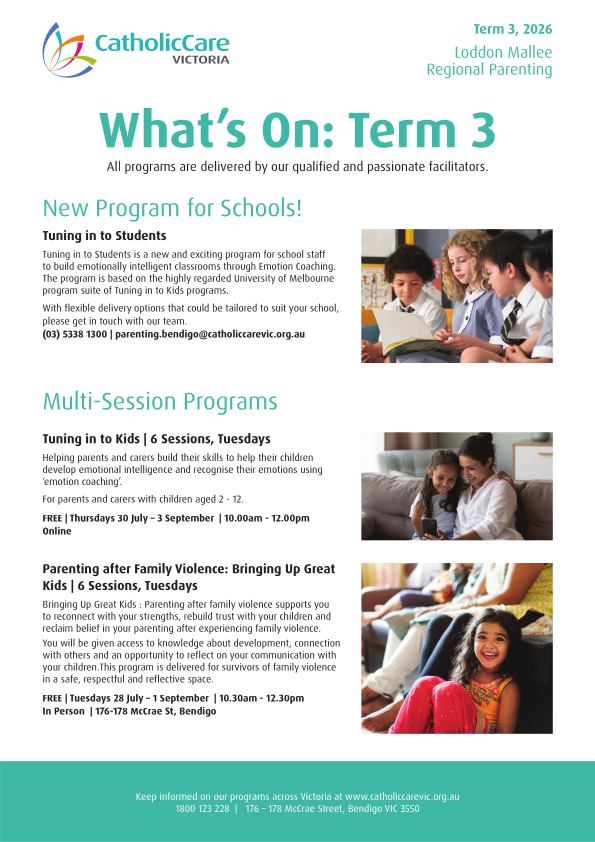
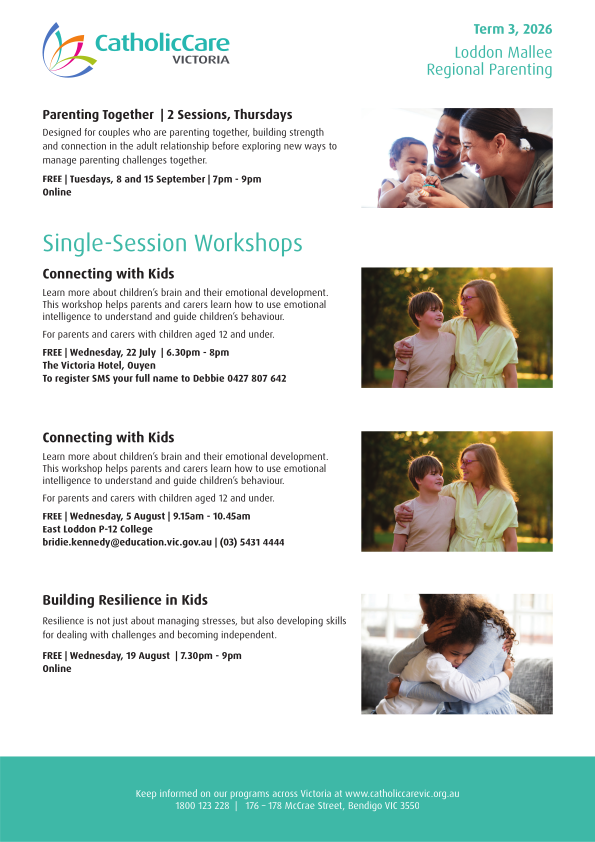
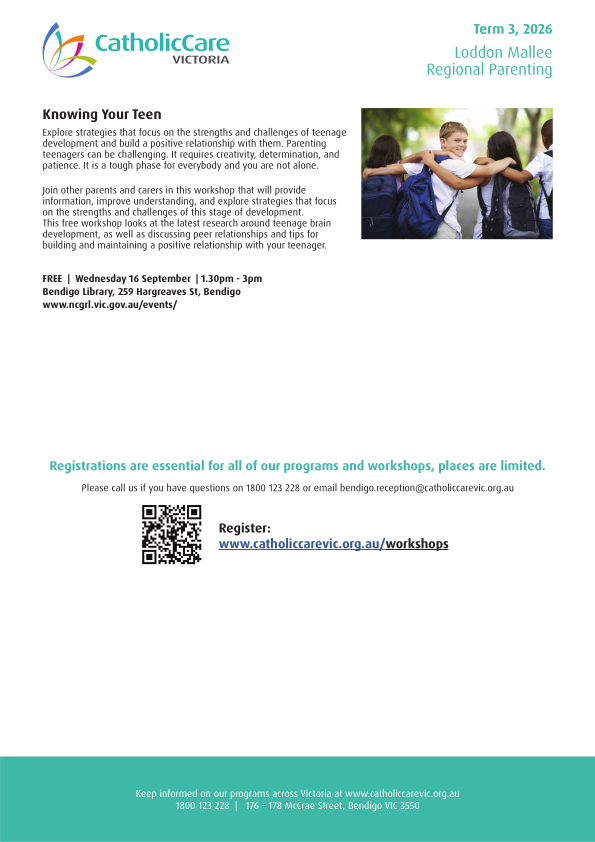
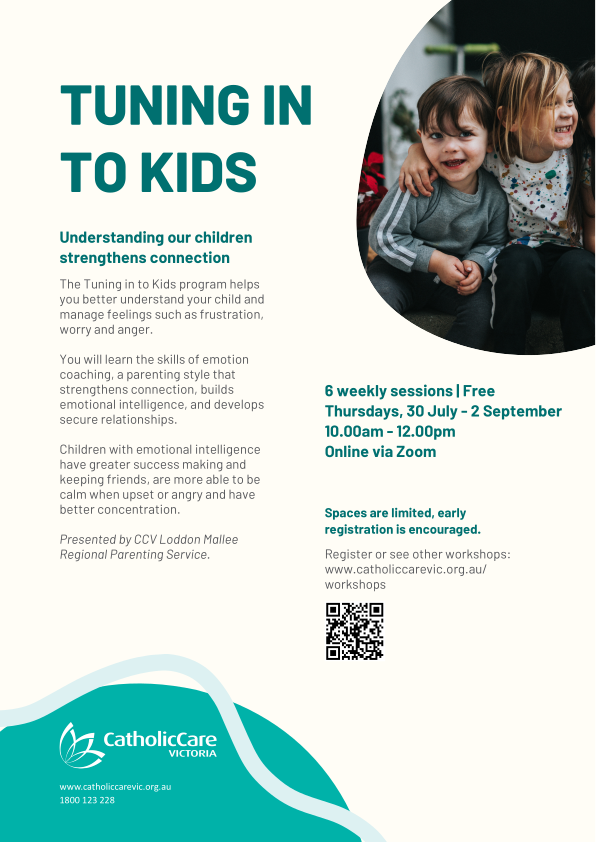
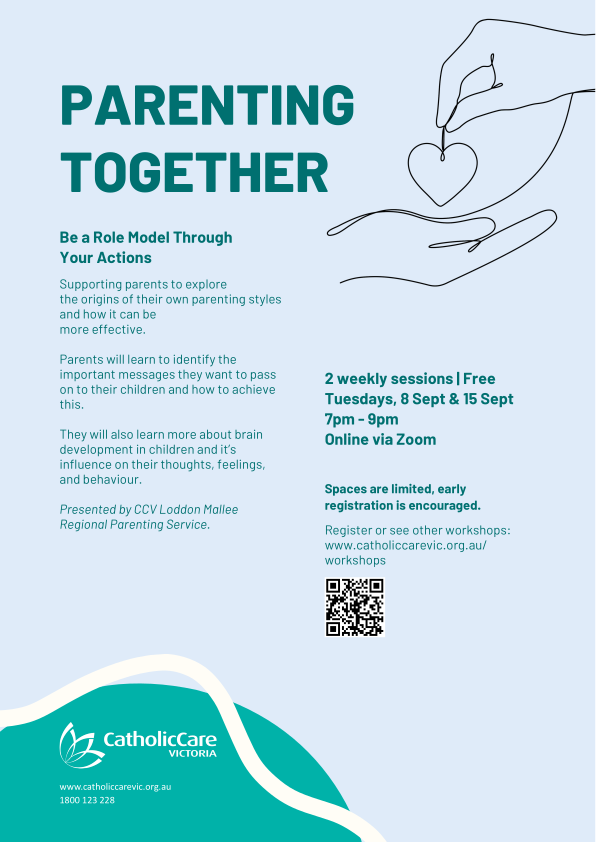
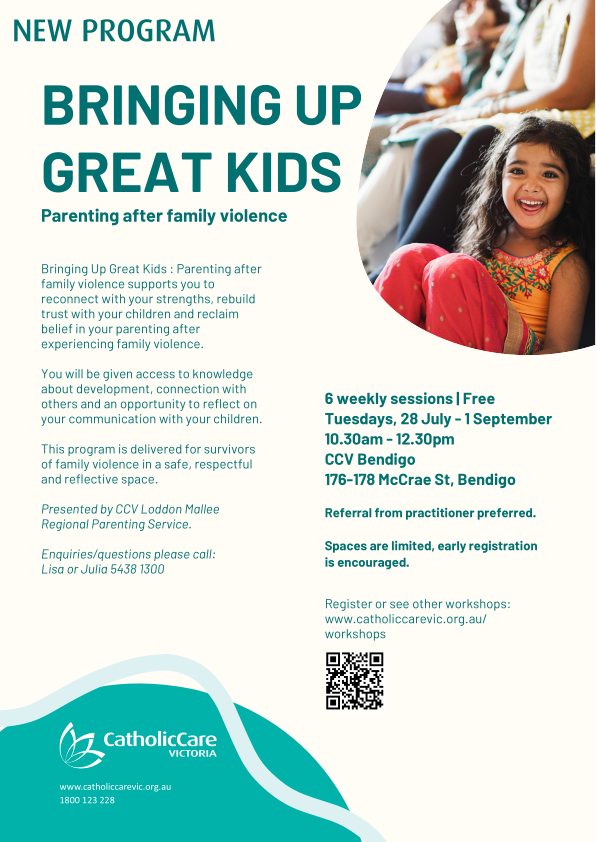
CatholicCare have some great, free and informative sessions running for families in Term 3.
Topics include: 'Tuning into Kids', 'Parenting Together' and 'Bringing Up Great Kids'.
For more information, see the flyers below and relevant QR codes.
Julia and Lisa, the facilitators for these sessions are also happy to visit school and run sessions if there's enough interest from families. If you are interested in a session running, please reach out to me (Bron) via ClassDojo.
Thanks,
Bron