Defining 2e - Twice Exceptional Students
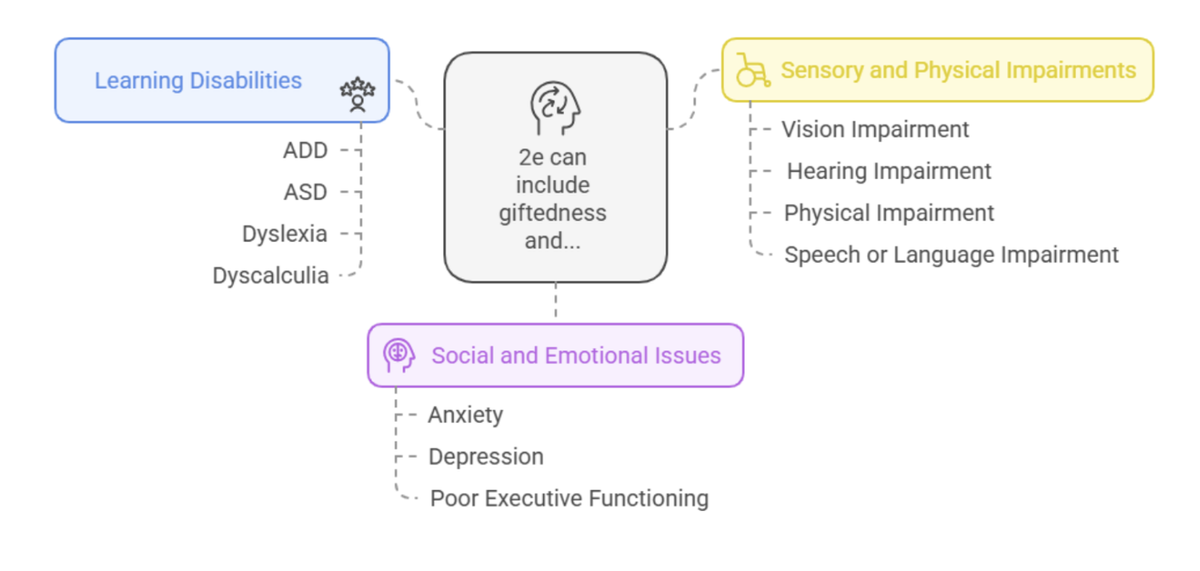
Twice-exceptional students or “2e” are intellectually gifted children who face one or more learning disabilities such as dyslexia, ADHD or autism spectrum disorder. These students think and process information differently. They can be more emotionally and intellectually sensitive.
How to Support your 2e Child
2e learners often experience inappropriate expectations from everyone around them, including themselves…either high or low.
- Research shows that parent advocacy was a primary reason that 2e students were able to succeed in school and feel supported in life
- Understand your child’s strengths and current deficits
- If overstimulated, create a safe space for them to tell you what's going on, listen and help them feel safe.
- Reinforce positive behaviour encouraging growth mindset
- Avoid comparing your 2e child to other students, their siblings or friends
- Organise opportunities that engage and suit their academic needs and their interests.
- Shift parenting practices to a strengths-based approach to ensure that your child feels safe, respected and valued, creating a positive home environment.
- Work collaboratively with the school - this can include speaking to the school's gifted Team or class teachers.
- Get creative! Provide options for fun activities that enable your children to choose how they can communicate what they have learned based on their strengths & interests.
- Avoid a complete focus on their problematic weaknesses
- Provide talent development opportunities and let your children enjoy part of each day doing these.
How to Talk to your Child about their Disability and Giftedness
First and foremost, you know your child best - Ask yourself is it an appropriate time now to begin this discussion!
- Once raised, talk openly about their learning and thinking differences.
- Provide simple and reassuring conversation as this helps to build trust and self-esteem.
- Explain that everyone is different in some way and it's okay to think differently.
- Emphasise that their challenges don't define them - highlight their strengths.
- Make sure they know it's okay to talk to you about their feelings/concerns.
Helpful articles for more guidance:
How to talk to your child about learning and thinking differences
After the diagnosis: How kids feel about their learning and thinking differences
8 tips for introducing dyslexia to your child
How to talk with your child about signs you’re noticing
Miss Natalie Burland
Newman Leader of Learning