
Careers News

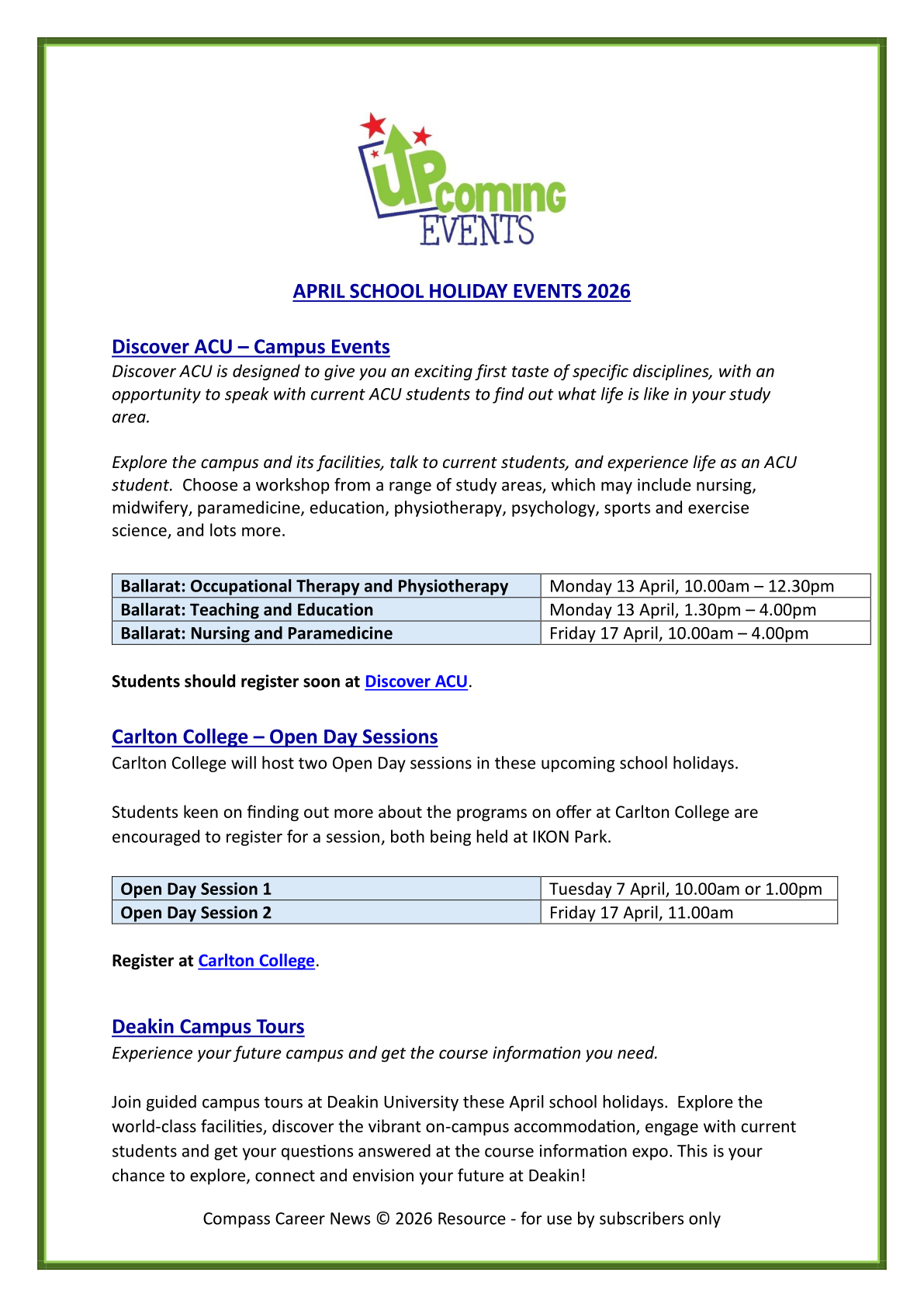
Gagliardi Scott Real Estate
A huge thank you to Jayden and Tom from Gagliardi Scott Real Estate for generously taking time out of their busy schedules to visit four of our Year 12 VM classes. Their session offered valuable insight into the real estate industry and what it takes to build a successful career in the field. Students gained a clearer understanding of:
• How agents build their client base and the importance of community presence and networking
• The key attributes of an effective team member and what drives success in real estate
• How commission structures work
• Opportunities for on the job training
• Qualifications associated with entering the industry
• Work experience pathways
• Jayden and Tom’s personal journeys into their current roles
• Criteria for applying for a rental and the importance of a strong rental history
• What percentage of income is recommended for rent each week.
We extend our appreciation to the Gagliardi Scott team for sharing their expertise and helping our students prepare for their upcoming SACs.
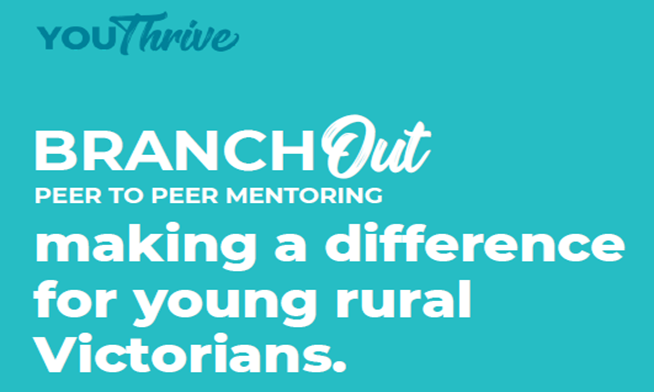
Branch Out Mentoring Workshops
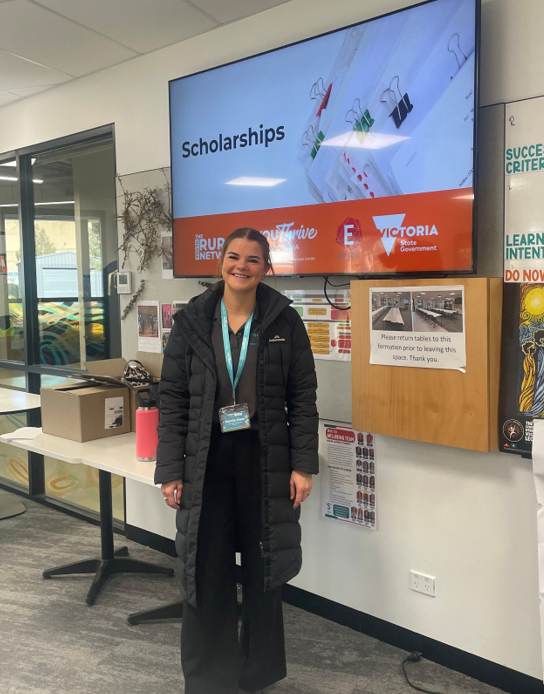
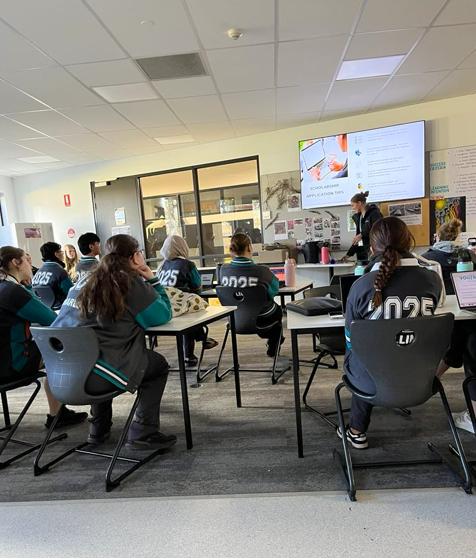
Our Year 12 students kicked off the week with the chance to sign up for YouThrive’s Branch Out Mentoring program! Across the first weeks of Term 2, students can take part in four themed lunchtime workshops right here at GSSC.Last year’s cohort loved the free program and helped shape the workshop themes below. This year’s students will again get to choose their four preferred sessions.
• 👥 Workshop 1: Scholarships
• 💼 Workshop 2: Gap Years
• 💰 Workshop 3: Finances
• 🏡 Workshop 4: Moving Out & Living Independently
We’re excited to welcome back Marnie Owen from YouThrive and can’t wait to see our students dive into this fantastic opportunity.
CAREER NEWS
Dates to Diarise in Term 1
- Victorian Careers and Employment Expo – 19 to 21 March 2026
REMINDER: Victorian Careers & Employment Expo 2026
Victorian Careers & Employment Expo takes place THIS weekend! This free event is for school students, parents, teachers, graduates, job seekers, people looking for courses and workers seeking new training and career options.
Dates: Saturday 21 March, 9am to 4pm
Venue: Melbourne Showgrounds in Ascot Vale

Virtual Open Day
Torrens University’s Virtual Open Day is now available on demand. It is a practical way for students to explore courses, hear directly from academics and understand how they can get the most out of studying with them. Visit Virtual Open Day 2026 | Torrens University
Virtual Open Day 2026
Join us for our Virtual Open Day, your exclusive snapshot of life at Bond!
Students are invited to experience Bond's deliberately different approach to learning at the Virtual Open Day, streaming to live on Saturday 28 March from 11.00am AEST. From the personalised attention to the exceptional graduate outcomes, the Virtual Open Day is the place to uncover everything Bond University has to offer.
Students who are thinking about future careers and universities – this is the perfect opportunity to experience the Bond difference. From tours of the beautiful campus to deep dives into the study areas, interviews with current students and academics, and so much more, Virtual Open Day is an all-access pass to life and study at Bond University.
Register at Virtual Open Day 2026 | Bond University | Gold Coast, Queensland, Australia
Studying the Bachelor of Engineering (Honours) at RMIT

The Bachelor of Engineering (Honours) degree allows students the opportunity to explore the fundamentals of engineering — science, mathematics, design, and more — before selecting a specialisation.
Students gain a wealth of engineering skills and knowledge, and through their elective subjects are exposed to a range of specialisations.
Upon successful completion of their first year of this program, students will be required to move into one of the specialised engineering degrees listed below:
- Bachelor of Engineering (Advanced Manufacturing and Mechatronics) (Honours)
- Bachelor of Engineering (Biomedical Engineering) (Honours)
- Bachelor of Engineering (Mechanical Engineering) (Honours)
- Bachelor of Engineering (Computer and Network Engineering) (Honours)
- Bachelor of Engineering (Electrical Engineering) (Honours)
- Bachelor of Engineering (Civil and Infrastructure) (Honours)
- Bachelor of Engineering (Aerospace Engineering) (Honours)
- Bachelor of Engineering (Chemical Engineering) (Honours)
- Bachelor of Engineering (Environmental Engineering) (Honours)
RMIT is ranked among the top 8 universities in Australia for engineering, according to the QS World University Rankings by Subject.
The VCE prerequisites for entry are Units 3 and 4 with a study score of at least 27 in English (EAL) or at least 25 in English other than EAL, and Units 3 and 4 with a study score of at least 20 in in one of Maths: General Mathematics, Maths: Mathematical Methods or Maths: Specialist Mathematics. This course has a guaranteed entry ATAR of 75.00 in 2026.
Further information can be found at Bachelor of Engineering (Honours).
Study to become a Cabin Crew Member
A qualification in aviation is your passport to success. Get a start in this competitive industry with technical, health and safety, and risk management training
William Angliss Institute offers the Certificate III in Aviation (Cabin Crew) at its Melbourne Campus. This is a 6-month course and students get to go on industry-based excursions and learning experiences, strengthening their employability with this industry-approved course. In addition, students experience –
- Practical training and assessment in an Australian training facility used by major airlines.
- Learn and grow alongside a cohort of passionate new aviation enthusiasts in the heart of the city.
- Look the part, students will receive full corporate uniform along with a name badge (additional costs apply).
Applicants must note that Australian based airlines have a minimum height requirement of 160cm (without shoes) and require a reach of 212cm to be employed as a cabin crew/flight attendant. Students who do not meet these requirements should take into consideration that this will affect their employability as a cabin crew/flight attendant with an Australian airline. International airlines may have different requirements.
Career as a Dental Technician
SEEK states that a Dental Technician works in dental laboratories making of models of the mouth and teeth from impressions taken by dental care professionals such as Dentists and Dental Prosthetists. Dental Technicians use techniques including plaster casting, wax modelling and metal casting. Dental Technicians work closely with Dentists and Dental Prosthetists and usually have no direct contact with patients.
Australian Dental Technicians are generally expected to have completed a tertiary level qualification. The minimum standard is generally a Diploma of Dental Technology.
- Complete a Diploma of Dental Technology through a TAFE or registered training organisation.
- Consider further study to broaden your skillset, such as a Bachelor of Dental Technology.
- It may also be possible to become a Dental Technician through an apprenticeship or traineeship in dental technology.
Holmesglen Institute offers the 2-year Diploma of Dental Technology course. This practical, hands-on course covers the design, manufacture, and repair of dental appliances, including dentures, bridges, crowns, and mouthguards. Training takes place in purpose-built dental laboratories with industry-standard equipment and support from qualified dental technicians and prosthetists.
Physiotherapist, Chiropractor, Osteopath and Myotherapist
A frequently asked question is what the difference is between the roles of physiotherapists, chiropractors, osteopaths, and Myotherapists.
So, what is the difference? In November 2020 an article by Charlotte Ganderton and Matthew King was published on the ABC website addressing this very topic, and the fact that all four types of therapy come highly recommended to assist people in managing their aches and pains. To sum up the article –
In Australia, physiotherapists, osteopaths and chiropractors have extensive university training and are registered with the Australian Health Practitioner Regulation Agency (AHPRA). Myotherapists complete an advanced diploma or bachelor’s degree in myotherapy or "musculoskeletal therapy” but are not registered with AHPRA.
The article goes on to state that a physiotherapist assesses your problem, provides a diagnosis, and helps you understand what's wrong while considering your general health, activities, and lifestyle. They treat your complaint with a variety of "active" therapies, such as exercise programs and hydrotherapy.
A chiropractor works on the diagnosis, treatment and prevention of mechanical disorders of the muscles, ligaments, tendons, bones and joints, and the effect on the nervous system.
They have an emphasis on passive manual treatments, including joint and soft-tissue manipulation, and spinal adjustments. They may also prescribe exercises to help you rehabilitate from your condition as well as provide dietary advice.
An osteopath focuses on the muscular and nervous systems, assessing the structure of the body to determine its impact on function. Treatment involves a combination of active and passive therapies, including joint manipulation and mobilisation, massage, as well as postural advice and exercise programs.
Finally, a myotherapist works to assist your aches and pains by focusing on the muscles and joints. They offer a range of mostly "hands-on" treatments including dry needling, massage, and joint mobilisation, but can also prescribe exercises.
Students can access the full article at Physiotherapist, chiropractor, osteopath and myotherapist: what's the difference and which one should I visit?
Film & Television Courses in Victoria in 2026
There are a number of institutions offering film and/or television courses in Victoria, and some of these courses are included below. For a comprehensive list, including those offered by TAFEs and other private colleges, visit VTAC. Note: For the most part, an English or EAL is the only prerequisite VCE subject, and often entry into these courses involves submission of a folio and/or participation in an interview. Note: Film and Screen Studies is often offered as a major or minor in some Bachelor of Arts degrees.
INSTITUTION | COURSE | MAJOR STUDIES IN 2026 |
Deakin | Bachelor of Film, Television and Animation | Animation (major only), Animation and motion graphic (minor only), Film studies (minor only), Screen content production (minor only), Screen development, Screen production (major only), Scriptwriting (minor only), Visual effects and virtual production (minor only). |
JMC Academy | Bachelor of Creative Arts (Film and Television) | Broadcasting, Camera Operation, Camera and Lighting, Cinematography, Directing (Film), Directing (Television), Documentary Production, Film Audio, Film Composition, Film Editing, Filmmaking, Industry and Professional Development, International Cinema, Lighting Design, Mise en scene, Motion Graphics, Multi-cam Broadcasting, Music Videos, Popular Culture, Post Production, Producing (Film), Producing (Television), Screen History, Screen and Genre Studies, Screenwriting, Short Films, Sound Design, Sound Recording and Design, Television Broadcasting, Television Studio Production.
|
RMIT | Bachelor of Communication (Media)
| Asian studies, Cinema, Communication, Film, Literature, Media, Politics, Popular Culture, Production, Radio, Social media, Television (TV), Video. |
| Associate Degree in Screen and Media Production | Camera production, Cinema studies, Compositing and animation, Digital audio and video production, Digital media, Digital television production, Digital video, Directing (television), Documentary production, Editing, Emerging media practices, Film and media studies, Film and television (production), Genre studies, Management, Post production, Production lighting, Production planning, Professional practices, Screen studies, Screenwriting, Sound recording and production, Storytelling, Television and broadcasting, Visual effects.
| |
| Diploma of Screen and Media | Industry knowledge, Post-production, Remote and virtual productions, Single camera operation, Multi-camera operation, Vision switching, Sound recording, Studio lighting, Studio production skills (include skills-shortage areas of EVS and CCU operation), Visual effects, Work health and safety.
| |
SAE Creative Media | Bachelor of Film (Production) | Aesthetics and Techniques, Business and Leadership Skills, Creative Production Approaches, Employability Skills in Screen Industry Contexts, Film, Media and Cultural Studies, History and Theory, Production Methods and Techniques, Production and Post-Production Workflows, Project Management, Screen Industry Best Practices, Screenwriting and Drafting, Story Concept Development.
|
| Associate Degree in Film | Aesthetics and Techniques, Business and Leadership Skills, Creative Production Approaches, Employability Skills in Screen Industry Contexts, Film, Media and Cultural Studies, History and Theory, Post-Production Methods and Techniques, Production and Post-Production Workflows, Project Management, Screen Industry Best Practices, Screenwriting and Drafting, Story Concept Development.
| |
Swinburne | Bachelor of Film and Television | Cinematography and lighting: Broadcast video, Cinematography and lighting: Film production, Experimental screen production, Genre and the moving image, Hollywood cinema, Movies and research methods, Post-production and editing, Production management, Production techniques, Screen literacy and contemporary cinema, Screen research and writing, Scriptwriting and directing: Non-fiction production, Scriptwriting and directing: Short film production, Scriptwriting and directing: Short narrative film, Short form screen production, Sound design and acquisition, The Australian Screen.
|
| Bachelor of Screen Production | Digital narratives, Digital post-production techniques, Digital video and audio, Episodic narratives for online platforms, Experimental screen production, Introduction to digital imaging, Post-production and editing, Pre-visualisation for screen, Production for digital platforms, Radio audio and podcasting, Screen franchising and innovation, Sound design and acquisition, Sound design for screen, Visual effects production.
| |
Uni Melb | Bachelor of Fine Arts (Film and Television)
| Actor direction, Film projects, Screen studies, Screenwriting. |
Victoria Uni
| Bachelor of Screen Media | Screen media. |
Snapshot of William Angliss Institute (WAI) in 2026

- With around 23,000 students enrolling each year, WAI offer a broad range of training and education programs including accredited traineeships and apprenticeships, certificates, diplomas and advanced diplomas, short courses, graduate certificates, bachelors, and master’s degrees.
- WAI has its main campus in Melbourne and is complemented by a campus in Sydney and offices in Brisbane, Adelaide and Perth. It also has four joint-venture campuses in China, a partnership in Sri Lanka and two partnerships and a representative office in Vietnam. - About WAI.
- WAI is one of Australia’s largest specialist centres for foods, tourism, hospitality, and events training.
- Courses are categorised into various groups:
1. Food Studies and Culinary Arts, Food Science & Technology, Baking, Patisserie - Foods
2. Travel and Tourism Management - Travel
3. Hospitality and Tourism Management - Hospitality
4. Event Management - Event Management
5. Hotel Management - Hotel Management
- WAI offers a number of Bachelor’s degrees including:
- Bachelor of Culinary Management
- Bachelor of Tourism and Hospitality Management
- Bachelor of Resort and Hotel Management
- Bachelor of Resort and Hotel Management Professional Practice
- WAI also offers Apprenticeships and Traineeships, as well as numerous short courses.
- WAI offers a 6-month Certificate III in Aviation (Cabin Crew) designed to enhance students’ opportunities to fulfil their plans to work with an airline as a cabin crew member. The focus of this course is about customer service, and not really about emergency procedures. Topics of study - beverage service, flight retailing, meeting customers, etc. managing disruptive customers, etc.
- Numerous scholarships are on offer to students each year.
- The Angliss International Hotel School offers students a study pathway to take service delivery to a new and luxurious level. With exposure to masterclasses covering the finer and more specialised areas of hotel service, students will be equipped for a career offering exceptional service in the international hotel industry.