
IN THE CLASSROOM

We are all Mathematicians!
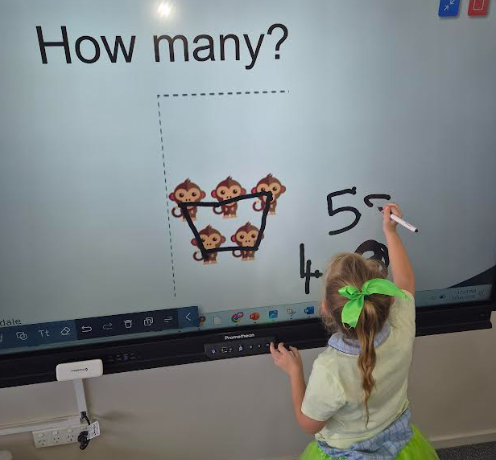
Our K-2 classroom is currently learning all about Time.
Kindergarten are learning to sequence and order events, including connecting days of the week to familiar events and actions.
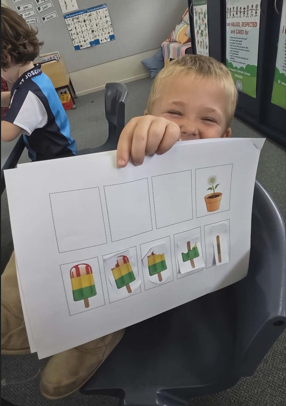
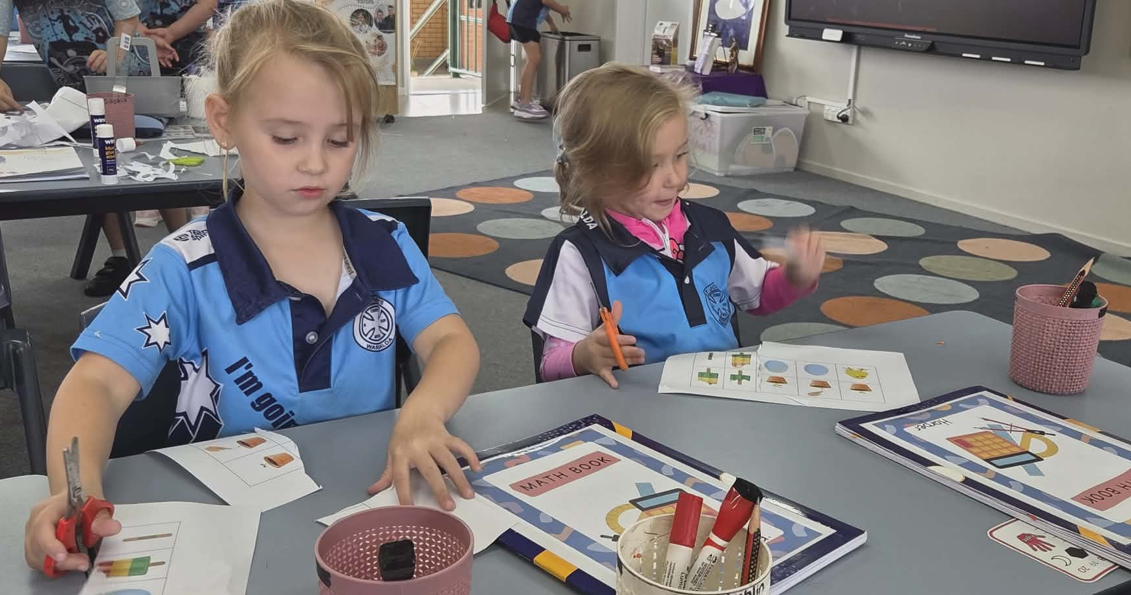
Ways to support this learning at home
Initially, children will learn about time through using language such as yesterday, today and tomorrow and through comparing the time it takes to complete activities.
Other ways to support this learning include;
- name the days of the week and months of the year.
- Contextualize times of the year using special celebrations such as birthdays or cultural events
- looking at the phases of the moon and the position of the sun
- involving them with weekly routines for school and home life.
- identify times of the year on a calendar or in a diary using special celebrations such as birthdays or cultural events
Stage 1 students are also learning to order and sequence events and they are beginning to read time, focusing on reading the half-hour and quarter of an hour on both analog and digital clocks.
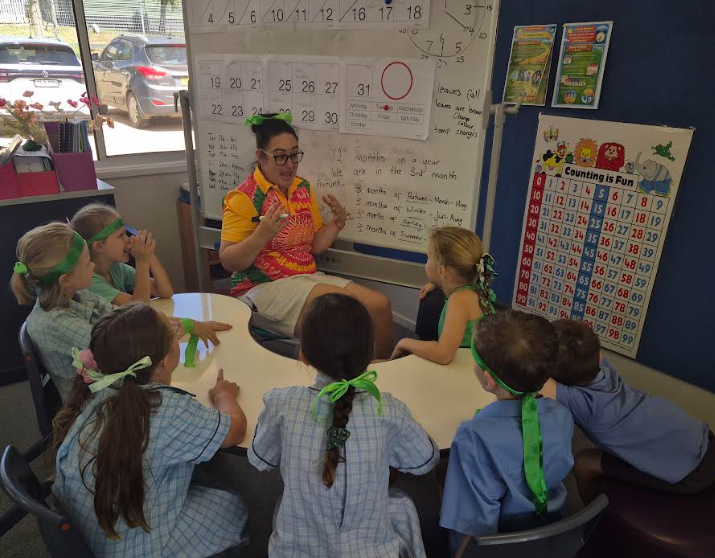
Ways to support this learning at home
- Practice Counting to 60: Before they can tell time, they have to know all their numbers up to 60, comfortably.
- Practice Counting by Fives all the way up t 60.
- Introduce your child to the concept of Time by introducing your child to the concepts of morning, noon, evening, and night time.
- Make a model clock together using a paper plate and some markers.
The Years 3-6 classroom is currently learning all about Additive Relations.
Stage 2 studentsare learning to select and use mental and written strategies for addition and subtraction involving 2- and 3-digit numbers. In particular they are focusing on strategies such as partitioning (breaking down numbers) and regrouping (changing orders) by using familiar numbers (friends of 10).
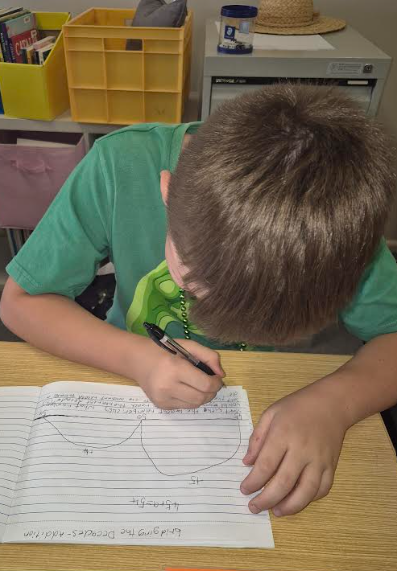
Ways to support this learning at home
- Adding totals at the supermarket
- Make estimates on the go
- Use the inverse (reword your addition question as subtraction and vice versa)
- Round everything! Look for opportunities for your child to practice their rounding skills.
- Use a variety of addition/subtraction methods (partitioning, bridging, jump method, split strategy, compensation, levelling, doubling, algorithm etc.)
- Draw pictures! Encourage your child to draw diagrams and pictures to support their number development.
Stage 3 studentsare learning to select and apply a range of strategies to solve multi-step word problems involving addition and subtraction. In particular, they are developing their knowledge of Bar Method as a strategy to understand and unpack problems.
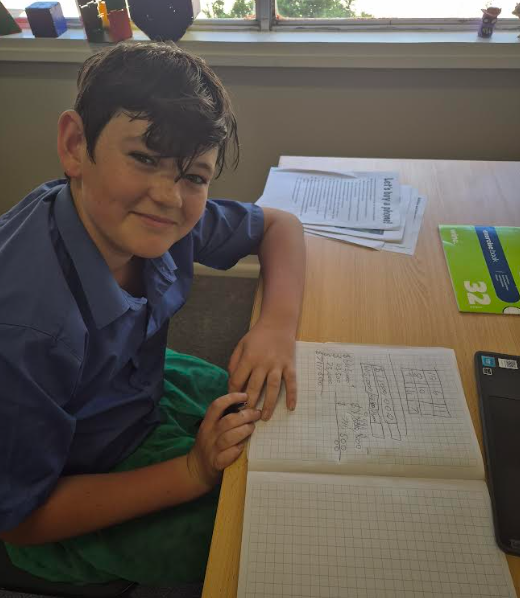
Ways to support this learning at home
- Ask for the Story, Not the Answer: ask your child to explain what is happening in the problem.
- Ask then to find the 'whole' verses the 'part' of the question.
- Focus on the "Why" of the Steps: Multi-step problems are like puzzles. Ask, "What do we need to find out first before we can solve the final question?"
- Check for Reasonableness: Once they get an answer, ask, "Does this number make sense?"