
Grade 3
Literacy
In literacy, students have been developing their writing skills across both narrative and persuasive texts. In our narrative writing, students have been learning how to make their stories more engaging and exciting for the reader. They have been exploring emotive language to show feelings and create strong images in the reader’s mind, Tier 2 vocabulary to make their writing more descriptive. Onomatopoeia and Adverbials of time (e.g. suddenly, later that day, meanwhile) to help organise events clearly.
A big focus has been on making their writing more detailed through sentence expansion using the 5 W’s (who, what, when, where, why).
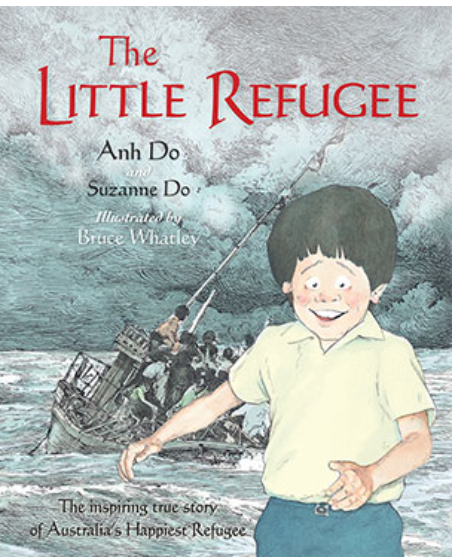
Students read The Little Refugee and explored the powerful journey of Anh as he left his home country to begin a new life. Through the story, students developed an understanding of the challenges and emotions experienced during this journey. They focused on how descriptive and emotive language was used to help readers create vivid mind pictures. Students also expanded their sentences using the 5 W’s (who, what, when, where, why) to clearly explain events and ideas. This learning supported their ability to make their own writing more detailed, engaging, and meaningful.
We have now begun developing our understanding of persuasive writing. In our persuasive writing, students are learning how to express their opinions clearly and convincingly. They have been working on writing strong topic sentences to introduce their ideas, adding supporting details to explain and justify their opinions, expanding their sentences with clear reasoning to make their arguments more powerful.
It has been wonderful to see students becoming more confident writers and taking pride in making their writing more interesting and detailed.
Maths
In numeracy, students have been developing their understanding of time and planning by learning to estimate short durations and check their accuracy using timers such as stopwatches. They have been practising how to explain their reasoning when making estimates, compare the duration of different events, and order activities based on how long they take. Students have also been learning to plan sequences of events by listing steps, estimating how long each will take using appropriate units of time, and determining whether their plan fits within a given timeframe. These skills support students in building their ability to think logically, manage time effectively and reflect on the accuracy of their thinking.
Students have also been strengthening their understanding of number concepts and operations. They have been exploring number patterns, including identifying and continuing odd and even sequences, and representing numbers using place value materials as well as standard and non-standard expanded form. In addition, students have been introduced to multiplication and division concepts through the use of arrays, repeated addition and skip counting. They have practised writing and identifying multiplication and division equations, particularly focusing on facts for 5 and 10, and recognising patterns within these facts. These experiences help students build a strong foundation in number sense and develop efficient strategies for solving problems.
NAPLAN
We are proud of the way students demonstrated our school values of Performance and Open-minded during the NAPLAN assessments. Students approached each task with a positive attitude, showing determination to do their best and applying the skills they have been developing throughout the term. They remained open-minded when faced with challenging questions, using strategies to think flexibly and persevere. It was wonderful to see students take pride in their efforts, demonstrating resilience, confidence and a willingness to embrace new challenges.