
Saint's of the Week
Saint Peter Damien
Feast Day: 21st February
Virtue: Courage
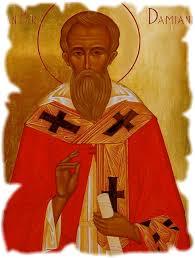
Saint Peter Damian was a champion of the renewal of the Church in the 11th Century.
It was a time when simony was rife, clerical abuses were widespread and morality among the laity was wayward.
Through his writings and his sermons, St Peter Damian helped to steer Christendom back towards the Gospel.
Born around 1007 in Ravenna, Italy, Peter’s early life was marked by hardship, having been orphaned and raised by his brother, who mistreated him and forced him to work as a swineherd.
He was taken in by an older brother, Damianus, who was archpriest of Ravenna, who treated him far better. Damianus helped Peter get a good education, and he went on to become a professor. Honouring his brother, Peter took on his name as a second name, Damian. Peter Damian displayed remarkable piety in his spiritual life, wearing a hair shirt under his clothes, regularly fasting and spending long hours in prayer.
He ultimately entered the Benedictine Order at Fonte Avellana.
His gifts of piety and intellect impressed those around him, and he succeeded in becoming the next prior of the community, going on to found five more hermitages.
The Holy See called on him to settle ecclesial disputes and was made a cardinal bishop by Pope Stephen IX. It was in this role that he battled against simony and other corruptions facing the Church at the time. He was a prolific writer, penning many letters, biographies and sermons that called for a return to simplicity and holiness. He frequently asked the pope to retire as he wanted to return to his monastic life. Pope Alexander II eventually granted this wish, and he lived happily, but was still often called upon for his expertise as a papal legate.
On one of his journeys, he contracted a fever and died. He died with his fellow monks praying the Divine Office around him on February 22, 1072. He was declared a Doctor of the Church in 1828.
St Polycarp
Feast Day: 23rd February
Virtue: Studiousness
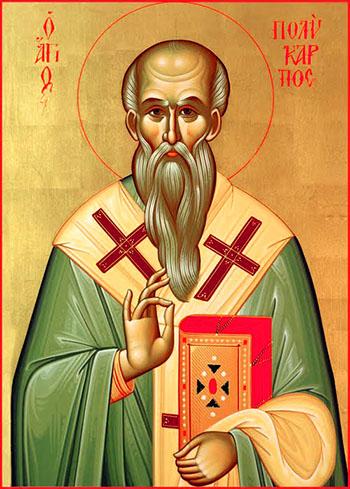
The story of Polycarp's martyrdom is the earliest recorded account of a Christian martyr.
Polycarp was a disciple of St John the apostle. While still quite young, he became the bishop of Smyrna and was one of the most respected leaders in the first half of the second century.
St Ignatius of Antioch and St Irenaeus spoke highly of him and the people love him very much. Polycarp was a Christian leader in a pagan world. He spoke clearly and simply, fearless in his love and defense of Christ, even though persecutions raged around him. He sought only to hand on the message he had been given by John, who had seen and heard and followed Jesus Christ. Even as Polycarp prepared for martyrdom, his joy and confident trust were evident to all.
Polycarp was seized for being a Christian. He was threatened and pressured in many ways, yet he declared to his captors, "For eighty-six years I have served Jesus Christ, and he has never abandoned me. How could I curse my blessed king and Saviour?"
Persecution and death would not tear him away from Jesus now. Polycarp was led into the stadium of Smyrna. The crowd demanded that he left to the lions, but instead, he was sentenced to death by fire. An eyewitness account claims that the flames didn't harm him. He was finally killed by the sword, and his body was burned. Christians buried his remains. Polycarp is remembered as an Apostolic Father, one who was a disciple of the apostles