Mental Health & Wellbeing

Programs and Support
Please find below some great external programs and groups to support our neurodivergent community. Please reach out to Jarrod Rodgers if you have any questions about the programs below.
BEING ME - Neuro-affirming Programme for Autistic Young People
BEING ME — Now Open for April 2026 Booking
Over the 10 weeks, with 4–8 young people and 1 or 2 Specialist Autistic Mentors, we’ll move through themes that support connection, insight, and self-understanding:
Session 1: Getting to know each other – sharing joys, glimmers, and interests.
Session 2: Neurodiversity and intersecting identities.
Session 3: What is ‘autism’? What does being Autistic mean to me and others?
Session 4: Communication, socialising, and friendships.
Session 5 & 6: Sensory experiences.
Session 7 & 8: Looking after myself.
Session 9: Self-advocacy.
Session 10: Wrapping up and moving forward.
Suitability: Age 8–12 or 12–16. (The programme follows the same topics, but the approach is adapted for the different age groups and further personalised for the participants.)
Find out more: gr0ve.org/being-me
Tech Strategies for Families
- When: Monday, 23 February 2026, 11:00 am – 12:30 pm
- Where: Ballarat Family Relationship Centre, 34 Peel St North, Bakery Hill, Vic
- Detail: Reflect on the challenges and opportunities of technology. Explores strategies for creating a safe and healthy tech environment for your family based on current research.
Triple P Online: Children and Screens
- Detail: A free evidence-based toolkit for Australian families with children under 12. Focuses on healthy digital habits, online safety, and managing screen-time transitions.
- Access: Triple P Parenting
Ongoing Support
Monday Meetups for Parent Carers of Neurodivergent Children (Online)
A peer-led space created by and for carers.
- Focus: Calm and regulate the nervous system, explore daily strategies, and join an empathy circle with those who truly understand the journey.
- Disclaimer: This group offers peer support, not professional coaching or therapy.
- Organiser: Samantha Wittenberg | 0490 501 671 | samantha.wittenberg@gmail.com
How to Support Your Child at School
Helping your child have a successful entry into school
Children who are starting school for the first time will inevitably experience new routines and unexpected challenges in the first few years of their school career. Parents and caregivers can implement a variety of strategies, activities, and mindsets to purposefully support this unique time of transition.
The strategies suggested below will directly correlate to what children are learning at school with the Open Parachute and Respectful Relationships curriculum, creating a true home-to-school partnership.
Attendance
We can set the tone for school attendance in our children and the mindset for the importance of going to school to learn and grow. Below are some helpful strategies for understanding that going to school regularly is important and fun:
● Establish school as a non-negotiable daily routine
● Avoid sending the message that staying home from school is a fun alternative
● Create excitement around going to school (e.g., “I wonder what you will learn about today! or “Do you think you will play with (insert friend’s name) at recess today?”)
● Connect attendance to their role as a learner (e.g., discuss that showing up means they are part of their classroom team, and helps them learn and grow, and they help others learn and grow)
● Remain calm and encouraging on tough mornings (e.g., validate feelings if they are tired, but explain they can be strong and still go to school by using phrases like, “I understand you are feeling tired this morning after our busy weekend. You can do this!”)
● Praise consistency (e.g., “You’ve gone to school every day this week. I bet your friends and your teacher have been so happy to see you each day!”)
Separation Anxiety
Separation anxiety is very common for young children, especially when starting school for the first time or returning to school after a long break. This can be especially tough on both us and our children; however, with consistency and reassurance, it will resolve over time.
Below are some helpful strategies to gently relieve separation anxiety:
● Before school starts, practice short periods of separation away from each other. Slowly begin to build up longer periods of separation to practice being okay while apart.
● When saying goodbye at school, keep it positive, consistent, and short (e.g., a special and fun phrase or goodbye handshake)
● When saying goodbye at school, avoid lingering.
● Stay calm and confident, as children take emotional cues from us in these situations.
● Create a small connection object, such as a small photo or matching bracelet, to keep on hand each day while separated to help ease anxiety.
● Stick to a consistent routine each day, so your child knows what to expect.
● Recognise small wins and brave behaviour (e.g., “You walked into your classroom all by yourself today- that was so brave! I bet you can do that again tomorrow!”)
● Validate your child’s feelings, while also letting them know they are resilient (e.g., “It’s okay to feel sad when we are apart. I feel sad leaving you too! But I know you will be okay, because you are brave and you can do hard things!”)
● Communicate with the teacher about any separation anxiety struggles, as they can offer additional support during transition time.
We are here to support you and your child every step of the way and value open, ongoing communication as part of a strong home–school partnership. If you have any questions or concerns about your child’s attendance or separation at drop-off, please feel free to contact your child’s classroom teacher or Will Georgiou from the Wellbeing Team via email. William.georgiou@education.vic.gov.au
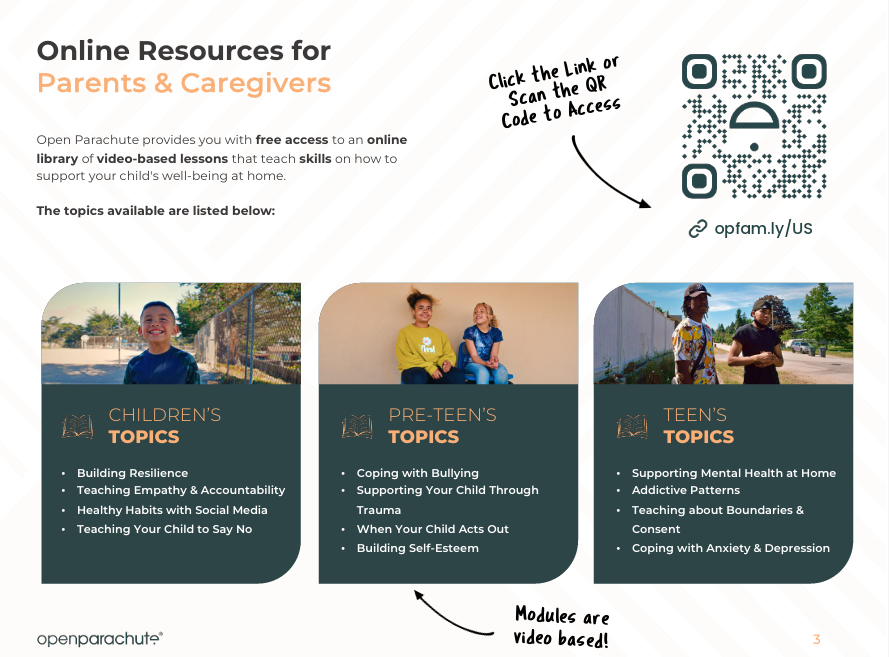
If you’re interested in some more resources regarding these topics and more, check out the Open Parachute Parent Resources. https://learn.openparachuteschools.com/parent/login?id=US_bITD-Q8O