
Important Notices


Influenza (Flu) Season – Keeping Our Community Well
As we move into the cooler months, it is important to be mindful of the annual influenza (flu) season. Influenza is a highly contagious virus that circulates widely each year, typically between April and October in Australia. While many people experience mild symptoms, the flu can also lead to serious illness and hospitalisation, even in otherwise healthy individuals.
Recognising the Symptoms
Flu symptoms can appear suddenly and may include:
Fever
Dry, chesty cough
Headache and fatigue
Chills and muscle aches
Sore throat, runny or blocked nose
Sneezing and loss of appetite
In some cases, gastrointestinal symptoms such as diarrhoea or an upset stomach
Anyone experiencing flu-like symptoms, even if mild, should remain at home and follow medical advice.
Prevention is Key
The most effective protection against influenza is annual vaccination, recommended for everyone aged six months and over.
The flu vaccine:
Is safe and cannot give you the flu (as it does not contain a live virus)
Can be given at the same time as other vaccines, including COVID-19
Helps reduce the spread and severity of illness within the community
In addition to vaccination, simple measures such as regular handwashing, covering coughs and sneezes, and staying home when unwell continue to play an important role in protecting others.
Measles Update – Important Information for Families
Health authorities have advised that measles cases are increasing across Victoria and internationally. While many recent cases have been linked to overseas travel, there has also been some local transmission. As a school community, it is important that we remain informed and take simple steps to help protect one another.
What is Measles?
Measles is a highly contagious viral infection that spreads easily through airborne droplets when an infected person coughs or sneezes. It can lead to serious illness and, in some cases, may be life-threatening—particularly for those who are not fully immunised.
Recognising the Symptoms
Early symptoms may include:
Fever
Tiredness or general unwellness
Cough or runny nose
Sore, red eyes (conjunctivitis)
Diarrhoea (especially in infants)
These symptoms are usually followed by a red, blotchy (non-itchy) rash that often begins on the face and spreads down the body.
Vaccination is the Best Protection
Vaccination remains the safest and most effective way to protect against measles. Full protection requires two doses of a measles-containing vaccine. Vaccines are widely available through GPs, pharmacists, local councils, and Aboriginal Health Services, with free access for eligible groups.
What Families Can Do
We encourage families to:
Check their child’s immunisation status, particularly if planning travel or if unsure of previous vaccinations
Review records via Medicare, the Australian Immunisation Register, or your GP
Seek medical advice if your child develops symptoms consistent with measles
Keep children at home if unwell, being tested, or diagnosed with measles, and notify the College
For families with younger students, please ensure any updated or catch-up vaccinations are reflected in your child’s immunisation history statement provided to the College.
By staying informed and ensuring vaccinations are up to date, we can help keep our school community safe and well.
For further information, please visit the Better Health Channel or the Department of Health websites, or speak with your GP or immunisation provider.

Have your contact details or family circumstances changed?
If your contact details or family circumstances have changed — including updates to emergency contacts — please let the College know. Keeping your information current ensures we can reach you when needed.
To update your details, contact College reception by phone or email.
Drop Off and Pick Up Reminder
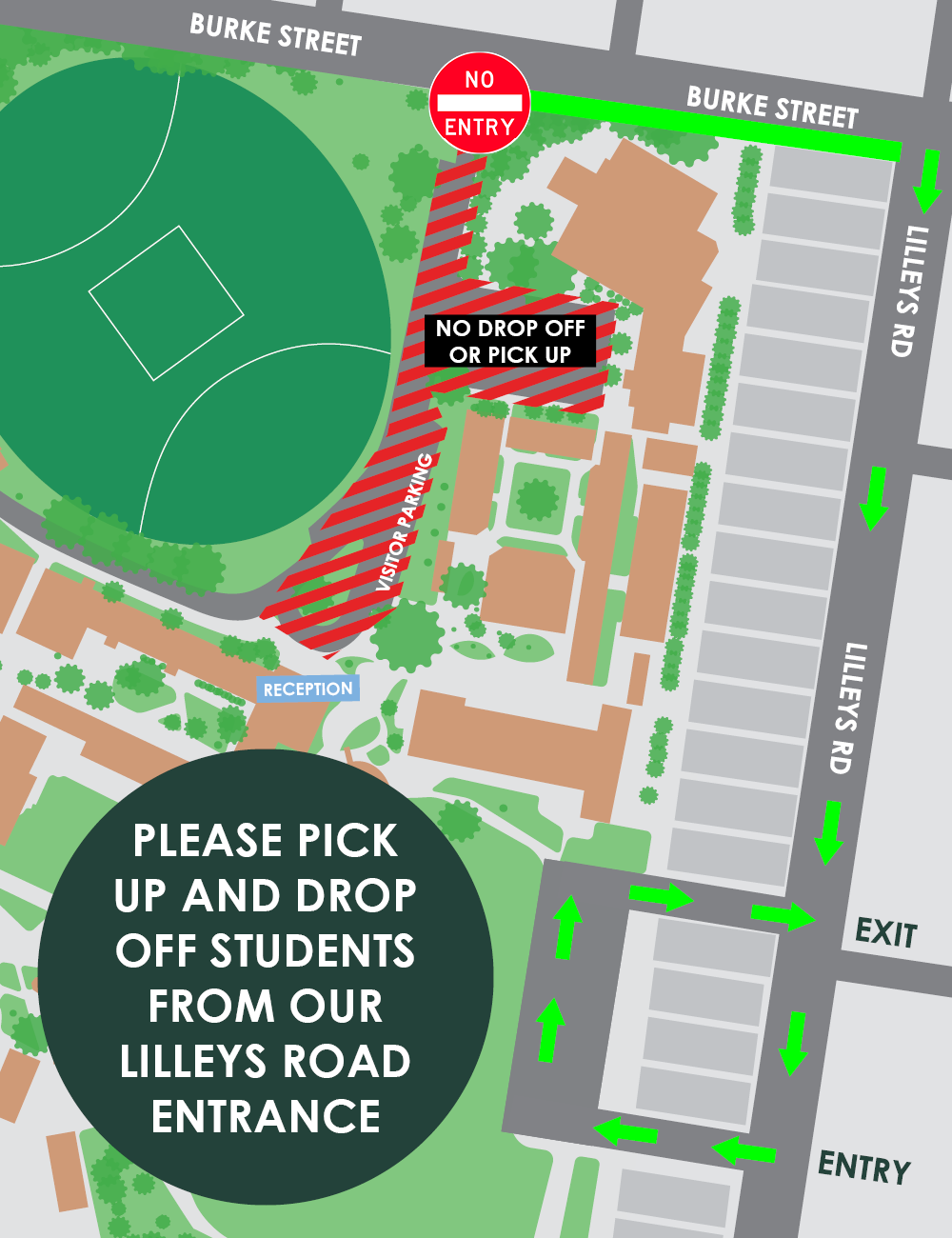
To ensure the safety of all students and ease congestion during busy times, we ask that families use the designated drop-off and pick-up bay on Lilleys Road.
❌ The Burke Street entrance is our main bus access point and becomes heavily congested. Please avoid using this area during peak times.
- The Visitor and Staff parking near Administration is for pre-arranged appointments only and not for drop-off or pick-up.
The Hall car park is for staff parking only and is not a drop-off area.
Thank you for helping us keep our school safe and running smoothly.
Where to access support?
The College has a support network for all students to assist in managing their mental health and wellbeing. Students are encouraged to seek wellbeing support from the Counselling and Wellbeing Services Team. A team of counsellors are available five days a week to meet with students and families.
Additional support is available by contacting Beyond Blue on 1300 224 636, Lifeline on 13 11 14, Parentline Victoria on 13 22 89 or Kids Helpline on 1800 551 800.
Are you a Marist-Sion Alumni?
Parents/Carers who are alumni are invited to participate in mentoring and alumni initiatives. Stay connected and support future students by completingthis form.