
From the Principal


National Sorry Day
On National Sorry Day we pause to acknowledge the strength of Stolen Generations Survivors and reflect on the historical policies that forcibly removed Aboriginal and Torres Strait Islander children from their families.
In alignment with the Victorian Curriculum F–10 Version 2.0, our students explore these vital histories through the lens of historical perspectives and ethical understanding.
Our teachers will spend some time with students completing a relevant activity. By learning about the impacts of past government actions, our school community fosters deep empathy, critical thinking, and a shared commitment to reconciliation.
Recognising this day empowers our students to understand our nation's true history, celebrate the resilience of First Nations peoples, and actively contribute to a more just and inclusive future.
Hand Foot and Mouth Disease
Please be aware that we have had a case of Hand, Foot and Mouth Disease discovered for a student in our school. There is no cause for alarm. The student concerned feels very well within themsleves and initially the rash like blisters presented like chickenpox. We provide this information so you can monitor your own children should such rashes appear. Any person with Hand, Foot and Mouth Disease is required to remain home until the blisters have dried.
If your child ever contracts an infectious disease please ensure you follow health professional advice and inform the school. All information is treated confidentially and communicated to the community on Department of Education and Melbourne Archdiocese Catholic Schools advice.
Child Safe Standard Number 5
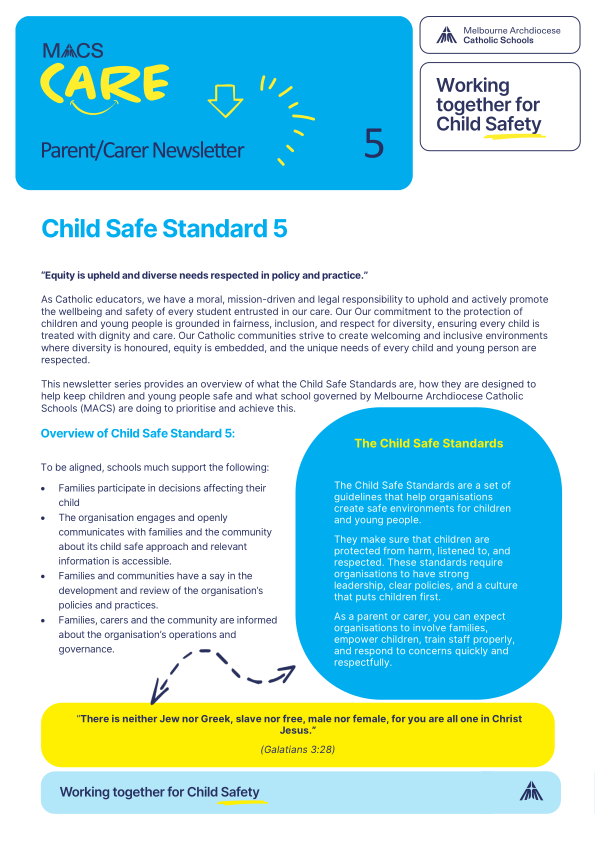
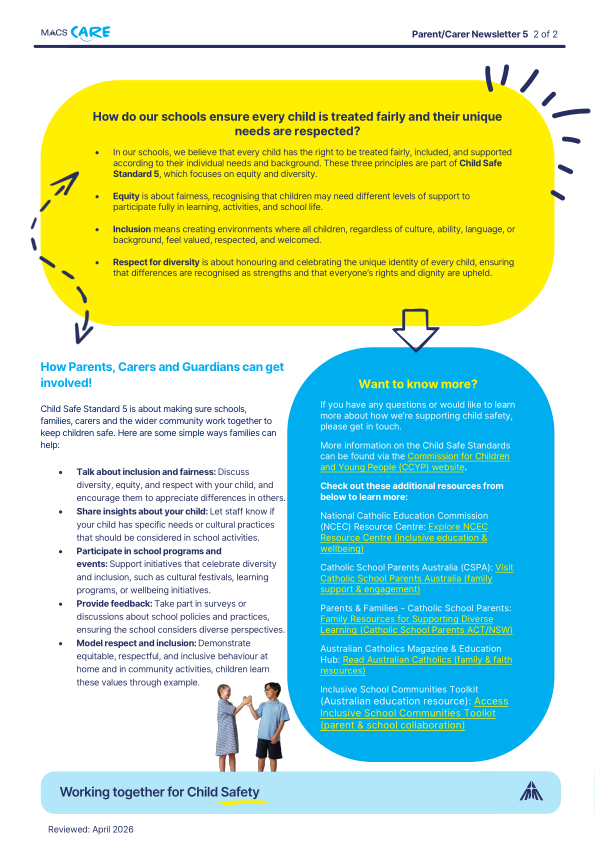
What do ‘’equity’’ and ‘’diversity’’ mean in relation to Child Safe Standard 5?
- Equity means fairness, not sameness. Recognising that some children need different levels of support to be safe, included, and able to participate fully.
- Diversity recognises and values difference. This includes culture, language, disability, gender identity, faith, family background, and lived experience.
- Child safety responses must be inclusive. Policies and practices should be accessible and responsive to the needs of all children, not just the majority.
- Barriers to safety are actively addressed. Schools identify and reduce structural, cultural, or attitudinal barriers that may place some children at greater risk.
- Respectful practice is essential. Staff interactions reflect dignity, cultural awareness, and respect for each child’s identity and circumstances.
- Everyone shares responsibility. All staff contribute to creating safe, welcoming environments where every child feels respected, supported, and protected.
The Impact when children and young people have their individual differences and backgrounds, known, respected, accommodated and honoured, they:
feel safe, valued, and respected in everyday interactions, which strengthens their wellbeing and reduces the risk of harm or disengagement.
- Are more able to participate confidently in learning and school activities, as reasonable adjustments and inclusive practices support their safety and access.
- Experience a genuine sense of belonging across classrooms and school spaces, helping to prevent exclusion, marginalisation, and isolation.
- Are less vulnerable to harm, discrimination, or misunderstanding, because staff proactively recognise and respond to diverse needs and circumstances.
- Develop trust in staff and school processes, making it more likely they will seek support, report concerns, and engage in a child safe system.