Learning

READ, COUNT and EXPLORE
Understanding phonics: Why is it important and how you can support your child’s learning at home
Phonics is one of the most important building blocks in learning to read. It teaches children how letters and groups of letters connect to the sounds of the spoken English language. When children understand these sounds-letter relationships, they can decode new words, and become confident, fluent readers.
Why Phonics Matters:
Build strong decoding skills - Phonics helps children ‘sound out’ unfamiliar words. Instead of guessing, they learn to break works into parts and read them accurately
Supports spelling and writing - When children understand the sound-letter relationship, they become more confident and capable writers.
Boosts reading fluency - With practice, decoding becomes automatic. This frees up mental energy so children can focus on understanding what they read
Creates confident, independent readers - Phonics gives children tools they can use for life. Once they master these skills, they can tackle new vocabulary with ease
How is phonics taught at school?
The key elements of phonics are:
Phonemes: the smallest sounds in words (like the /k/ sound in ‘cat’).
Graphemes: the letters or groups of letters that represent those sounds (like the letter ‘c’ in ‘cat’).
Blending: putting sounds together to read a word (e.g., /k/ /a/ /t/ becomes ‘cat’).
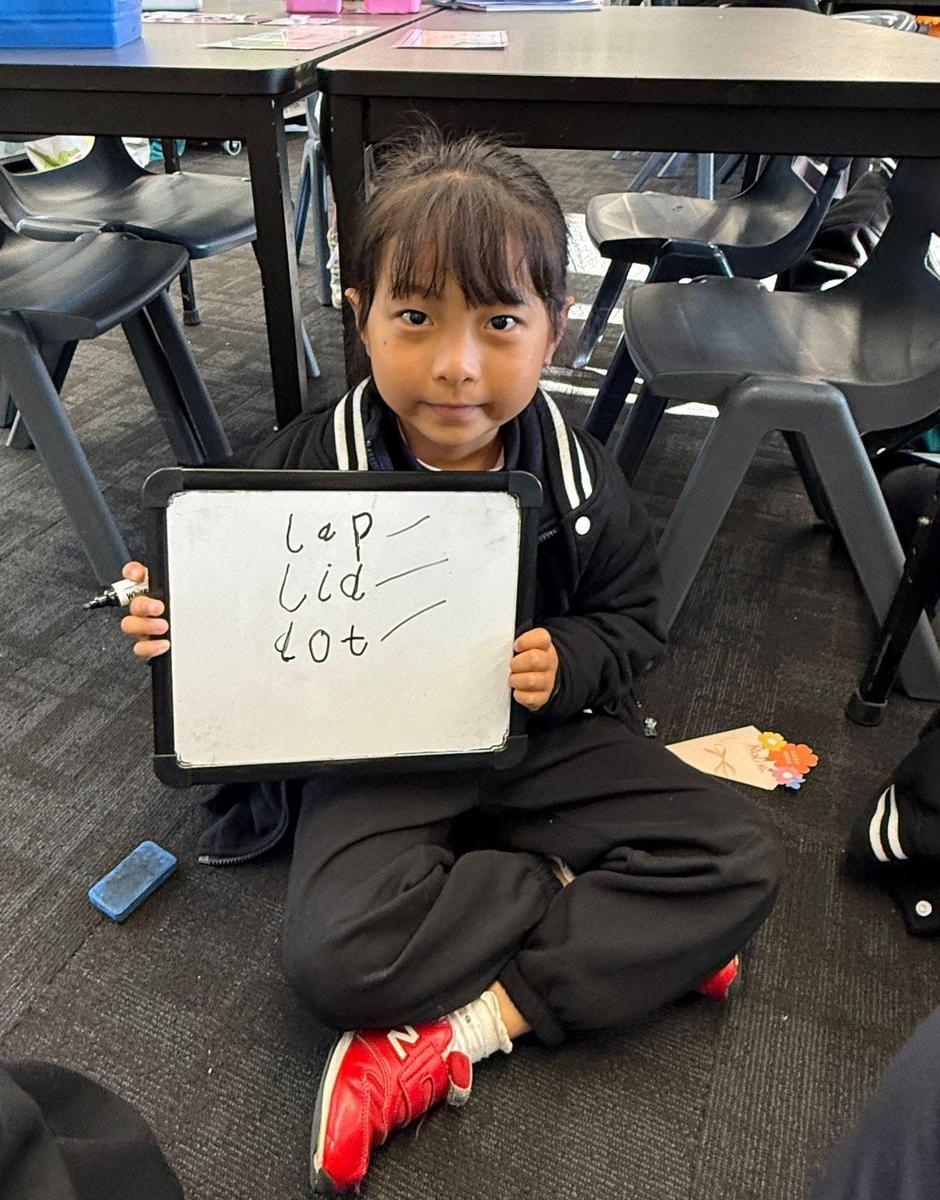
Segmenting: breaking words down into sounds to spell them (e.g., ‘chat’ becomes /ch/ /a/ /t/).
Phonics is taught in a step-by-step way. Children start with the simplest sounds (like /s/, /a/, and /t/) and slowly move to more complex sound-letter patterns (like /ee/ as in ‘bee’ or /oa/ as in ‘cloak’). This is called systematic synthetic phonics.
Children learn sounds first. Then they practise blending those sounds together to read whole words.
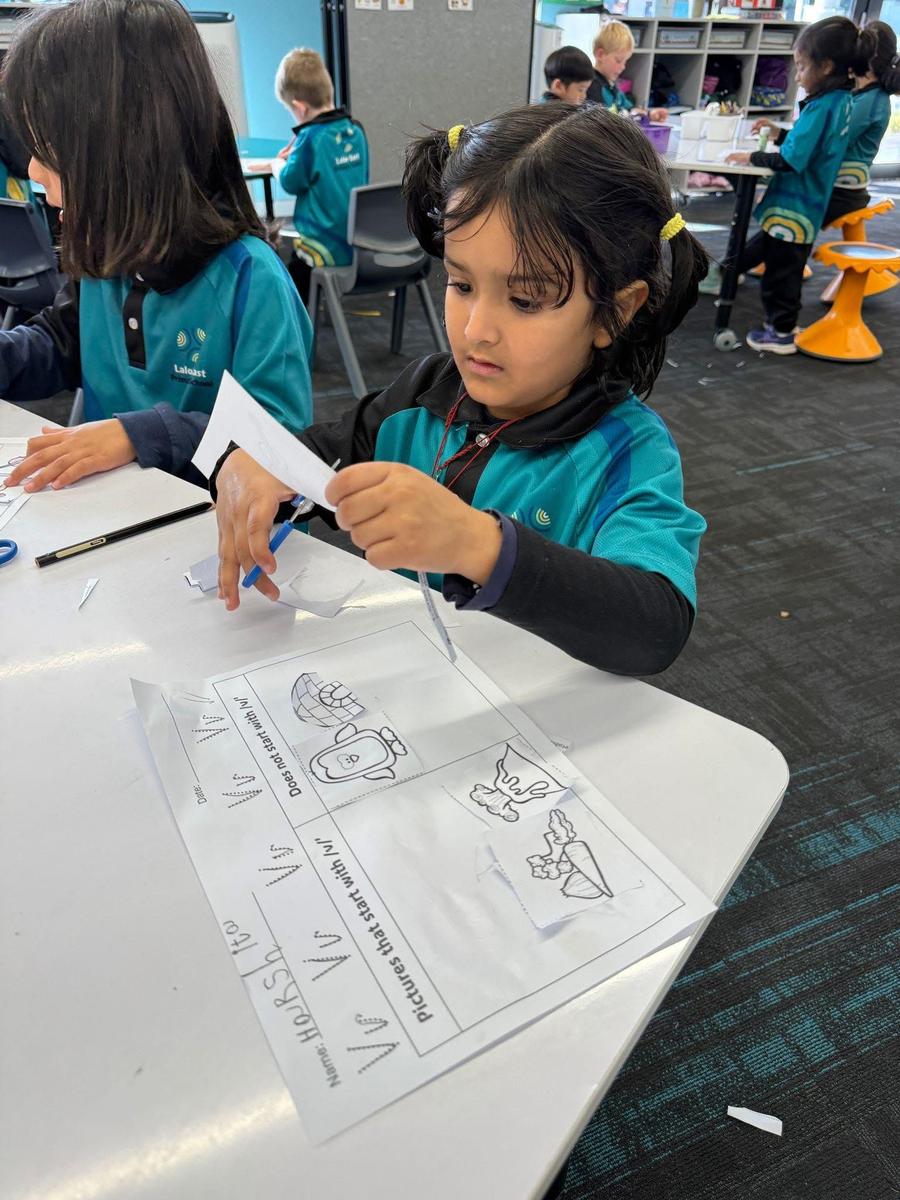
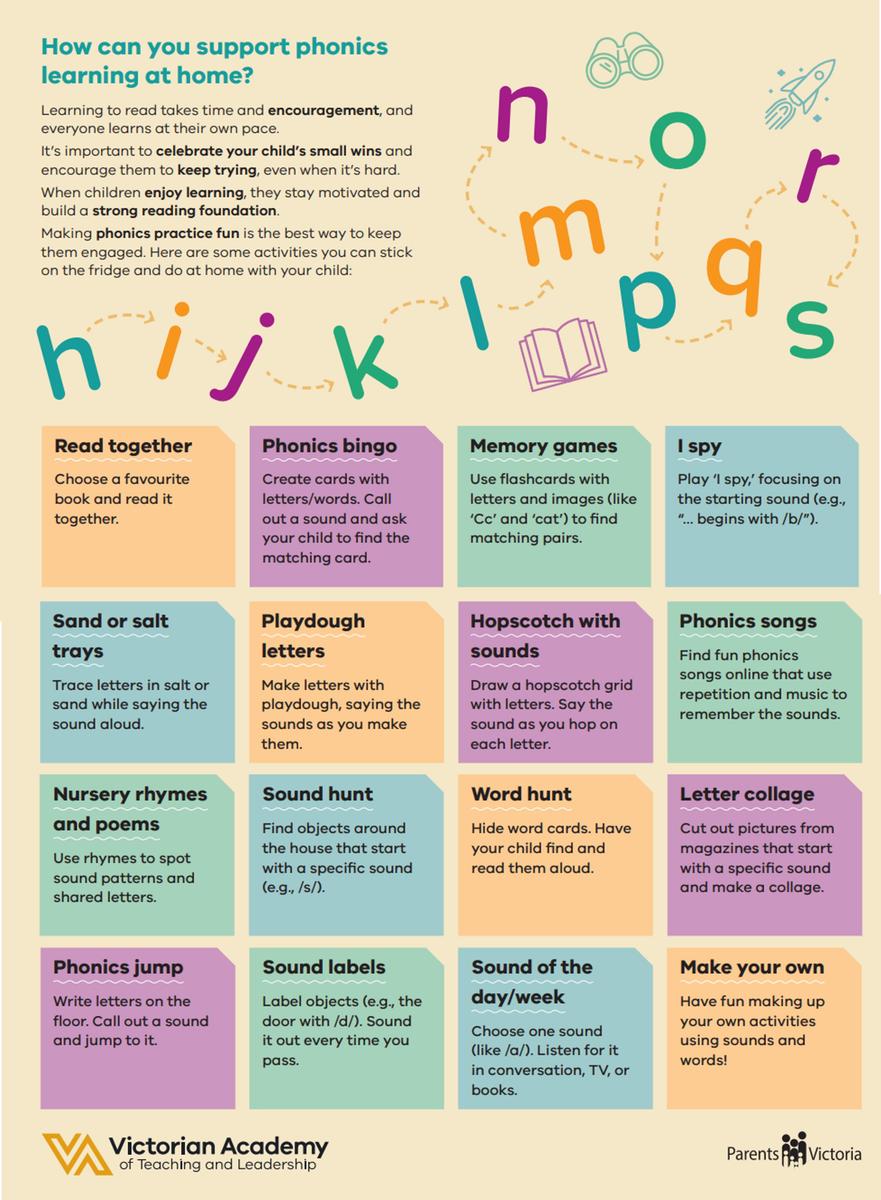
We use many ways to make phonics lessons engaging. This might include short, focused lessons which incorporate both reading and writing. We also play games, like bingo, 4-in-a-row, matching beginning sounds with pictures.
[insert attached file ‘Supporting phonics at home’]
Source: Victorian Academy of Teaching and Leadership https://www.academy.vic.gov.au/resources/understanding-phonics