Junior School
Head of Junior School - Ms Nicola Treacey
Junior School
Head of Junior School - Ms Nicola Treacey

Article by Sam Davidson, Junior School CCL Leader
Cross Curricula Learning (CCL) in Junior School is an opportunity for students to develop their knowledge through their engagement in a range of Inquiry Units, aimed at encouraging questioning, critical thinking, teamwork and curiosity. Units creatively inspire students to think critically about a range of topics, spanning from understanding how people create designs to solving problems in Prep, to the Evolution of Technology in Year 4. Term 3 units offered the following opportunities for the students.
In Prep, the learning experienced by students were hands-on experiences, aimed at exploring the systems in communities that keep us safe. This unit saw students participate in tangible learning tasks that facilitated the development of knowledge that will continue to be drawn on and utilised long after they leave Junior School. The Traffic School excursion, focussed on road safety, along with the police incursion, that examined how police keep us safe, were particular highlights during this term of learning.
In Year 1, students looked at both natural and man-made environments and developed their understanding of the different purposes of these environments. The unit provided a gradual release of knowledge to assist students to think critically about the purpose behind the different elements used in varying places. Once their understanding of design purpose was established, students began designing and constructing their own environments. The term of learning culminated in an exhibition where students shared their constructions and discussed their design choices leading to a critique of their work.
Term 3 saw the Year 2 students exploring different types of transport and examining how transport has changed over time. They questioned the reasons why transport has changed and challenged their understanding of what a ‘want’ vs a ‘need’ is, when inquiring into transport. The students particularly enjoyed their excursion to the Newport Railway Museum, where they demonstrated their knowledge of the changes to train travel in particular. This inspired many more questions with students engaged in looking more broadly and comparing similarities and differences in trains in Japan and those they are familiar with in Melbourne.
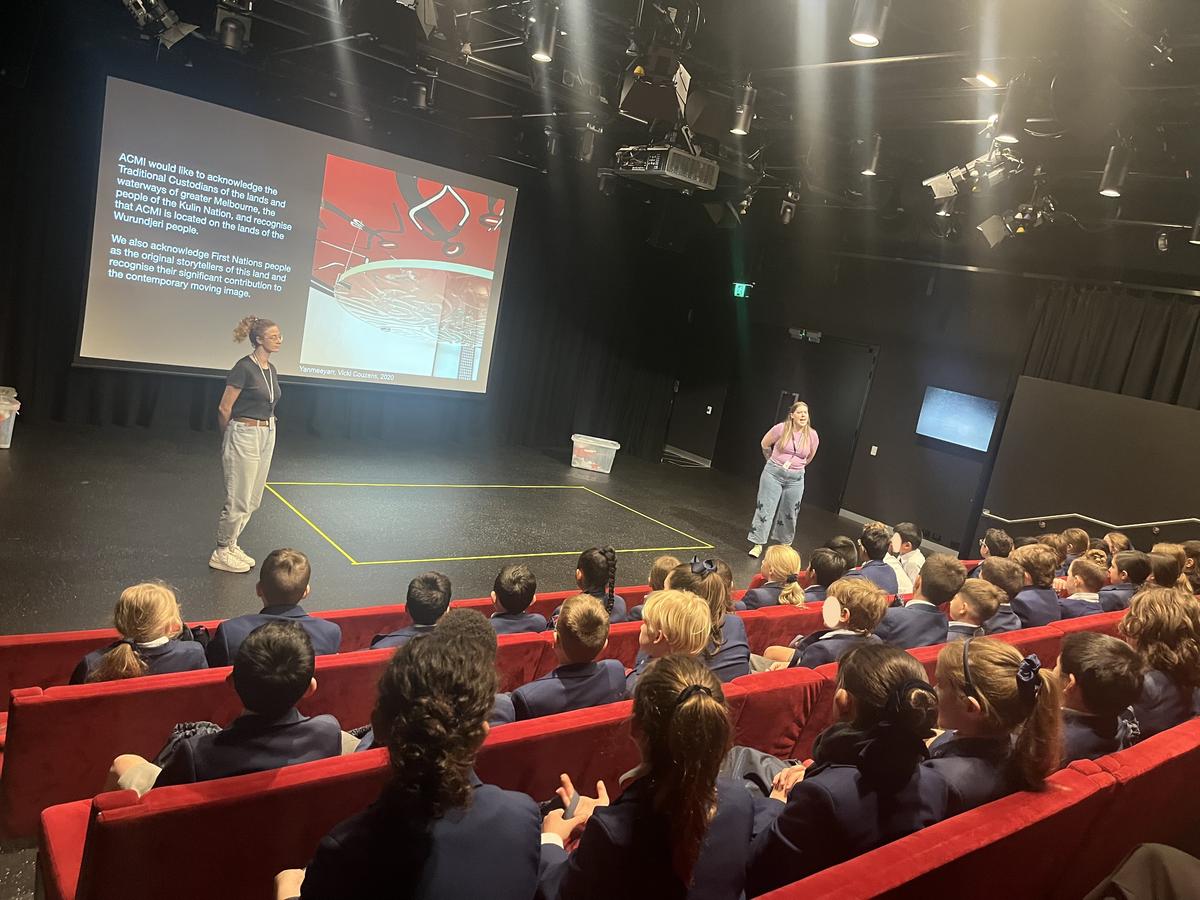
In Year 3, students had the opportunity to examine the impact of media arts and how messages are shared and received. Students examined the different features of media arts and looked at how these features work together to send messages to an intended audience. The Year 3 students developed their digital literacy throughout the unit. A highlight of the unit was visiting the ACMI Museum, where students participated in workshops aimed at building their ability to use ‘Stop Motion’ to share a message. They used the skills acquired to create their own Stop Motions to share a part of their class novel, The Boy Who Grew Dragons, with their peers, using multiple features to convey their message.
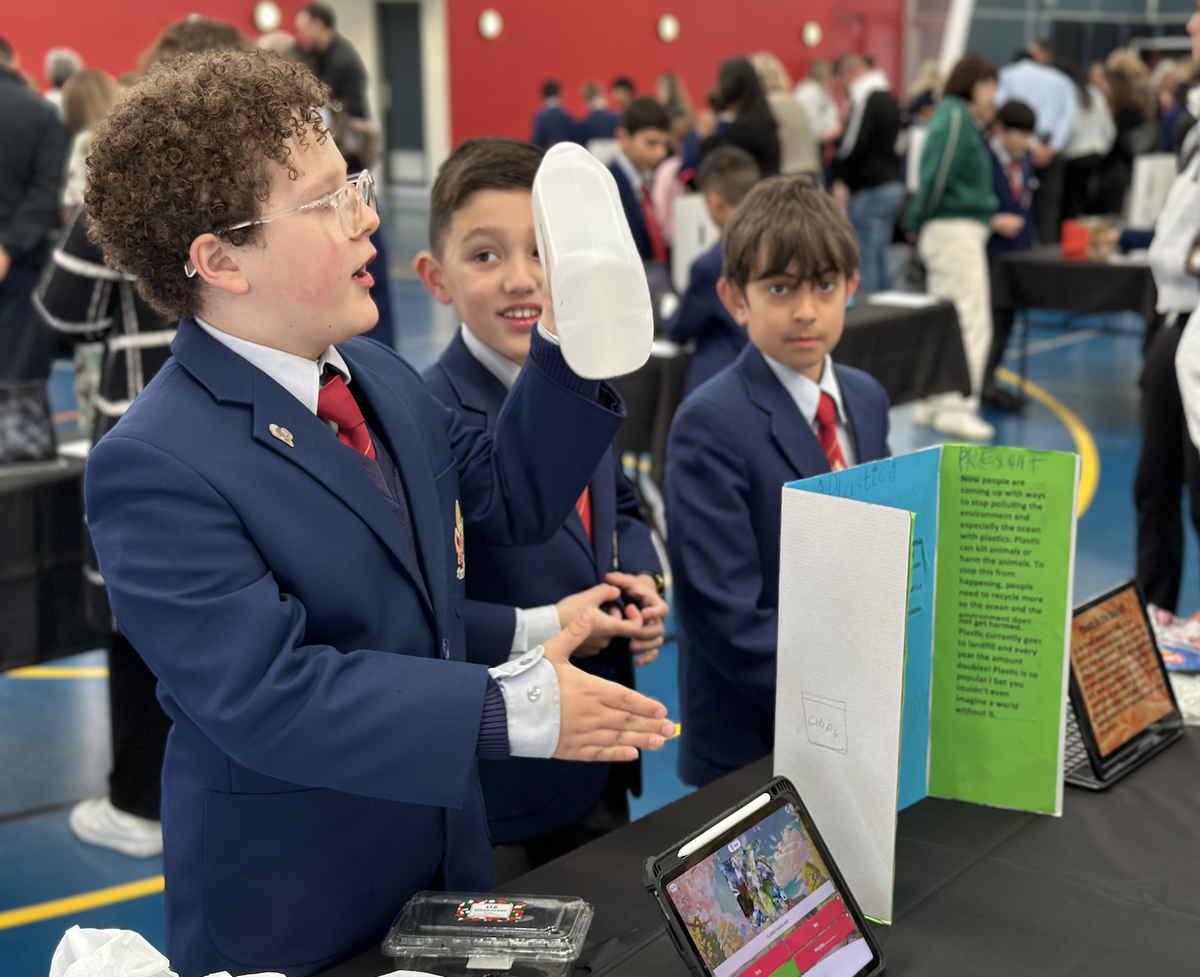
At the end of Term 3 in Year 4 students participated in their Genius Hour Exhibition. The unit of learning provided students with the opportunity to choose a technology and research how this technology has changed over time, how these changes have impacted people and the environment, and then predict how the technology may continue to change and develop in the future. When making their predictions, students kept in mind the current impact on the environment and what changes they feel need happen to create a sustainable product for future generations. Students demonstrated both collaborative and independent working skills during these sessions. They were encouraged to lead their own learning and follow their curiosity. The unit culminated in the Genius Hour exhibition, where students showcased their projects to teachers, peers, fellow students and their families.
Students thrived during their participation in exploring the CCL units in Semester 2 and flourished during these hands-on, creative, collaborative, yet challenging learning experiences.
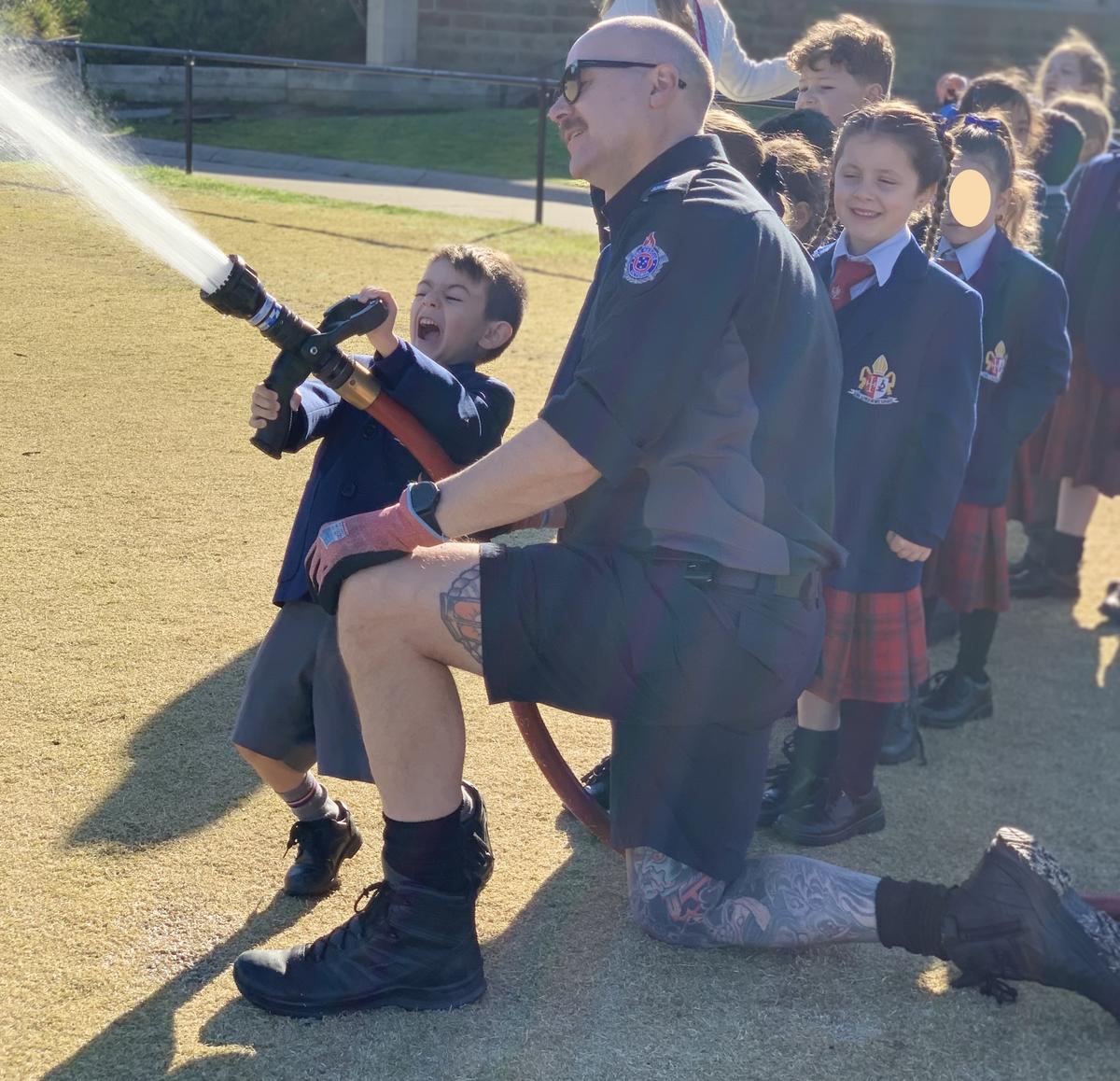
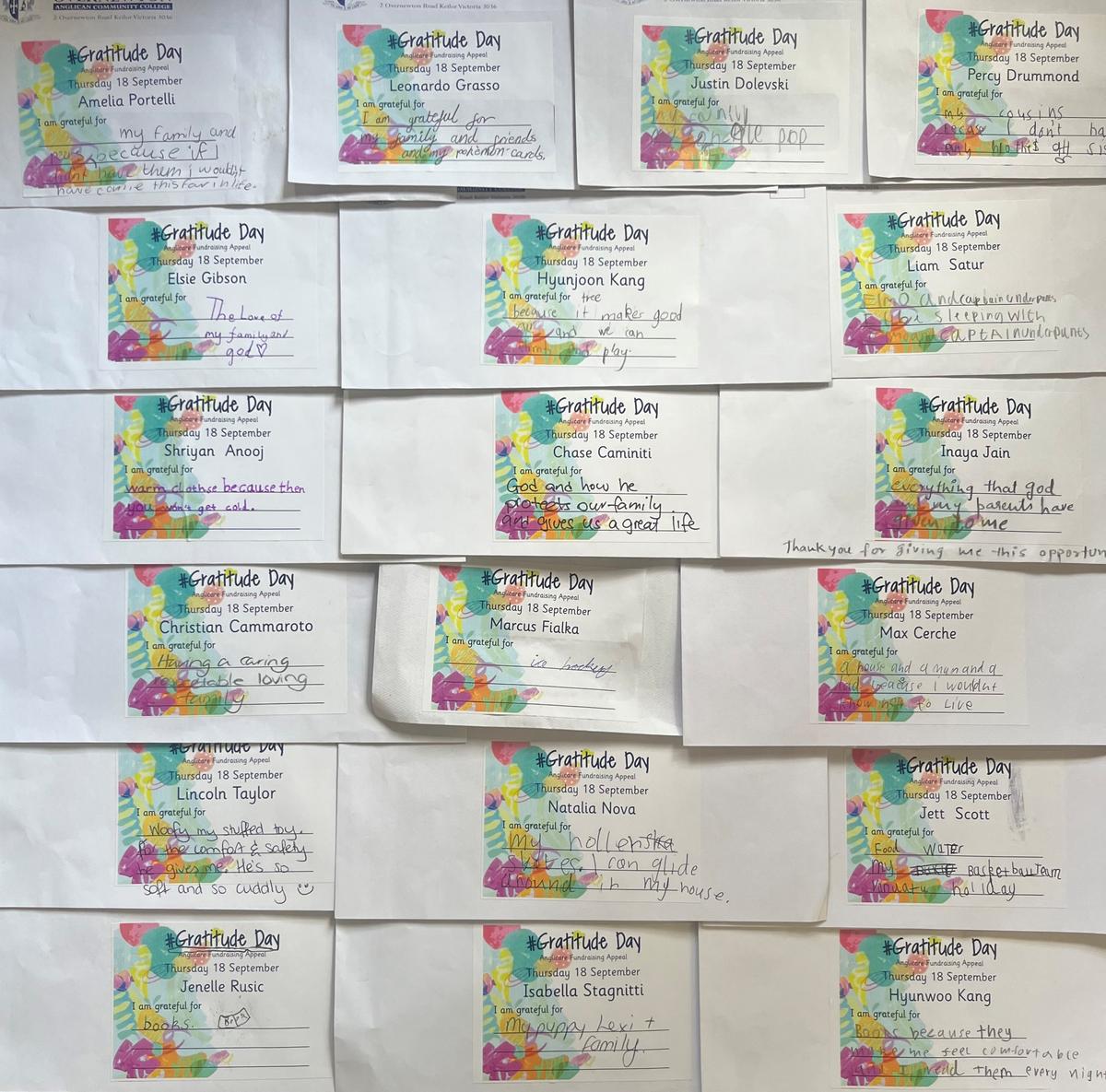
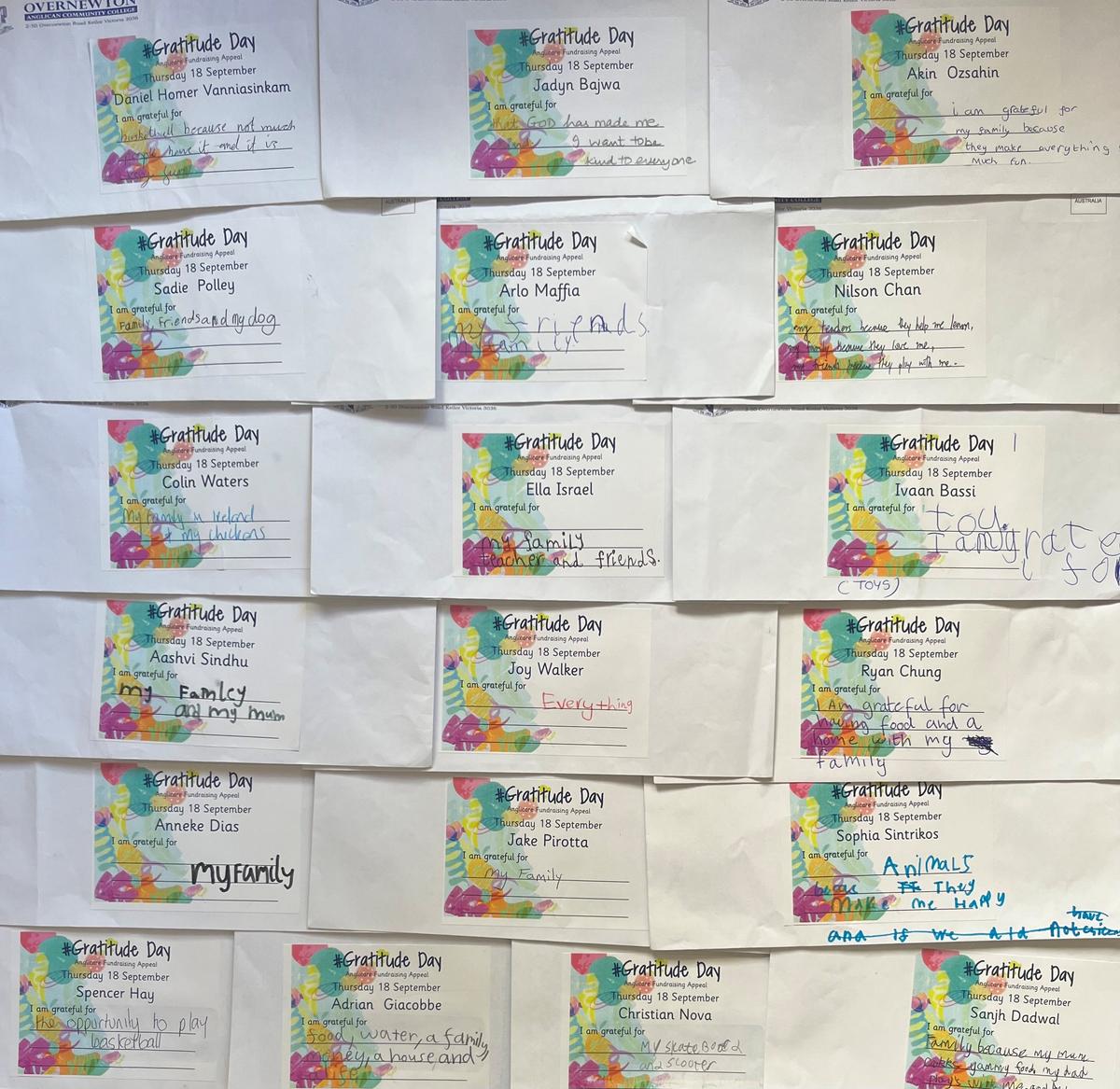
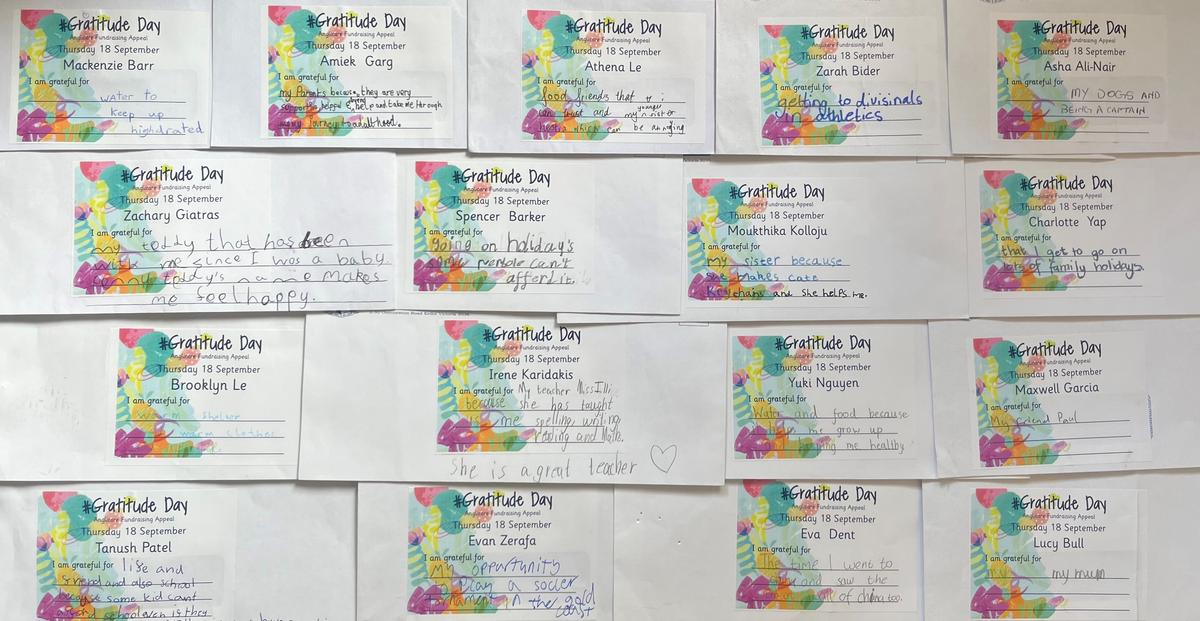
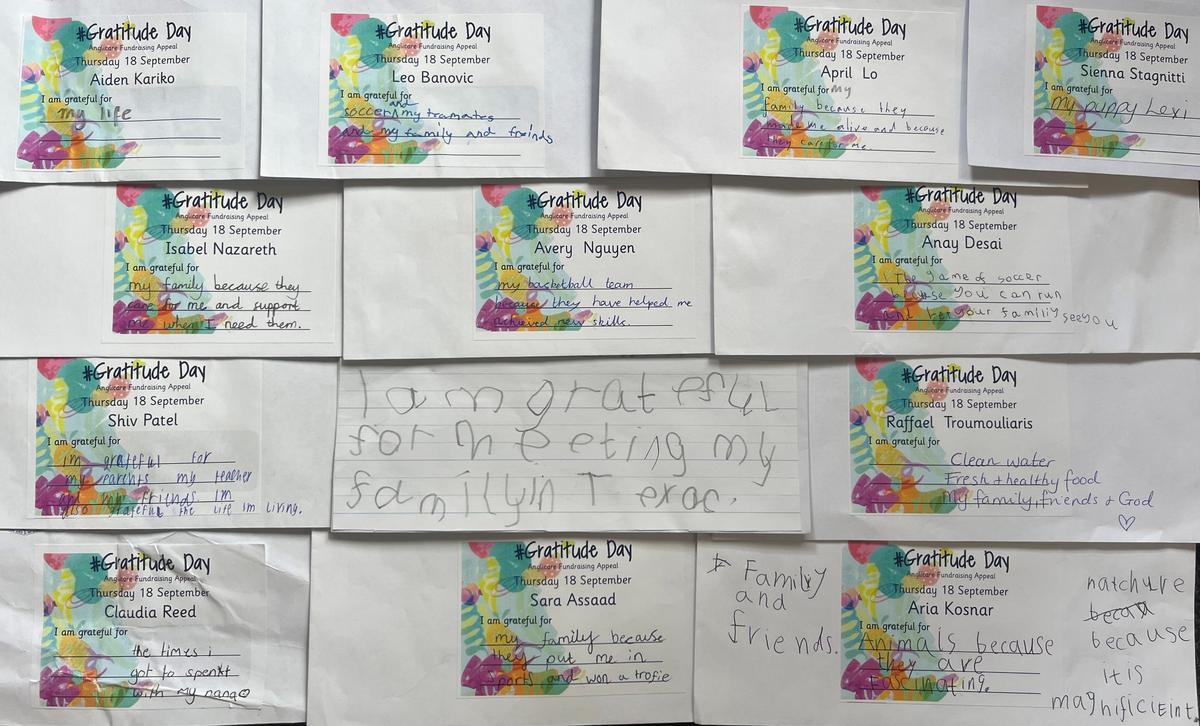
On Thursday September 18th the Junior School Students participated in Gratitude Day. They participated in lessons that assisted students to explore what they are grateful for and shared things and people that they were grateful for through circle time. The focus on gratitude was to inspire and attitude of gratitude within our student community.
Research says that experiencing and expressing gratitude supports children in the following ways:
Helps children to manage their emotions more effectively
Encourages a positive outlook, reducing anxiety and stress
Increases self-confidence and optimism
Enhances empathy and resilience
Inspires kindness, sharing, cooperation and appreciation
Each student was also given an envelope to record what they were grateful for on and to make a donation towards the annual Anglicare Christmas Gift Giving. The purpose of these donations and gift giving is to encourage gratitude in those who are less fortunate than our Overnewton Community. Through the generosity of our students and their families we were able to raise $5052.00 to put towards the gifts that will be purchased this Christmas.
This is an exceptional effort and the SRC are incredibly grateful to every person in the Junior School community who made a donation on Gratitude Day. The Junior School students will be able to see some of the gifts that will be purchased using their donations during the Carols Service at St. Paul’s Cathedral later this term.