Co-Curricular
How Do You See the World?
This week has offered an invitation to reflect on how young people learn to see the world and how they learn to contribute to it.
At Friday’s Opening Mass at the Quaycentre, Fr Geoff spoke of faith as a lens; not something added onto life, but something through which life is interpreted. Faith, in this sense, does not remove the challenges faced, or the difficulty in understanding, the world we live in. It shapes how meaning is made of effort, struggle, joy, disappointment and success. It determines what we notice, what we value, and how we respond.
I was pleased to hear this message, particularly as it aligns so closely with what we are exploring in Year 11 Studies of Religion – a worldview not as abstract belief, but as the framework through which reality is understood and lived. Hopefully, my students made the connection!
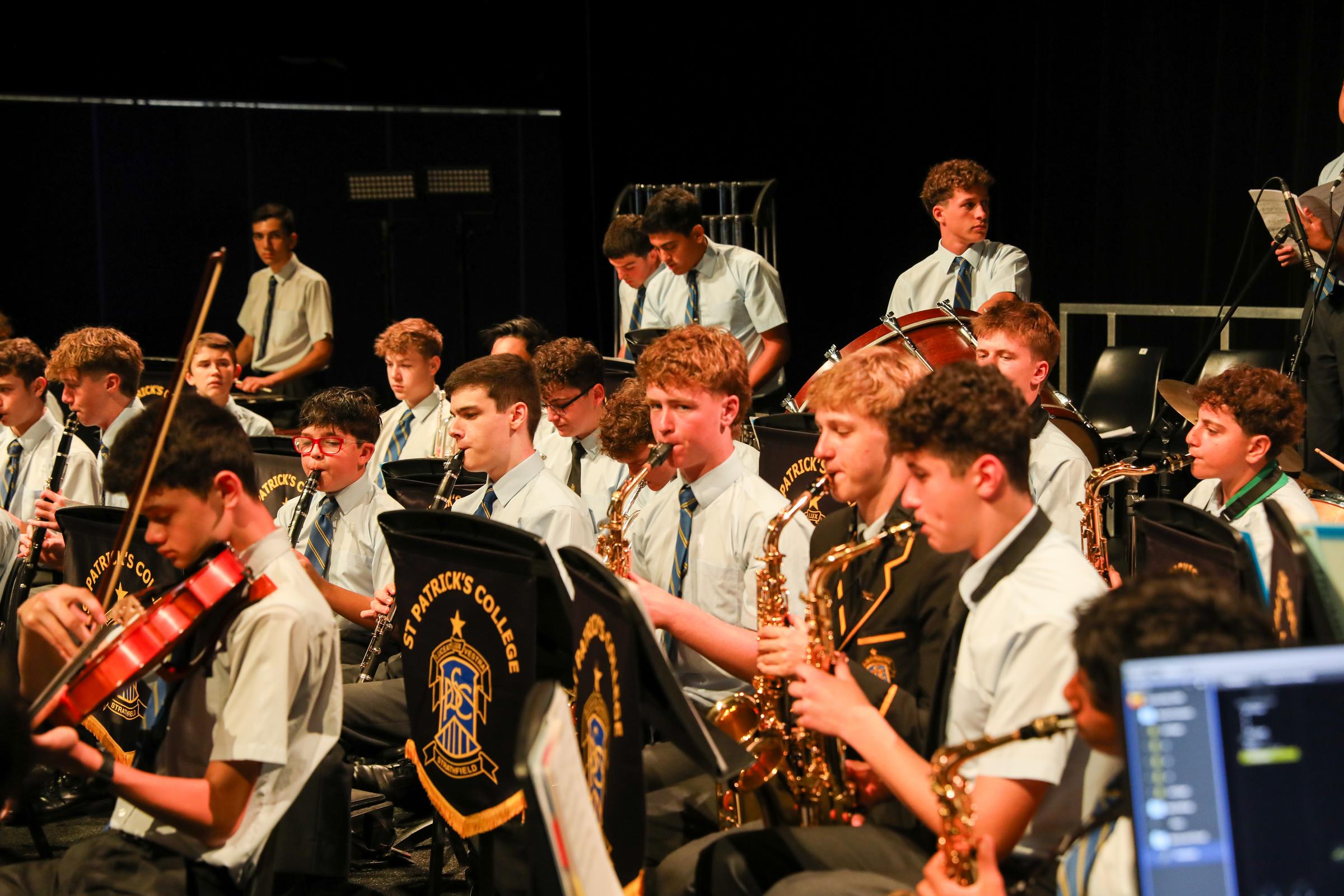
The High Achievers’ Assembly that followed gave that idea tangible form. Students were recognised for outstanding academic results, with their co-curricular achievements in 2025 also highlighted – whether in sport, culture, service, or leadership. What was pleasing was not the scale of involvement, but the breadth. These were students who had learned to give expression to their values through action, contribution, and sustained effort over time.
Recognition matters. Not because it defines a student’s worth, but because it affirms the choices, habits, and character that have been formed over time. In that sense, recognition is not so much a conclusion, but a reinforcement of the positive direction our boys are heading in.
We can look ahead to the Secondary Swimming Carnival later this week and be reminded that co-curricular experiences take on many forms at St Patrick’s. Carnivals are not really about times, places, or trophies – although they are an important part. They are about participation, courage, belonging, and shared experience. They reveal how students respond when they are seen, when they are challenged, and when they are part of something larger than themselves. For many of our boys, just diving in the pool and having a go will be an important event for them in their formation this year. Others will be competing for Age Championships and record-breaking performances. Both will be fun to watch.
With public speaking trials also approaching, the theme continues. Public speaking is, in many ways, the practice of learning a language that involves clarity and confidence under pressure which in most cases leads to conviction. It asks students to organise thought and articulate belief as they learn to stand behind their words.
Across faith, sport, performance, and communication, a common theme does appear. Formation does not begin with activity or achievement alone. It begins with how students learn to interpret experience, and how they are taught and encouraged to express who they are becoming.
Our Co-Curricular Program exists in service of this formation. Through mastery, in the pursuit of excellence, we seek to help students develop the capacity to see clearly, act purposefully, and speak with integrity. Not perfectly, but progressively.
Thank you, as always, for the commitment, care, and presence that make this possible across our community.
“We do not see things as they are; we see them as we are.” Anais Nin
“Do not be conformed to this world but be transformed by the renewing of your minds.” Romans 12:2